-
Townhouse & Terraced garden design guide
Introduction
Townhouse or terraced house gardens can be some of the hardest to design and visualise due to their size. Like most city living town houses and city dwellings have a small if not tiny gardens. Most clients wrestle with their small space ending up with an unused space. However, It doesn't matter how small your garden is you too can have an inviting outdoor space. This design guide shows you how a small overlooked back garden can be transformed into an outdoor oasis bringing calm to a busy city.
Most people struggle with creating their own townhouse or terraced house garden, as space is often too small to imagine, or they try and simply cram in loads of ideas, making it look cluttered. Given the lack of space and adjacent properties, my clients often complain that there’s no privacy and that space limits what they can achieve.
Many simply pave over them, scatter some plant pots around and stick a shed in the corner. However, there is so much more you can do with a small space, not only making it feel much bigger than it is, but creating a real wow factor even with just a couple of meters of garden.
- What is a townhouse garden?
- Designing a small city garden
- Adding privacy to your garden
- Vertical growing
- Year-round garden interest
- Do you need a lawn in a garden?
What exactly is a townhouse?
The traditional term townhouse relates to the Georgian era of the wealthy having a residence in the city along with their country estate. However, in recent decades, the term townhouse has almost become synonymous with any city terrace or property. After all, how many of us have both a country estate and a city townhouse? A townhouse garden is usually a small rectangular plot behind the house, which shares a boundary with other houses all in close proximity.
Designing a small city garden
A design client of mine asked me to redesign their townhouse garden in Manchester to bring privacy and a lush relaxing area. It was a small 6m x 8m overgrown plot. It has neighbours to all three sides of the garden and was about as overlooked as possible. On the plus side, it was south-facing and was an end terrace, so it had access rather than just through the house.
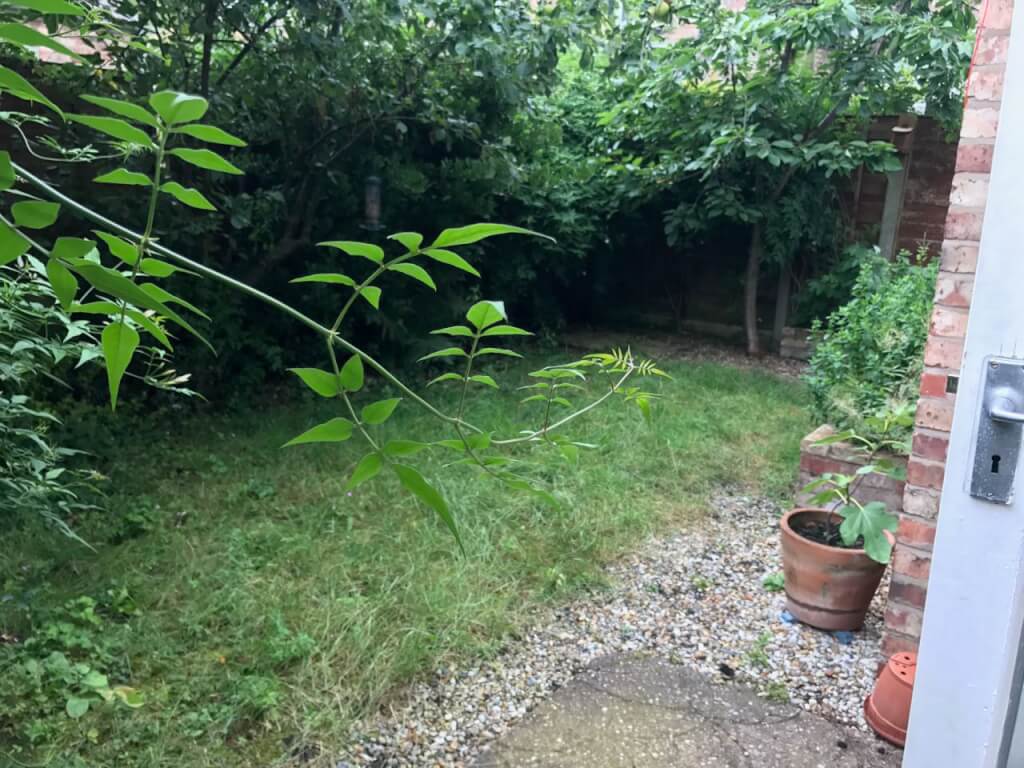
The clients avoided using the garden as they felt they were being watched all the time, and it felt damp and uninviting. The brief was to create a garden that:
- Provided privacy for the couple
- Was multifunctional for socialising and relaxing
- Had a lush feel that reminded them of Guernsey
- Would survive some neglect
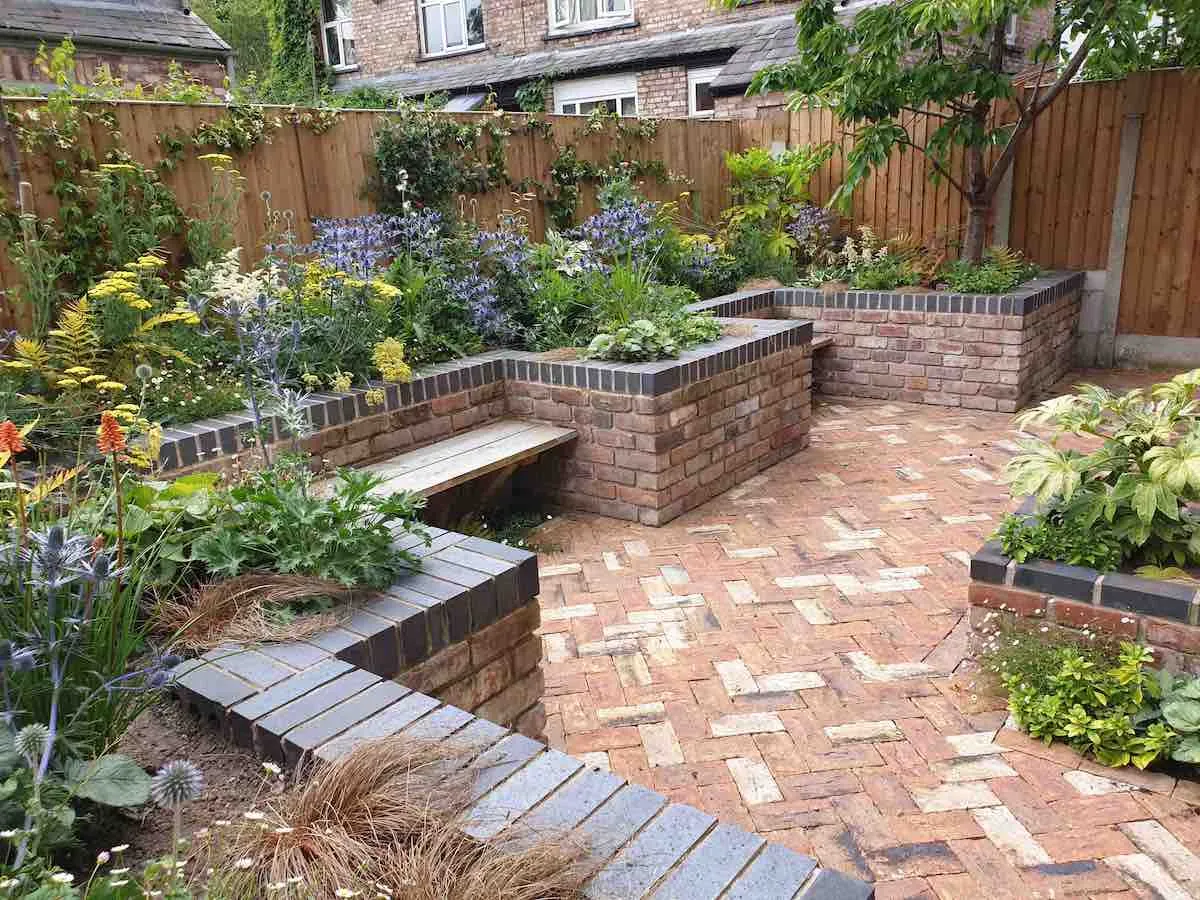
Dealing with being overlooked
I’ve written extensively about overlooked back gardens with hints and tips for reducing neighbourly glare. In this example, though, there was simply no way to completely block out the neighbours. Townhouses are so close that you’re always going to have someone occasionally looking at you from a window. Hopefully fully dressed!
What you can do, however, is break up the eye line and provide a number of different seating positions. The key to my design was to provide a variety of seating areas, even in this tiny space, so the couple could move around the garden. This allowed them to make the most of the sun no matter what time of day and also move out of an eye line if someone was at one of the windows.
There’s nothing worse than sipping a glass of cold beer on a Friday evening whilst someone’s getting changed, looking out of a bedroom window at you!

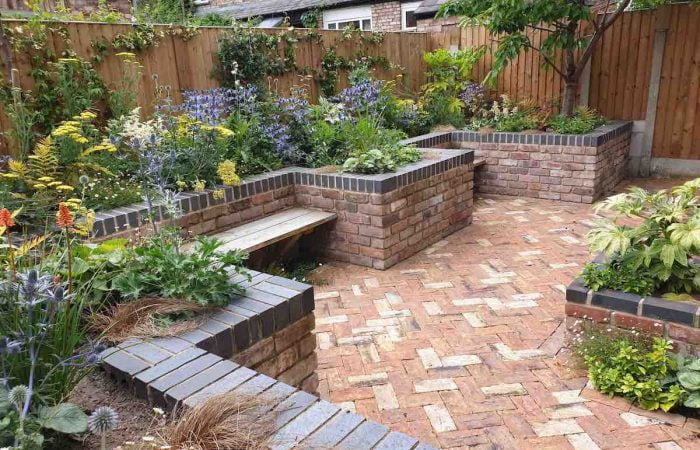
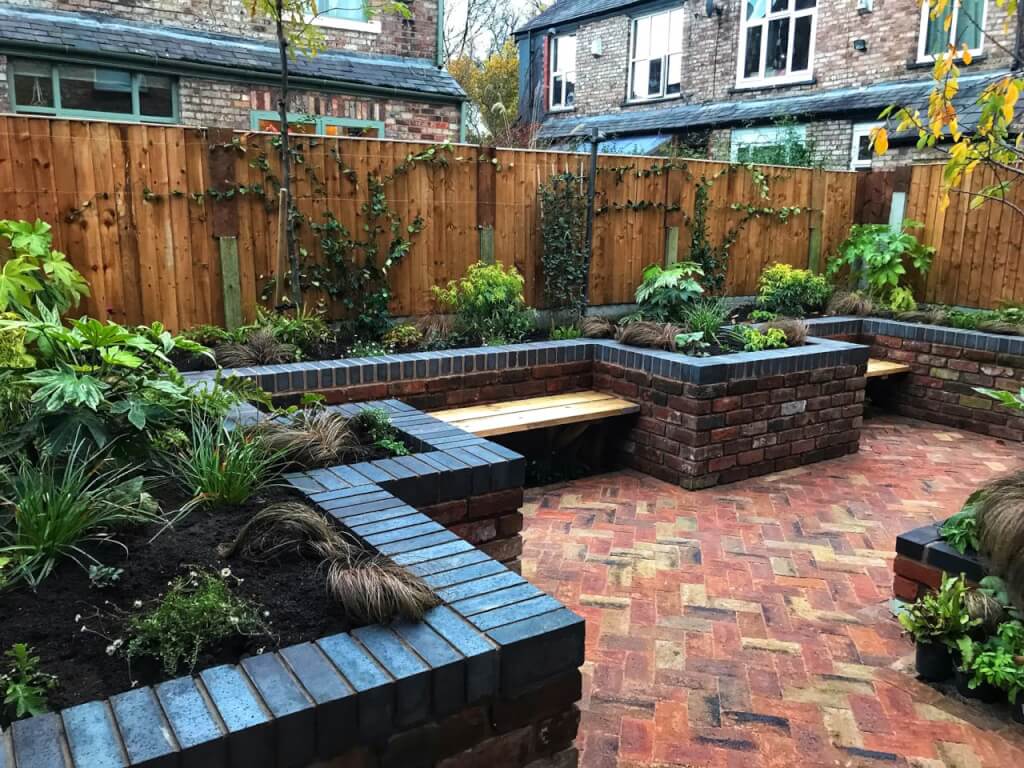
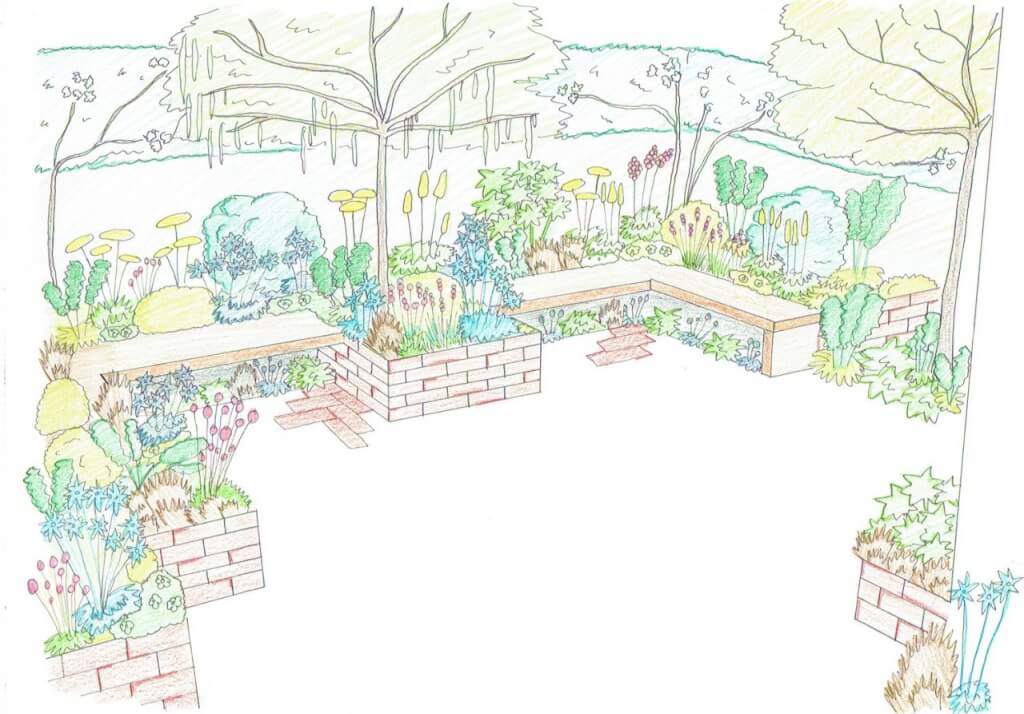
So the first area I worked on was the proportion and layout of this space. I knew it would need to have some hidden areas and angles to break up the eyeline. I used the scale from the patio doors to give proportion to the garden. By using a dog’s leg in two parts of the raised bed, it provides nooks to sit in and feel enclosed. These spaces give a feeling of depth and drama to the garden.
Vertical gardening to increase space
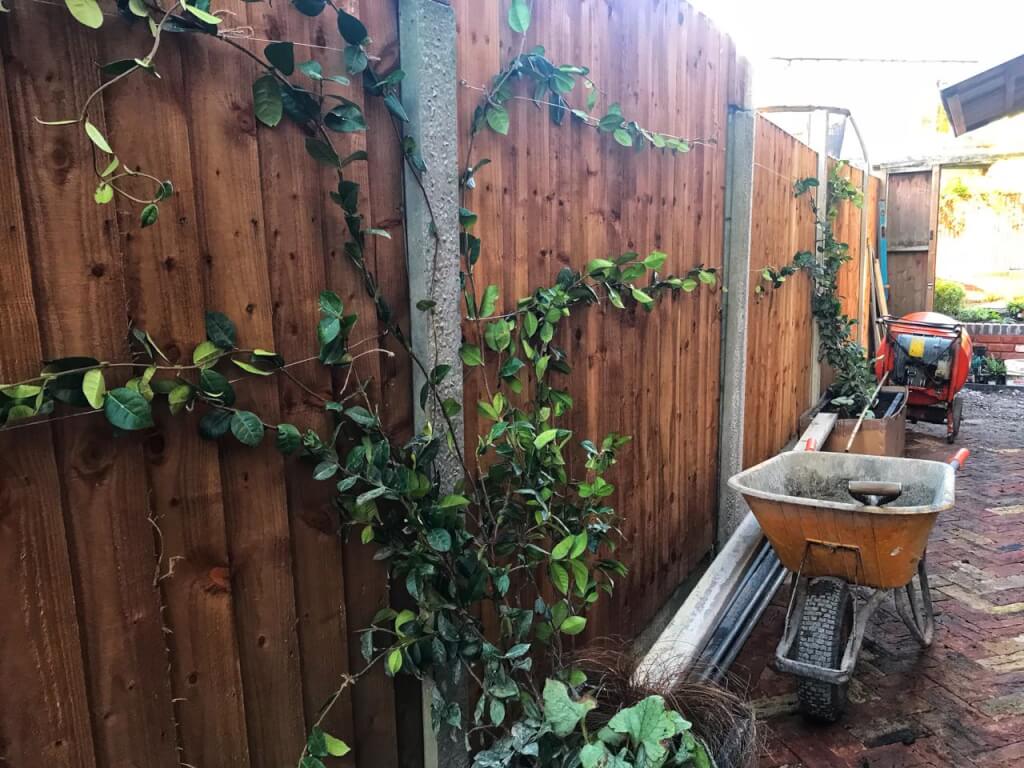
One clever method to help make a garden look bigger is to use vertical gardening. Whilst living walls are beautiful, they also require careful irrigation methods to keep them watered and fed. This can be expensive and time-consuming. In this garden design, I’ve used a number of large Trachelospermum jasminoides, which are trained over wires on the fences.
Over time, they will colonise the fence panels, blurring the garden’s boundaries. They also have the added benefit of providing more privacy and a softer feel to the garden than fence panels alone.
The use of Garrya eliptica ‘James Roof’ as a wall shrub will provide gorgeous winter interest with its white catkins whilst slowly growing up along the wires also. This specimen will help bring that tropical canopy feel to the garden.
Year round interest planting
The planting choice for any garden is key. It must satisfy the overall design aesthetic but also the amount of maintenance and skill of the garden owner. The young couple that the garden belonged to wanted to get more involved in their garden but were still relative newcomers. My planting choices carefully took this into consideration by choosing plant specimens that would provide seasonal interest all year round. You can see the plant list at the bottom of this post.
The couple had family ties to Guernsey and they wanted the planting scheme to reflect this. Now, Manchester is not known for its tropical coastal weather, so I had my work cut out.
Through careful research, I selected plants that shared either a similar appearance or feel with the coastal plants of Guernsey. Instead of Echiums, I chose Aruncus for height and Kniphofia for a yellow colour blast. Fleabane was chosen as a border filler, which is also found in Guernsey, along with a colour palette of blues and yellows.
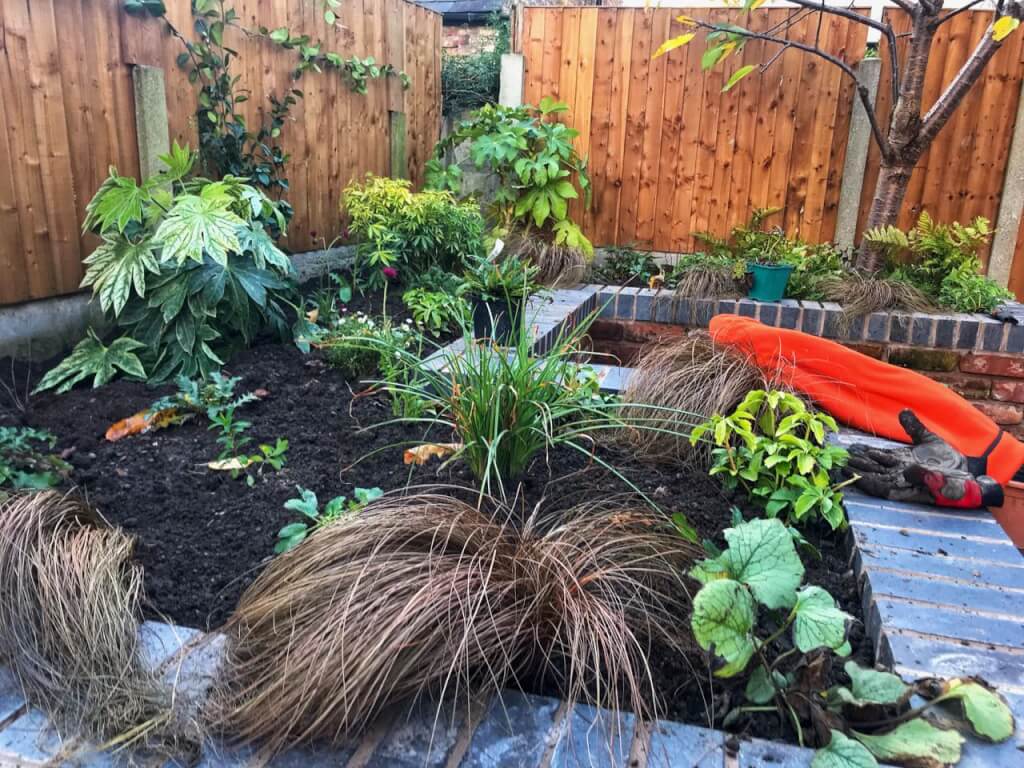
I also chose specimens that if left for a few weeks wouldn’t throw a fit or make the garden look scruffy. By using herbaceous plants like Cirsium and Eryngium, these coastal plants look just as beautiful once they have gone to seed as when in flower. You can cut them back or leave them through the winter.
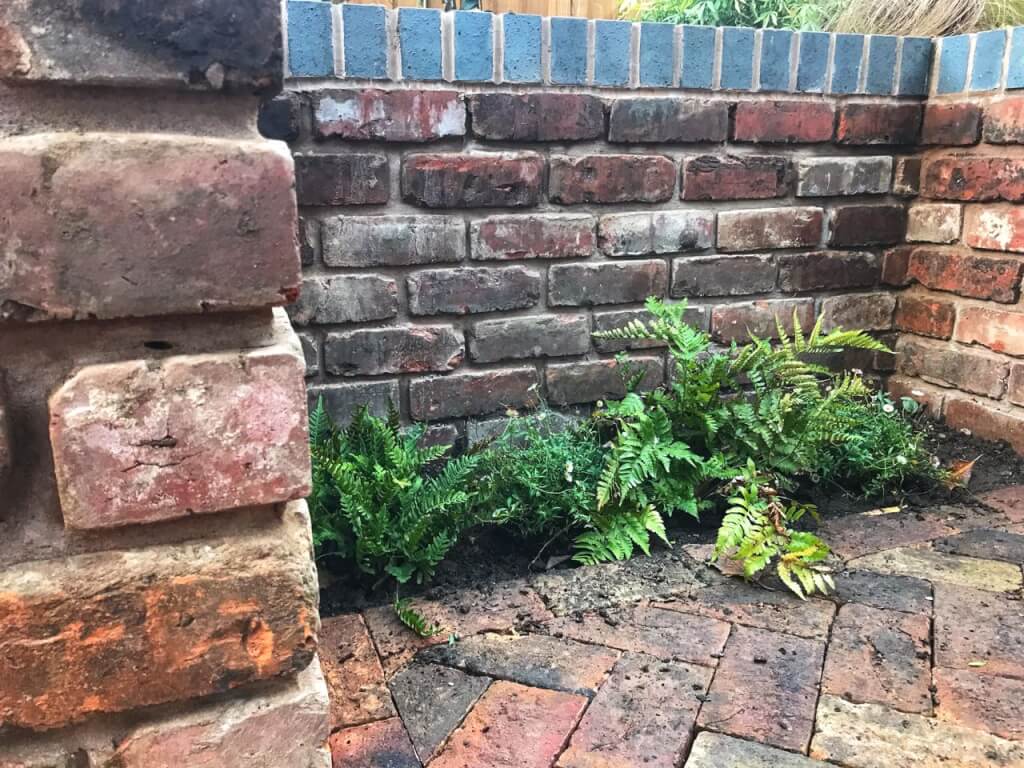
By using reclaimed brick raised beds it helps keep the borders looking uniform even in the cold winter months. The bronze Carex gives a coastal drift feel to the borders, along with Pachysandra, giving year-round ground cover. This combination is easy to look after and will also cover a multitude of sins if the owners go on holiday.

I provided an evergreen structure with Fatsia japonica, Choisya and the evergreen Jasmin climbers to mimic the semi-tropical feel of Guernsey. By choosing larger specimens, you can actually make a garden look bigger than it is. The scale of larger plants helps bring depth to the garden. There is also a Gleditsia tree which helps screen off one of the more offending views from inside the house. The canopy is light to reduce the amount of light it blocks out, but broad enough to provide privacy.
Doing away with the lawn
Having a lawn in a garden is a quintessential aspect of British gardening. Ask anyone what one of the things you will find in a garden and I bet lawn is in the top 5 items, when consulting with the clients on this design they had originally wanted to keep some of the lawn. When we discussed the routes through the garden and how they used it we came to the agreement that actually a lawn simply wasn’t suitable for their requirements. It would have just become a walkway and when we discussed it further they didn’t want to mow it or need storage for a mower.
To help soften the transition between the herringbone brick pavers and the raised bed I designed in under seating planting. These shade-loving plants help break up the eye line and act as a soakaway from any rain that falls onto the hard surfaces. It’s essential when designing a garden that water runoff is taken into consideration to help reduce the impact on our sewer systems.
My top tip with lawns in a town garden is carefully consider is there enough light and space to have a lawn. Whilst you can get specific shade lawn seed mixes you will need to maintain, scarify and feed your lawn at least twice a year to keep it neat. If you’re tight on time and equipment than maybe another material would be a better choice. It’s about working out the cost-benefit of each part of the garden and seeing what is more suitable for your lifestyle.
Summary
Even in a small garden, you can achieve a real feeling of peace and space. By carefully considering your requirements and then designing around these you can create a really inspiring garden. In this example, the owners can move around the garden depending on the time of day. Whether they are entertaining a group or sitting in quiet contemplation, there are different spaces within the garden. Using consistent patterns and groups of plants helps bring unity to the space.
I’ll be returning to this garden next summer to show an update on how it’s getting on. What do you think of the design? If you have questions why not leave a comment? Why not Tweet, Facebook or Instagram me with your garden dramas for help and advice.
Happy Gardening!



Lee Burkhill
Lee Burkhill, known as the Garden Ninja, is an award-winning garden designer and horticulturist with over 30 years of gardening experience and 15 years as a professional garden designer. A qualified RHS (Royal Horticultural Society) professional, Lee specialises in sustainable garden design and practical horticultural advice. He designs and presents on BBC1’s Garden Rescue and in leading gardening publications. Lee combines three decades of hands-on gardening knowledge with professional design qualifications to help gardeners create beautiful, functional outdoor spaces.
View all posts by Lee Burkhill








Categories
Plants used for "Townhouse & Terraced garden design guide"
Coastal Style Plants
- Achillea 'Credo'
- Aruncus 'Horatio'
- Astilbe 'Deutschland'
- Carex comans 'Bronze'
- Cirsium rivulare 'Trevor's Blue Wonder'
- Echniops ritro 'Veitch's Blue'
- Erigeron karvinskianus
- Eryngium × zabelii 'Big Blue'
- Euphorbia ceratocarpa
- Kniphofia 'Tawny King'
Vertical Growing
- Garrya eliptica 'James Roof'
- Gleditsia 'Sunburst'
- Trachelospermum jasminoides
Evergreen & Ground Cover
- Brunnera 'Jack frost'
- Pachysandra terminalis
- Polypodium vulgare
- Fatsia Japonica 'Spiders Web'
- Choisya GoldFingers

Other projects
-
Hampton Court Flower Show 2018: The Plant Explorers for Hartley Botanic
-
Chelsea flower show & Hartley Botanic 2018
-
Formal front garden design makeover
-
RHS Feel Good Garden Winner
-
Sensory Town Garden
-
Fancy a brew front garden
-
Small garden makeover
-
Family Friendly Garden Design Guide
-
Outdoor Living Garden Design Guide
-
Front Garden Makeover
-
Modern Garden Design Makeover Guide
-
Overlooked Back Garden Design Guide
-
BBC North West Community Garden with the RHS at Tatton Flower Show 2021