-
Artificial Turf Reviewed – is fake grass bad for the environment?
 Lee Burkhill: Award Winning Designer & BBC 1's Garden Rescue Presenters Official Blog

Artificial turf claims to be the maintenance-free way to have year-round 'perfect turf' in your garden. It has seen an increase in demand from people seeking a quick, easy lawn solution. However, it holds an ugly secret, which this guide will expose, along with the environmental argument against fake grass. This article presents both sides of the argument so you can decide whether reduced garden maintenance is worth the environmental costs. (Trust me, it's not worth it!)
Artificial turf is now a serious competitor for real lawns in our gardens. One installer has seen a 200% year-on-year increase in the demand for artificial turf compared to living grass. A visit to a ‘Garden & Landscaping’ exhibition recently gave me first-hand experience of the sheer amount of artificial grass being pushed to consumers, designers and landscapers alike. I could have been mistaken for thinking I was in a green carpet warehouse at one point!
This guide will help you think again when choosing fake grass for your garden. I’ll walk you through the environmental impacts of why fake grass is bad for you and the environment before you bring this plastic carpet into your gardens.
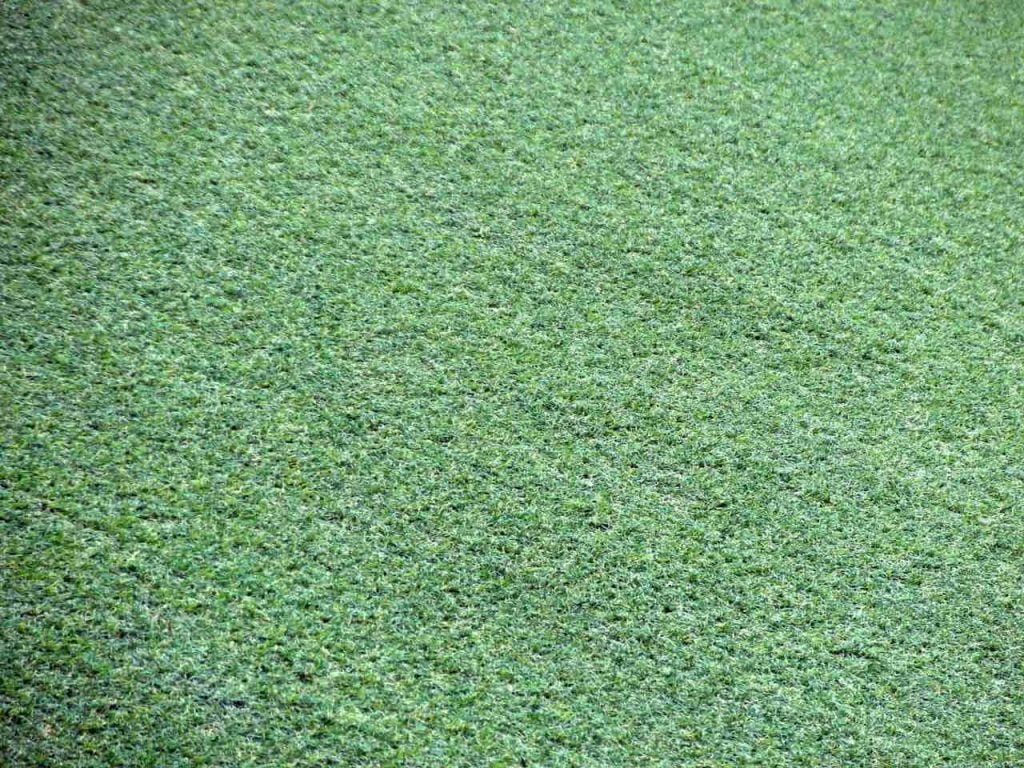
One of the biggest selling points of artificial lawns is time-saving in reduced maintenance compared to real turf – but does it really save time? The above picture shows just how unrealistic it can be. Join me as I show you why all serious gardeners are saying no to fake grass and how toxic it is to introduce to your gardens and families.
Beginner’s Guide to Fake/Artificial Grass
- Why has artificial turf become so popular?
- What is artificial turf?
- Is Artificial turf low maintenance?
- Costs of artificial turf vs a living lawn
- How is fake grass made?
- Environmental impacts of fake grass
- Heat retention in artificial grass
- Recycling artificial grass
- Is artificial grass bad for your health?
- Water savings of artificial grass debunked
- Alternatives to false grass
- Fake Grass FAQ
Why is artificial turf so popular?
In my Garden Design practice, I’m regularly approached by artificial turf suppliers to incorporate it into my designs. Clients are also increasingly asking for maintenance-free lawns. I feel sometimes like I’m drowning in a sea of virtual plastic during the initial design consultation, having to discuss this time and time again. Artificial turf has become so popular because of the fake benefit of saving time. It doesn’t.
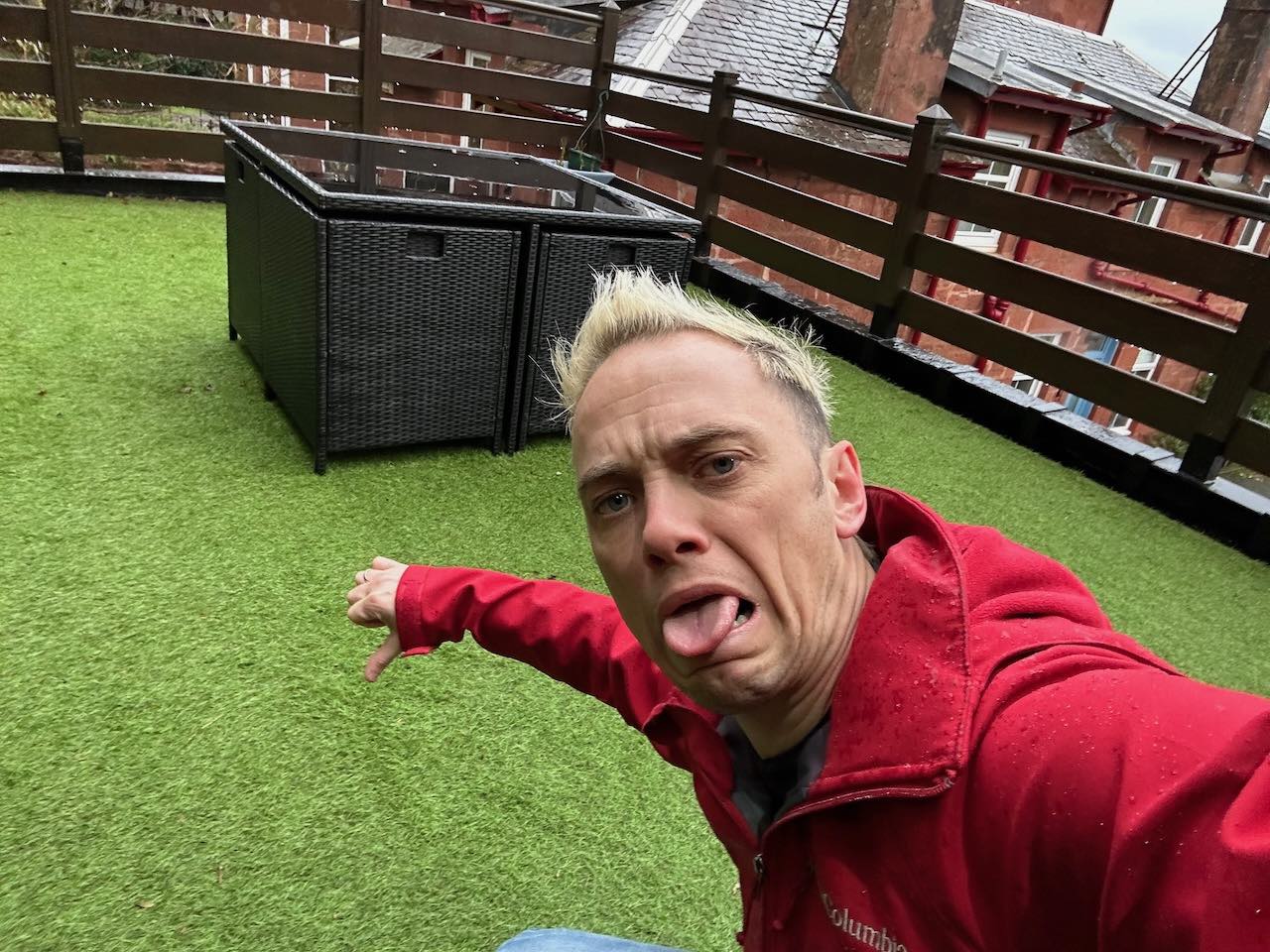
Firstly, it claims to offer a low-maintenance alternative to natural grass, saving homeowners time and effort on mowing, watering, and fertilising (which this article dispels).
Additionally, artificial grass remains green and lush throughout the year, regardless of weather conditions or foot traffic, providing a consistently attractive lawn appearance (if you want a lawn that looks unnaturally green and static).
It is also highly durable and resistant to wear and tear, making it suitable for areas with heavy use, such as sports fields or playgrounds (though it’s usually so hot in the summer you can’t walk barefoot on it!)
Why I don’t use Fake Grass
As a garden designer, my stance on fake grass is that I won’t use it ever. A
rtificial grass is highly destructive to wildlife and looks garish. There are other low-maintenance natural options instead, which are overlooked. However, I thought it best to broaden my options to see what other sources come up with. So that you can see the full picture on plastic grass.
I decided to do some more research by reaching out to people either for or against artificial turf. I’ve scoured articles, delved deep into social media, and spoken to representatives from the leading artificial turf websites, garden designers and lawn experts alike to give their opinion on the matter. These are my findings to help you make a fully informed decision about whether the cost, savings and environmental impact of artificial turf are worth it.
What is artificial turf?
Artificial turf, astroturf, plastic grass, or fake grass are synthetic, plastic-based woven mats that, from a distance, resemble law, turf, or grass. Artificial grass is used as a turf replacement in gardens around the UK, as homeowners believe it is cheap and low maintenance due to some dubious claims from fake grass companies about its eco credentials (it has zero eco credentials).
The majority of residential artificial grass is woven, but there is also 3G crumb, which is a rubberised alternative found in sports pitches (more on that later).
There are varying qualities, styles and lengths available to give different looks to a garden space. If you imagine a thick carpet of green plastic threads, then that’s pretty much what artificial turf is. Some types are even woven on looms before being backed with either a plastic or rubberised underlay. It’s laid on top of compacted hardcore, usually once an existing lawn has been removed, and then the joints are glued or taped together.
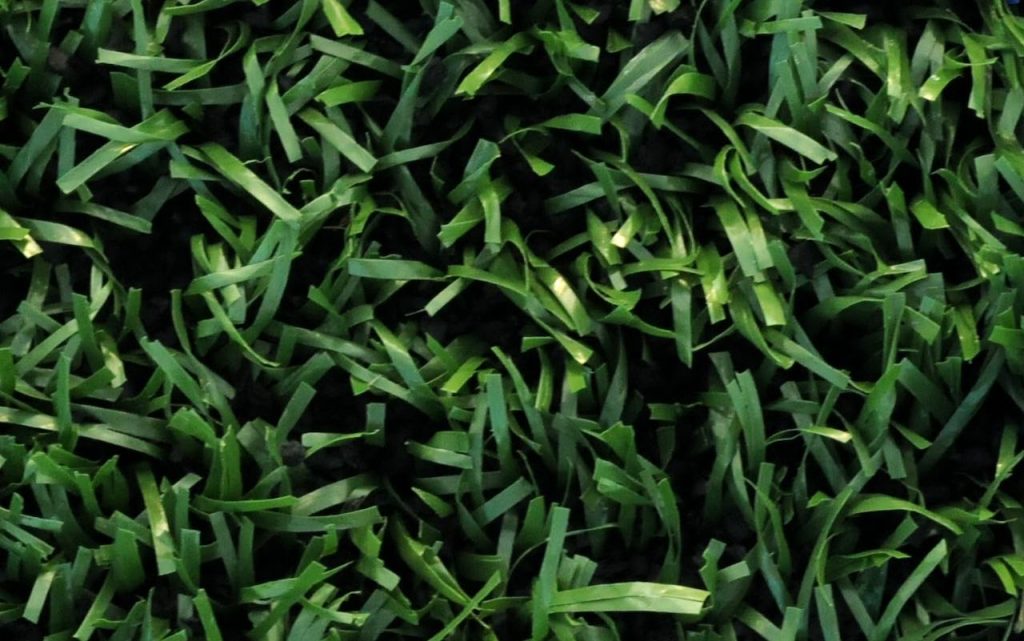
This is an example of the non-woven artificial lawn style. Scratchy and coarse.
It’s sold as almost maintenance-free, green all year round, tough, and suitable for children and pets. It sounds like a win-win, doesn’t it?
However, I would argue that natural turf is green all year round and suitable for children and pets. In most online sources, it is often aligned with busy homeowners who want a clean, fuss-free surface to exit their hot tubs onto on a Friday night. Let’s have a look at the main benefit of maintenance-free in a bit more detail.
Do artificial lawns save you time?
One of the strongest arguments in favour of artificial lawns is time-saving. Given the average UK Gardener spends 19.2 hours per year mowing their lawn, that’s nearly a full day per year saved if you’re pushed for time! But are these time savings accurate?
Rob from Solent Garden Services is an approved installer of one of the largest artificial grass suppliers. If you’ve not seen his urban garden makeover work, you can check him out on Instagram here. Rob spoke to me about why he has moved to use artificial turf in some of his garden design work.
“Probably the phrase I hear most from potential clients is ‘We want a low-maintenance garden’. They want a multipurpose space – a place to relax, entertain a play area for the kids. Artificial lawn ticks all those boxes. No more mud, mowing or watering” Rob Woodhouse – Solent Garden Services Ltd
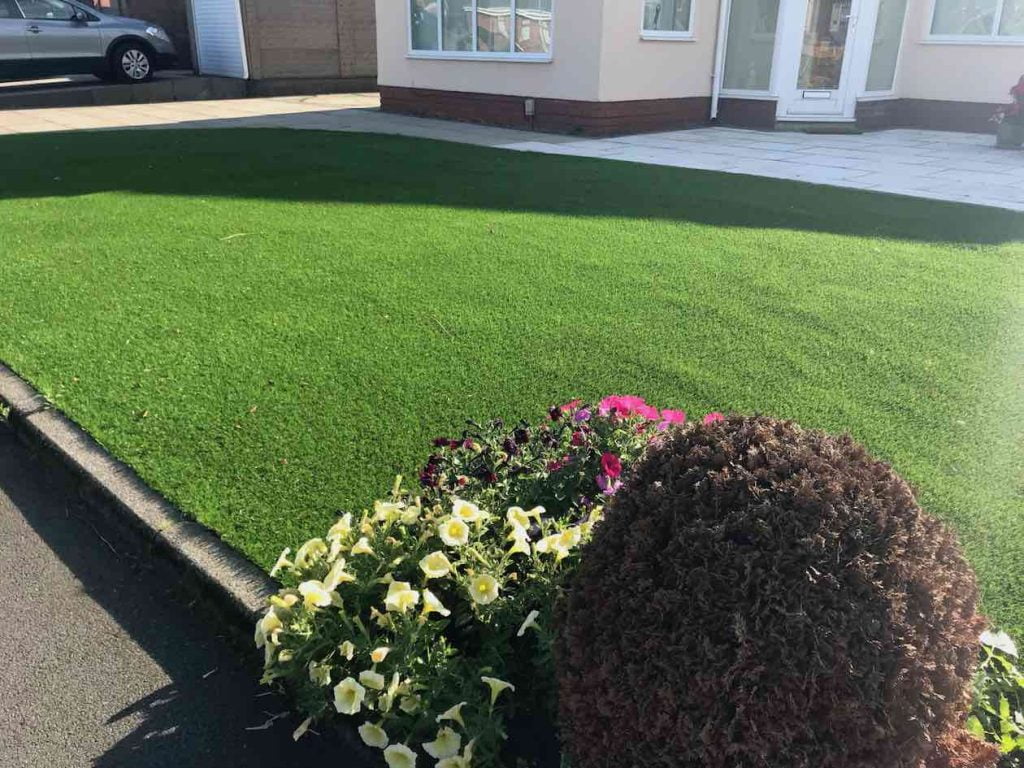
I know from first-hand experience as a Garden Designer just how many times I get asked for a low-maintenance garden. In fact, it’s nearly the first comment people new to gardening request. People live busy lives with competing needs for their spare time allowance.
Rob further commented on how far artificial turf has come from that Butcher’s window-style fake grass to something much more realistic. Varied ‘pile’ length from 26mm to 40mm, depending on the needs or wants of the customer, and a variety of colourings. Some artificial turfs I’ve seen have tiny amounts of fake ‘dead’ grass to make them look more realistic.
However, the care element is understated by fake grass retailers and fitters when it comes to the maintenance of artificial grass. Many of the advocates for fake grass I spoke to mentioned using a light rake, followed by brushing in more sand to hide the matting underneath and the joints. However, you may need to do this up to 2 times per year, it turns out!
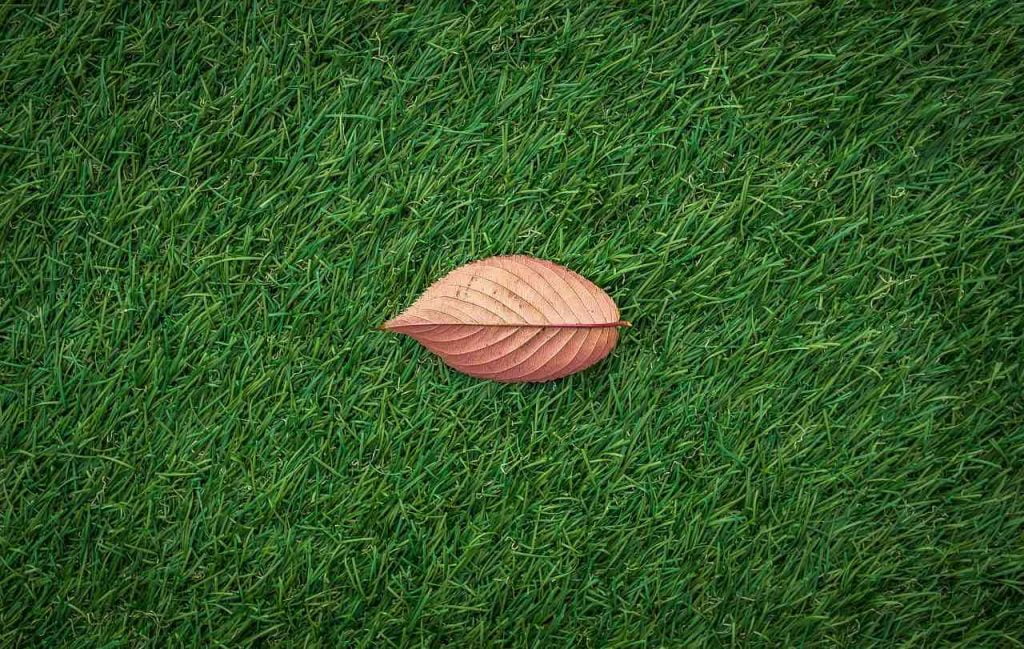
Fake grass needs far more attention, especially in Autumn with leaf fall. None of the suppliers I’ve spoken to have mentioned.
Leaves will literally sit on the grass, getting stuck in it without ever being able to permeate through into the soil. This creates a wet, sludgy layer that can then lead to mould on top of the artificial grass. Although water can permeate through the grass’s matting, it does so very slowly.
In fact, anything that falls on the fake grass is pretty much there unless you remove it. Whilst you can still use a leaf blower, I’m just pointing out the issues that you may face if there are lots of trees around. On my own lawn, I just use a mower to vacuum up any leaves in Autumn.
Do Artificial lawns reduce maintenance?
No, I’m afraid not.
In fact, artificial lawns have their own maintenance requirements that normal living lawns don’t have. Anything that falls on your artificial turf, such as leaves, will need to be removed as they’re nearly impossible to break down on fake grass, and you can’t use a lawnmower to collect them.
There’s also the issue with animal waste if you’re choosing it because of its pet-friendly credentials. Conscientious dog owners know all too well that waste needs to be collected if for whatever reason one misses one it eventually will be recycled into the earth.
On artificial grass, dog or cat poo, urine, or other pet waste can get stuck in the matting. Where it will sit there as an awkward pile. Slowly degrading into the mesh, causing a mess on your pristine fake lawn.
Given that the artificial grass is sitting on top of compacted grit, it’s going to be a long time until that waste makes its way back into the ground. This leads to artificial grass stinking if not cleaned regularly.
How much, on average, does artificial turf cost?
Artificial turf is by no means a cheap option when compared to laying a regular lawn. One supplier provided me with calculations that, on average, a small lawn, 10m2, would cost £1300-£1600 to be fitted with artificial turf. Firstly, this is a very small lawn size, so bear that in mind. Secondly, many suppliers quote a 10-year lifespan.
That means your artificial lawn is costing anywhere between £130-£160 per year for a 10-year duration.
Given that most people opting for artificial grass are replacing real turf, I thought it would be a good idea to help detail the potential cost savings in this scenario vs keeping what you have already got.
So, if we spend 19.2 hours a year maintaining a regular living lawn, and you divide that by the cost of an artificial lawn, we can directly compare the cost per hour of maintaining your garden.
At the cheaper £130 per year cost of artificial turf, the hourly cost to cut your own is £6.70 in comparison to the same spend. The real question is whether you find this a significant enough cost-saving during the year. That every hour you save not mowing is costing you £6.70. Artificial lawns require zero cutting, but are more expensive to install
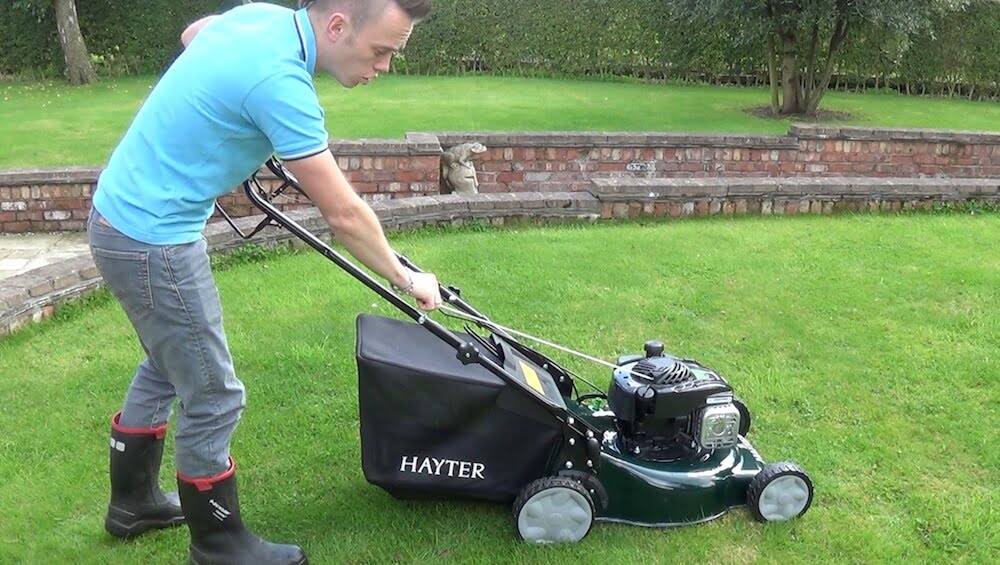
Obviously, this does not take into account any maintenance of either lawn type outside of mowing or cleaning your artificial turf. However, it does make for interesting comparisons on a cost basis.
Would you pay £6.70 not to mow your lawn if time-saving is the biggest benefit of artificial grass? If you decide to brush in fine sand to help cover up the joins of fake grass, you’ll need to reapply this once a year. Probably taking a car journey to the builder’s merchants and a few hours brushing it in. All of which starts to negate the time or cost-saving.
| Factor | Natural Grass | Artificial Turf |
|---|---|---|
| Initial Cost | £25-35 (materials + DIY laying) | £1,300-1,600 (professional installation) |
| Lifespan | Indefinite with maintenance | 10-20 years maximum |
| Annual Maintenance Time | ~19 hours (mowing) | ~10 hours (cleaning, brushing, repairs) |
| Water Requirement | Minimal (none if established correctly) | None (but may need hosing for cooling) |
| Wildlife Support | High (insects, worms, microorganisms) | Zero |
| Carbon Impact | Carbon-negative (sequesters CO2) | High carbon footprint (5+ tonnes CO2) |
| Flood Mitigation | Excellent (absorbs rainfall) | Poor (compacted base, slow drainage) |
| Heat in Summer | Stays cool (20-25°C) | Extreme heat (70-100°C) |
| Microplastics | None | Continuous shedding |
| Recyclability | Fully biodegradable | Effectively non-recyclable |
| Chemical Requirements | None (if managed organically) | Manufacturing chemicals, potential PFAS |
| Barefoot Comfort | Pleasant year-round | Excellent in cool weather, impossible in summer |
How artificial grass is made & the carbon emissions of fake grass
Artificial grass is made using plastic threads that are then woven together and adhered to a plastic or rubberised backing to create this green carpet. Manufacturing plastics used in artificial grass is a very energy-intensive process.
Shockingly, artificial turf is made from the industry term ‘virgin’ plastics. They are made from scratch as a new ‘virgin product’ and are currently not made from recycled plastics.
Synthesising key petrochemicals to produce plastics consumes a lot of energy, which primarily comes from burning fossil fuels. Plastic has many brilliant uses, but it’s an entirely inert substance and takes up to 450 years to biodegrade, as you can see in my Plastic Free Gardening series. It is a massive challenge facing everyone, especially gardeners.
Most ‘fake grasses’ are made from either Category 4 or 6 plastics. The lower-cost options I’m told are usually Category 4, such as LDPE (Low-Density Polyethene). LDPE is used in creating things from plastic buckets, plastic bags, dry cleaning sheaths and squeezy plastic bottles. It can be recycled, but most recycling centres do not widely accept it. It’s almost treated as single-use plastic, ie the products can’t easily be recycled when you’re done with them.
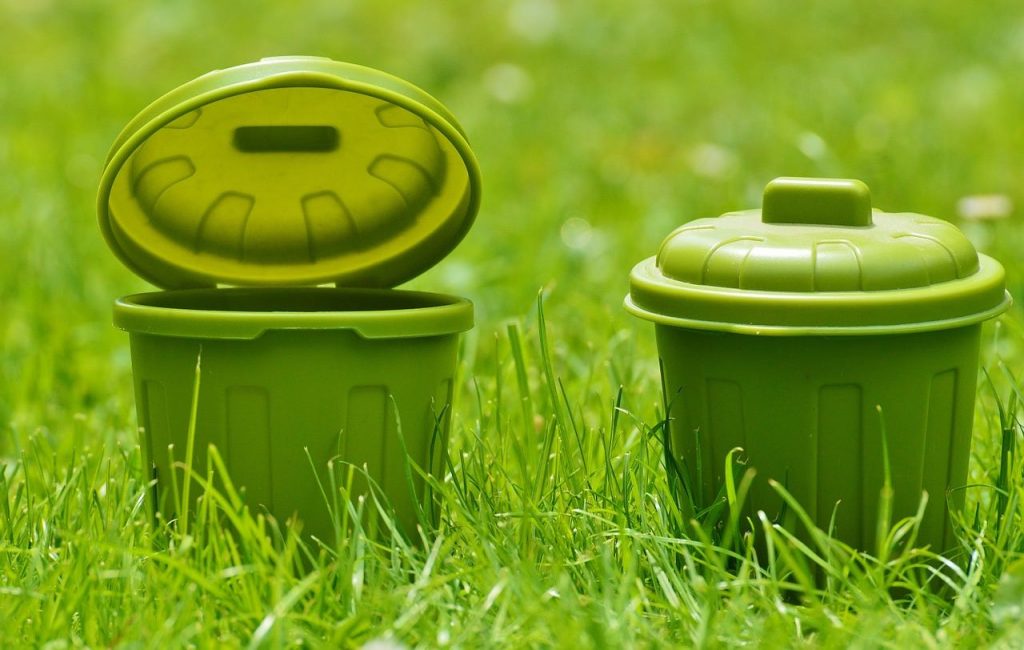
Cat 4 Plastic Buckets: Category 4 and 6 plastics are really difficult to recycle at present, which means more landfill and the leaking of plastics back into the environment.
It’s described as a softer plastic compared to category 6 plastic. This is why some artificial grass companies claim it’s of lower quality. However, Category 6 plastic or PS (Polystyrene) is usually considered structurally weak as well, with studies showing just how quickly it breaks down and can leach into the environment.
This means that using artificial grass leads to microplastics entering the soil and potentially the food chain.
Either way, they are both resource-intensive plastics. Whether your fake turf is category 4 or category 6, the lack of recycling is still a significant issue (more on that below with a shocking image).
The other sad fact is that artificial grass actually consumes more fossil fuels before it even reaches the consumer, compared to either natural grass seed production or simply maintaining an existing lawn. Probably negating your £6.70 per hour saving in terms of the cost to the planet.
Then there are transport costs to factor in. If you imagine the area you’re looking to turf with artificial grass and then imagine how many plastic bottles it would take to cover that, then. You probably have a fair idea of the number of plastic resources needed to fill that space with the green matting. All to save a couple of hours each month?
What’s the environmental impact of artificial turf?
With the time-saving argument covered, it’s time to move on to a more pressing drawback of fake grass. The environmental impact of removing natural lawns for artificial plastic grass.
We’ve established that no matter how you dress it up, artificial grass is a petrochemical man-made product that is essentially plastic matting.
It’s made using a similar method to other types of plastic, requiring considerable resources and energy to create the end product. This needs to be discussed in context against the impact of a real organic lawn.
I’ve been speaking to the UK’s ‘real’ lawn expert, David Hedges-Gower, about the environmental impact that fake grass is having on our ecosystem. It makes for a worrying conversation.
David points out that grass is one of the toughest plants on the planet, capable of withstanding extreme temperatures, making it ideal for a garden surface. He also points out that we rely on it for the careful management of water, including real grass acting as a partial flood defence here in the UK. Last year, during the heatwave, we saw just how resilient grass is in extreme temperatures, from drought to flooding. It helps reduce ambient temperatures during a heatwave and wicks away rainfall efficiently in heavy rain.
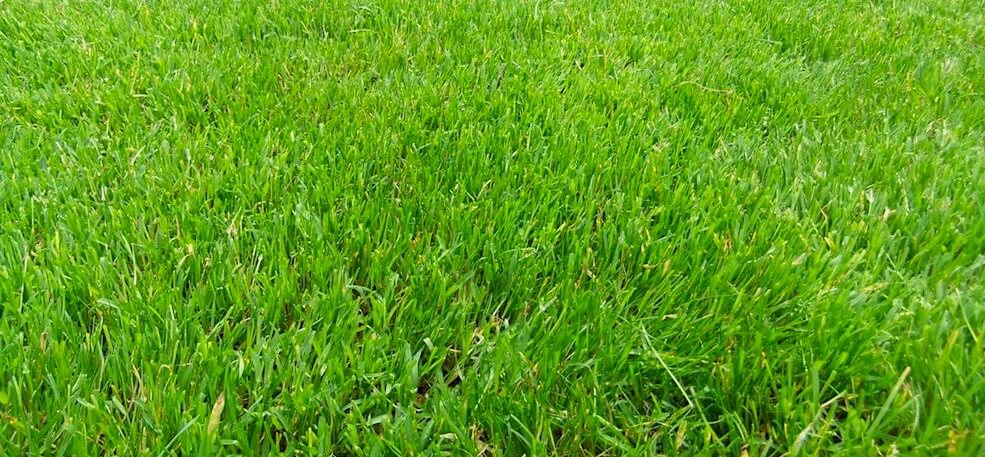
Real living grass offers a home for a diverse amount of wildlife, not to mention it helps soak away water very efficiently. By removing it and installing fake grass, we are actually making it harder for rainfall to permeate into underground soakaways. You might be increasing your chances of garden flooding during heavy rain.
Some people have even argued that artificial grass is classed as a non-permeable surface and should be subject to planning consent like tarmac is in the UK as it is so slow at transfusing water through its matting to the ground.
“Some people are still opting for using artificial grass in their gardens, but there is one big problem – fake grass, together with its matting and installation substrate, cannot percolate heavy rainwater as efficiently as natural turf. But that’s not all. It also can’t support the life cycles of fauna and flora. And it can’t absorb CO2 and other pollutants from the air we breathe.” David Hedges-Gower Lawn Care Expert.
Why fake grass is bad for the environment
I think everyone can agree that plastic matting has almost no environmental credentials when it comes to supporting wildlife.
Nothing living can survive in artificial grass, other than feeding off organic matter or pet waste that may get stuck in the lawn.
Compare that to a real lawn, where a vast ecosystem of organisms, microbes, invertebrates, and plant life can survive, helping both the food chain and biodiversity.
When I use lawns in my garden designs for clients, I always use real turf. When I explain how effectively they support wildlife and slow down water, their attitude completely changes. In fact, I have noticed that some clients have even started to leave parts of the lawn unmown as mini meadows. Embracing it as a feature plant in the garden!
Not only does this help save time for gardeners, but in a matter of weeks, they see a whole range of flowers and insects rushing to colonise the meadow. Whilst you never need to mow artificial grass, you’ll also never be able to experience the environmental benefits that a real lawn brings to both the gardener and wildlife.
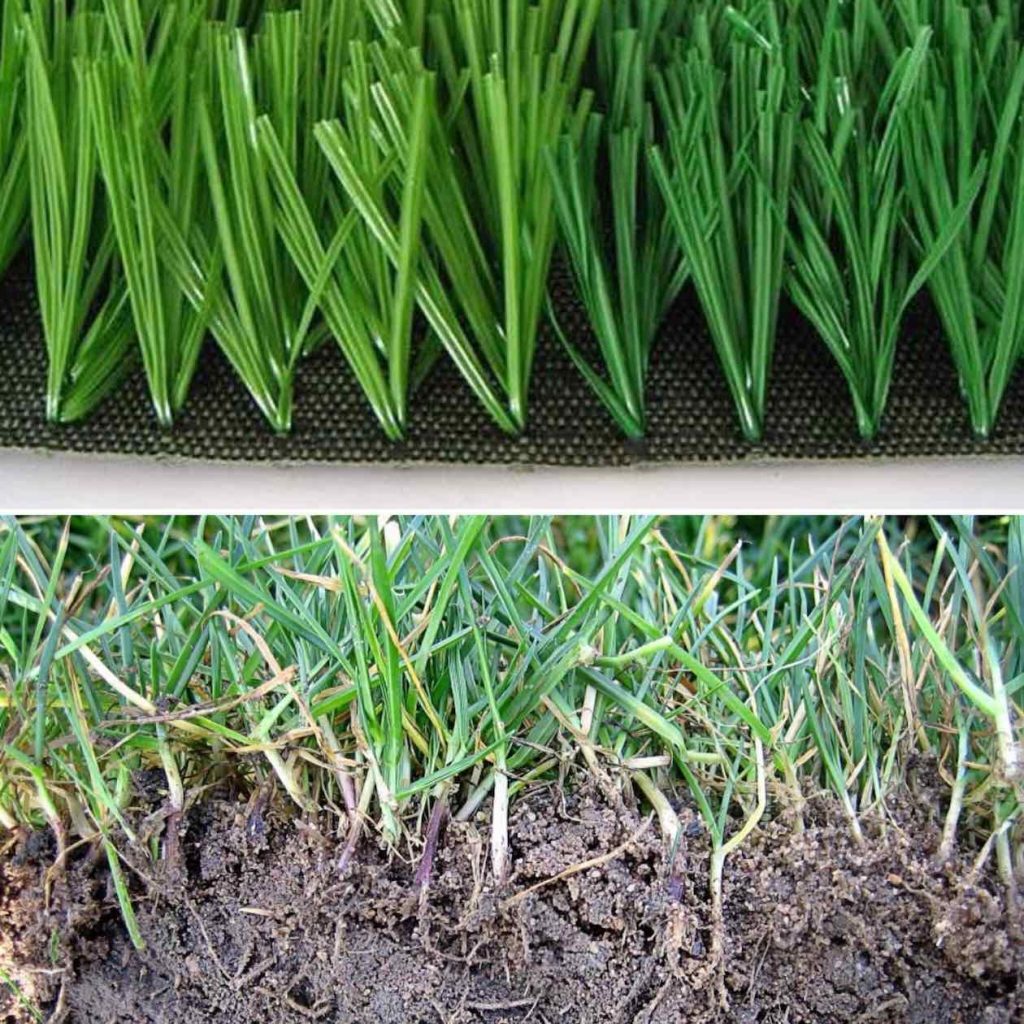
This image from David’s Twitter page shows the relationship between the soil, roots and grass blades. Also, the density of real grass is compared to the fake grass above. Why remove such biodiversity from your garden?
Why does Artificial grass get so hot?
Another issue raised by gardeners is that fake turf in the summer months can become extremely hot.
In fact, there are numerous articles on heat build-up in fake grass, as it can act like a massive heat reserve, storing and retaining heat. This causes the ground to become much hotter than if it were home to real turf, which can actually cool the ground temperature during heat waves. Not only does this make barefoot walking a less-than-pleasurable experience, but it’s yet more bad news for wildlife.
Alan Gardener (from the TV series The Autistic Gardener) spoke to me at length about the damage of this heat and plastic matting to microbes and bacteria that live in living grass. Alan explained that this heat build-up in the summer can lead to vast areas of gardens becoming sterile.
Such hot temperatures will literally cook living organisms beneath it and fry your feet. Spelling disaster for wildlife.
He takes issue with fake grass that is pretending to be something it is not. He went on to tell me that if people don’t want to maintain grass, there are plenty of alternatives, such as gravel, permeable stone, or chippings. All of which are far kinder and more welcoming to the continuation of much-needed wildlife in our gardens.
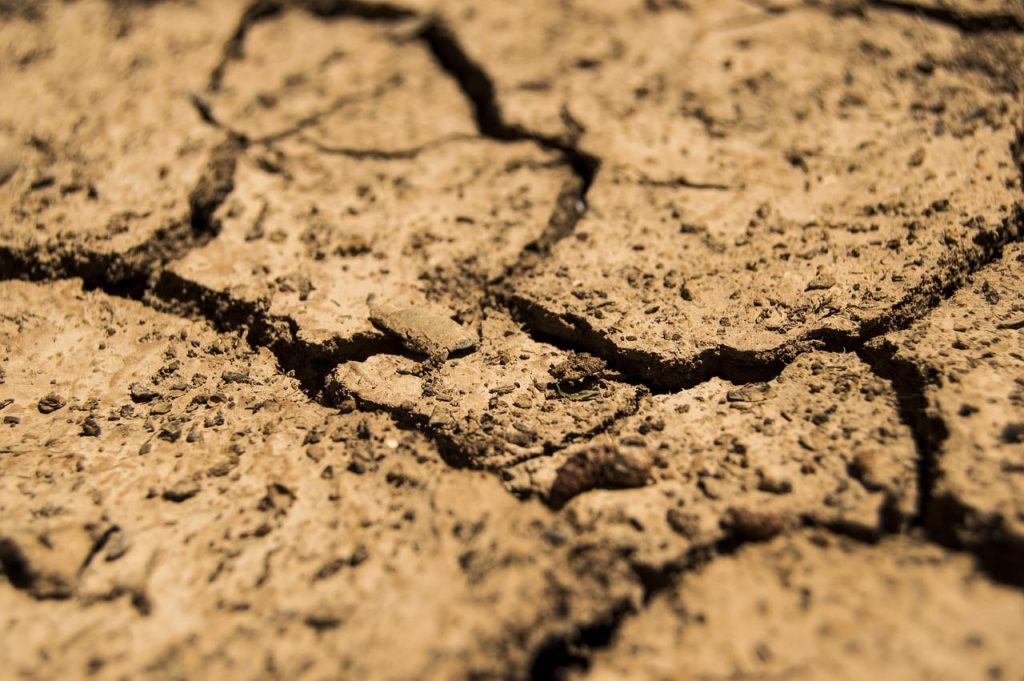
The heat built up under these plastic mats not only kills microbes and bacteria that would otherwise live in the soil, but it also prevents any viable life from developing in organisms of any kind. Artificial turf can literally cook the ground beneath it, leaving no room for any meaningful life to survive.
You may as well drape a plastic sheet over your garden and suffocate it. Alan believes that artificial grass is an imposter to our gardens, disguised as organic material. People are being fooled into thinking it’s not that bad of an option. Alan argues that this sterile imposter is killing our garden wildlife under the guise of ‘low maintenance. I can’t disagree with him.
Recycling issues with artificial lawns
There is no way to recycle artificial turf at the end of its life cycle, other than sending it to a landfill or incinerating it for energy. Both of which dump the end product back into the environment. Out of all the leading artificial turf companies I’ve spoken to, not one has been able to confirm its recycling plans. I’m not sure there are any.
Recycling is especially noticeable with the 3G crumb-style artificial turf often used in stadiums and sports fields. Not only does this surface erode very quickly into plastic particles, but there are currently no recycling options available. Below is a truly shocking image of a waste pile of artificial grass that will either be incinerated or dumped in a landfill.
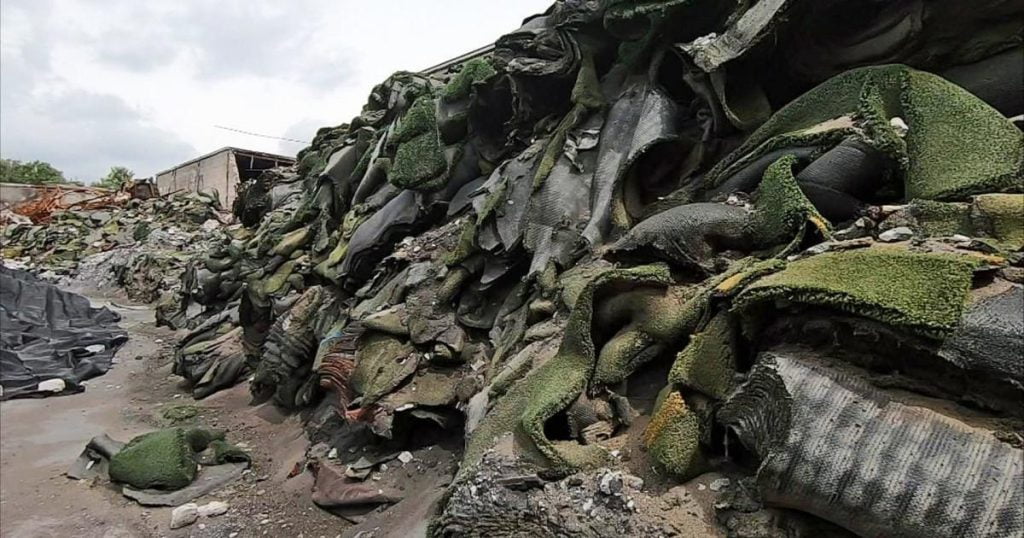
Artificial turf has no recycling options at present. This is a waste dump in Dongen in the Netherlands, showing mounds of artificial grass at the end of its life. Courtesy of ‘Against 3G’ on Twitter
Many artificial grass manufacturers said they are considering using recycled plastics in fake grass, but couldn’t provide any details.
It was the same at the gardening expo I attended. As soon as I asked about how we can recycle artificial turf, puzzled expressions appeared on the sellers of fake turf, and the conversation was quickly shut down.
Companies literally shrugged their shoulders at me and moved on to other punters. I genuinely don’t think anyone is considering what happens after the 10-year average lifespan of artificial turf. Looking at the horrendous image above, it’s safe to say there are many more mounds of artificial turf heading to landfills around the globe.
Health Concerns: PFAS and Chemical Exposure
Beyond environmental damage, artificial grass raises concerning questions about human health exposure, particularly for children who play on these surfaces.
PFAS (per- and polyfluoroalkyl substances), often called “forever chemicals”, have been detected in numerous artificial turf products. These chemicals are highly persistent in the environment and human body, with documented health effects including hormone disruption, liver damage, and immune system impacts. Children are particularly vulnerable as their developing organ systems and immature detoxification mechanisms make them more susceptible to chemical exposure.
Older artificial grass products have tested positive for lead, cadmium, and other heavy metals used as pigments and stabilisers. Whilst newer products claim to be lead-free, independent testing remains limited. The crumb rubber infill commonly used in sports pitches (and sometimes in residential installations) is derived from recycled tyres and contains numerous compounds never intended for close human contact.
Heat exposure presents another health risk. Surface temperatures exceeding 70°C can cause skin burns within minutes, particularly affecting children and pets. Several documented cases exist of children suffering burns from playing on artificial turf during warm weather.
Water savings from artificial turf
During my research, most suppliers have quoted the water saved by using artificial turf because you never need to water it. It’s been a real sticking point for me with the entire debate. I never water my lawn. Not even in a heatwave.
Grass – as a species – is one of the toughest plants on the planet and will often come back from the dead even when it looks like it’s been fried.
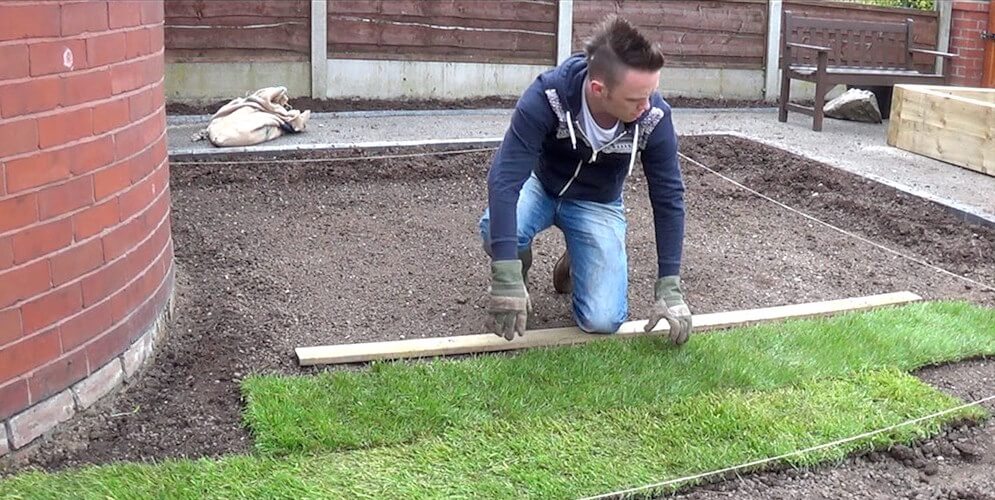
The only time I ever water grass is when I’m laying new turf or grass seed. This is a temporary activity that I will cease as soon as the turf starts to grow in a couple of weeks. In fact, if you’re clever, then laying new turf in late Autumn or sowing seed in early spring can actually require tiny amounts of watering outside rainfall.
So I totally refute this claim about the benefits of artificial turf on water saving. If you’re clever with the weather when laying turf, you can reduce the watering requirements considerably. Early Autumn is an ideal time.
Natural Low-Maintenance Lawn Alternatives to Artificial Grass
If you’re looking for genuinely low-maintenance alternatives to both traditional lawns and artificial grass, numerous natural options support wildlife whilst reducing your garden workload. Here are the best alternatives I recommend as a professional garden designer:
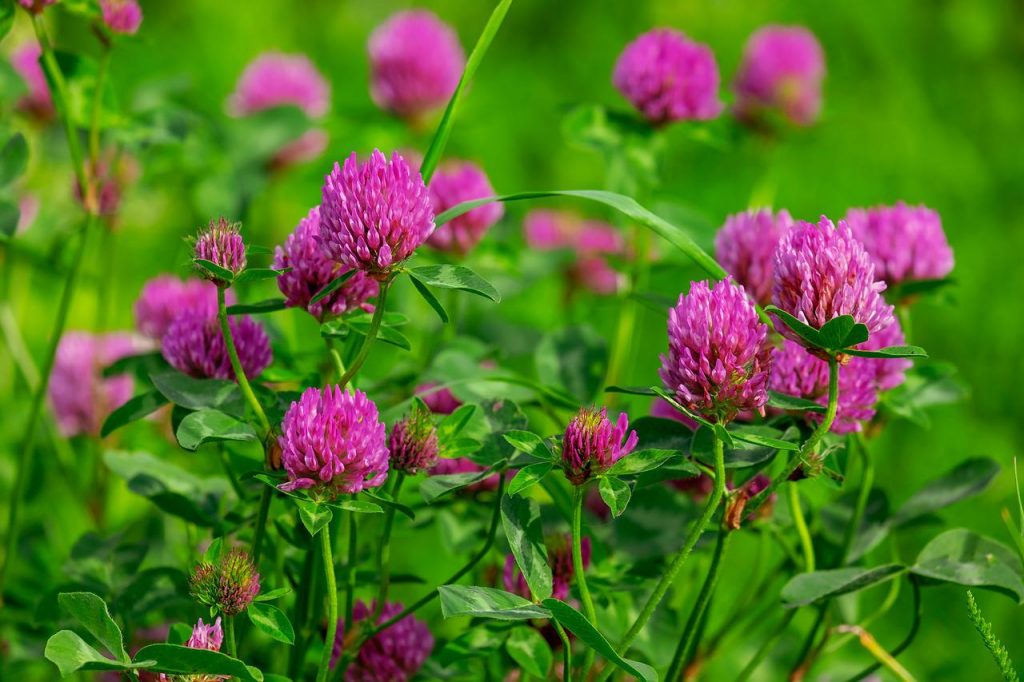
Clover Lawns: The Nitrogen-Fixing Wonder
White clover (Trifolium repens) creates a soft, green carpet that stays lush even during droughts thanks to its deep root system. Unlike grass, clover actually fixes nitrogen from the air, feeding itself whilst improving your soil. It requires mowing only once or twice per year, attracts bees with its flowers, and tolerates foot traffic remarkably well. I’ve used clover extensively in family gardens where children play, and it performs brilliantly. The main drawback? It can become slippery when wet, and you’ll need to watch for bee activity if family members have allergies.
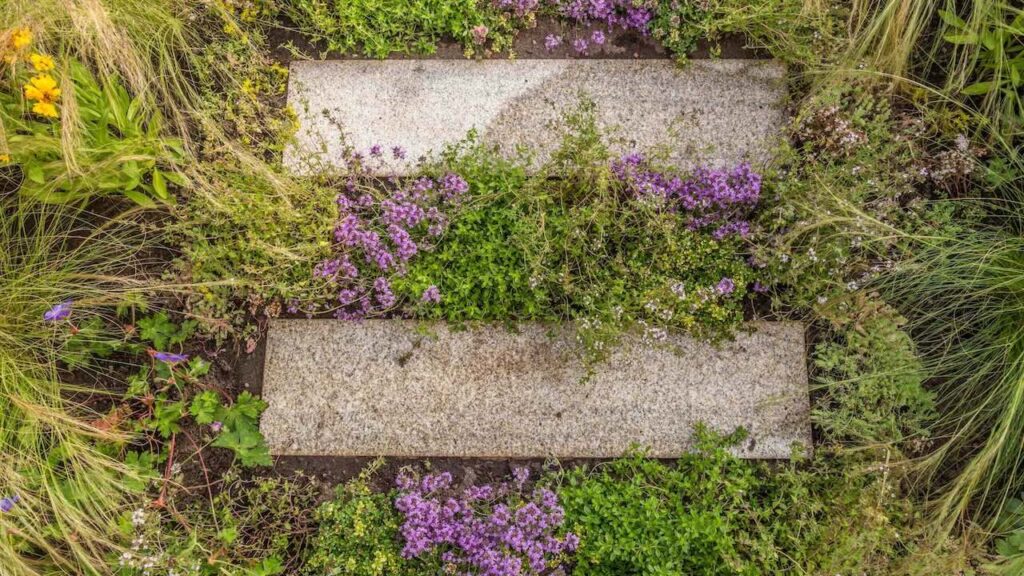
Creeping Thyme: The Aromatic Carpet
For sunny, well-drained areas with light foot traffic, creeping thyme (Thymus serpyllum) creates a fragrant, drought-tolerant alternative. This low-growing herb releases its distinctive scent when walked upon and produces masses of purple flowers that bees adore. It requires virtually no mowing, though an annual trim with shears helps maintain density. Thyme lawns work brilliantly between stepping stones or in small courtyard gardens. Establishment takes patience, but once mature, maintenance is minimal.
Chamomile: The Traditional English Choice
Roman chamomile (Chamaemelum nobile ‘Treneague’) was favoured in Elizabethan gardens for good reason. This apple-scented groundcover creates a soft, verdant carpet in sunny spots with light, sandy soil. The non-flowering ‘Treneague’ variety eliminates mowing entirely, requiring only occasional trimming with shears. Whilst it won’t tolerate heavy foot traffic or shade, chamomile suits paths, seating areas, or small contemplative spaces beautifully. I’ve designed several sensory gardens using chamomile with stunning results.
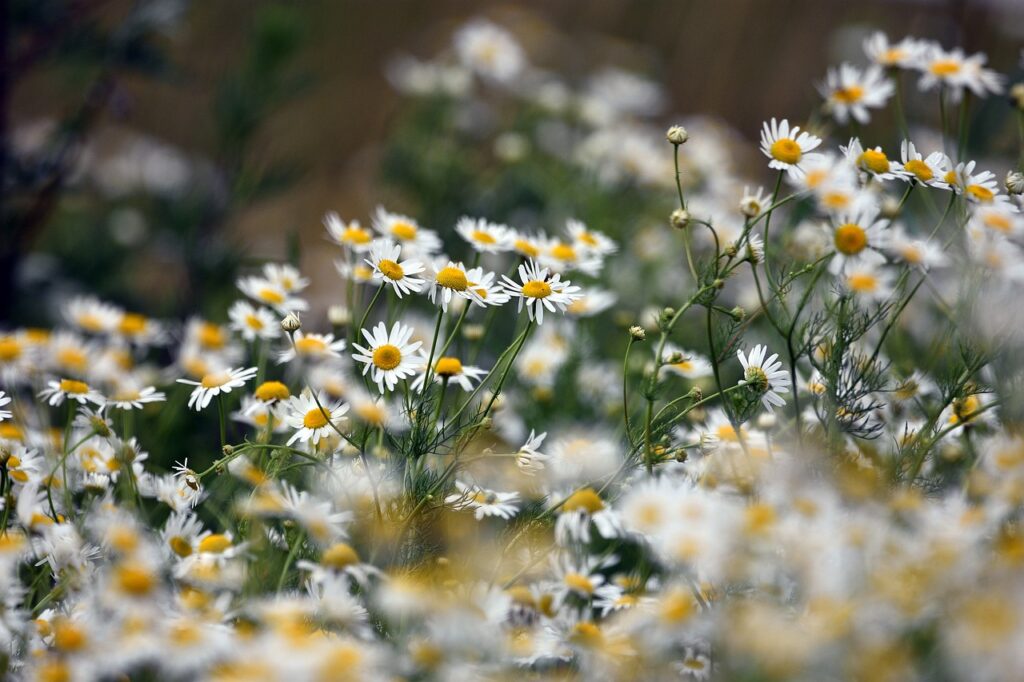
Wildflower Meadows: Maximum Impact, Minimum Maintenance
Perhaps my favourite alternative, wildflower meadows transform lawns into biodiverse habitats whilst dramatically reducing maintenance. These require just one or two cuts per year, typically in late summer after plants have set seed. Native wildflower mixes suited to UK conditions will attract butterflies, bees, and other pollinators whilst providing year-round interest. Establishment requires patience and careful ground preparation, but once mature, meadows are remarkably self-sufficient. Mow paths through the meadow to maintain access whilst preserving the wild aesthetic.
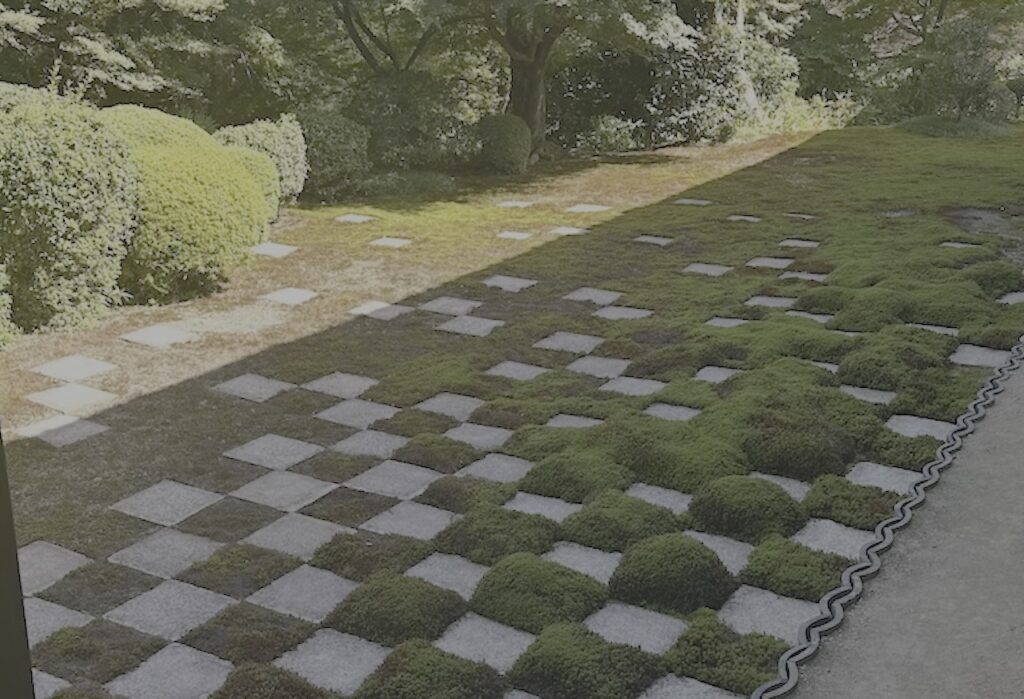
Moss Lawns: The Shade Solution
For those challenging shaded areas where grass struggles, moss lawns offer a velvety, emerald alternative. Species like common hair cap moss (Polytrichum commune) thrive in conditions that defeat traditional lawns. Moss requires no mowing, minimal watering once established, and actually prefers acidic soil where grass fails. The main consideration? Moss won’t tolerate regular foot traffic, making it better suited to ornamental areas or side passages. However, for purely visual impact in shade, moss is unbeatable.
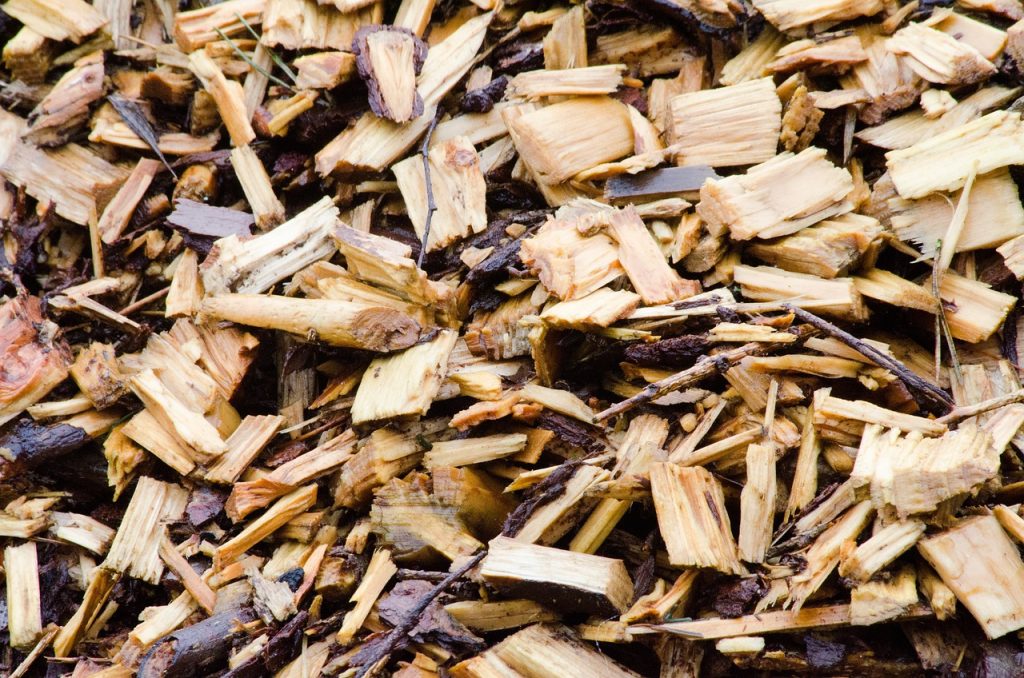
Bark Mulch: The Practical Choice
For high-traffic areas or play spaces, ornamental bark provides a soft, natural surface that’s entirely maintenance-free. Quality play-grade bark creates cushioned pathways, play areas, or low-maintenance zones between planted borders. Whilst it requires topping up every 3-4 years and won’t provide the ecological benefits of living plants, bark offers a practical solution for problem areas. I often use bark in family gardens for children’s play zones combined with living plant alternatives elsewhere.
Artificial Grass: Frequently Asked Questions
How long does artificial grass actually last?
Most suppliers quote 10-20 years, though quality varies enormously. In reality, high-traffic areas show wear within 5-8 years, with matting, discolouration, and visible seams becoming apparent. UV degradation affects cheaper products faster, and extreme heat can cause warping. The “20-year lifespan” claims typically assume perfect conditions with minimal use.
Can artificial grass be recycled at the end of its life?
In theory, yes; in practice, virtually never. The combination of different plastic types, infill materials, and adhesives makes separation extremely difficult and economically unviable. The vast majority ends up in landfill or incineration. I contacted multiple suppliers whilst researching this article, and not one could provide details of actual recycling programmes.
Does artificial grass get hot in summer?
Extremely. Surface temperatures can reach 70-90°C on sunny days, whereas natural grass remains near ambient temperature due to transpiration. This makes barefoot use impossible during warm weather and contributes to urban heat island effects. Some suppliers suggest hosing down the surface, which rather negates the “water-saving” claims.
Is artificial grass safe for children and pets?
This remains contentious. Concerns centre on PFAS (per- and polyfluoroalkyl substances) used in manufacturing, lead in older products, and heat exposure risks. Pet waste requires regular cleaning to prevent odours and bacterial build-up, as it cannot decompose naturally. The heat issue particularly affects pets’ paws during the summer months.
How much does artificial grass really cost compared to real turf?
For a small 10m² lawn, professional installation costs £1,300-£1,600 (£130-£160 annually over 10 years). By comparison, real turf costs around £25-£35 to purchase and lay, with annual maintenance time of approximately 19 hours. This equates to £6.70-£8.30 per hour of saved time, making artificial grass one of the most expensive “time-saving” options available.
Does artificial grass help with drainage and flooding?
No, quite the opposite. Whilst water can permeate through the matting, the compacted base beneath significantly reduces infiltration rates compared to living soil. This increases surface runoff during heavy rainfall, potentially contributing to localised flooding. Real grass and healthy soil act as natural flood defences.
Summary
I started this journey to investigate artificial turf because I’ve seen a rise in online and customer inquiries about installing it in gardens. My original opinion was that fake grass and artificial plants are somewhat pointless substitutes. I thought fake lawns were just a marketing fad providing no real value.
I looked at garden designers using them with a kind of ambivalence. It’s not for me, but each to their own. After advocating for years that gardening provides untold rewards for both your mental health and the environmen,t it seems odd to be asked for ‘fake’ parts of this gardening equation. I barely considered the broader environmental implications of recycling and the destruction of the soil beneath it.
However, since researching this article, I’m even more determined not to use or promote artificial turf. Looking at the environmental consequences alone terrifies me. I knew artificial turf would have some negative impact, but to see the true impact, which will continue for decades, terrifies me.
I believe all designers, gardeners and homeowners should recognise how damaging their choices can be with artificial turf.
Whereas Real turf provides a habitat for wildlife, absorbs rainfall and requires little attention, artificial turf leads to sterile gardens, a lack of biodiversity, increased flood risks and a disconnect with the benefits of physical gardening. We may be swapping plastic water bottles for reusable ones, but we’re then laying out thousands of tonnes of plastic into our own back gardens. I’m not sure that people even realise how hypocritical this is.
I can appreciate that people are busy. Time is precious. I truly believe that if homeowners knew what artificial turf is really doing to the environment, they would be rejecting it as quickly as all the other single-use plastics.
My final thought is this. If you want a low-maintenance garden, then that’s fine and achievable without artificial grass. Any decent designer or landscaper can suggest alternatives to a living lawn. Especially if it is going to become a maintenance burden, or you want to prevent pets or children from bringing muck inside.
However, I’d suggest a decent coir doormat will resolve this problem pretty quickly. There are a plethora of alternatives from gravel, stone or permeable paving. All plastic-free, which encourages, rather than savages, our wildlife populations. We must do more to make informed decisions with our gardens to support wildlife and the environment.
Do you have an opinion on Artificial grass? If so, I’d love to hear from you on my Twitter, Facebook or Instagram pages. If you’re looking for ways to reduce your plastic usage in the garden, why not check out my YouTube channel, where there’s a whole series on that?
I would lastly like to thank everyone who gave me their time on both sides of the argument on artificial turf. Links have been provided to those I’ve spoken to, and I’ve kept the turf companies anonymous intentionally.
Happy Gardening.
Lee Burkhill
Lee Burkhill, known as the Garden Ninja, is an award-winning garden designer and horticulturist with over 30 years of gardening experience and 15 years as a professional garden designer. A qualified RHS (Royal Horticultural Society) professional, Lee specialises in sustainable garden design and practical horticultural advice. He designs and presents on BBC1’s Garden Rescue and in leading gardening publications. Lee combines three decades of hands-on gardening knowledge with professional design qualifications to help gardeners create beautiful, functional outdoor spaces.
View all posts by Lee Burkhill





Categories
4 thoughts on “Artificial Turf Reviewed – is fake grass bad for the environment?”
Leave a Reply
You must be logged in to post a comment.
Other posts
-

Start here: to begin your gardening journey! Read more
-
How to sow seeds – beginners guide to growing plants Read more
-
How & when to prune Hydrangeas: Beginners guide to beautiful blooms Read more
-
The Hori Hori: The Best Japanese Gardening Knife Guide Read more
-
Garden Watering Top 10 Tips: Save time & conserve water in the garden Read more
-
How to Choose the Right Lawn Mower: Complete 2025 Buying Guide Read more
Thank you! Very good information! Just so sad to see some of my “gardener friends” having fake grass!
Wish they’ve read this beforehand ?
Whilst I do agree with you that artificial grass should not be used, the only alternatives you offered were grass, gravel, stone or permeable paving. Only grass offers a soft surface to walk/play on, and considering the amount of artificial fertilizers and weed killers I see being used on the average lawn – I don’t really consider this to be an eco friendly alternative. Most articles also suggest that having a monoculture of grass is actually a poor substitute for something like a meadow – which would be the closest natural approximation of a lawn.
I think what I’m trying to say is that it would have been nice to see some examples of low maintenance alternatives for people, rather than just “plastic bad, grass good”.
Hi Dan,
Many thanks for your comment. Whilst I appreciate that I could have used Meadow Grass as an alternative this isn’t really suitable as a walking surface or area for play. So yes it would be fantastic for wildlife and biodiversity but paths would need to be mown through it. Maybe I could update the article with incorporating wildlife stips around the edges of a garden.
Also, you can, as I do, quite happily look after a lawn without any chemical fertilisers or weedkillers. I use a light top dress of compost each year and a scarification every couple of years with no drama. Maybe I should create a post or vlog on why we don’t need chemicals on our lawns? If that would be helpful for people
Thanks again for engaging and happy gardening!
Lee
Great article Lee. I’ve never liked artificial grass in fact we often play the game when out and about of spot the fake lawn! Some of them look so fake it’s impossible not to know their plastic. The damage these things do is I think completely underplayed. Long live the real grass!