Hi @gowie64
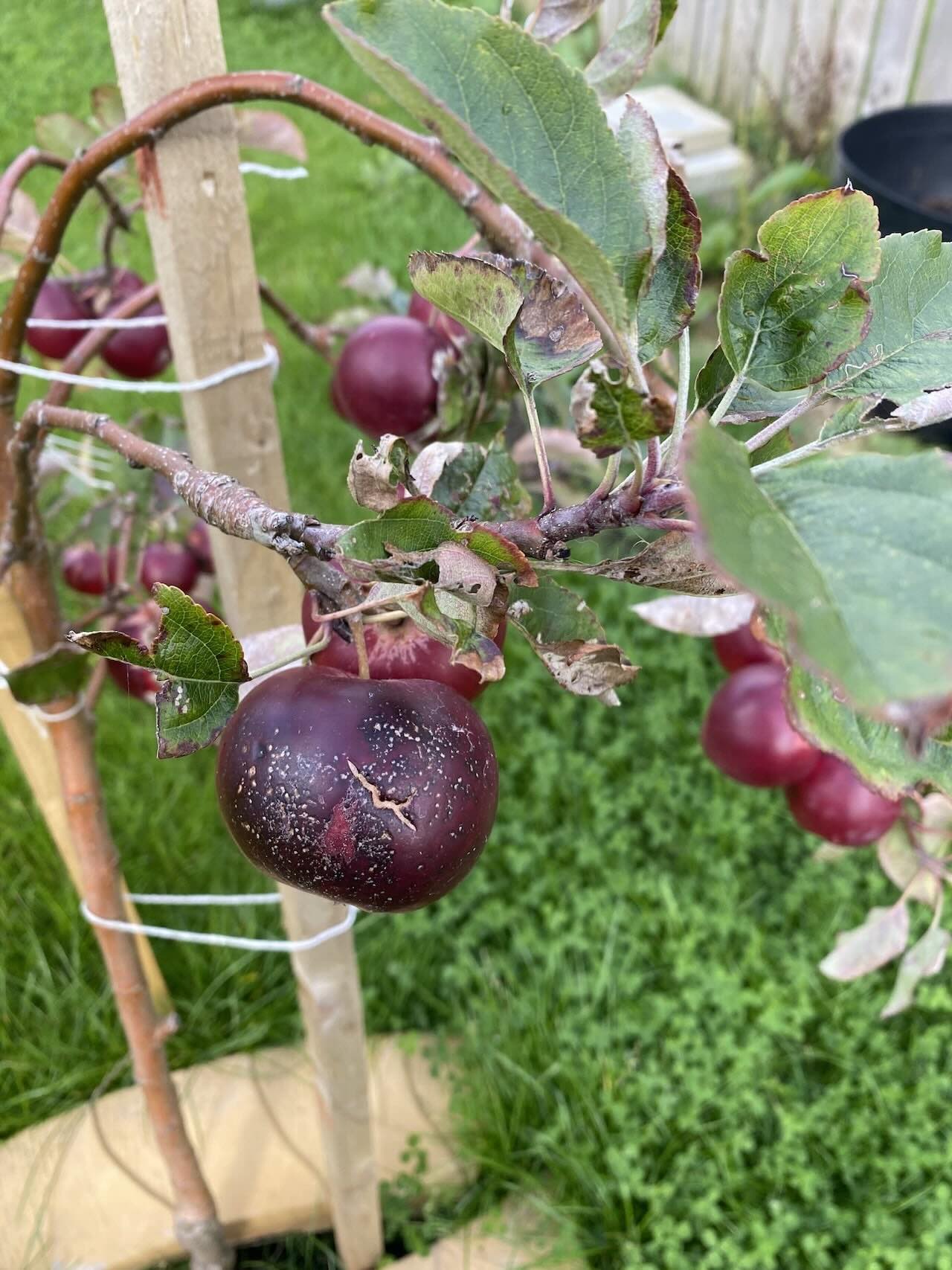
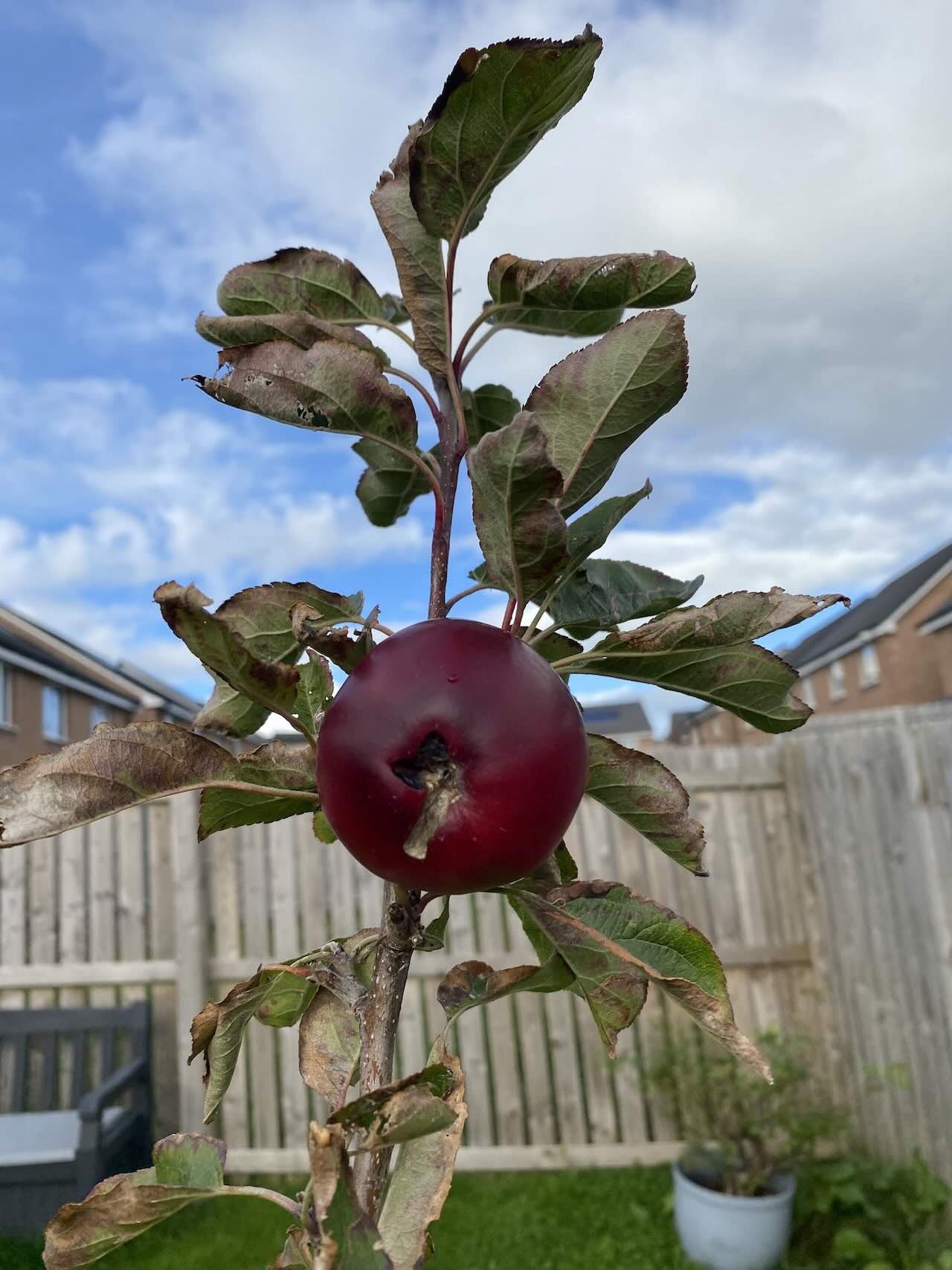
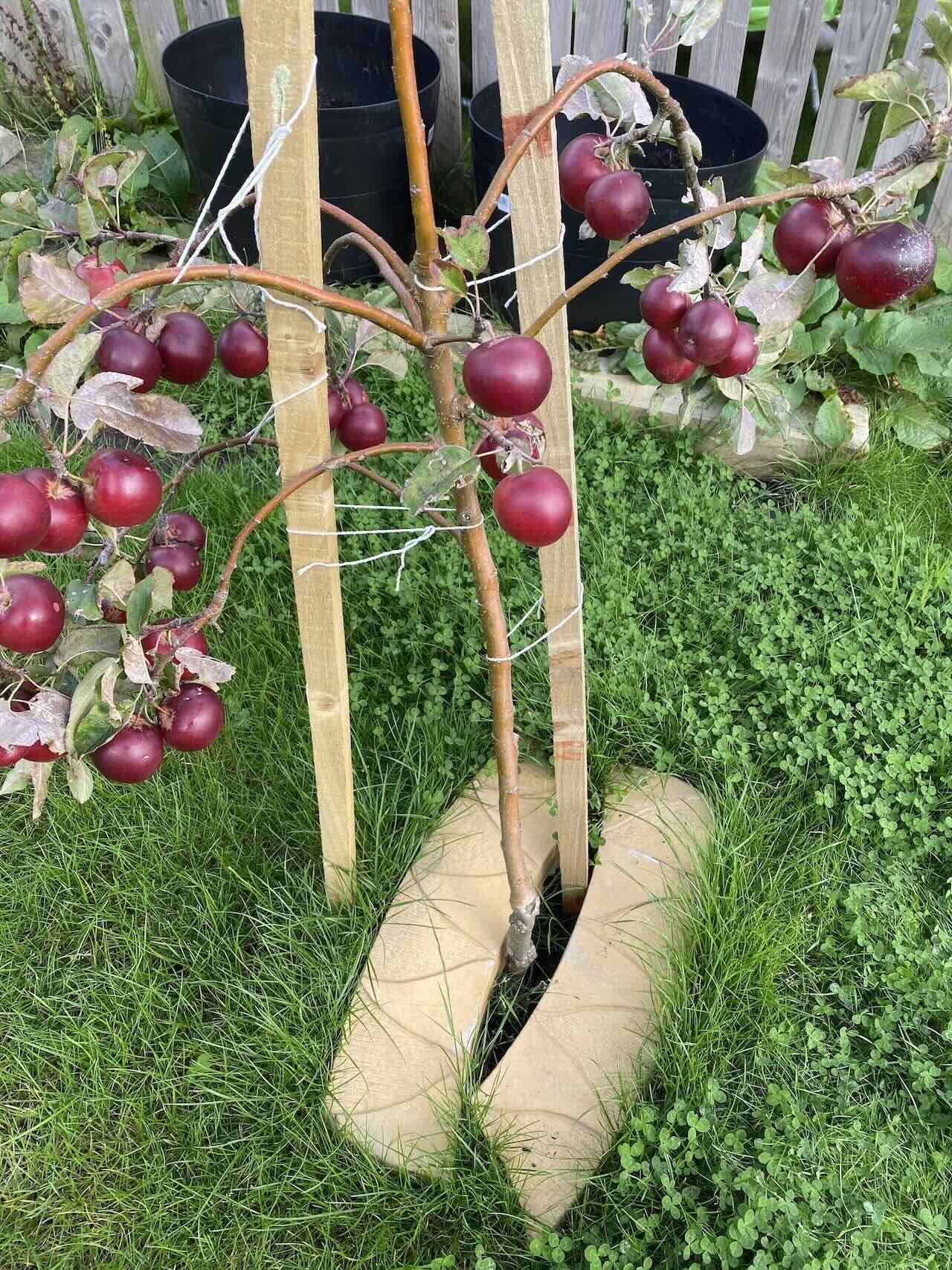
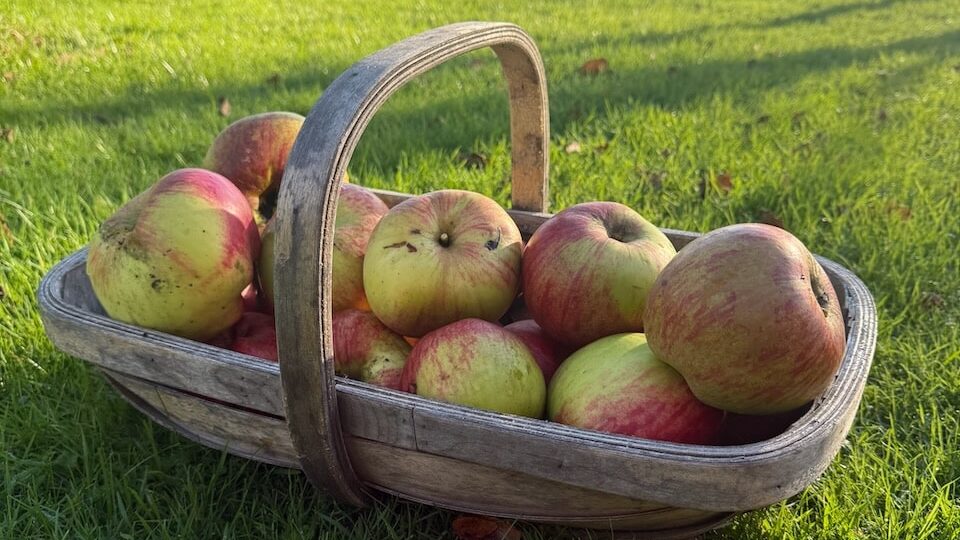
Thanks for uploading those pictures of your apple tree. To be honest, your apples don't look doomed, so please don't panic! I've seen far worse, and given that they are a purple variety of apple, that may be adding to the confusion that they are black. As far as I can see, they are not completely rotten; it's just a bit of scab. Though you really need to harvest your apples ASAP! By the end of September, they will either be pecked to death or have started to shrivel!
Based on your description and pictures of your 3-year-old apple tree showing 'rotting and blackening' apples, this certainly sounds like classic symptoms of some mild apple scab (caused by the fungus Venturia inaequalis). This is one of the most common and economically important diseases affecting apple trees in the UK, particularly during mild, damp seasons like we often experience. This year's been crazy hot, then wet, then hot, then wet, so scab is prevalent.
What You're Seeing: Apple Scab Identification
Apple scab typically presents as brown blotches or scabs on the leaves and fruit, with the disease being most prevalent in mild, damp seasons. On fruit, the symptoms appear as scabby spots that are sunken and tan, which may have velvety spores in the centre, and these affected areas often crack and split. The fact that your tree was fine during flowering but developed problems later fits perfectly with apple scab's typical progression. This then can allow insects like wasps and birds to peck through these weak spots making the fruit turn soft and rot on the branch.
The fungus overwinters mainly in fallen leaves on the orchard floor, and in spring, spores are released in rain from overwintering leaves to infect developing leaves and fruit. Once established, the disease spreads throughout the growing season via wind and rain.
Why Fungicides Aren't Recommended for Home Gardeners
Here's the crucial information many gardeners don't realise: The RHS recommends that you don't use fungicides, as fungicides (including organic types) may reduce biodiversity, impact soil health and have wider adverse environmental effects. No fungicides are currently being produced for use by home gardeners on trees from which the fruit will be consumed. Also with scab you have to spray the entire tree which then means the spray drifts in the wind and starts to kill off all sorts of beneficial funguses too!
There are no longer any chemical sprays available to the UK gardener for treating scab on apple trees where the fruit will be eaten. Copper based fungicides are also no longer sold in the UK. This represents a significant shift in approach, with emphasis now on use of scab-resistant varieties and cultural control, particularly eradication of overwintering scab and maintaining trees with good air circulation.
Can You Still Harvest and Eat the Apples?
The good news is that whilst still perfectly edible if peeled, the fruit infected with scab develops scabby, corky patches and often cracks which makes the fruit less appetising in appearance and useless for storage. The disease also causes scabs on the skins of fruit, although they are still edible.
https://youtu.be/jQUHwhhOPKM
Simply remove any soft or rotten portions, peel away the affected skin, and the flesh underneath should be perfectly fine to eat. The scab affects appearance rather than the actual edibility of the fruit.
Management Strategy Going Forward
Immediate Actions:
- Rake up fallen leaves at the end of the growing season and dispose of them – don't add them to your compost heap. This interrupts the life cycle of the disease as the spores overwinter on fallen leaves
- Remove and dispose of any infected fruit that has fallen
- Prune trees so that branches are spaced far enough apart to let air move through the branches and dry the leaves quickly, as the apple scab fungus needs moisture on the leaves to start new infections
Long-term Prevention:
- Consider planting scab-resistant varieties for future trees. Resistant varieties include 'Ashmead's Kernel', 'Discovery', 'Egremont Russet' for dessert apples, and 'Lord Derby' and 'Reverend W. Wilks' for cooking apples
Further Reading: Complete Apple Growing Resources on Garden Ninja
For comprehensive guidance on all aspects of apple growing, from planting to harvest, here are my complete apple resources on Garden Ninja:
Complete Apple Growing Guides:
How to Prune an Apple Tree: Ultimate Beginner Pruning Guide - Master the art of formative winter pruning to create healthy, productive apple trees with proper open goblet structure for maximum fruit production.
Apple Harvest Guide: What to do with Apples Once You've Harvested Them - Learn perfect harvest timing, storage techniques, and practical recipes for dealing with apple gluts, from simple sauces to impressive preserves.
How to Prune a Fruit Tree in Summer - Discover essential summer pruning techniques to improve fruit ripening, manage excessive growth, and maintain healthy fruit trees throughout the growing season.
Tree Grafting of Fruit Trees: A Beginner's Guide - Complete step-by-step guide to grafting apple trees, including rootstock selection, scion preparation, and propagation techniques for creating new trees.
Tree Rootstock Sizes Guide: How Big Will My Garden Tree Get? - Essential guide to choosing the right rootstock for your space, from dwarf M27 varieties for containers to full-sized MM111 standards for orchards.
Apple Growing Forum Discussions:
Crab Apple Pruning Question - Expert advice on managing overgrown crab apples, dealing with drooping branches, and creating proper tree structure through seasonal pruning.
Weird Roots on Side of Apple Tree - Understanding burr knots on grafted apple trees, when they're problematic, and proper management techniques for these unusual growths.
Drooping Apple Tree Branches - Solutions for weighted down branches on fruit trees, proper support techniques, and corrective pruning for Malus varieties.
Memorial Apple Tree - Complete guidance on propagating apple trees through grafting, including timing, techniques, and sourcing materials for preserving heritage varieties.
Bark Peeling Off Apple Tree Branches - Diagnosing bark damage on apple trees, assessment techniques, and proper pruning responses to winter weather damage.
Mini Apple Tree Branch Problem - Managing wayward branches on compact apple varieties, training techniques, and maintaining proper structure on dwarf rootstocks.
Apple Tree Pruning of a Mature Tree - Tackling overgrown heritage apple trees, renovation pruning strategies, and managing large established specimens like Blenheim Orange.
These resources provide everything you need to successfully grow, maintain, and harvest apple trees in UK conditions, from initial planting through to dealing with common problems like the apple scab you're currently experiencing. The forum discussions offer real-world solutions to specific problems that many apple growers encounter.
The key takeaway is that apple scab, whilst unsightly and potentially weakening to trees over time, doesn't render your fruit inedible. With proper cultural management focusing on hygiene and air circulation, you can significantly reduce its impact in future seasons.
All the best
Lee Garden Ninja
Hi @gowie64
Thanks for uploading those pictures of your apple tree. To be honest, your apples don't look doomed, so please don't panic! I've seen far worse, and given that they are a purple variety of apple, that may be adding to the confusion that they are black. As far as I can see, they are not completely rotten; it's just a bit of scab. Though you really need to harvest your apples ASAP! By the end of September, they will either be pecked to death or have started to shrivel!
Based on your description and pictures of your 3-year-old apple tree showing 'rotting and blackening' apples, this certainly sounds like classic symptoms of some mild apple scab (caused by the fungus Venturia inaequalis). This is one of the most common and economically important diseases affecting apple trees in the UK, particularly during mild, damp seasons like we often experience. This year's been crazy hot, then wet, then hot, then wet, so scab is prevalent.
What You're Seeing: Apple Scab Identification
Apple scab typically presents as brown blotches or scabs on the leaves and fruit, with the disease being most prevalent in mild, damp seasons. On fruit, the symptoms appear as scabby spots that are sunken and tan, which may have velvety spores in the centre, and these affected areas often crack and split. The fact that your tree was fine during flowering but developed problems later fits perfectly with apple scab's typical progression. This then can allow insects like wasps and birds to peck through these weak spots making the fruit turn soft and rot on the branch.
The fungus overwinters mainly in fallen leaves on the orchard floor, and in spring, spores are released in rain from overwintering leaves to infect developing leaves and fruit. Once established, the disease spreads throughout the growing season via wind and rain.
Why Fungicides Aren't Recommended for Home Gardeners
Here's the crucial information many gardeners don't realise: The RHS recommends that you don't use fungicides, as fungicides (including organic types) may reduce biodiversity, impact soil health and have wider adverse environmental effects. No fungicides are currently being produced for use by home gardeners on trees from which the fruit will be consumed. Also with scab you have to spray the entire tree which then means the spray drifts in the wind and starts to kill off all sorts of beneficial funguses too!
There are no longer any chemical sprays available to the UK gardener for treating scab on apple trees where the fruit will be eaten. Copper based fungicides are also no longer sold in the UK. This represents a significant shift in approach, with emphasis now on use of scab-resistant varieties and cultural control, particularly eradication of overwintering scab and maintaining trees with good air circulation.
Can You Still Harvest and Eat the Apples?
The good news is that whilst still perfectly edible if peeled, the fruit infected with scab develops scabby, corky patches and often cracks which makes the fruit less appetising in appearance and useless for storage. The disease also causes scabs on the skins of fruit, although they are still edible.
Simply remove any soft or rotten portions, peel away the affected skin, and the flesh underneath should be perfectly fine to eat. The scab affects appearance rather than the actual edibility of the fruit.
Management Strategy Going Forward
Immediate Actions:
- Rake up fallen leaves at the end of the growing season and dispose of them – don't add them to your compost heap. This interrupts the life cycle of the disease as the spores overwinter on fallen leaves
- Remove and dispose of any infected fruit that has fallen
- Prune trees so that branches are spaced far enough apart to let air move through the branches and dry the leaves quickly, as the apple scab fungus needs moisture on the leaves to start new infections
Long-term Prevention:
- Consider planting scab-resistant varieties for future trees. Resistant varieties include 'Ashmead's Kernel', 'Discovery', 'Egremont Russet' for dessert apples, and 'Lord Derby' and 'Reverend W. Wilks' for cooking apples
Further Reading: Complete Apple Growing Resources on Garden Ninja
For comprehensive guidance on all aspects of apple growing, from planting to harvest, here are my complete apple resources on Garden Ninja:
Complete Apple Growing Guides:
How to Prune an Apple Tree: Ultimate Beginner Pruning Guide - Master the art of formative winter pruning to create healthy, productive apple trees with proper open goblet structure for maximum fruit production.
Apple Harvest Guide: What to do with Apples Once You've Harvested Them - Learn perfect harvest timing, storage techniques, and practical recipes for dealing with apple gluts, from simple sauces to impressive preserves.
How to Prune a Fruit Tree in Summer - Discover essential summer pruning techniques to improve fruit ripening, manage excessive growth, and maintain healthy fruit trees throughout the growing season.
Tree Grafting of Fruit Trees: A Beginner's Guide - Complete step-by-step guide to grafting apple trees, including rootstock selection, scion preparation, and propagation techniques for creating new trees.
Tree Rootstock Sizes Guide: How Big Will My Garden Tree Get? - Essential guide to choosing the right rootstock for your space, from dwarf M27 varieties for containers to full-sized MM111 standards for orchards.
Apple Growing Forum Discussions:
Crab Apple Pruning Question - Expert advice on managing overgrown crab apples, dealing with drooping branches, and creating proper tree structure through seasonal pruning.
Weird Roots on Side of Apple Tree - Understanding burr knots on grafted apple trees, when they're problematic, and proper management techniques for these unusual growths.
Drooping Apple Tree Branches - Solutions for weighted down branches on fruit trees, proper support techniques, and corrective pruning for Malus varieties.
Memorial Apple Tree - Complete guidance on propagating apple trees through grafting, including timing, techniques, and sourcing materials for preserving heritage varieties.
Bark Peeling Off Apple Tree Branches - Diagnosing bark damage on apple trees, assessment techniques, and proper pruning responses to winter weather damage.
Mini Apple Tree Branch Problem - Managing wayward branches on compact apple varieties, training techniques, and maintaining proper structure on dwarf rootstocks.
Apple Tree Pruning of a Mature Tree - Tackling overgrown heritage apple trees, renovation pruning strategies, and managing large established specimens like Blenheim Orange.
These resources provide everything you need to successfully grow, maintain, and harvest apple trees in UK conditions, from initial planting through to dealing with common problems like the apple scab you're currently experiencing. The forum discussions offer real-world solutions to specific problems that many apple growers encounter.
The key takeaway is that apple scab, whilst unsightly and potentially weakening to trees over time, doesn't render your fruit inedible. With proper cultural management focusing on hygiene and air circulation, you can significantly reduce its impact in future seasons.
All the best
Lee Garden Ninja
 Lee Burkhill: Award Winning Designer & BBC 1's Garden Rescue Presenters Official Blog