Hi @hope1106
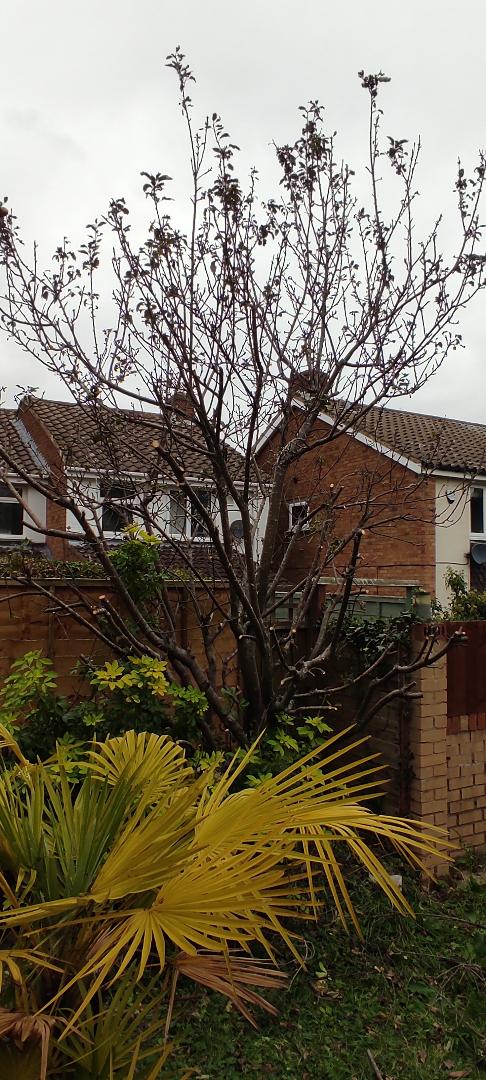
Thanks for your question about pruning your apple tree. I can completely understand losing confidence midway through, and the good news is that you've asked before doing anything drastic. The YouTube advice you've heard about pruning in October is actually incorrect for apple trees, and I'm really glad you've stopped to check before carrying on. Let me explain why October is too early and when you should actually be reaching for those secateurs.
The fundamental issue with October pruning is that your apple tree is not yet dormant. In October, the tree is still actively moving nutrients and energy back down from the leaves into the trunk and root system in preparation for winter. The leaves are turning colour and falling, yes, but the tree hasn't fully shut down for its winter rest.
https://youtu.be/jQUHwhhOPKM
When you prune an apple tree whilst it's still in this transition phase, you're essentially opening up fresh wounds at exactly the wrong time. These cuts are vulnerable to frost damage, which can kill the wood around the pruning cut and allow diseases to enter the tree. Fresh pruning wounds in October also struggle to heal properly because the tree doesn't have enough time to seal them before the really cold weather arrives.
The other major problem with autumn pruning is that you're leaving your tree susceptible to disease infections that are rife at this time of year. Apple trees can pick up all sorts of fungal infections through open wounds when the weather is damp and cool, which is exactly what we get in October and November here in the UK. Winter diseases absolutely love fresh pruning cuts made in autumn, and you can end up with far more problems than you started with. This is why experienced fruit growers always wait until proper winter dormancy before touching their apple trees.
The Correct Time to Prune Apple Trees: December Through February
The proper window for pruning apple trees is from December through to late February, with the sweet spot being January and early February here in the UK. This timing ensures your tree is fully dormant, with the sap well and truly retreated back down into the roots and the worst of the autumn damp behind us. The tree has completely shut down for winter, which means pruning cuts heal much more effectively and disease risk drops dramatically. You're working with a tree that's essentially asleep rather than one that's still trying to pack away its energy stores for winter.
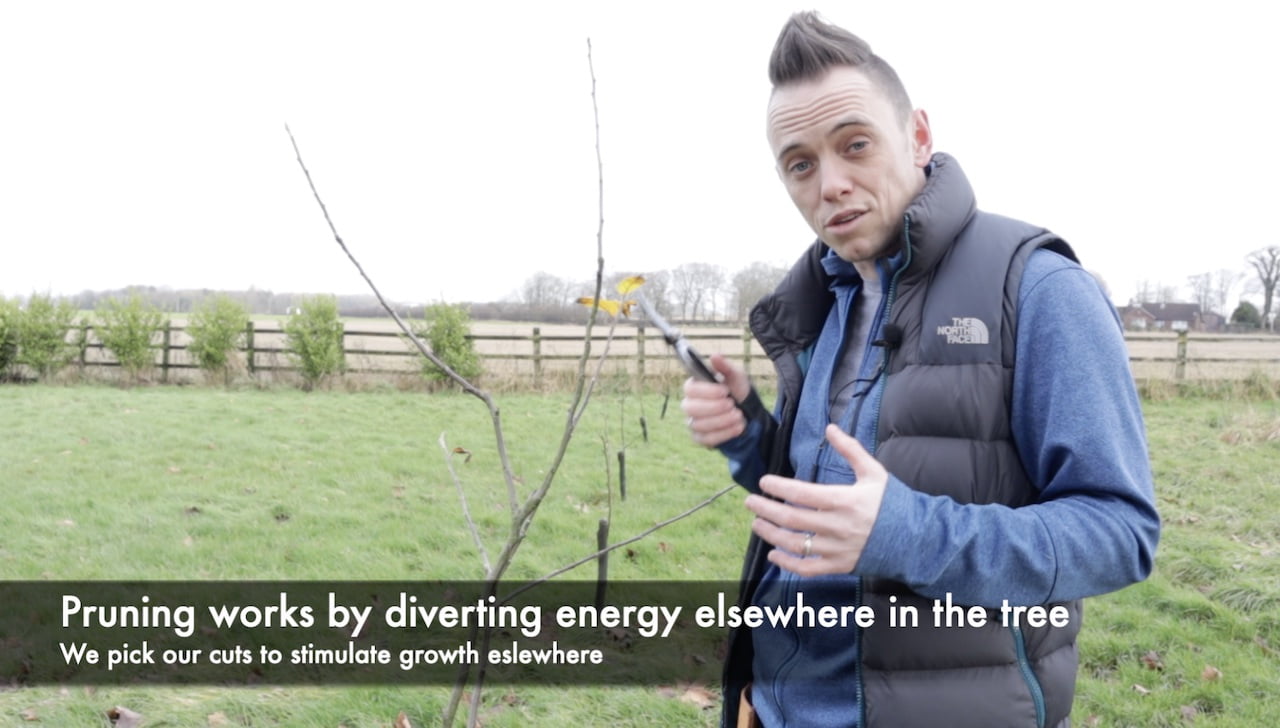
January and February pruning also gives you the huge advantage of being able to see exactly what you're doing. All the leaves have fallen, so you can clearly see the true structure and shape of the tree without any foliage getting in the way. This makes it so much easier to spot crossing branches, congested growth, dead wood, and areas that need attention. You can stand back, assess the tree's skeleton, and make informed decisions about which branches need to come off. Try doing that in October when there are still leaves clinging on and you simply can't see the wood for the trees, quite literally.
Winter pruning between December and February has another massive benefit in that it actively encourages vigorous spring growth and fruiting. When you prune a dormant tree in winter, you're telling it where to focus its energy come spring. The tree will send all its stored nutrients and hormones to the buds just below where you've made your cuts, resulting in strong new shoots and plenty of fruiting spurs for the following year. This is exactly what you want for a productive apple tree. October pruning doesn't give you this benefit because the tree's already shutting down and won't respond until spring anyway, so you've gained nothing and risked everything.
Why Pruning Doesn't Directly Increase Fruit Production
I need to address the claim you heard on YouTube about cutting back the tree so it puts more energy towards fruit rather than growth. This is a fundamental misunderstanding of how apple trees work, and it's important to get this straight. Pruning an apple tree in winter actually encourages growth, not fruiting. When you prune back branches in winter, you're stimulating the tree to put on vigorous new shoots in spring. This is because you're removing some of the branches that would have taken energy, so the remaining buds get a bigger share of the tree's resources and respond by growing strongly.
The way to get more fruit from an apple tree isn't by winter pruning it harder. More fruit comes from having a well shaped tree with good airflow, plenty of light reaching all the branches, and the right balance of older fruiting wood and younger productive branches. Apple trees fruit on little stubby shoots called spurs that form on two to three year old wood. If you hack back all the branches trying to reduce growth, you're actually removing the very wood that would produce fruit in the coming years. You end up with a tree that puts on loads of leafy growth but produces disappointingly few apples.
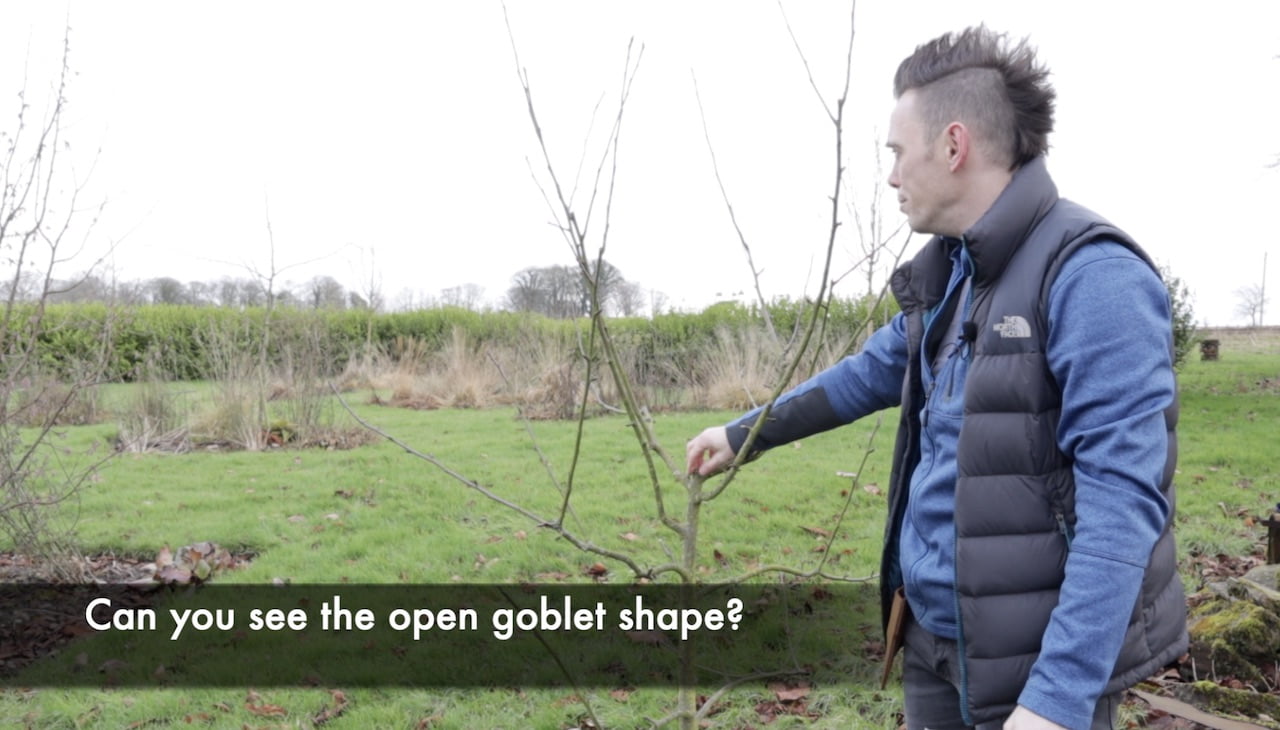
What you actually need to do is prune to create an open goblet shape with well-spaced branches that don't cross or rub against each other. This allows light and air into the centre of the tree, which helps the fruiting spurs develop properly and reduces disease pressure. You should be taking off about one quarter to one third of this year's growth on each main branch, cutting to an outward-facing bud. This maintains the tree's size, keeps it productive, and prevents it becoming congested. But you absolutely must do this in proper winter dormancy, not in October.
How to Rescue Your October Pruning Attempt
Since you've already started cutting and then stopped, here's what I'd recommend doing now. Leave the tree completely alone for the rest of October and all of November. Don't touch it, don't tidy it up, just let it finish going dormant naturally. The cuts you've already made aren't ideal, but the tree will cope as long as you don't make things worse by doing more autumn pruning. Once we're into late December or January, when the tree is properly dormant and we've had some cold weather, then you can get back to the job properly.
At that point, assess what you've already removed and what still needs doing.
Focus on the four Ds of pruning:
- Dead
- Diseased
- Damaged
- Deranged/Crossing wood (branches growing in the wrong direction or causing congestion).
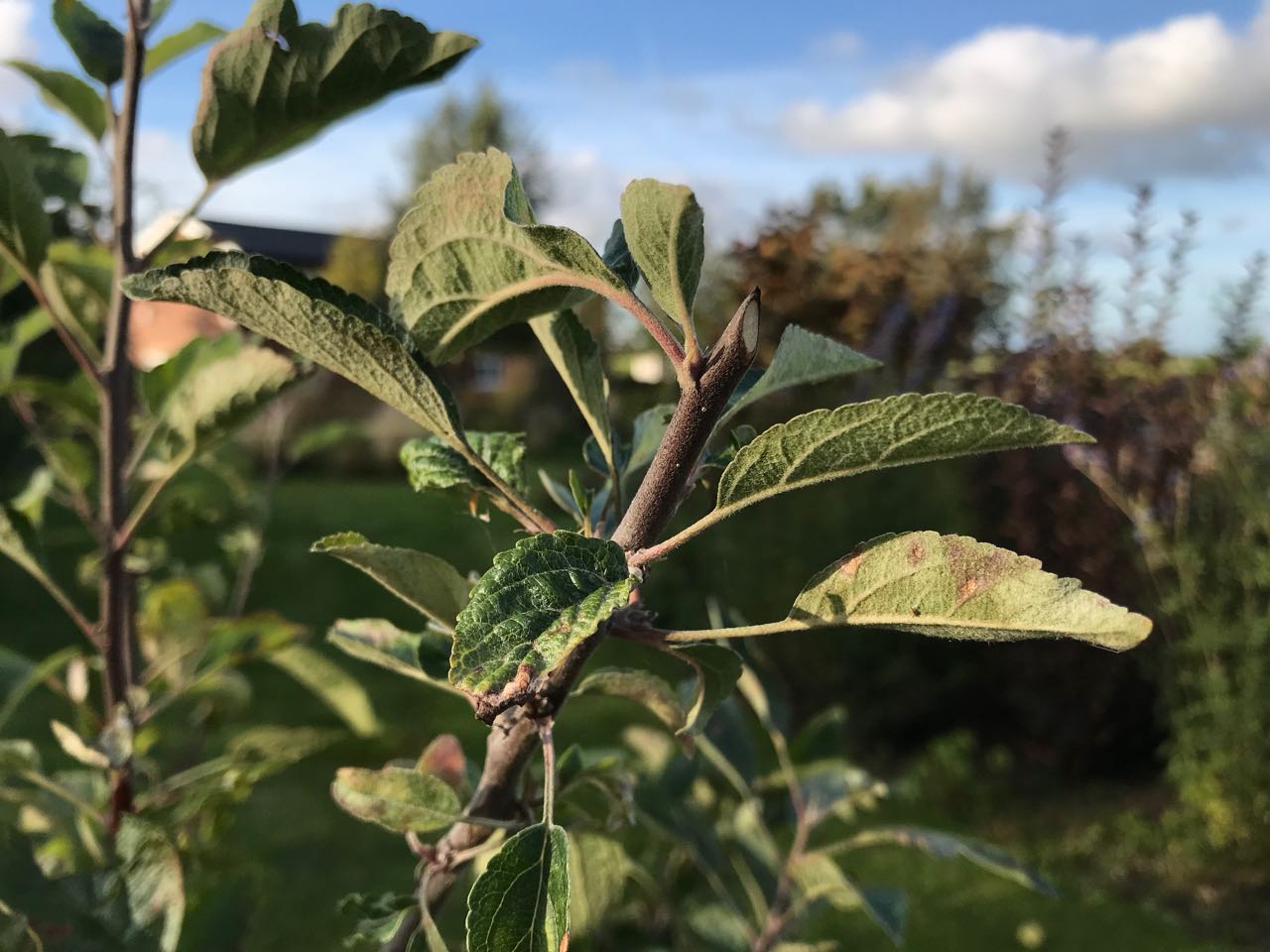
Remove any branches that are crossing and rubbing, take out anything growing back towards the centre of the tree, and open up that canopy so you can pass your hand through the centre of the branches without hitting too much wood. Then take back each main branch by about one quarter of this year's growth, cutting just above an outward-facing bud at a 45-degree angle.
If you're not confident about what to cut, the safest approach is to just remove the obvious problems like dead wood, crossing branches, and anything damaged or diseased. Even if you do very little else, just clearing out that congested wood will make a difference to the tree's health and productivity. You can't go too wrong if you follow the four Ds principle. Better to do a conservative job and have the tree thrive than hack it about and end up with a stressed tree that puts on masses of unproductive growth next year.
Getting Your Tree to a Manageable Size
You mentioned wanting a smaller tree, which is a perfectly reasonable goal. The best way to reduce the size of an overgrown apple tree is through a combination of winter pruning to shape it and potentially some summer pruning to control vigour. In December through February, you can reduce the overall height by cutting the main leader (central upright stem) back to a strong side branch at the height you want.
This tells the tree not to keep growing upwards. You can also shorten any excessively long branches by cutting them back to about one-third of their length, always to an outward-facing bud or branch.
However, there's a limit to how much you should take off in one go. If you remove more than about 30 percent of the tree's canopy in a single winter, you'll stress it and trigger an explosion of water sprouts (those vigorous vertical shoots) next year. If your tree is seriously overgrown, it's better to tackle it over two or three winters rather than trying to sort it all out in one go. Be patient, prune conservatively, and you'll end up with a well-shaped, productive tree rather than a stressed mess.
For controlling size long term, consider doing some light summer pruning in late July or August after the tree has finished its main spring growth. Summer pruning involves shortening the current year's shoots back to about five or six leaves. This slows down the tree's vigour because it can't use summer pruning to trigger lots of new growth the way it does with winter pruning. Summer pruning is ideal for keeping a tree compact and manageable without encouraging excessive vegetative growth.
Further Reading
For more help with your apple tree pruning, have a look at these articles:
How to Prune an Apple Tree: Ultimate Beginner Pruning Guide
How to Prune a Fruit Tree in Summer
Winter vs Summer Pruning: What's the Difference?
How to Prune Garden Plants: Ultimate Beginner Pruning Guide
How to Prune Low Hanging Fruit Tree Branches
I hope that clears up the confusion and gives you confidence to tackle your apple tree properly, come December or January. Well done for stopping when you weren't sure rather than ploughing on regardless. That's exactly the right instinct, and it'll serve you well in the garden. Do let us know how you get on with the winter pruning!
All the best
Lee Garden Ninja
Hi @hope1106
Thanks for your question about pruning your apple tree. I can completely understand losing confidence midway through, and the good news is that you've asked before doing anything drastic. The YouTube advice you've heard about pruning in October is actually incorrect for apple trees, and I'm really glad you've stopped to check before carrying on. Let me explain why October is too early and when you should actually be reaching for those secateurs.
The fundamental issue with October pruning is that your apple tree is not yet dormant. In October, the tree is still actively moving nutrients and energy back down from the leaves into the trunk and root system in preparation for winter. The leaves are turning colour and falling, yes, but the tree hasn't fully shut down for its winter rest.
When you prune an apple tree whilst it's still in this transition phase, you're essentially opening up fresh wounds at exactly the wrong time. These cuts are vulnerable to frost damage, which can kill the wood around the pruning cut and allow diseases to enter the tree. Fresh pruning wounds in October also struggle to heal properly because the tree doesn't have enough time to seal them before the really cold weather arrives.
The other major problem with autumn pruning is that you're leaving your tree susceptible to disease infections that are rife at this time of year. Apple trees can pick up all sorts of fungal infections through open wounds when the weather is damp and cool, which is exactly what we get in October and November here in the UK. Winter diseases absolutely love fresh pruning cuts made in autumn, and you can end up with far more problems than you started with. This is why experienced fruit growers always wait until proper winter dormancy before touching their apple trees.
The Correct Time to Prune Apple Trees: December Through February
The proper window for pruning apple trees is from December through to late February, with the sweet spot being January and early February here in the UK. This timing ensures your tree is fully dormant, with the sap well and truly retreated back down into the roots and the worst of the autumn damp behind us. The tree has completely shut down for winter, which means pruning cuts heal much more effectively and disease risk drops dramatically. You're working with a tree that's essentially asleep rather than one that's still trying to pack away its energy stores for winter.
January and February pruning also gives you the huge advantage of being able to see exactly what you're doing. All the leaves have fallen, so you can clearly see the true structure and shape of the tree without any foliage getting in the way. This makes it so much easier to spot crossing branches, congested growth, dead wood, and areas that need attention. You can stand back, assess the tree's skeleton, and make informed decisions about which branches need to come off. Try doing that in October when there are still leaves clinging on and you simply can't see the wood for the trees, quite literally.
Winter pruning between December and February has another massive benefit in that it actively encourages vigorous spring growth and fruiting. When you prune a dormant tree in winter, you're telling it where to focus its energy come spring. The tree will send all its stored nutrients and hormones to the buds just below where you've made your cuts, resulting in strong new shoots and plenty of fruiting spurs for the following year. This is exactly what you want for a productive apple tree. October pruning doesn't give you this benefit because the tree's already shutting down and won't respond until spring anyway, so you've gained nothing and risked everything.
Why Pruning Doesn't Directly Increase Fruit Production
I need to address the claim you heard on YouTube about cutting back the tree so it puts more energy towards fruit rather than growth. This is a fundamental misunderstanding of how apple trees work, and it's important to get this straight. Pruning an apple tree in winter actually encourages growth, not fruiting. When you prune back branches in winter, you're stimulating the tree to put on vigorous new shoots in spring. This is because you're removing some of the branches that would have taken energy, so the remaining buds get a bigger share of the tree's resources and respond by growing strongly.
The way to get more fruit from an apple tree isn't by winter pruning it harder. More fruit comes from having a well shaped tree with good airflow, plenty of light reaching all the branches, and the right balance of older fruiting wood and younger productive branches. Apple trees fruit on little stubby shoots called spurs that form on two to three year old wood. If you hack back all the branches trying to reduce growth, you're actually removing the very wood that would produce fruit in the coming years. You end up with a tree that puts on loads of leafy growth but produces disappointingly few apples.
What you actually need to do is prune to create an open goblet shape with well-spaced branches that don't cross or rub against each other. This allows light and air into the centre of the tree, which helps the fruiting spurs develop properly and reduces disease pressure. You should be taking off about one quarter to one third of this year's growth on each main branch, cutting to an outward-facing bud. This maintains the tree's size, keeps it productive, and prevents it becoming congested. But you absolutely must do this in proper winter dormancy, not in October.
How to Rescue Your October Pruning Attempt
Since you've already started cutting and then stopped, here's what I'd recommend doing now. Leave the tree completely alone for the rest of October and all of November. Don't touch it, don't tidy it up, just let it finish going dormant naturally. The cuts you've already made aren't ideal, but the tree will cope as long as you don't make things worse by doing more autumn pruning. Once we're into late December or January, when the tree is properly dormant and we've had some cold weather, then you can get back to the job properly.
At that point, assess what you've already removed and what still needs doing.
Focus on the four Ds of pruning:
- Dead
- Diseased
- Damaged
- Deranged/Crossing wood (branches growing in the wrong direction or causing congestion).
Remove any branches that are crossing and rubbing, take out anything growing back towards the centre of the tree, and open up that canopy so you can pass your hand through the centre of the branches without hitting too much wood. Then take back each main branch by about one quarter of this year's growth, cutting just above an outward-facing bud at a 45-degree angle.
If you're not confident about what to cut, the safest approach is to just remove the obvious problems like dead wood, crossing branches, and anything damaged or diseased. Even if you do very little else, just clearing out that congested wood will make a difference to the tree's health and productivity. You can't go too wrong if you follow the four Ds principle. Better to do a conservative job and have the tree thrive than hack it about and end up with a stressed tree that puts on masses of unproductive growth next year.
Getting Your Tree to a Manageable Size
You mentioned wanting a smaller tree, which is a perfectly reasonable goal. The best way to reduce the size of an overgrown apple tree is through a combination of winter pruning to shape it and potentially some summer pruning to control vigour. In December through February, you can reduce the overall height by cutting the main leader (central upright stem) back to a strong side branch at the height you want.
This tells the tree not to keep growing upwards. You can also shorten any excessively long branches by cutting them back to about one-third of their length, always to an outward-facing bud or branch.
However, there's a limit to how much you should take off in one go. If you remove more than about 30 percent of the tree's canopy in a single winter, you'll stress it and trigger an explosion of water sprouts (those vigorous vertical shoots) next year. If your tree is seriously overgrown, it's better to tackle it over two or three winters rather than trying to sort it all out in one go. Be patient, prune conservatively, and you'll end up with a well-shaped, productive tree rather than a stressed mess.
For controlling size long term, consider doing some light summer pruning in late July or August after the tree has finished its main spring growth. Summer pruning involves shortening the current year's shoots back to about five or six leaves. This slows down the tree's vigour because it can't use summer pruning to trigger lots of new growth the way it does with winter pruning. Summer pruning is ideal for keeping a tree compact and manageable without encouraging excessive vegetative growth.
Further Reading
For more help with your apple tree pruning, have a look at these articles:
How to Prune an Apple Tree: Ultimate Beginner Pruning Guide
How to Prune a Fruit Tree in Summer
Winter vs Summer Pruning: What's the Difference?
How to Prune Garden Plants: Ultimate Beginner Pruning Guide
How to Prune Low Hanging Fruit Tree Branches
I hope that clears up the confusion and gives you confidence to tackle your apple tree properly, come December or January. Well done for stopping when you weren't sure rather than ploughing on regardless. That's exactly the right instinct, and it'll serve you well in the garden. Do let us know how you get on with the winter pruning!
All the best
Lee Garden Ninja
 Lee Burkhill: Award Winning Designer & BBC 1's Garden Rescue Presenters Official Blog