Hi @amajane
Thanks for your question about your inherited rose bush!
It's brilliant that you're taking the time to learn how to care for it properly rather than just hacking away or giving up on it. Mature roses can look absolutely intimidating when you're new to gardening, with all that thick woody growth and awkward angles, but the good news is that they're remarkably tough and forgiving. The fact that it's still flowering beautifully despite being overgrown is a great sign that you've got a vigorous plant worth saving.
Don't be afraid of hard pruning
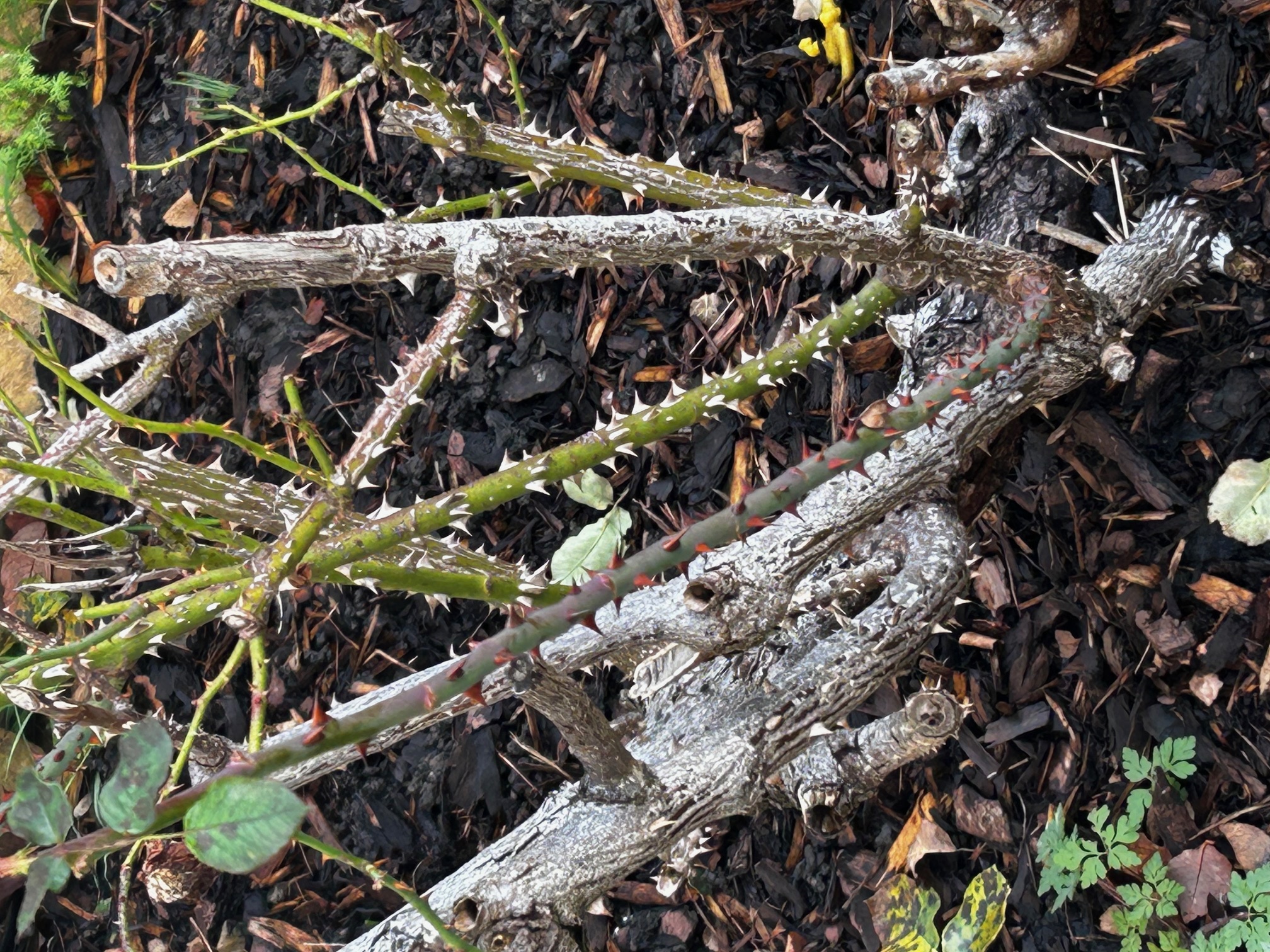
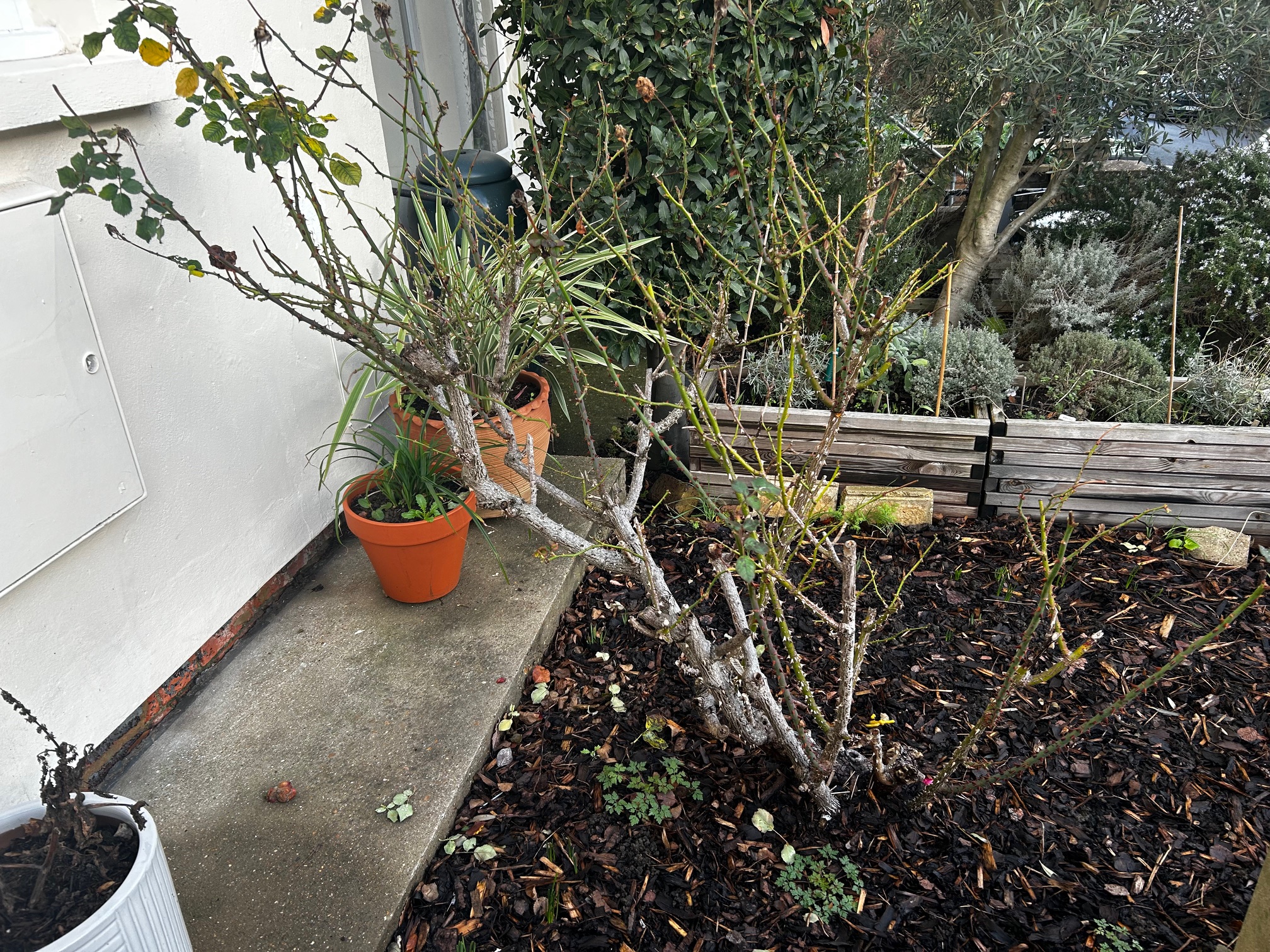
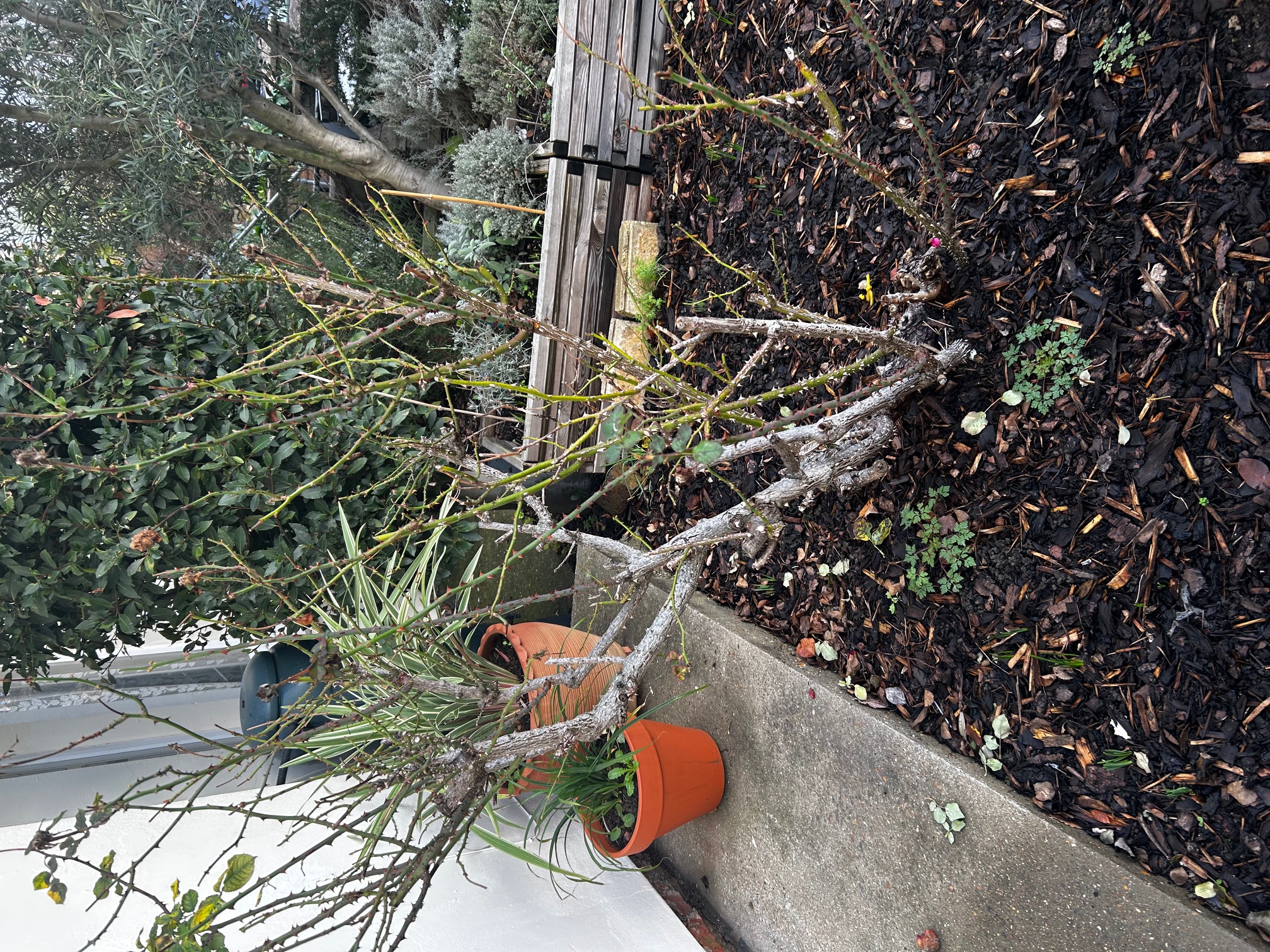
Here's something that surprises most beginner gardeners: roses actually respond brilliantly to hard pruning, and it's often exactly what an old, neglected rose needs to rejuvenate itself. That thick, woody growth you're describing is perfectly normal for a mature rose, and those seemingly dead looking stems might surprise you with fresh growth once you cut back properly.
Hard pruning encourages the rose to produce fresh, vigorous stems from lower down rather than just getting taller and more unruly at the top. It opens up the centre of the plant for better airflow, which reduces disease problems like black spot and mildew. Most importantly for your situation, it lets you reshape the rose and redirect growth away from the house rather than having it lean squiffy towards your walls.
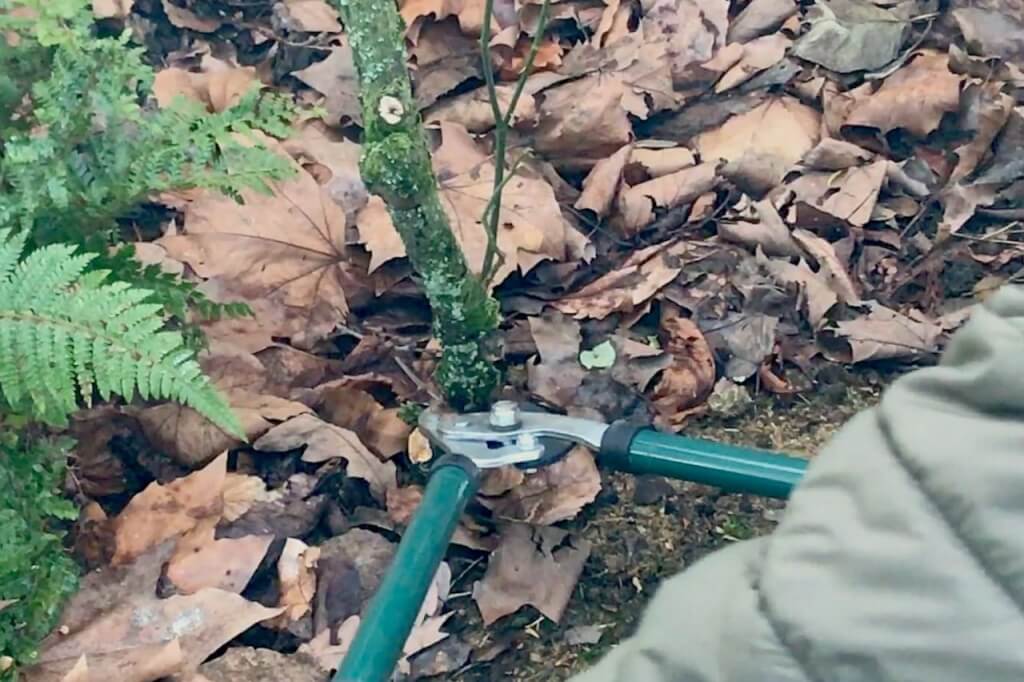
The key is pruning at the right time of year, which is late winter (ideally February in the UK) when the rose is dormant but just before new growth starts. This gives the rose the entire growing season to produce strong new stems and recover its shape.
Getting the right tools
For those thick, woody stems you're describing, you'll need proper loppers rather than just secateurs. Loppers give you the leverage and cutting power to deal with stems thicker than a pencil, which standard secateurs simply can't manage without damaging both the tool and your wrists. You might even need a small pruning saw for the really thick old stems that need removing entirely.
Make sure whatever tools you use are sharp. Clean cuts heal far better than ragged tears, and sharp tools make the job so much easier. Give your blades a wipe with some diluted disinfectant between cuts if you're removing diseased material to avoid spreading problems around the plant.
Follow my comprehensive guide
Rather than trying to explain every detail of rose pruning in a forum post, I've created a comprehensive guide that will walk you through exactly what to do with your overgrown rose. My complete rose pruning guide covers identifying what to remove, where to make your cuts, how to shape the plant, and most importantly, gives you the confidence to be brutal when needed.
The guide includes photos and videos showing the techniques, explains how to identify dead wood versus living wood (that scratch test is your friend here), and reassures you that roses are tougher than you think. It will feel shocking when you've cut it back hard and it looks like a collection of stumps, but trust the process. Come spring, you'll see vigorous new growth emerging and by summer you'll have a much healthier, better shaped rose producing loads of flowers.
Pay particular attention to the sections on removing old woody stems entirely to make way for fresh growth, and how to cut back to outward facing buds to direct growth away from structures. That's going to be key for sorting out that squiffy growth towards your house.
Feeding after pruning
Once you've done your late winter pruning, don't forget to feed your rose in spring to support all that fresh new growth. Roses are hungry plants, and after a hard prune they need nutritional support to produce strong stems and abundant flowers.
In early spring (around March or April, once you see new growth starting), apply a good rose fertiliser around the base of the plant following the packet instructions. Any balanced fertilizer will work, but specialist rose feeds are formulated with the right nutrient balance for flowering plants.
Even better than commercial fertiliser is a thick mulch of well-rotted compost or manure applied in late winter after pruning. Spread a 5cm to 7cm layer around the base of the rose, keeping it a few centimetres away from the stems themselves. This feeds the rose gradually as it breaks down, suppresses weeds, and retains moisture through the growing season. It's absolutely the best thing you can do for a rose that's being rejuvenated through hard pruning.
If you don't have access to compost or manure, a granular rose feed sprinkled around the base in spring followed by a second application after the first flush of flowers will keep your rose happy. Water it in well so the nutrients can reach the roots.
https://youtu.be/-Occ2WuIBnU
The combination of hard pruning in late winter and good feeding in spring will transform your overgrown rose. It might take a couple of seasons to get it exactly where you want it, but you'll see dramatic improvement in the first year. The thick woody growth you remove makes way for fresh, flexible stems that you can train in the right direction, and proper feeding ensures those new stems have the energy to produce loads of flowers.
Don't be intimidated by the size and thickness of what you're dealing with. Grab those loppers, read through the guide so you understand what you're doing and why, then get stuck in. The worst thing you can do is nothing, leaving the rose to get progressively more tangled and woody. Roses evolved to cope with being browsed by deer and other animals, so they're built to regenerate from hard pruning.
Let us know how you get on with the pruning, and feel free to post photos if you'd like feedback on your progress. We'd love to see the transformation!
Happy pruning!
Lee Garden Ninja
Hi @amajane
Thanks for your question about your inherited rose bush!
It's brilliant that you're taking the time to learn how to care for it properly rather than just hacking away or giving up on it. Mature roses can look absolutely intimidating when you're new to gardening, with all that thick woody growth and awkward angles, but the good news is that they're remarkably tough and forgiving. The fact that it's still flowering beautifully despite being overgrown is a great sign that you've got a vigorous plant worth saving.
Don't be afraid of hard pruning
Here's something that surprises most beginner gardeners: roses actually respond brilliantly to hard pruning, and it's often exactly what an old, neglected rose needs to rejuvenate itself. That thick, woody growth you're describing is perfectly normal for a mature rose, and those seemingly dead looking stems might surprise you with fresh growth once you cut back properly.
Hard pruning encourages the rose to produce fresh, vigorous stems from lower down rather than just getting taller and more unruly at the top. It opens up the centre of the plant for better airflow, which reduces disease problems like black spot and mildew. Most importantly for your situation, it lets you reshape the rose and redirect growth away from the house rather than having it lean squiffy towards your walls.
The key is pruning at the right time of year, which is late winter (ideally February in the UK) when the rose is dormant but just before new growth starts. This gives the rose the entire growing season to produce strong new stems and recover its shape.
Getting the right tools
For those thick, woody stems you're describing, you'll need proper loppers rather than just secateurs. Loppers give you the leverage and cutting power to deal with stems thicker than a pencil, which standard secateurs simply can't manage without damaging both the tool and your wrists. You might even need a small pruning saw for the really thick old stems that need removing entirely.
Make sure whatever tools you use are sharp. Clean cuts heal far better than ragged tears, and sharp tools make the job so much easier. Give your blades a wipe with some diluted disinfectant between cuts if you're removing diseased material to avoid spreading problems around the plant.
Follow my comprehensive guide
Rather than trying to explain every detail of rose pruning in a forum post, I've created a comprehensive guide that will walk you through exactly what to do with your overgrown rose. My complete rose pruning guide covers identifying what to remove, where to make your cuts, how to shape the plant, and most importantly, gives you the confidence to be brutal when needed.
The guide includes photos and videos showing the techniques, explains how to identify dead wood versus living wood (that scratch test is your friend here), and reassures you that roses are tougher than you think. It will feel shocking when you've cut it back hard and it looks like a collection of stumps, but trust the process. Come spring, you'll see vigorous new growth emerging and by summer you'll have a much healthier, better shaped rose producing loads of flowers.
Pay particular attention to the sections on removing old woody stems entirely to make way for fresh growth, and how to cut back to outward facing buds to direct growth away from structures. That's going to be key for sorting out that squiffy growth towards your house.
Feeding after pruning
Once you've done your late winter pruning, don't forget to feed your rose in spring to support all that fresh new growth. Roses are hungry plants, and after a hard prune they need nutritional support to produce strong stems and abundant flowers.
In early spring (around March or April, once you see new growth starting), apply a good rose fertiliser around the base of the plant following the packet instructions. Any balanced fertilizer will work, but specialist rose feeds are formulated with the right nutrient balance for flowering plants.
Even better than commercial fertiliser is a thick mulch of well-rotted compost or manure applied in late winter after pruning. Spread a 5cm to 7cm layer around the base of the rose, keeping it a few centimetres away from the stems themselves. This feeds the rose gradually as it breaks down, suppresses weeds, and retains moisture through the growing season. It's absolutely the best thing you can do for a rose that's being rejuvenated through hard pruning.
If you don't have access to compost or manure, a granular rose feed sprinkled around the base in spring followed by a second application after the first flush of flowers will keep your rose happy. Water it in well so the nutrients can reach the roots.
The combination of hard pruning in late winter and good feeding in spring will transform your overgrown rose. It might take a couple of seasons to get it exactly where you want it, but you'll see dramatic improvement in the first year. The thick woody growth you remove makes way for fresh, flexible stems that you can train in the right direction, and proper feeding ensures those new stems have the energy to produce loads of flowers.
Don't be intimidated by the size and thickness of what you're dealing with. Grab those loppers, read through the guide so you understand what you're doing and why, then get stuck in. The worst thing you can do is nothing, leaving the rose to get progressively more tangled and woody. Roses evolved to cope with being browsed by deer and other animals, so they're built to regenerate from hard pruning.
Let us know how you get on with the pruning, and feel free to post photos if you'd like feedback on your progress. We'd love to see the transformation!
Happy pruning!
Lee Garden Ninja

 Lee Burkhill: Award Winning Designer & BBC 1's Garden Rescue Presenters Official Blog