Hi @erobinson
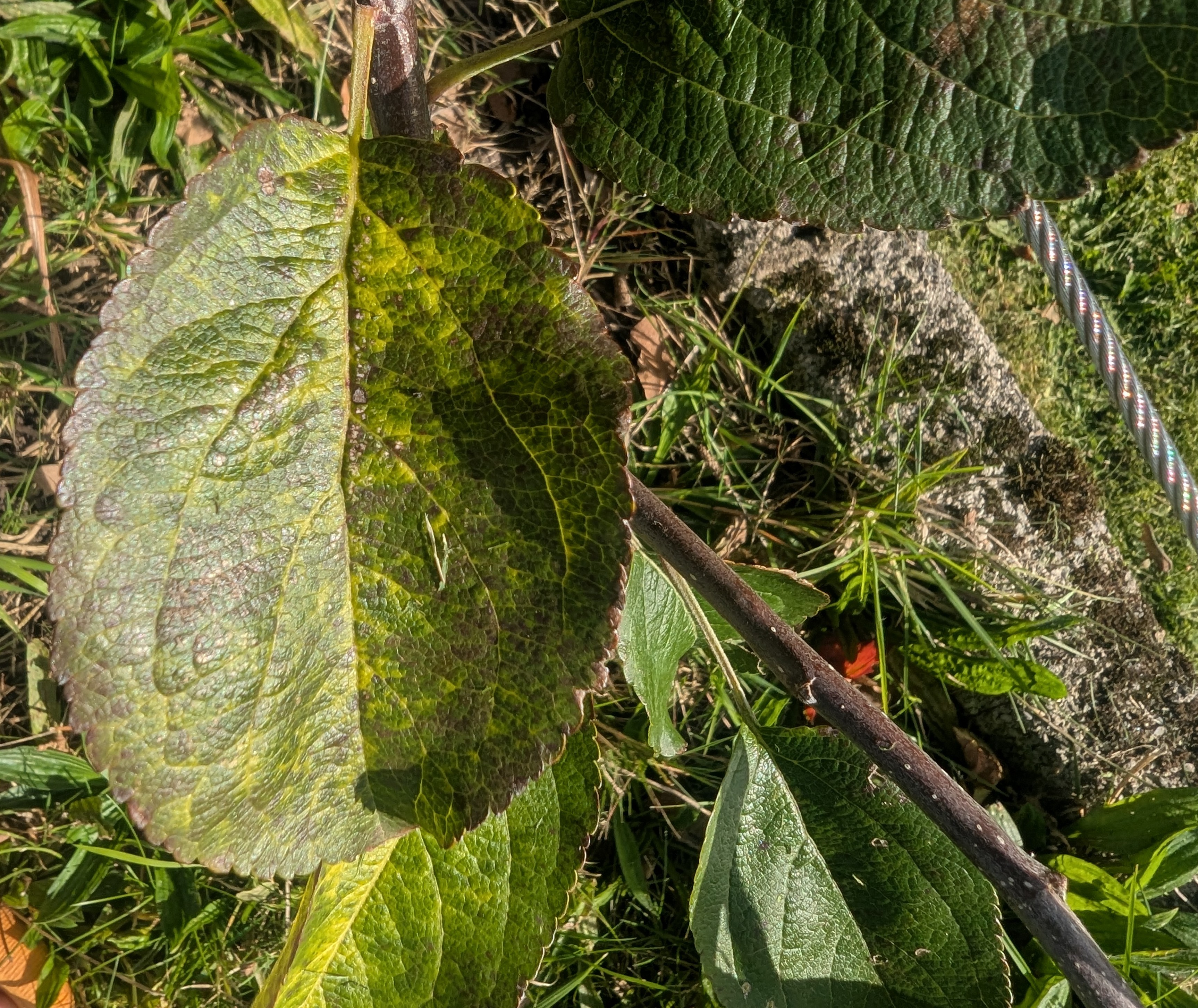
Thanks for your question about your mottled apple tree leaves, Emily. First things first, let me put your mind at rest. What you're seeing on both your Spartan and Howgate Wonder is almost certainly not apple scab at all. This is just your trees doing what they're supposed to be doing at this time of year, which is preparing to shed their leaves for winter. It's completely normal and nothing to be worried about.
We're now in October, and deciduous fruit trees like apples naturally begin their autumn senescence process. The mottling you're seeing is the tree breaking down the chlorophyll in the leaves and reabsorbing nutrients back into the stems and roots before winter arrives. As this happens, leaves often develop patches of yellow, bronze, or mottled colouration that can look a bit alarming if you've not seen it before. The leaves will eventually turn fully yellow or brown and drop off, which is exactly what should happen. Your apple trees are just being sensible and getting ready for the cold months ahead.
What Apple Scab Actually Looks Like
Apple scab is caused by a fungus called Venturia inaequalis, and its symptoms are quite distinctive and very different from what you're describing. The classic signs of apple scab include olive green to dark brown velvety circular spots or lesions that appear on the upper surface of leaves, typically starting in spring and early summer. These lesions have a distinct texture, almost fuzzy or velvety appearance, with feathery or fringed borders. As infections mature, the spots turn darker brown to black, often growing together into larger blotches. Severely infected leaves become twisted, puckered, or distorted, and they frequently drop off prematurely during the growing season, not just at leaf fall time in autumn.
The fungus particularly loves cool, wet spring weather when new leaves are emerging. It overwinters in fallen infected leaves on the ground, then releases spores during spring rains that infect the fresh young foliage and developing fruit. On fruit itself, apple scab creates rough, corky, dark brown or black scabby patches that are sunken into the skin. Early infections can cause the fruit to become misshapen and cracked. The key thing here is that apple scab is a spring and early summer problem that shows up on young, actively growing tissues when conditions are wet. What you're describing, mottled leaves appearing in October on trees planted last December, simply doesn't fit the pattern at all.
Why Your Trees Look the Way They Do
Both of your maiden whips are in their first full growing season after planting last winter. The Spartan starting off well and then developing mottled leaves in autumn is textbook normal behaviour. As for the Howgate Wonder having smaller leaves, this could be down to a few things.
Maiden trees often have variable growth in their first year as they're putting energy into establishing their root systems rather than producing massive amounts of foliage. Different varieties also have different growth habits naturally. Howgate Wonder is a triploid variety that produces huge apples, so it may be channelling its energy differently compared to the Spartan. The mottling on both is just autumn doing its thing.
Regarding your concern about pruning the Spartan's vertical stem too short, don't panic about that either. Maiden apple trees are incredibly forgiving, and since you're training them as espaliers anyway, you'll be managing their shape through pruning regardless.
For espalier work, you actually want to encourage horizontal growth along your wires rather than vertical growth, so a shorter central leader isn't necessarily a problem. Come this winter, you can assess the framework you've got and prune accordingly to develop those strong horizontal tiers that make espaliers so productive and attractive.
What to Do Next
Absolutely nothing right now. Let those leaves finish their autumn display and fall naturally. Once the leaves have dropped, give the area beneath the trees a good tidy up and remove the fallen foliage. This is just good garden hygiene and helps prevent any fungal diseases from overwintering, even though I'm confident you don't have apple scab. Come late winter, probably around February or March, before the buds break, that's when you'll want to do your main pruning work to start developing the espalier structure properly. You'll be cutting back to outward-facing buds to create those lovely horizontal branches along your support wires.
https://youtu.be/jQUHwhhOPKM
Make sure your trees are well watered going into winter, especially if we have a dry autumn. Newly planted trees need consistent moisture in their first couple of years to establish properly. A good mulch around the base, keeping it clear of the trunk itself, will help retain moisture and suppress weeds. Come spring, you should see healthy new growth emerging, and that's when you'll really start to see progress with your espalier project.
You definitely don't need to start again with new trees. What you've got is two perfectly healthy young apple trees doing exactly what they should be doing at this time of year. Give them time to establish and they'll reward you with years of fruit. The mottled leaves are just nature's way of getting ready for winter, not a sign of disease.
Further Reading
For more help with your apple trees, have a look at these forum discussions:
Apple Tree Pruning and Shaping
Understanding Apple Tree Growth Issues
Drooping Apple Tree Branches
Apple Tree Canker Identification
I hope that puts your mind at rest, Emily. Your trees are doing absolutely fine. Do let us know how they get on come spring!
Happy Gardening! Lee Garden Ninja
Hi @erobinson
Thanks for your question about your mottled apple tree leaves, Emily. First things first, let me put your mind at rest. What you're seeing on both your Spartan and Howgate Wonder is almost certainly not apple scab at all. This is just your trees doing what they're supposed to be doing at this time of year, which is preparing to shed their leaves for winter. It's completely normal and nothing to be worried about.
We're now in October, and deciduous fruit trees like apples naturally begin their autumn senescence process. The mottling you're seeing is the tree breaking down the chlorophyll in the leaves and reabsorbing nutrients back into the stems and roots before winter arrives. As this happens, leaves often develop patches of yellow, bronze, or mottled colouration that can look a bit alarming if you've not seen it before. The leaves will eventually turn fully yellow or brown and drop off, which is exactly what should happen. Your apple trees are just being sensible and getting ready for the cold months ahead.
What Apple Scab Actually Looks Like
Apple scab is caused by a fungus called Venturia inaequalis, and its symptoms are quite distinctive and very different from what you're describing. The classic signs of apple scab include olive green to dark brown velvety circular spots or lesions that appear on the upper surface of leaves, typically starting in spring and early summer. These lesions have a distinct texture, almost fuzzy or velvety appearance, with feathery or fringed borders. As infections mature, the spots turn darker brown to black, often growing together into larger blotches. Severely infected leaves become twisted, puckered, or distorted, and they frequently drop off prematurely during the growing season, not just at leaf fall time in autumn.
The fungus particularly loves cool, wet spring weather when new leaves are emerging. It overwinters in fallen infected leaves on the ground, then releases spores during spring rains that infect the fresh young foliage and developing fruit. On fruit itself, apple scab creates rough, corky, dark brown or black scabby patches that are sunken into the skin. Early infections can cause the fruit to become misshapen and cracked. The key thing here is that apple scab is a spring and early summer problem that shows up on young, actively growing tissues when conditions are wet. What you're describing, mottled leaves appearing in October on trees planted last December, simply doesn't fit the pattern at all.
Why Your Trees Look the Way They Do
Both of your maiden whips are in their first full growing season after planting last winter. The Spartan starting off well and then developing mottled leaves in autumn is textbook normal behaviour. As for the Howgate Wonder having smaller leaves, this could be down to a few things.
Maiden trees often have variable growth in their first year as they're putting energy into establishing their root systems rather than producing massive amounts of foliage. Different varieties also have different growth habits naturally. Howgate Wonder is a triploid variety that produces huge apples, so it may be channelling its energy differently compared to the Spartan. The mottling on both is just autumn doing its thing.
Regarding your concern about pruning the Spartan's vertical stem too short, don't panic about that either. Maiden apple trees are incredibly forgiving, and since you're training them as espaliers anyway, you'll be managing their shape through pruning regardless.
For espalier work, you actually want to encourage horizontal growth along your wires rather than vertical growth, so a shorter central leader isn't necessarily a problem. Come this winter, you can assess the framework you've got and prune accordingly to develop those strong horizontal tiers that make espaliers so productive and attractive.
What to Do Next
Absolutely nothing right now. Let those leaves finish their autumn display and fall naturally. Once the leaves have dropped, give the area beneath the trees a good tidy up and remove the fallen foliage. This is just good garden hygiene and helps prevent any fungal diseases from overwintering, even though I'm confident you don't have apple scab. Come late winter, probably around February or March, before the buds break, that's when you'll want to do your main pruning work to start developing the espalier structure properly. You'll be cutting back to outward-facing buds to create those lovely horizontal branches along your support wires.
Make sure your trees are well watered going into winter, especially if we have a dry autumn. Newly planted trees need consistent moisture in their first couple of years to establish properly. A good mulch around the base, keeping it clear of the trunk itself, will help retain moisture and suppress weeds. Come spring, you should see healthy new growth emerging, and that's when you'll really start to see progress with your espalier project.
You definitely don't need to start again with new trees. What you've got is two perfectly healthy young apple trees doing exactly what they should be doing at this time of year. Give them time to establish and they'll reward you with years of fruit. The mottled leaves are just nature's way of getting ready for winter, not a sign of disease.
Further Reading
For more help with your apple trees, have a look at these forum discussions:
Apple Tree Pruning and Shaping
Understanding Apple Tree Growth Issues
Drooping Apple Tree Branches
Apple Tree Canker Identification
I hope that puts your mind at rest, Emily. Your trees are doing absolutely fine. Do let us know how they get on come spring!
Happy Gardening! Lee Garden Ninja
 Lee Burkhill: Award Winning Designer & BBC 1's Garden Rescue Presenters Official Blog