Hi @lavenderflower
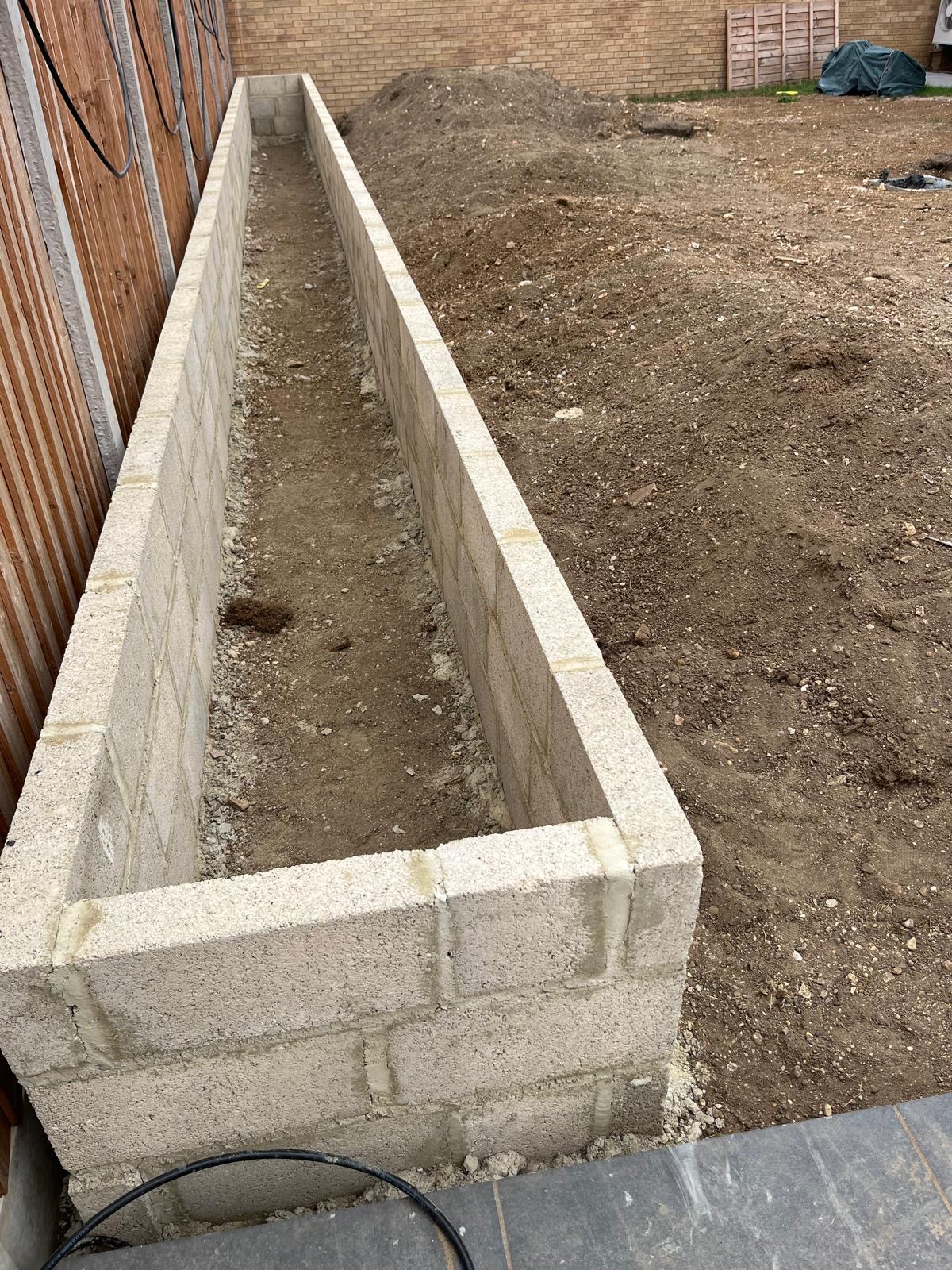
I'm afraid I have to be the bearer of challenging news here but your main issue isn't actually the structural integrity of the block construction, but rather the 40cm internal width you've been left with. This narrow dimension is going to create far more problems than you might initially realise, and addressing it now will save you significant headaches down the line.
Why 40cm Width Won't Work for Trees
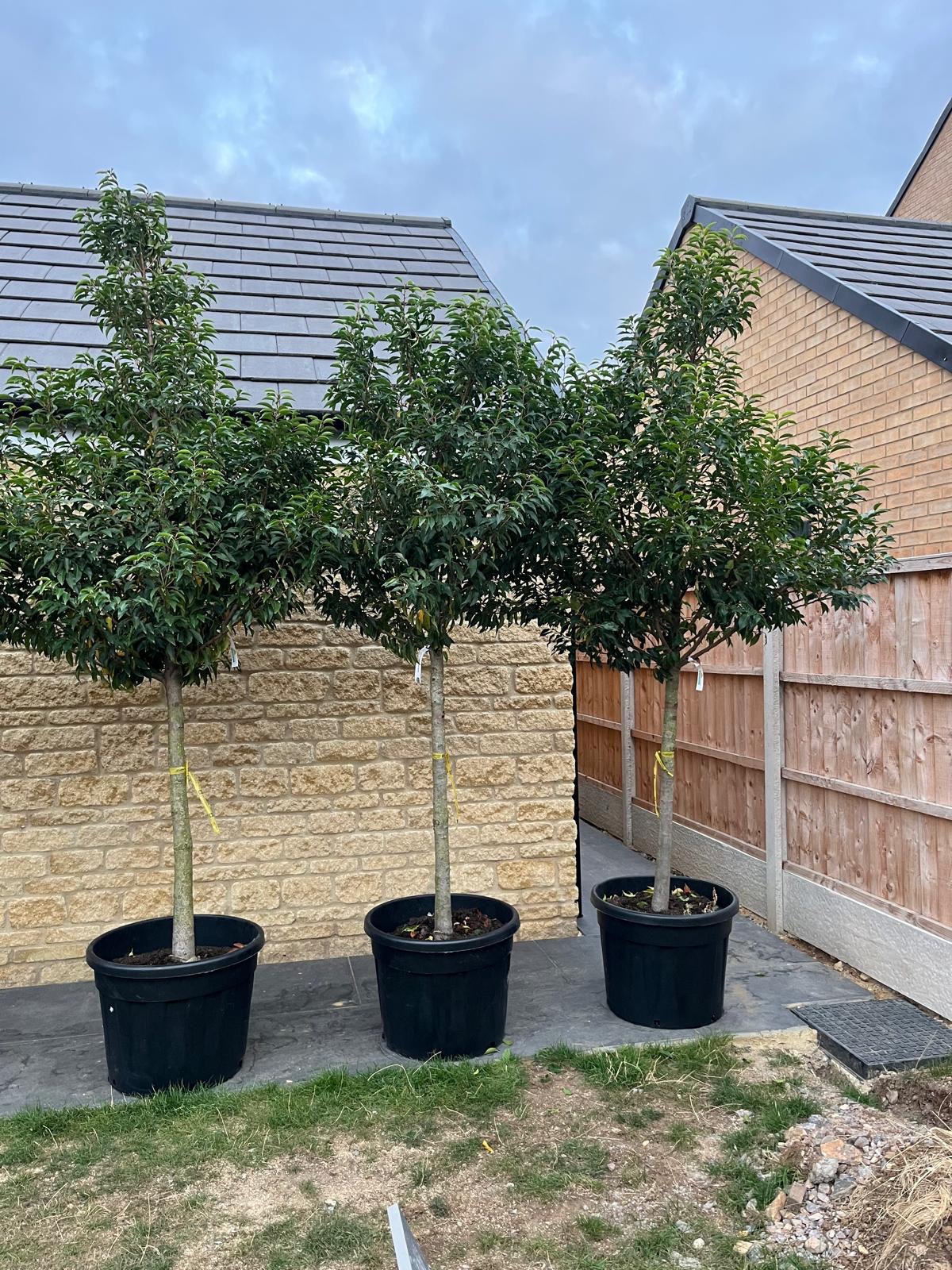
Your 40cm (16-inch) internal width is creating a recipe for disaster that goes far beyond any structural concerns. Portuguese Laurel trees with 16cm trunk girth in such a narrow space will become increasingly problematic as they mature, and the visual impact will be disappointing from day one.
The Top-Heavy Tree Problem
If a deciduous tree is placed in a planting bed, the bed needs to extend only about two to four feet beyond the trunk, but for evergreen trees such as spruce and some pines, beds need to be large enough to encompass the mature diameter of lower branches. Your Portuguese Laurel trees, being evergreen screening plants, will develop substantial canopies that extend well beyond your 40cm width.
As these trees grow taller in such a constrained root space, they'll become increasingly top-heavy and unstable. Planting trees in a hole that is too narrow will result in plants that look good for a while, but may show signs of suffering years later. The risk of them eventually pushing through or toppling your block wall becomes very real as the root systems fight for space and the canopies catch more wind.
Why Deeper Beds Create Better Impact
This is a classic example of what I call the "skinny flower bed fail" - you can read my full guide on avoiding this mistake here. Minimum width for a foundation planting on a one-story house is 6 to 8 feet, and for screening trees, you need even more space.
Most garden beds, especially new flower bed plantings, are simply not deep enough. An easy way to improve the look of your landscape is to simply bring your garden beds out to at least 1-1.2m deep The more depth that you have to create rows of plantings, the better off you are and the more choices you'll have when choosing plants.
The Visual Balance Issue
As a general rule, you want to opt for deeper flower beds to give the illsuion of depth but also provide proportion against the fence and house.
The plants' height other wise starts to look odd and forced when comparfed to the depth or width of the flower bed. Even following this more lenient rule, your screening trees will quickly become massively out of scale with your bed width, creating an awkward, unbalanced appearance that screams "design mistake."
The Real Solution
Rather than focusing on reinforcing the existing structure, I'd strongly recommend widening the bed to at least 80cm internal width, preferably 100-120cm for proper screening tree development. Plants look better and create more visual impact in groups, and you should fill up the space with enough plants for the size of your house and yard.
With proper width, you can create layered planting with your Portuguese Laurels as the backdrop, supported by understory shrubs and groundcover plants. This creates the lush, balanced screening effect you're actually after, whilst giving your trees the root space they desperately need to remain healthy and stable.
Moving Forward
Yes, this likely means reconstructing parts of your raised bed, but doing it now will save you from inevitable problems later when your trees outgrow their cramped quarters and potewntiall either bust out or get pushed over in the wind in stormy weather A wider bed will also give you opportunities for seasonal interest with herbaceous perennials and bulbs, creating a much more attractive and functional landscape feature.
Further Reading That May Help:
I know this isn't the answer you were hoping for, but addressing the width issue now will create a far more successful and sustainable landscape feature for years to come.
Lee Burkhill - Garden Ninja
Hi @lavenderflower
I'm afraid I have to be the bearer of challenging news here but your main issue isn't actually the structural integrity of the block construction, but rather the 40cm internal width you've been left with. This narrow dimension is going to create far more problems than you might initially realise, and addressing it now will save you significant headaches down the line.
Why 40cm Width Won't Work for Trees
Your 40cm (16-inch) internal width is creating a recipe for disaster that goes far beyond any structural concerns. Portuguese Laurel trees with 16cm trunk girth in such a narrow space will become increasingly problematic as they mature, and the visual impact will be disappointing from day one.
The Top-Heavy Tree Problem
If a deciduous tree is placed in a planting bed, the bed needs to extend only about two to four feet beyond the trunk, but for evergreen trees such as spruce and some pines, beds need to be large enough to encompass the mature diameter of lower branches. Your Portuguese Laurel trees, being evergreen screening plants, will develop substantial canopies that extend well beyond your 40cm width.
As these trees grow taller in such a constrained root space, they'll become increasingly top-heavy and unstable. Planting trees in a hole that is too narrow will result in plants that look good for a while, but may show signs of suffering years later. The risk of them eventually pushing through or toppling your block wall becomes very real as the root systems fight for space and the canopies catch more wind.
Why Deeper Beds Create Better Impact
This is a classic example of what I call the "skinny flower bed fail" - you can read my full guide on avoiding this mistake here. Minimum width for a foundation planting on a one-story house is 6 to 8 feet, and for screening trees, you need even more space.
Most garden beds, especially new flower bed plantings, are simply not deep enough. An easy way to improve the look of your landscape is to simply bring your garden beds out to at least 1-1.2m deep The more depth that you have to create rows of plantings, the better off you are and the more choices you'll have when choosing plants.
The Visual Balance Issue
As a general rule, you want to opt for deeper flower beds to give the illsuion of depth but also provide proportion against the fence and house.
The plants' height other wise starts to look odd and forced when comparfed to the depth or width of the flower bed. Even following this more lenient rule, your screening trees will quickly become massively out of scale with your bed width, creating an awkward, unbalanced appearance that screams "design mistake."
The Real Solution
Rather than focusing on reinforcing the existing structure, I'd strongly recommend widening the bed to at least 80cm internal width, preferably 100-120cm for proper screening tree development. Plants look better and create more visual impact in groups, and you should fill up the space with enough plants for the size of your house and yard.
With proper width, you can create layered planting with your Portuguese Laurels as the backdrop, supported by understory shrubs and groundcover plants. This creates the lush, balanced screening effect you're actually after, whilst giving your trees the root space they desperately need to remain healthy and stable.
Moving Forward
Yes, this likely means reconstructing parts of your raised bed, but doing it now will save you from inevitable problems later when your trees outgrow their cramped quarters and potewntiall either bust out or get pushed over in the wind in stormy weather A wider bed will also give you opportunities for seasonal interest with herbaceous perennials and bulbs, creating a much more attractive and functional landscape feature.
Further Reading That May Help:
I know this isn't the answer you were hoping for, but addressing the width issue now will create a far more successful and sustainable landscape feature for years to come.
Lee Burkhill - Garden Ninja

 Lee Burkhill: Award Winning Designer & BBC 1's Garden Rescue Presenters Official Blog