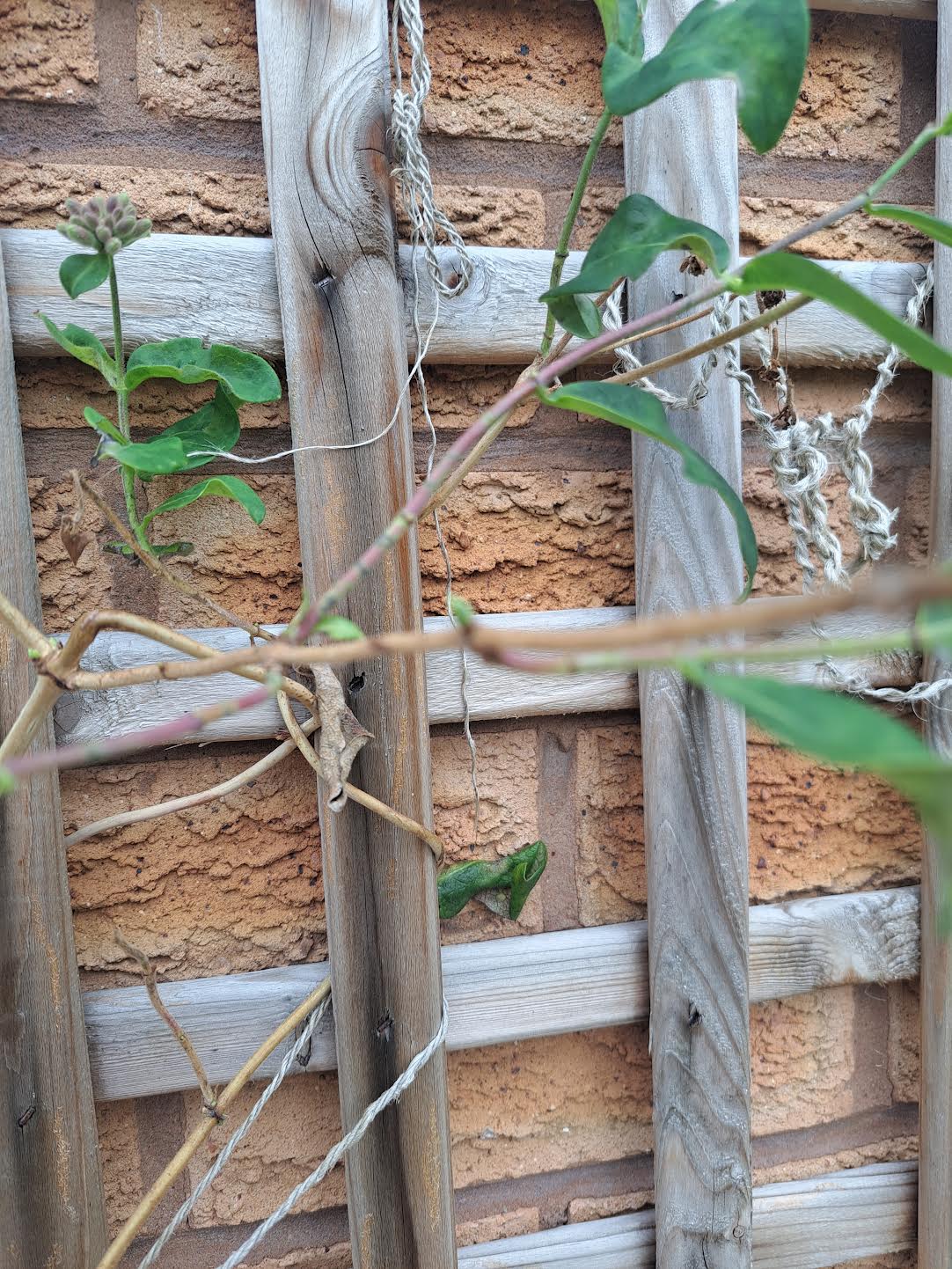
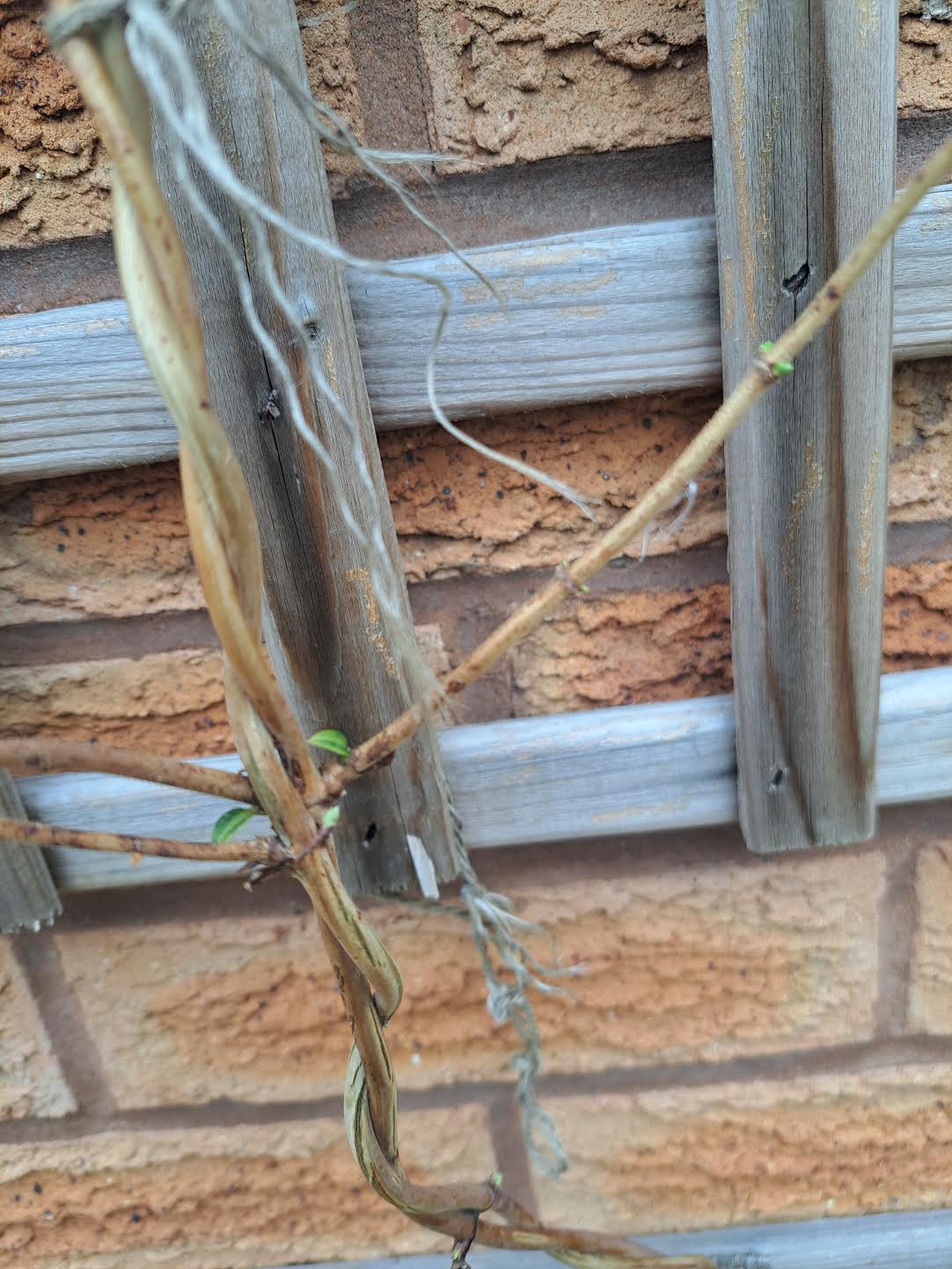
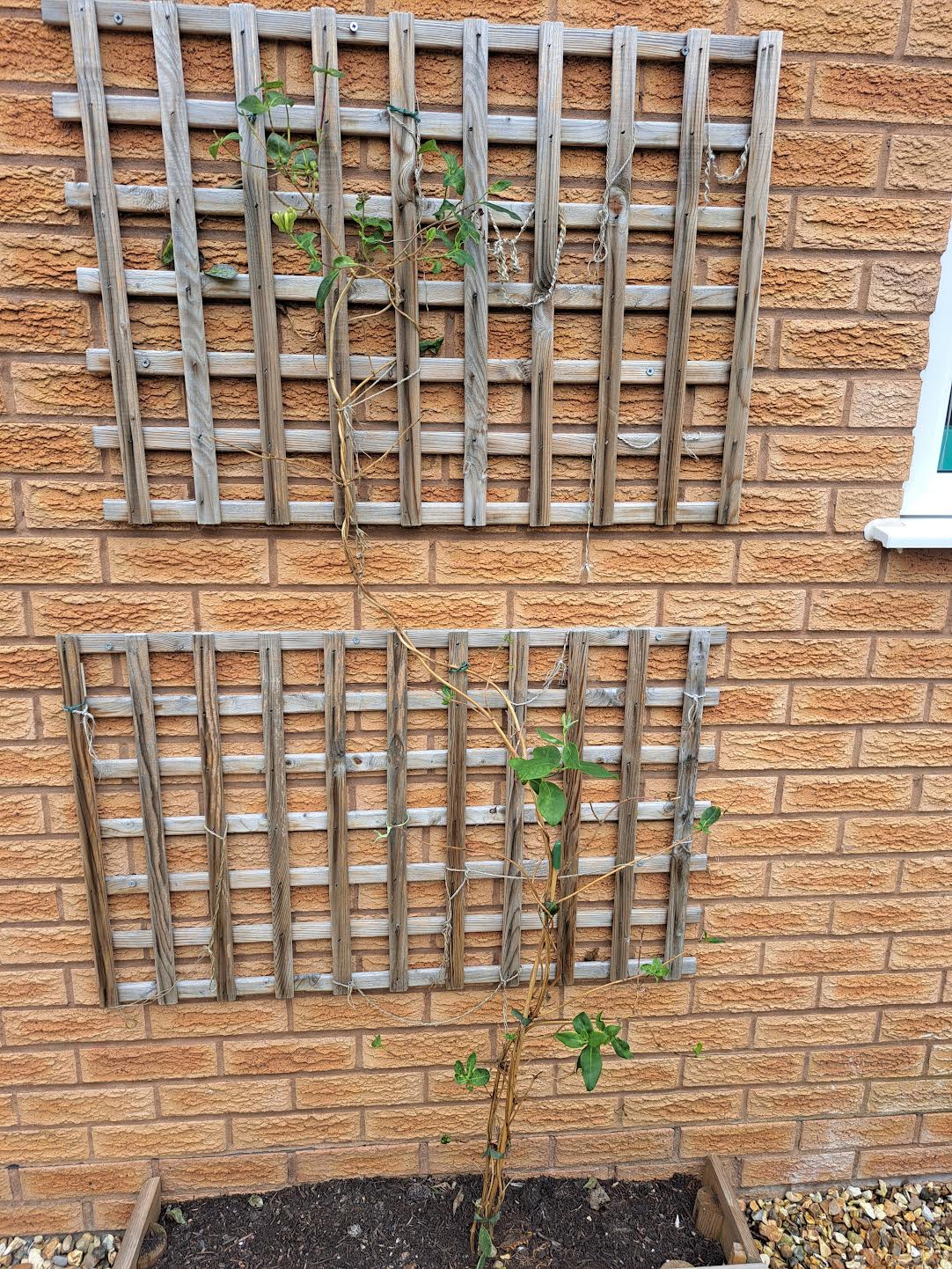
I can completely understand your concern, especially when your honeysuckle doesn't quite match those lush, bushy photos you see online. The good news is that what you're describing is actually very common with young climbing honeysuckles, and there's absolutely nothing to worry about. Those new shoots you're seeing are a brilliant sign that your plant is alive and establishing itself nicely.
The rather leggy, straggly appearance is typical of young honeysuckles that have been trained as climbers in the nursery. They often come with one or two long stems that have been encouraged to climb quickly, but without much branching lower down. This creates that "sad" look you're describing, where you've got plenty of length but not much bushiness. It's the plant equivalent of someone being all arms and legs!
Here's What I'd Recommend (And I Know This Might Feel Counterintuitive)
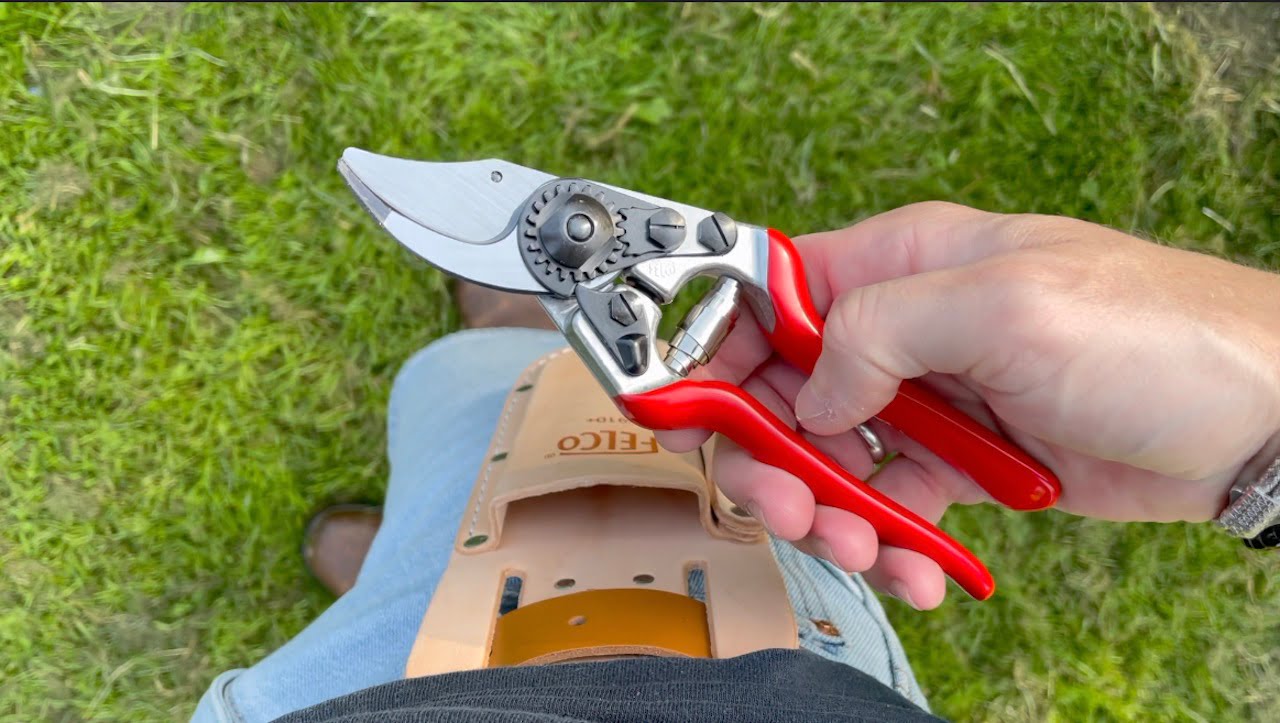
Give your honeysuckle a good hard prune, cutting it back to about 30 to 45 centimetres from the base. I realise this sounds drastic, and I've been there myself, secateurs in hand, feeling slightly sick about chopping back a plant I've just bought and nurtured. But I promise you, this is one of the best things you can do for a young, leggy honeysuckle, and I've done it countless times to rejuvenate straggly climbers with spectacular results.
Why This Works
When you cut back a young honeysuckle hard, you're essentially forcing it to produce multiple new shoots from lower down the plant rather than just elongating those existing straggly stems. Think of it like giving your honeysuckle a proper foundation. Those new shoots will emerge from various points along the stems, creating that bushy, well-furnished look you're after. Without this intervention, you often end up with a honeysuckle that has all its foliage at the top of your trellis with bare, woody stems at the bottom. Not the look anyone's going for!
The hard prune also encourages the plant to put energy into establishing a really robust root system rather than supporting long, thin stems. This makes for a much healthier, more resilient plant in the long run. You're essentially asking it to focus on getting properly settled in rather than racing upwards.
The Best Time to Do This
Since you planted in June and we're now heading into autumn, you've got a decision to make. Ideally, you'd prune honeysuckle in late winter or early spring, just before growth really kicks off. However, if your honeysuckle is looking particularly sparse and you want to encourage bushier growth for next season, you could give it a moderate prune now, taking it back by about half rather than the full hard prune. Then come late February or early March, you can assess it again and prune harder if needed.
Alternatively, you could wait until late winter (February is perfect) and do the full hard prune then. The advantage of waiting is that the plant gets to keep its foliage through winter, which helps the roots continue establishing. The disadvantage is you'll have to look at the leggy growth for a few more months!
After Pruning, Here's How to Train It
Once you've pruned and those lovely new shoots start emerging in spring, you'll want to train them carefully across both your trellises. Rather than letting them all shoot straight up, gently tie them horizontally or at angles across the framework. This horizontal training encourages even more side shoots to develop, creating that full, bushy coverage you're after. Think of it like creating a framework of stems that covers the whole trellis structure, then letting the plant fill in the gaps.
As new growth appears, keep spreading it out and tying it in, covering as much of your trellis space as possible. You want to avoid the temptation to just let everything grow upwards, which is what the plant naturally wants to do. By being a bit bossy about directing traffic, you'll end up with even coverage across both trellises rather than a mad scramble up one side.
A Bit of Reassurance
I genuinely understand that cutting back a plant you've just paid good money for and carefully planted feels all wrong. I still get that moment of hesitation before making the first cut, even after years of doing this professionally. But I can tell you from experience that honeysuckles are incredibly forgiving and respond brilliantly to hard pruning. Within a few months, you'll have multiple strong shoots appearing, and by the following year, you'll have the bushy, fragrant climber you're dreaming of.
I've rescued countless straggly honeysuckles with this approach, and the transformation is genuinely remarkable. Give it a season, and you'll barely recognise it. That sad, leggy specimen will become the lush, flowering climber that matches all those gorgeous photos you've been admiring.
In the Meantime
Make sure your honeysuckle is well watered, especially if we have a dry autumn. Young plants need consistent moisture to establish properly. A good mulch around the base (keeping it away from the actual stems) will help retain moisture and suppress weeds. Feed it in spring with a general-purpose fertiliser or some well-rotted compost, and it'll reward you with vigorous growth.
You're doing absolutely fine, and your honeysuckle is doing exactly what young honeysuckles do. With a strategic prune and a bit of patience, you'll have that bushy, beautiful climber covering both trellises beautifully. Trust the process, be brave with those secateurs, and this time next year you'll be writing posts telling other people how brilliantly your honeysuckle has filled out!
Let me know if you have any other questions, and do share a photo next summer when it's romping away. I'd love to see the transformation!
Quick Action Summary
- Hard prune back to 30-45cm from the base in late winter (February/March) or give a moderate prune now (cutting back by half)
- Train new shoots horizontally across both trellises as they emerge in spring
- Tie in growth regularly to create even coverage rather than letting everything shoot upwards
- Water consistently through establishment, especially during dry periods
- Mulch around the base in autumn, keeping it away from stems
- Feed in spring with general-purpose fertiliser or well-rotted compost
- Be patient – within a season you'll see multiple strong shoots, and by next year you'll have the bushy climber you're after
All the best Sue
 Lee Burkhill: Award Winning Designer & BBC 1's Garden Rescue Presenters Official Blog