-
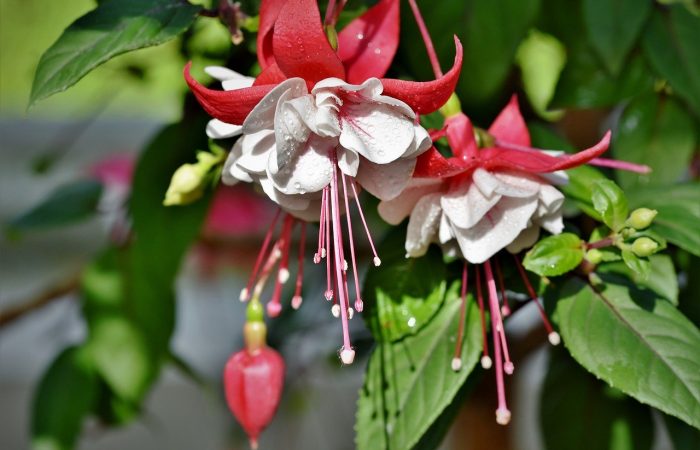
How to take softwood cuttings to propagate plants: the easy way
 Lee Burkhill: Award Winning Designer & BBC 1's Garden Rescue Presenters Official Blog

There's something really rewarding about propagating your own plants from cuttings. Not only does it allow you to bulk up your garden flower beds but it means you really get to know your plants and shrubs. Making you an even better gardener! This guide is going to show you how you can take cuttings from plants relatively easily and help reduce your carbon footprint along the way! Let's get cutting!
Let’s talk softwood cuttings—the easiest way to propagate plants for free! Learn exactly when and how to take softwood cuttings from your favourite shrubs, perennials, and climbers. This step-by-step guide covers timing, technique, rooting methods, and aftercare to transform garden trimmings into thriving new plants. Perfect for budget-conscious UK gardeners wanting instant results.
Taking cuttings is a really easy way to propagate and create plants for your gardens without spending a penny. This guide will show you how to take softwood cuttings in your gardens to multiply your shrubs and plants without leaving the house!
When to take softwood cuttings?
In the UK, the best time to take softwood cuttings is in mid-spring, just before shrubs start to send out flowers. Usually, mid to late April is the ideal time, as you’re looking for flexible new green growth. Not to be confused with woodier material from last year.
Think of it like the plants just woke up and started to grow, but it is not in full swing just yet. It’s a perfect time not to stress the plant or the cutting too much. You don’t want to take cuttings of stems with flowers on, as these will be taking a lot of energy from the plant and therefore cutting and making it harder for it to root.

Always take cuttings either first thing in the day or early evening.
How to Tell if Your Cutting is Ready: The Snap Test
Here’s the thing that catches out most beginners: knowing exactly when that stem has hit the sweet spot between too green and too woody. I’ve watched countless gardeners take cuttings that were either too soft and rotted, or too hard and never rooted. The snap test solves this problem in about three seconds.
Take the stem you’re considering between your thumb and forefinger, about halfway down where you’d make your cut. Gently bend it. What happens next tells you everything you need to know.
If it snaps cleanly with a crisp sound, you’ve hit gold. That’s perfect softwood material, flexible enough to have active growth hormones but mature enough to handle the stress of being severed from the parent plant. The break should be clean, almost like snapping a fresh green bean.
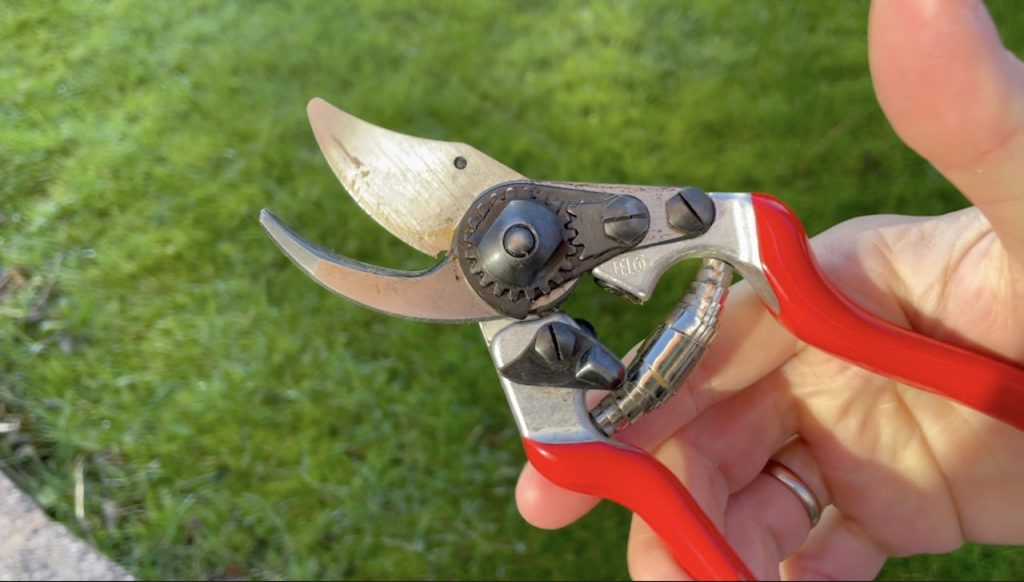
If the stem just bends and won’t snap, it’s too green and immature. These cuttings will struggle because they’re mostly water with very little structure. They’ll wilt before they can establish roots. Wait another week or two and test again.
If the stem won’t bend at all, or feels rigid and woody, you’ve missed the softwood window. These stems have already started forming bark, and the hormone levels have dropped. You’ll need to wait until late summer for semi-ripe cuttings instead, or come back next spring for another go at softwood.
I use this test on every single cutting I take, even after thirty-five years of propagating plants professionally. It takes the guesswork out completely and dramatically improves your success rate. Within a few attempts, your fingers will recognise that perfect snap without even thinking about it.
What plants can I take softwood cuttings from?
This is one of the most commonly asked questions. You can take softwood cuttings from tender perennials, herbaceous perennials and most deciduous shrubs (those that lose their leaves in the winter). It’s a good way to propagate plants that are tricky to root through division or seeds.
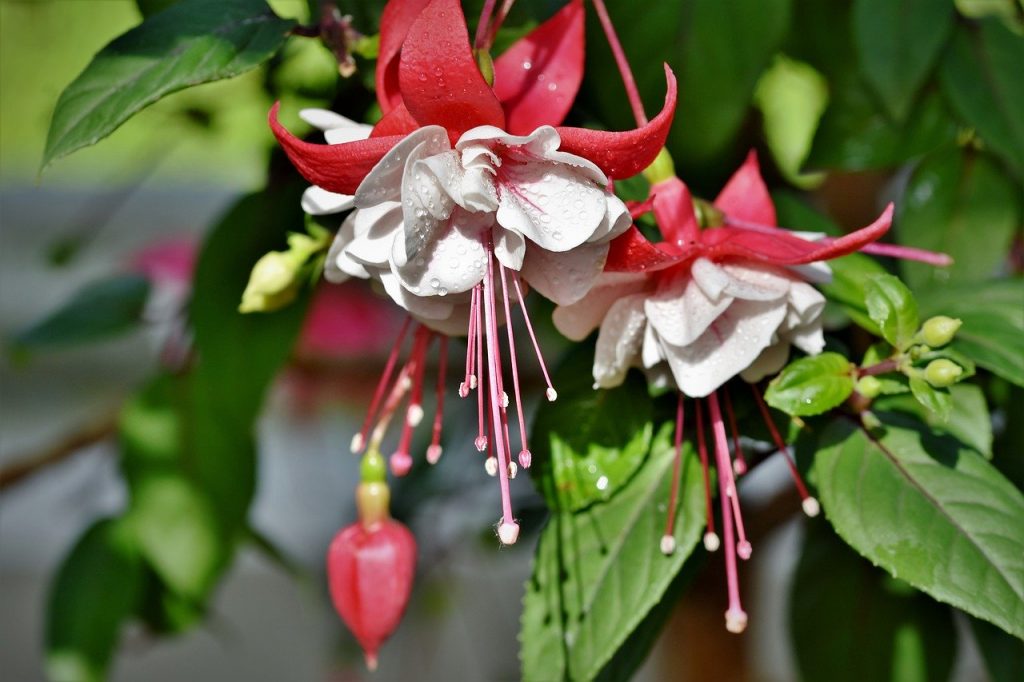
The Complete Softwood Cuttings Plant List: Beginner to Advanced
Not all softwood cuttings are created equal. Some plants root so easily you could practically stick them in a glass of water and forget about them. Others demand patience, perfect conditions, and even then might fail just to keep you humble. Here’s my honest assessment after decades of propagating everything from the bombproof to the bloody-minded.
| Plant Name | Why It’s Easy/Challenging | Best Timing |
|---|---|---|
| Pelargonium (Geraniums) | Root in water or compost, incredibly forgiving, great for beginners | May-August |
| Fuchsia | Fast rooting, visible results in 2-3 weeks, very reliable | April-June |
| Lavender | Nearly impossible to kill once cut, perfect starter plant | May-July |
| Buddleia | Vigorous grower, roots establish quickly, high success rate | May-June |
| Forsythia | Reliable rooter, great for confidence building, tolerates mistakes | April-June |
| Verbena | Roots visible in jam jar within days, exciting for beginners | May-August |
| Osteospermum | Foolproof for beginners, multiple cuttings per plant possible | May-July |
| Hydrangea | Takes longer (6-8 weeks) but rewarding, needs consistent humidity | April-May |
| Penstemon | Reliable but sensitive to overwatering, moderate difficulty | May-June |
| Salvia | Most varieties root well, particular about compost moisture levels | May-July |
| Rosemary | Slower than other herbs but worth patience, decent success rate | May-June |
| Physocarpus | Decent success rate, just needs warmth and time | May-June |
| Lavatera | Good results if taken at exactly the right stage, use snap test | May-June |
| Weigela | Temperamental about water levels, requires careful attention | May-June |
| Philadelphus | Stunning when successful but inconsistent, advanced level | May-June |
| Ceanothus | Demands rooting hormone and perfect drainage, challenging | May-June |
| Viburnum | Slow to root, prone to rotting if conditions aren’t spot on | May-June |
Beginner Plants (80-95% Success Rate)
Start here if you’re new to taking cuttings. These plants want to root, and they’ll forgive most mistakes:
Intermediate Plants (60-75% Success Rate)
Once you’ve mastered the basics, these plants offer a bit more challenge but still root reasonably well:
- Hydrangea – Takes longer (6-8 weeks) but very rewarding. Needs consistent humidity.
- Penstemon – Reliable but sensitive to overwatering in the rooting stage.
- Salvia – Most varieties root well but they’re particular about compost being too wet.
- Rosemary – Slower than other herbs but worth the patience for culinary use.
- Physocarpus – Decent success rate, just needs warmth and time.
- Anthemis – Roots well but the cuttings can look tatty before they establish.
- Lavatera – Good results if you take them at exactly the right stage.
- Aubrieta – Reasonable success, better in slightly cooler conditions.
Advanced Plants (40-60% Success Rate)
These require perfect timing, optimal conditions, and sometimes just pure luck. Don’t be discouraged by failures here:
- Philadelphus – Absolutely stunning when it works but maddeningly inconsistent.
- Ceanothus – Demands hormone rooting powder and perfect drainage.
- Viburnum – Slow to root and prone to rotting if conditions aren’t spot on.
- Roses – Technically possible from softwood but honestly better from hardwood in winter.
- Clematis – Can be done but needs careful attention to node positioning.
- Weigela – Possible but temperamental about water levels.
My advice? Start with five Pelargoniums or Fuchsias to build your confidence. Get those rooting successfully, understand the process, then gradually work your way up to the trickier customers. There’s no medal for starting with the hardest plants first, and you’ll enjoy the process far more if you’re seeing regular success.
If in doubt, give it a go, as long as the cutting is fresh green growth, what do you have to lose?
Tools for Taking Cuttings
You will need a few tools to take cuttings to make the job easier.
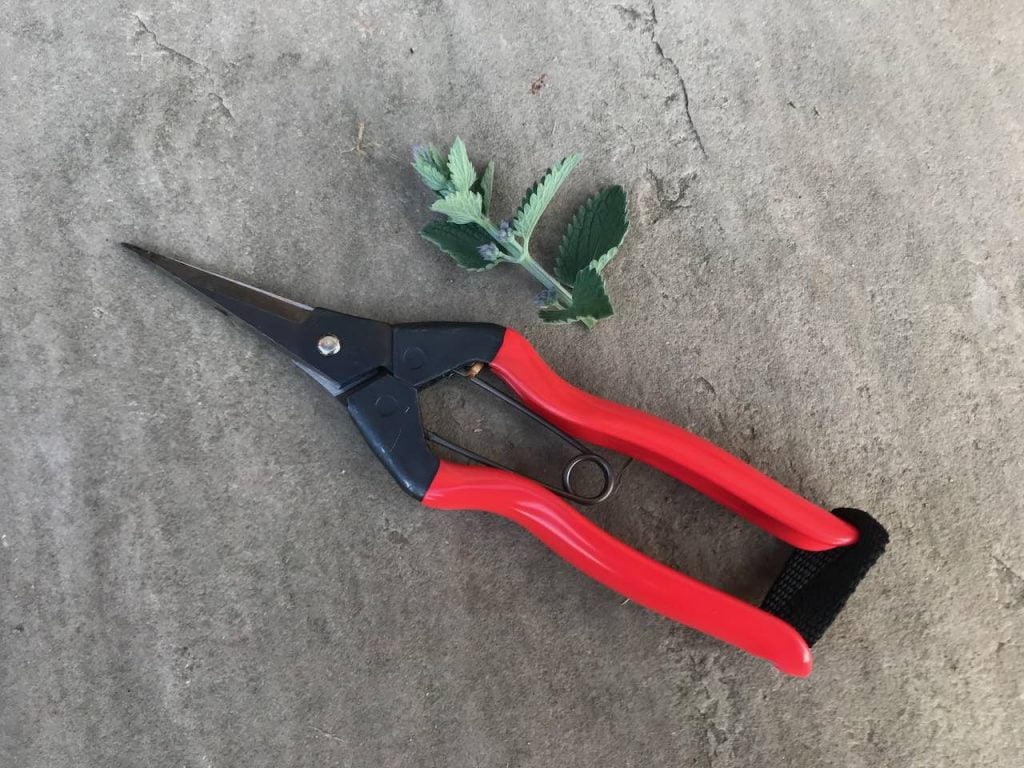
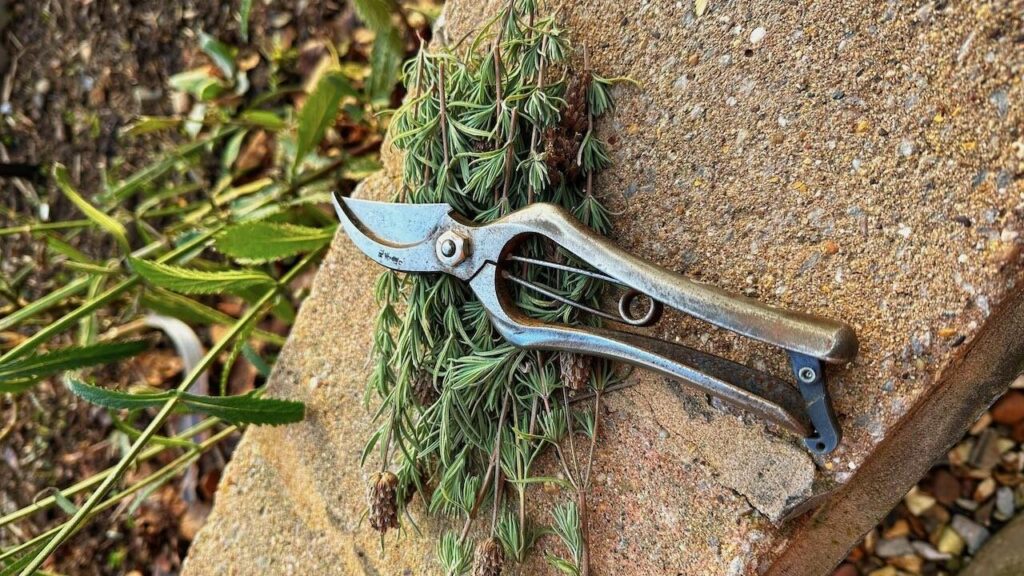
- Sharp secateurs or snips
- Plastic bag
- A sharp knife
- Jam jar or egg cup of water
- Pots
- Compost
- Rooting hormone (optional)
How to take softwood cuttings
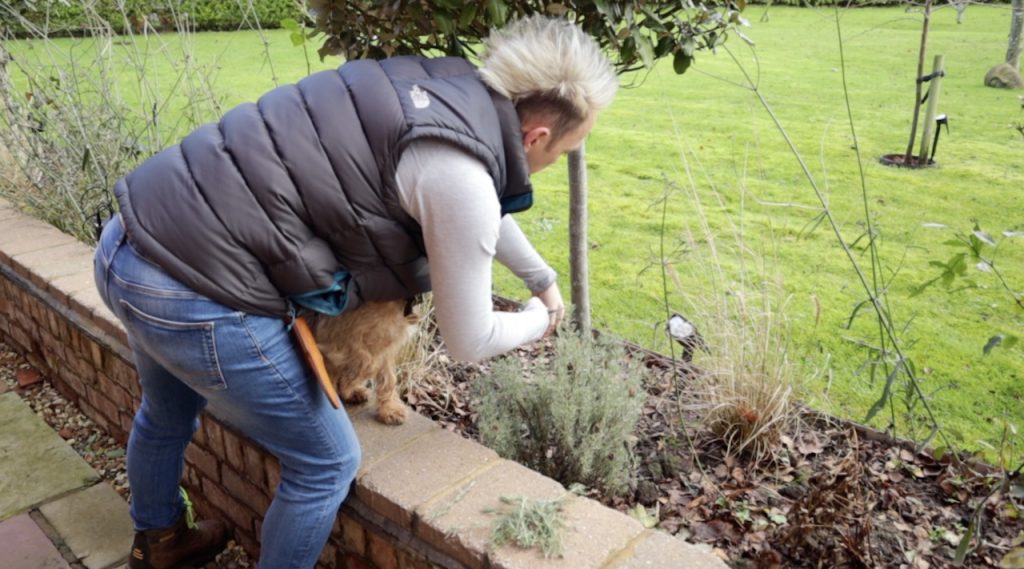
Taking cuttings couldn’t be easier, but you do need to work at a pace because as soon as you make your cuts, you’re then on the clock as the cuttings will be losing water fast. The aim is to get them potted or into the water as quickly as possible.
1. Take your cuttings either early morning or early evening.
Never in the midday sun. This is to help reduce stress on the plant and the cuttings as they are not transpiring as quickly out of the midday sun. Ideally, an overcast day is perfect.
2. Cut off 2-4 inches per cutting
You want to take 2-4 inches of fresh green growth from the very tip of the plant or shrub. It should be flexible and not woody. Use a sharp pair of secateurs, snips or scissors.
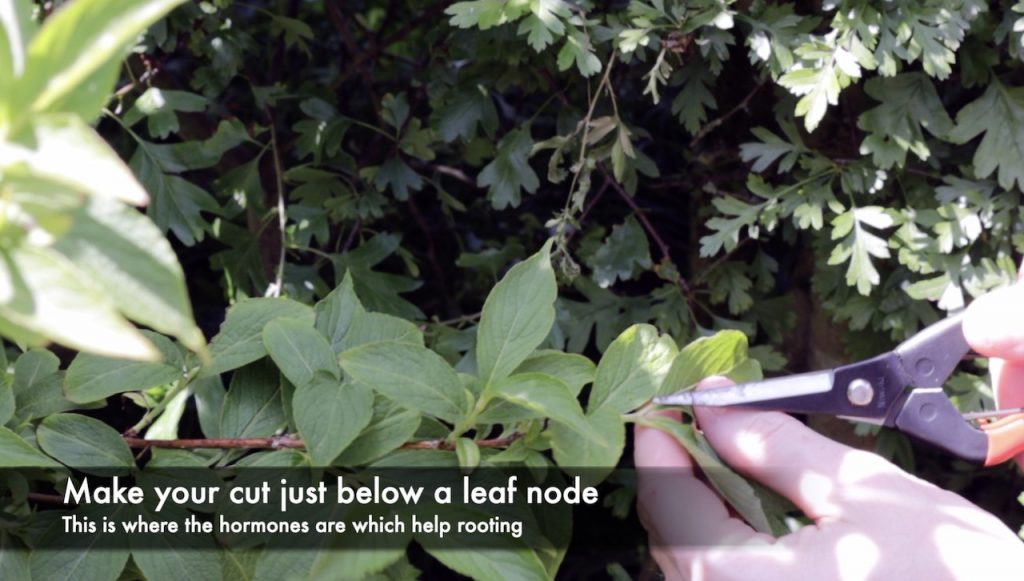
3. Make a cut just below a set of leaves/leaf node.
This is where hormones are their strongest. The cutting will use these to send out tiny roots from the cutting.
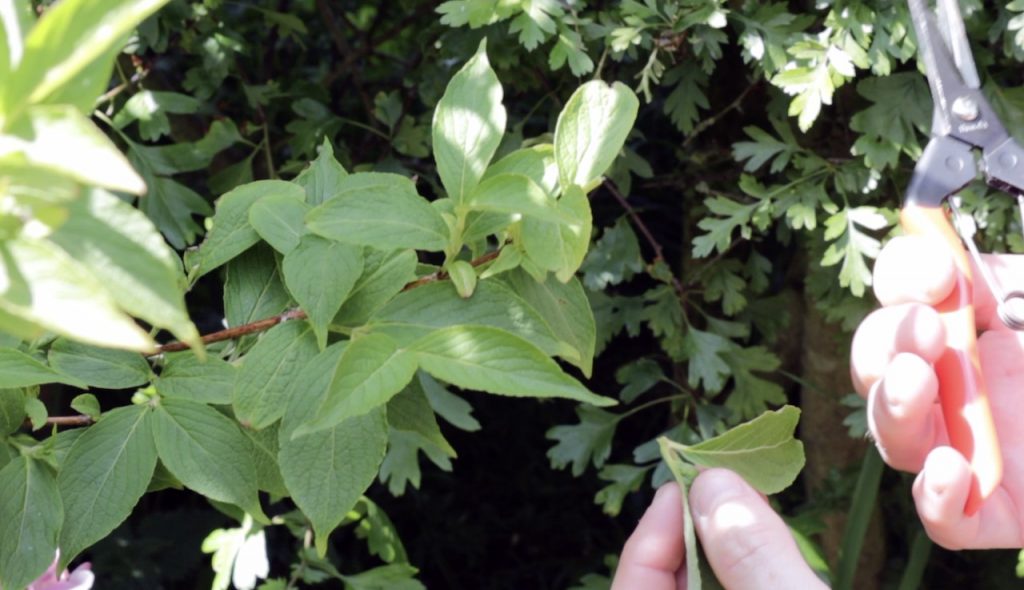
4. Take 5 or 6 cuttings minimum
Taking 5 cuttings minimum increases your chances of rooting success. It also means if some don’t take all your hard work, it’s not for nothing!
5. Pop your cuttings in a wet plastic bag
Putting the cuttings into a plastic bag helps reduce water loss until you can prepare them.
Preparing your plant cuttings
Before we go plonking the cuttings into compost or a jar of water, we need to clean them up and prepare them for success.
1. Take your sharp knife and remove all but 2-4 of the leaves.
Leaves allow the plant to release moisture through its stomata so we want to reduce that as much as possible until the plant roots. The leaves will still be acting as if they are attached to the mother plant! If there are any flower buds, pinch these out too.
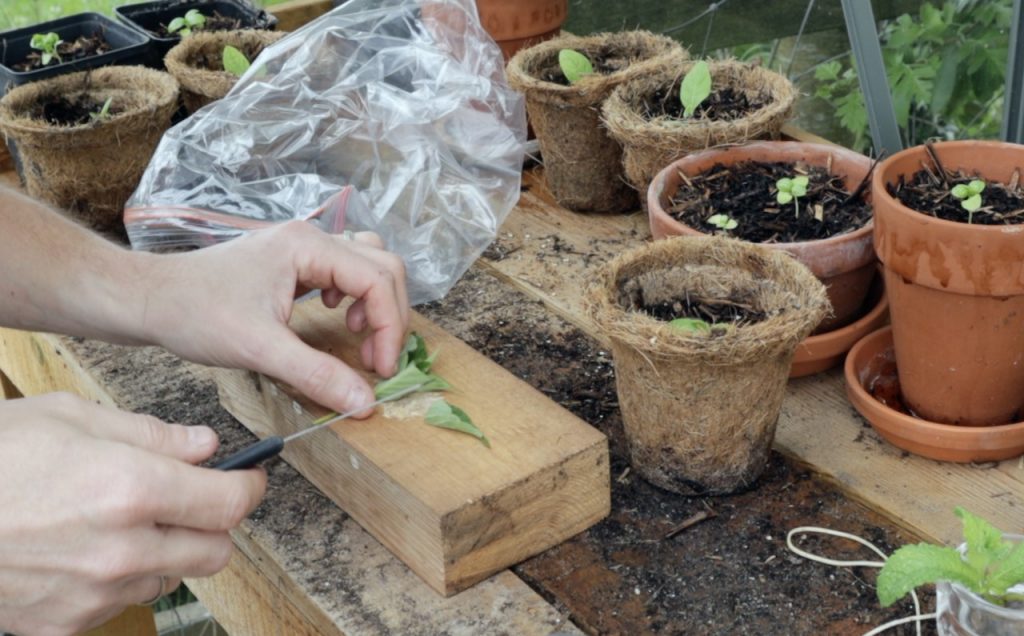
2. Then reduce the size of the leaves by half, cutting them down.
This may sound brutal, but its really important and the plant will thank you. Again we’re helping to slow down its water loss whilst still allowing photosynthesis.
Potting on cuttings
Now I have two methods for potting on cuttings. One is my lazy way, and the other is slightly more old-fashioned. Either works perfectly well, so pick your route. If you’re a beginner gardener, the jam jar method is exciting as you get to see your plant’s roots.
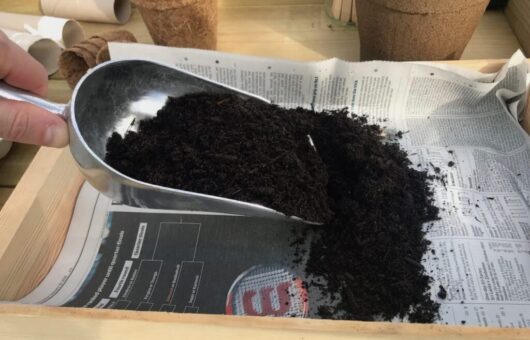
You’ll need some decent compost and a pot with drainage. You can use a clean yoghurt pot or a recycled plastic pot.
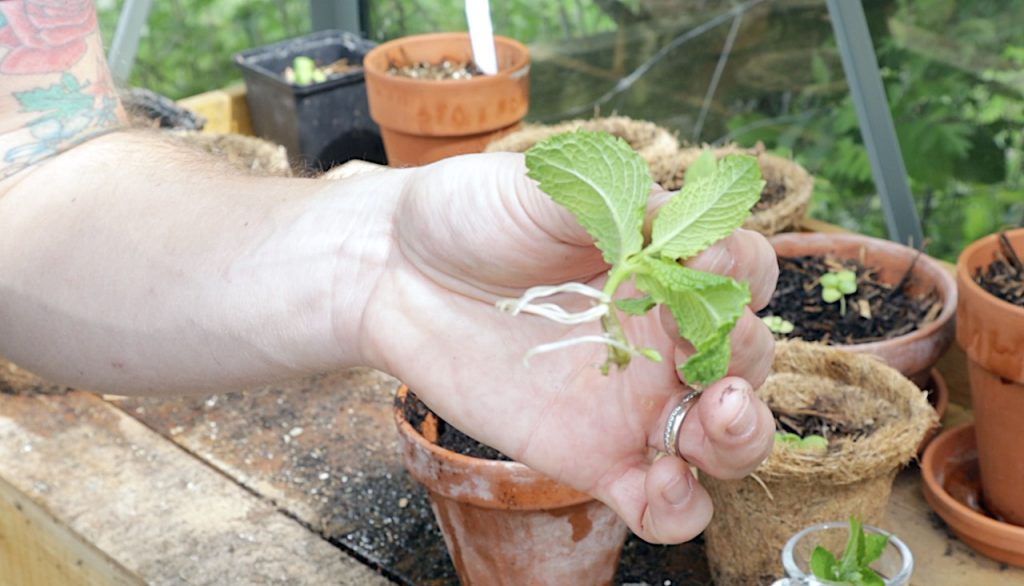
Speedy Cuttings Method
I simply plop my prepared cuttings into a jam jar or egg cup. Then I place them on a windowsill for a few weeks. Different plants and shrubs will root at different rates. I love this method as you get to see the roots emerge, and you know which cuttings will be successful.
This method is also great for limited spaces, such as window ledges or balcony planting, where space is at a premium. It’s also great to encourage children to the garden as they race each other for root emergence!
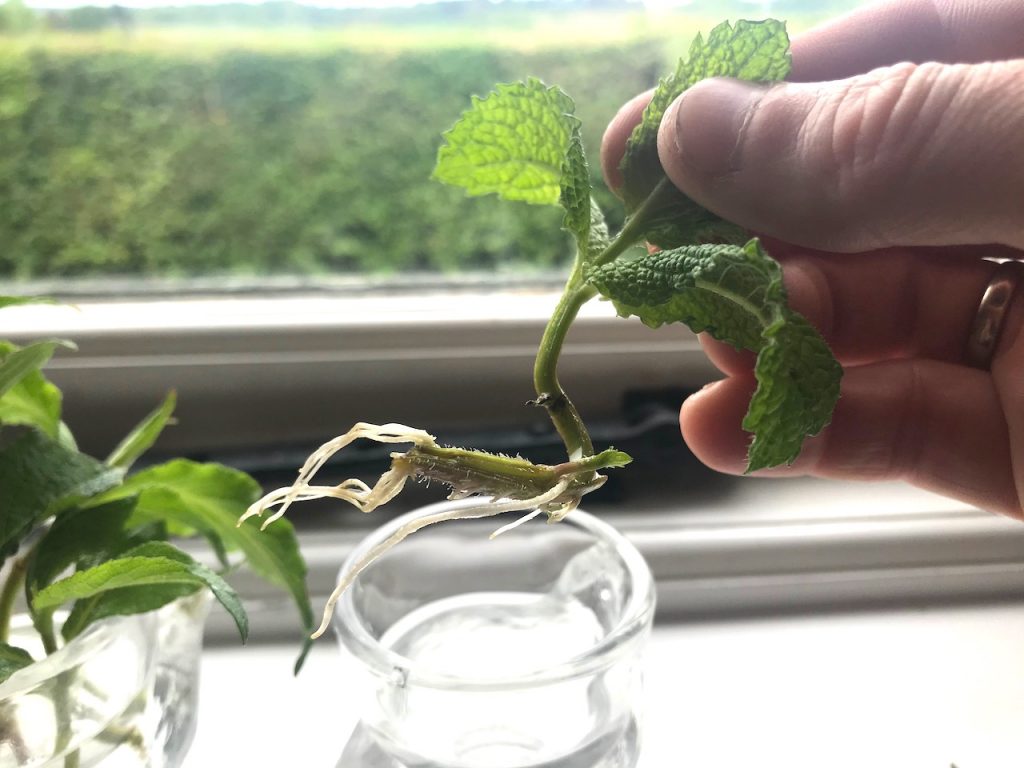
Once they have rooted, follow the guidance below.
Pot & Bag Cutting Method
You can directly pot on cuttings once they have been prepared, or use this method after the jam jar approach.
1. Fill a pot with compost and water well
This is going to be the pot for your cutting to root.
2. Make a hole with a dibber or pencil and insert the cutting.
For smaller, less vigorous plant species, i.e. tender perennials, you can add multiple cuttings to one pot until they root and then transplant if space is at a premium.
3. Insert your cutting and backfill around it.
Water the pot again, and then place a plastic bag over the top.
4. Make sure you remove the plastic bag a couple of times a week
This allows air to reach the cutting area. This helps reduce mildew, mould, fungus and airborne pathogens.
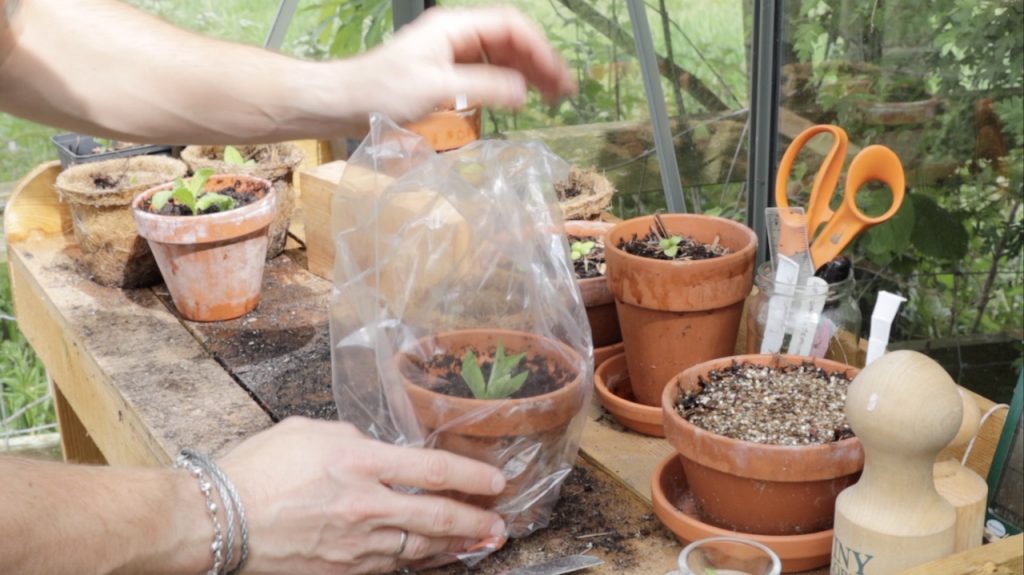
5. The cutting may take 4-8 weeks to root
Some shrubs may take even longer, like Hydrangea. So be patient! You can tell when it is roote,d as you will see new leaves emerge from the shoot or roots appearing if you carefully lift the entire plant from the pot.
6. Ensure you then harden off the plant
You can do this in a cold frame of somewhere protected before planting out. With shrubs, I’d wait until the next spring before planting them out, so you can babysit them as they establish themselves this year.
When to Plant Out in the Garden
This is where patience really pays off. Just because your cutting has rooted doesn’t mean it’s ready for the harsh realities of garden life. Those roots might look impressive in the pot, but they’re still quite soft, and the plant hasn’t toughened up yet.
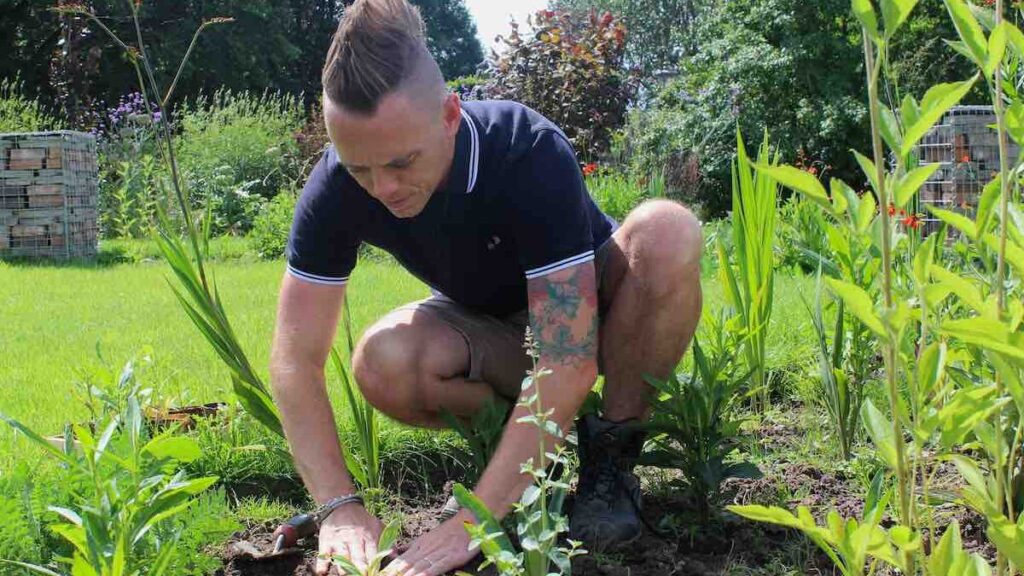
For perennials, I generally wait until the cutting has been potted on for at least a month and is showing good growth before considering garden planting. For shrubs, I wait an entire year, growing them on in increasingly larger pots and letting them spend their first winter in a protected spot like a cold frame or against a sheltered house wall.
The absolute earliest you should consider planting out is late summer for very vigorous perennials that were rooted by early June. More typically, cuttings taken in spring will spend their first summer and winter in pots, with planting out happening the following spring. This gives them a full year to establish a proper root system before facing winter in the ground.
When you do plant out, treat your new plants like the precious babies they are. Water them regularly through their first season, mulch around them to conserve moisture, and provide some shade if the weather turns scorching. Within a couple of years, they’ll be just as tough as plants you bought from the garden centre. But in that first season, they need a bit of mollycoddling.
Getting the Temperature Right for Rooting Success
Temperature is the secret ingredient that separates successful propagators from those who are frustrated. I learned this the hard way back in my early gardening days, when I took perfect cuttings in April, followed all the steps religiously, and watched them sit there, refusing to root, for months. Turns out they were just too cold.
Softwood cuttings need consistent warmth to root successfully, ideally between 18-24°C (64-75°F). Below this range, the rooting process either slows to a crawl or stops altogether. Above it and you risk cooking your cuttings or encouraging fungal problems.
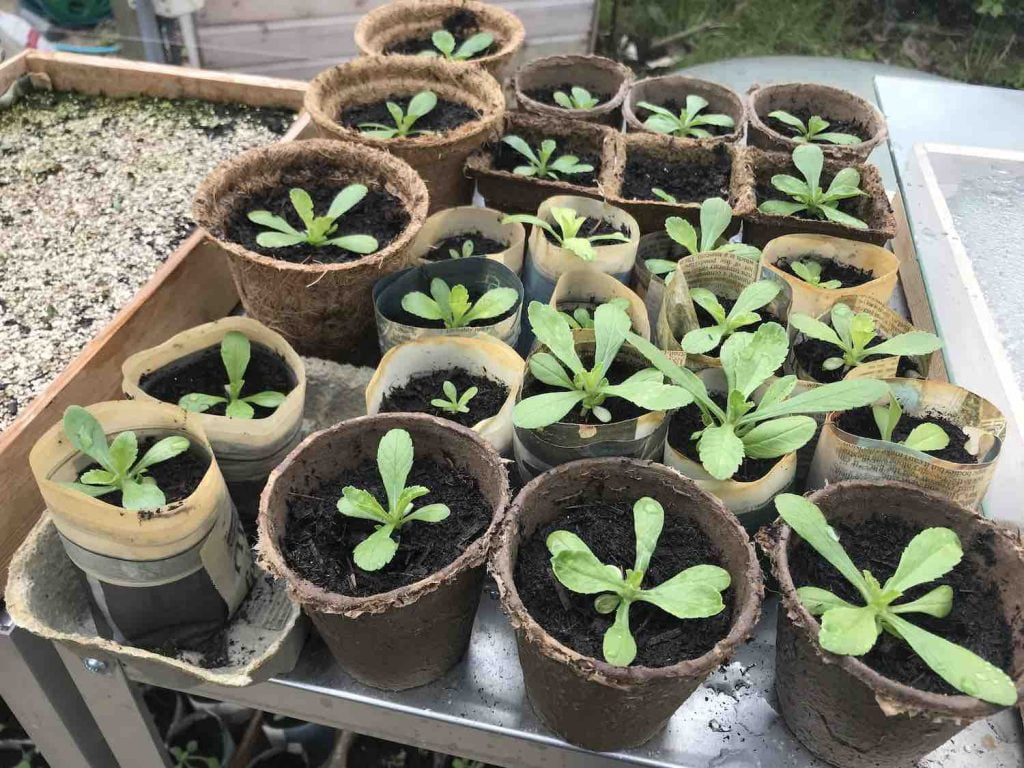
This creates a particular challenge for UK gardeners taking cuttings in April or early May. Your days might be lovely and warm, but those nighttime temperatures can still plummet to single digits. I’ve had clients tell me their cuttings were fine, only to discover they’d left them outside in a cold snap that basically sent them into hibernation.
Common Softwood Cutting Questions Answered
What is a softwood cutting?
A softwood cutting is a section of new spring or early summer growth taken from a plant before it’s had chance to mature and turn woody. The stem should be flexible, green, and at that perfect stage between brand new shoots and established wood. Think of it as teenage plant material, neither fully mature nor still a baby. These cuttings root faster than any other type because they’re packed with growth hormones and actively trying to expand.
When is the best time to take softwood cuttings in the UK?
Mid-April through late June is your golden window for softwood cuttings in the UK. The exact timing varies slightly by plant, but generally, you want that period after spring growth has started but before the plant puts all its energy into flowering.
Early morning or early evening are the best times of day because the plant material is fully hydrated and not stressed by midday sun. Avoid taking cuttings on scorching hot days or during drought conditions when plants are already struggling.
How long do softwood cuttings take to root?
Most softwood cuttings develop roots within 3-6 weeks if conditions are right. Easy plants like Fuchsia and Pelargonium might show roots in as little as two weeks, whilst trickier customers like Hydrangea can take 8-10 weeks. Temperature plays a massive role here.
Cuttings kept at a consistent 18-20°C root significantly faster than those experiencing temperature fluctuations. You’ll know they’ve rooted when you see new leaf growth or can gently tug the cutting and feel resistance.
Can I take softwood cuttings in summer?
Yes, but your window is narrowing. Early summer (June) is still excellent for softwood cuttings. By mid to late July, many plants have moved into the semi-ripe stage where the base of the stem is starting to harden. This doesn’t mean you can’t take cuttings, but you’d technically be taking semi-ripe rather than softwood cuttings.
Some tender perennials like Pelargoniums and Osteospermums stay soft enough for cuttings well into August. Use the snap test to determine what stage your plant is at rather than rigidly following calendar dates.
Do I need rooting hormone for softwood cuttings?
Strictly speaking, no, you don’t need rooting hormone. Many plants will root perfectly well without it. However, rooting hormone significantly increases your success rate, speeds up root development, and gives you better root systems on the cuttings that do take.
I use it religiously on everything except the absolute easiest plants like Pelargoniums. A small tub costs about five quid and lasts for years. If you’re not using rooting hormone, at least dip your cuttings in water before potting to help the compost stick to the cut surface.
Can I root softwood cuttings in water?
Absolutely, and it’s brilliant for beginners because you can watch the magic happen.
The jam jar method works particularly well for Pelargoniums, Coleus, Verbena, Fuchsia, and most tender perennials. Simply pop your prepared cuttings in a jam jar or glass with a few centimetres of water, place on a bright windowsill out of direct sun, and watch roots develop over 2-4 weeks.
Change the water every few days to keep it fresh. Once roots are about an inch long, pot them up into compost. The only downside is that water roots are quite soft, so cuttings can sulk for a week or two when transferred to compost.
Why are my softwood cuttings dying?
The three most common culprits are excessive water, insufficient humidity, and temperature shock. If your cuttings are turning black at the base, that’s rot from overwatering or poor drainage.
If they’re wilting despite moist compost, they’re losing water faster than they can absorb it, which means either not enough humidity (put that bag back on) or they were exposed to direct sunlight. If they’re sitting there doing nothing for weeks, they’re probably too cold. Cuttings require a consistent temperature of 18-24°C to root. Stick your finger in the compost; if it’s cold, the plants won’t root until it warms up.
Summary
That’s really all there is to softwood cuttings. It’s a fantastic way to bulk up your garden and help reduce your carbon footprint. Not only are you getting ‘true to type’ plants, but you’re not spending a fortune in the garden centre!
If you have questions or comments on taking cuttings, why not let me know below? You can Tweet, Facebook or Instagram me. You can also follow me on Youtube where I’ve got plenty of garden guide vlogs!



Lee Burkhill
Lee Burkhill, known as the Garden Ninja, is an award-winning garden designer and horticulturist with over 30 years of gardening experience and 15 years as a professional garden designer. A qualified RHS (Royal Horticultural Society) professional, Lee specialises in sustainable garden design and practical horticultural advice. He designs and presents on BBC1’s Garden Rescue and in leading gardening publications. Lee combines three decades of hands-on gardening knowledge with professional design qualifications to help gardeners create beautiful, functional outdoor spaces.
View all posts by Lee Burkhill







Categories
One thought on “How to take softwood cuttings to propagate plants: the easy way”
Leave a Reply
You must be logged in to post a comment.
Other posts
-

Start here: to begin your gardening journey! Read more
-
Top 15 Slug & Snail Proof Garden Plants Read more
-
Crop Rotation for Beginner Gardeners: How to arrange your allotment Read more
-
Compost vs Mulch: What’s the Difference and When to Use Each Read more
-
Why Is My Peace Lily Turning Black? Complete Troubleshooting Guide Read more
-
Lawn Weeds Identification Guide: Common UK Lawn Weeds and How to Remove Them Read more





Hello, I really enjoyed reading your article about taking softwood cuttings to propagate plants, I found it very helpful. Thank you, Richard