Purple Flowers: 35 Best Varieties for Stunning UK Gardens
Lee Burkhill: Award Winning Designer & BBC 1's Garden Rescue Presenters Official Blog
Beginner level
Discover the 35 best purple flowers for UK gardens, from hardy lavender and stunning alliums to dramatic delphiniums and fragrant sweet peas. This comprehensive guide covers annuals, perennials, climbers, and shrubs perfect for British gardens, with expert growing tips for year-round purple colour that attracts pollinators and adds sophistication to any space.
I’m Lee Burkhill, the Garden Ninja, and if there’s one colour that absolutely transforms UK gardens throughout the seasons, it’s purple. From the palest lavender to the deepest aubergine, purple flowers bring sophistication, drama, and an air of mystery that no other colour quite achieves.
After designing hundreds of gardens across the North West and working on the BBC’s Garden Rescue, I can tell you that purple is consistently one of the most requested colours from clients. And it’s not hard to see why.
Purple has this incredible versatility where it can be romantic and cottage-garden soft, or bold and contemporary, depending on how you use it. It complements virtually every other colour in the garden and looks stunning against green foliage, making it a true workhorse in garden design.
In this guide, I’ll walk you through 35 of the absolute best purple flowers for UK gardens. These aren’t just pretty faces; they’re reliable performers that I’ve personally grown or specified in designs over my 35 years of gardening experience. From hardy perennials that’ll come back year after year to show-stopping annuals for instant impact, there’s something here for every garden situation, whether you’re in Cornwall or Cumbria.
Understanding Purple in UK Garden Design
Before we dive into the plant list, let’s talk about what makes purple such a powerful tool in garden design, particularly in the UK climate and light conditions.
Purple encompasses an enormous range of shades, from soft lilac and lavender through to rich violet, deep plum, and almost-black aubergine tones. Each has its place in the garden and creates different effects. The lighter purples work beautifully in shaded areas where they seem to glow in low light, whilst darker purples provide dramatic punctuation points in sunny borders.
From a design perspective, I use purple flowers to:
Create depth and make spaces feel larger (darker purples recede)
Add sophistication to cottage garden schemes
Provide cooling contrast to hot colours like orange and red
Create romantic evening gardens (purple flowers glow at dusk)
Establish year-round structure with purple-leaved plants
Bridge the gap between cool blues and warm pinks
In the UK, we’re blessed with conditions that suit purple flowers brilliantly. Our moisture and moderate temperatures mean many purple-flowering plants thrive here. The quality of our light—softer and more diffused than Mediterranean climates—makes purple flowers particularly luminous rather than appearing muddy.
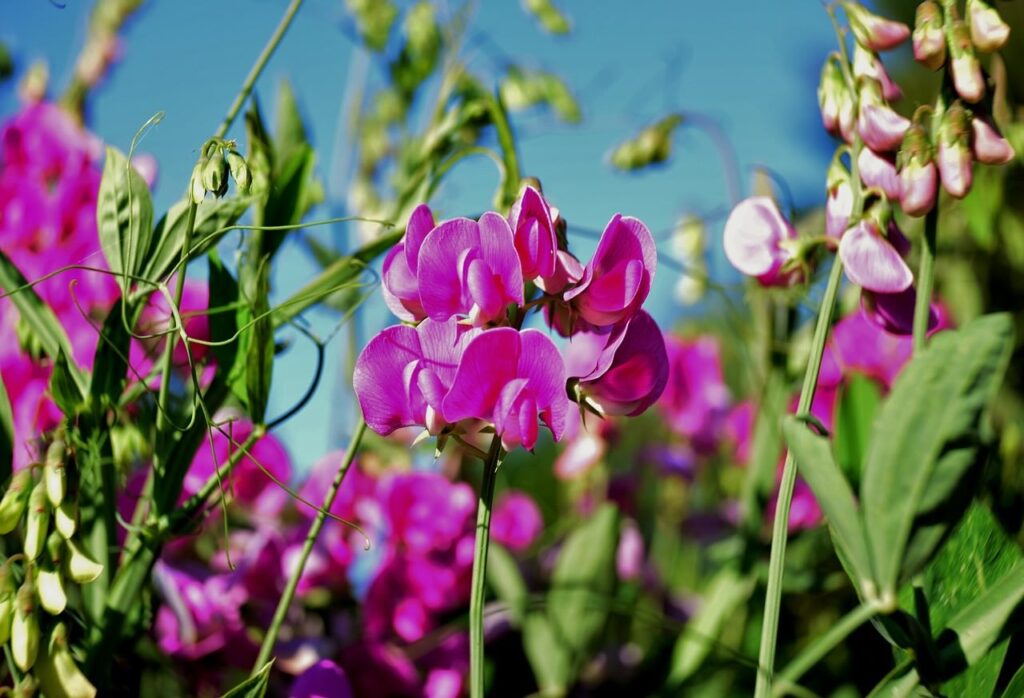
This is the original sweet pea, discovered in Sicily in the 1690s, and it remains one of the best. Deep purple-maroon flowers with an incredible scent that’ll fill your entire garden. I grow these up obelisks at Garden Ninja HQ every single year without fail. They’re brilliant for cutting, and the more you pick, the more they flower.
Growing Tips: Sow in autumn in root trainers for the strongest plants, or spring-sow in March. They need full sun and rich, moisture-retentive soil. Provide tall supports and pinch out growing tips when plants are about 15cm tall. Water consistently and deadhead religiously. Feed weekly with high-potash fertiliser.
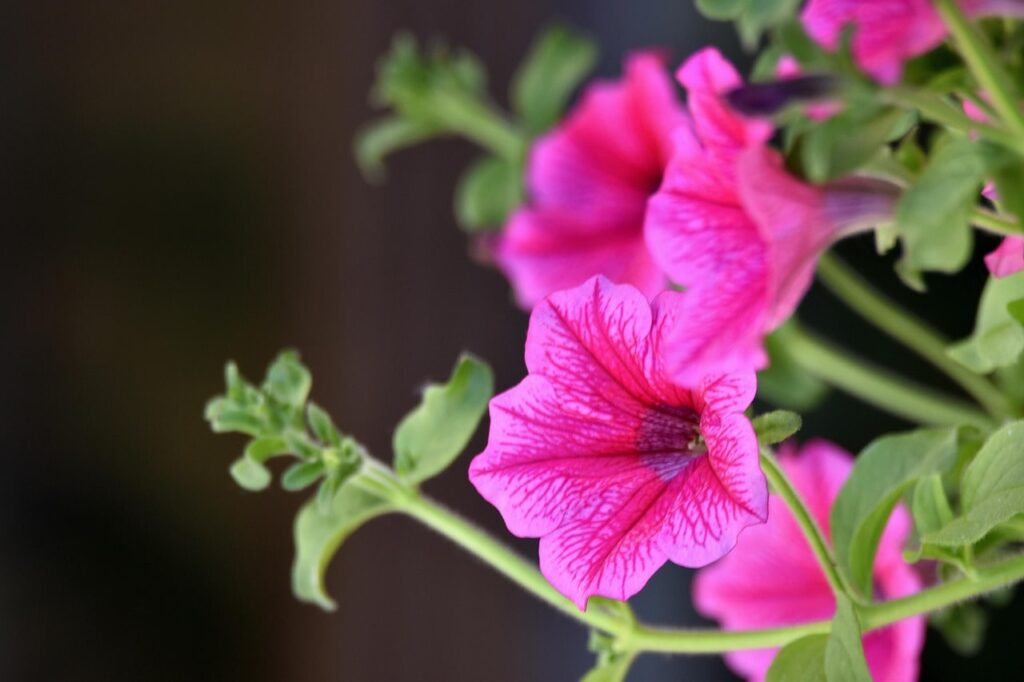
These trailing petunias are absolute workhorses for containers and hanging baskets. The vibrant purple flowers cascade beautifully and are incredibly weather-resistant for petunias. They flower non-stop from May through to the first frosts with minimal fuss.
Growing Tips: Plant out after all frost risk, typically mid-May. Use quality compost and feed weekly with high-potash fertiliser. Deadhead spent flowers though Surfinias are better than traditional petunias at self-cleaning. They’re surprisingly drought-tolerant once established but perform best with consistent moisture.
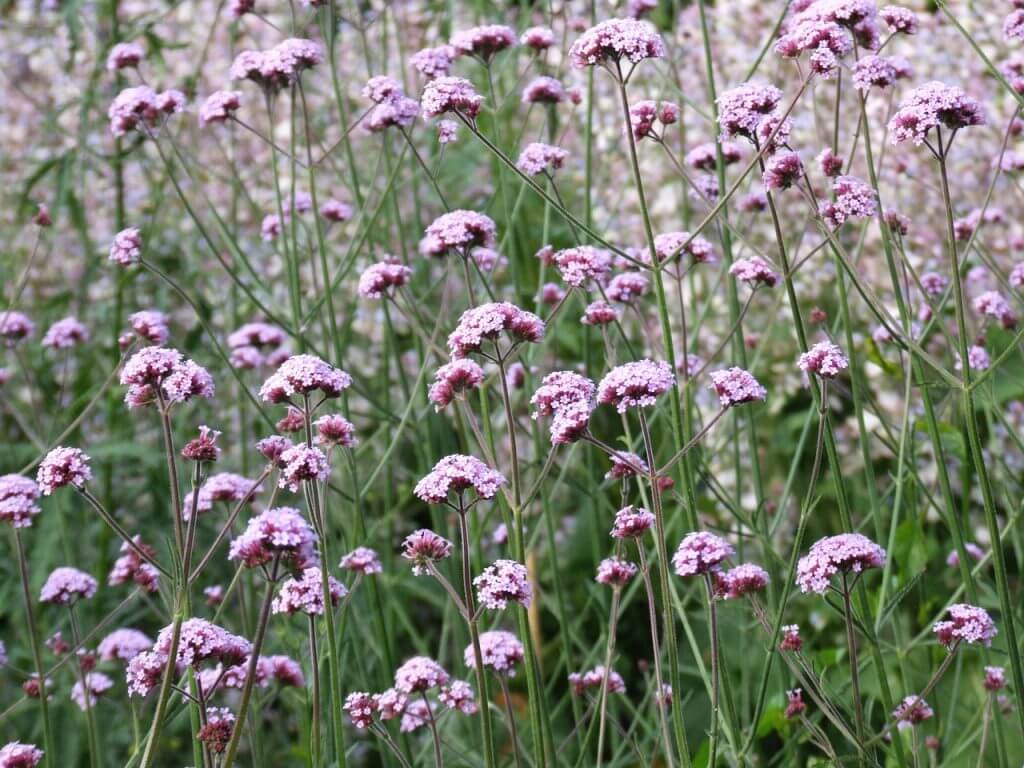
Technically a tender perennial, but I treat this as an annual in most of the UK. Those tall, wiry stems topped with clusters of rich purple flowers are architectural and see-through, allowing you to plant them throughout borders. Butterflies go absolutely mad for them, and they self-seed prolifically if you let them.
Growing Tips: Direct sow in late spring or start indoors in March. They need full sun and well-drained soil. In milder areas of the UK, they’ll survive winter and become woody perennials. Let them self-seed, but be prepared to weed out volunteers where you don’t want them. No staking needed despite their height.
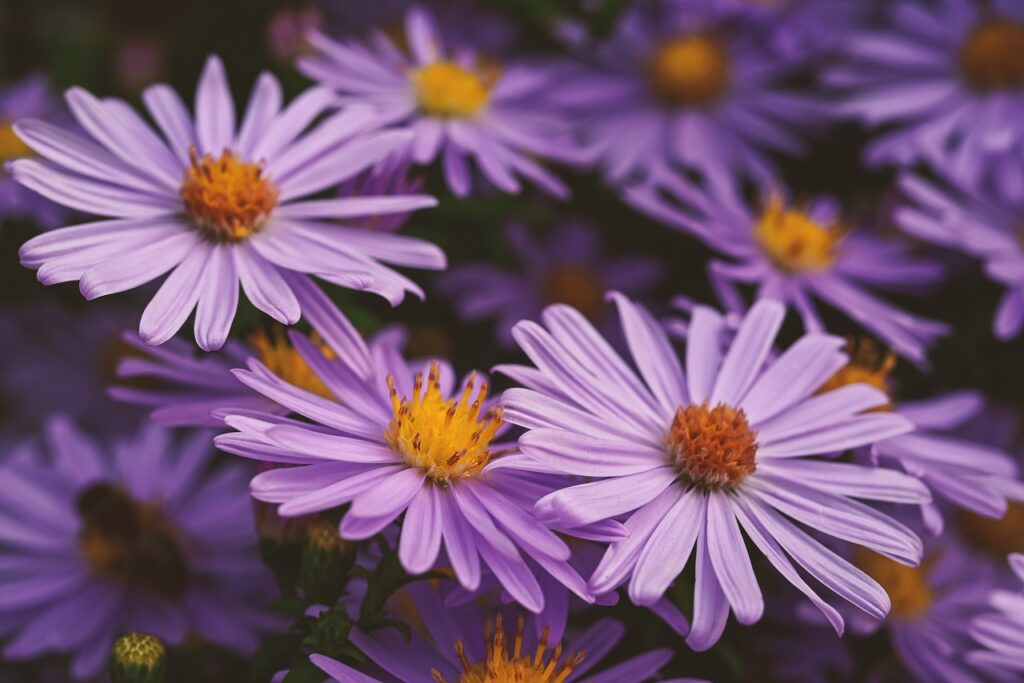
These annual asters produce enormous, chrysanthemum-like blooms in rich purple shades. They’re brilliant for late summer and autumn colour when many annuals are flagging. Perfect for cutting gardens, they last well in vases.
Growing Tips: Sow indoors in early spring or direct sow in May. They prefer full sun and well-drained soil. Water at the base to prevent mildew. Stake taller varieties. They can be susceptible to aster wilt, so rotate planting positions yearly and don’t plant where you’ve grown asters before.
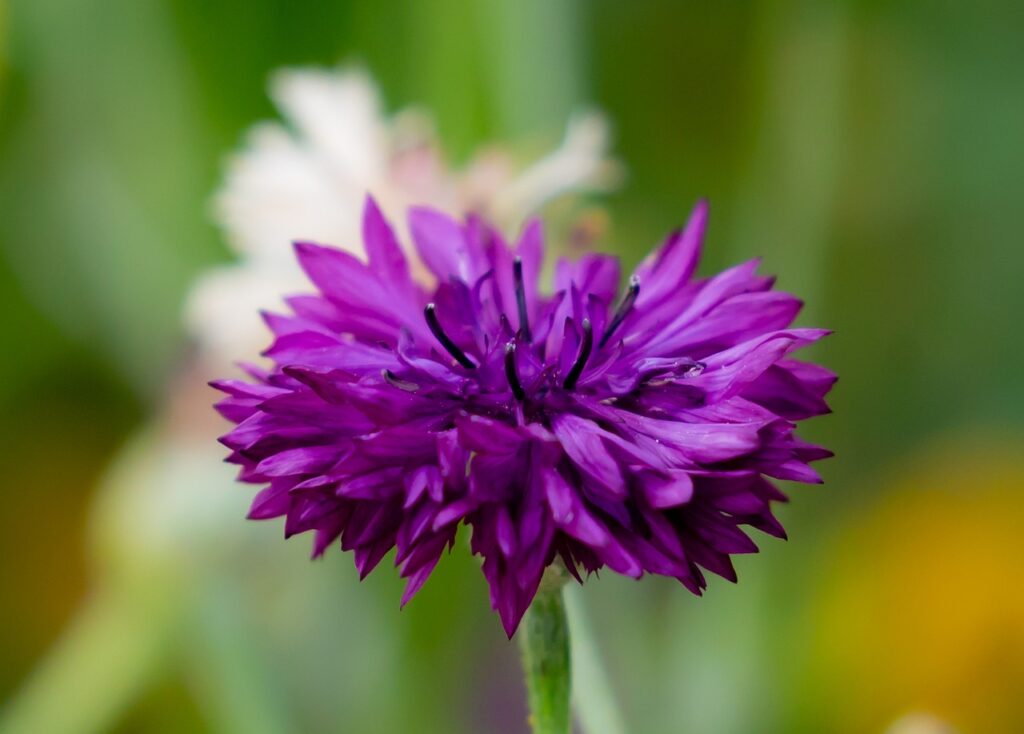
Despite the name ‘Black Ball’, these cornflowers are a gorgeous deep purple-maroon. They’re cottage garden classics that attract beneficial insects and make excellent cut flowers. Incredibly easy to grow and brilliant for filling gaps in borders.
Growing Tips: Direct sow in autumn or spring where you want them to flower. They thrive in poor to moderate soil (too rich and they’ll flop). Full sun is essential. Deadhead for continuous blooms. They’re tap-rooted, so don’t transplant well. Let some self-seed for next year.
The evening scent of stocks is absolutely intoxicating. These produce spikes of intensely fragrant double flowers in rich purple. I always plant these near seating areas or by paths where you’ll brush against them. The perfume on a warm evening is simply magical.
Growing Tips: Autumn sowing gives the best plants with earlier flowers. They prefer cool growing conditions and may stop flowering in high summer heat. Provide rich, well-drained soil with added lime. Water consistently. They’re brilliant in containers on shady patios.
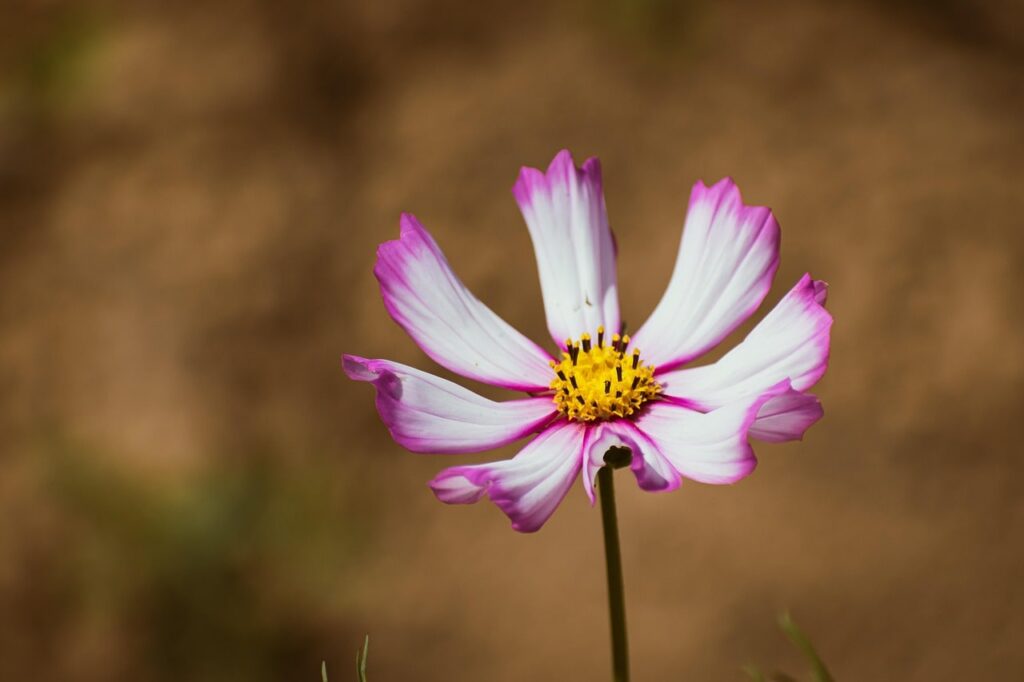
These offer deep magenta-purple blooms with a darker centre on tall, graceful stems. The feathery foliage adds wonderful texture. They flower from June through to the first frosts and are brilliant for attracting butterflies and hoverflies.
Growing Tips: Sow directly in late May or start indoors in April. They actually prefer poor to moderate soil—too rich and you get foliage at the expense of flowers. Full sun is essential. Incredibly drought-tolerant once established. They self-seed enthusiastically in my garden.
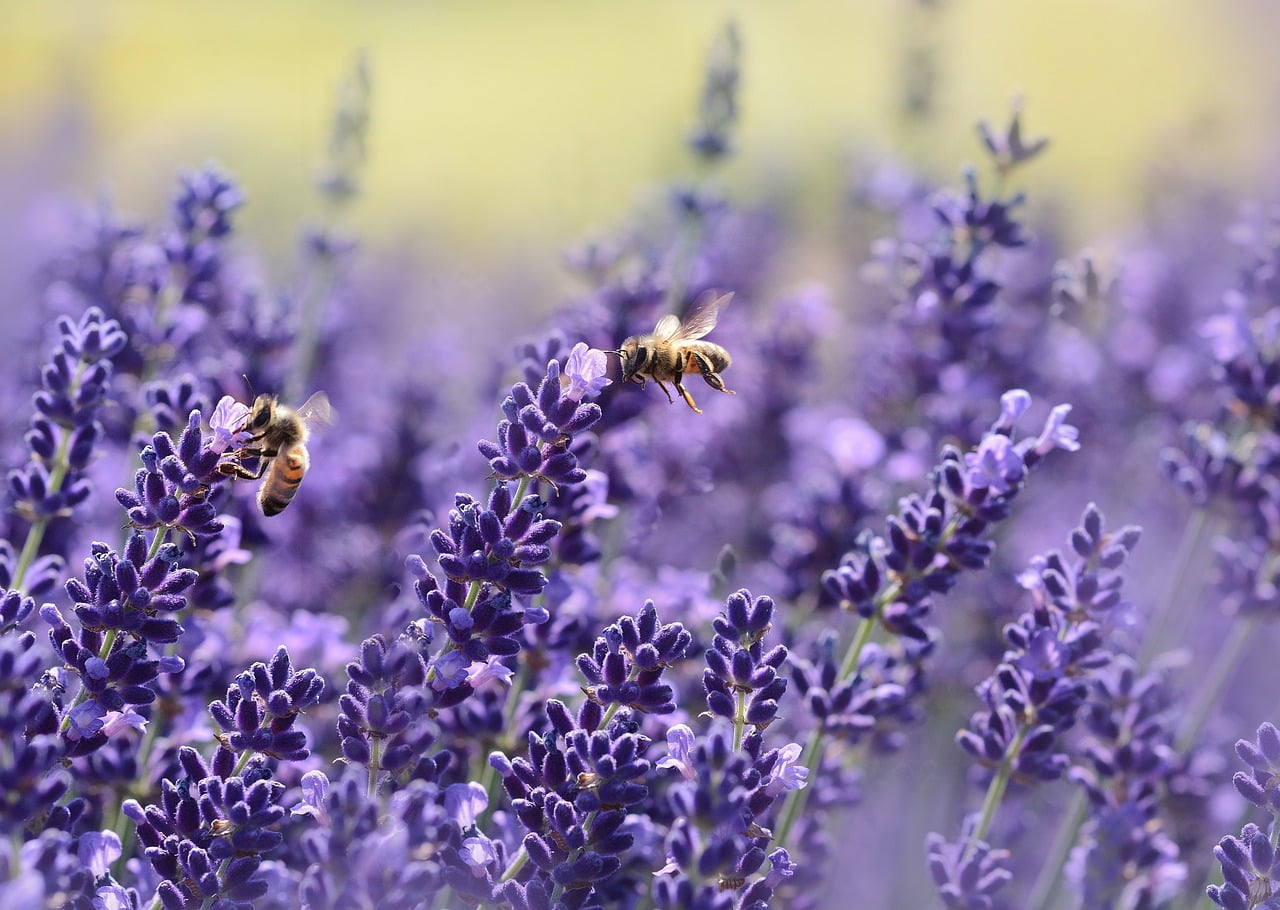
This is my go-to lavender for UK gardens. Compact, reliable, and produces masses of deep purple flower spikes with that classic lavender scent. It’s brilliant for edging paths, formal hedging, or dotted through borders. The bees absolutely worship it.
Growing Tips: Plant in full sun with excellent drainage—lavender hates sitting in wet soil, particularly over winter. Trim after flowering to remove spent spikes, then give it a light haircut in spring to maintain shape. Don’t cut into old wood. Replace plants every 5-7 years as they become woody.
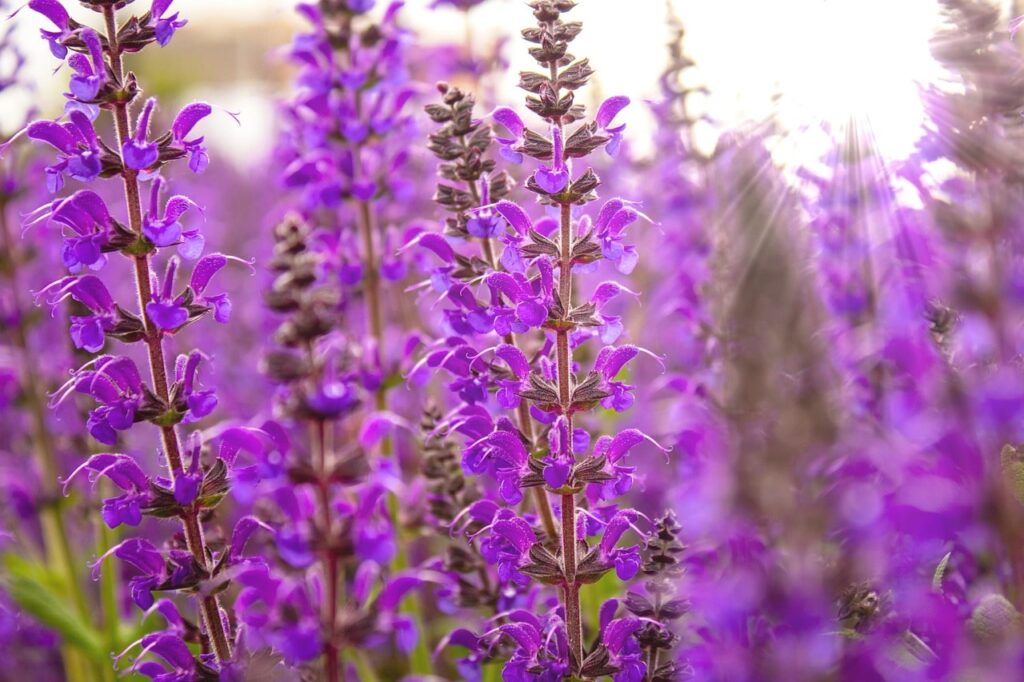
These vertical purple-blue spikes with almost-black stems are stunning from June through September. I use these extensively in prairie-style plantings. They’re incredibly drought-tolerant once established and provide reliable vertical interest.
Growing Tips: Full sun and well-drained soil. Cut back after first flush of flowers for a second wave of blooms. They’re virtually indestructible and rarely need dividing. Brilliant for hot, dry spots where other perennials struggle.
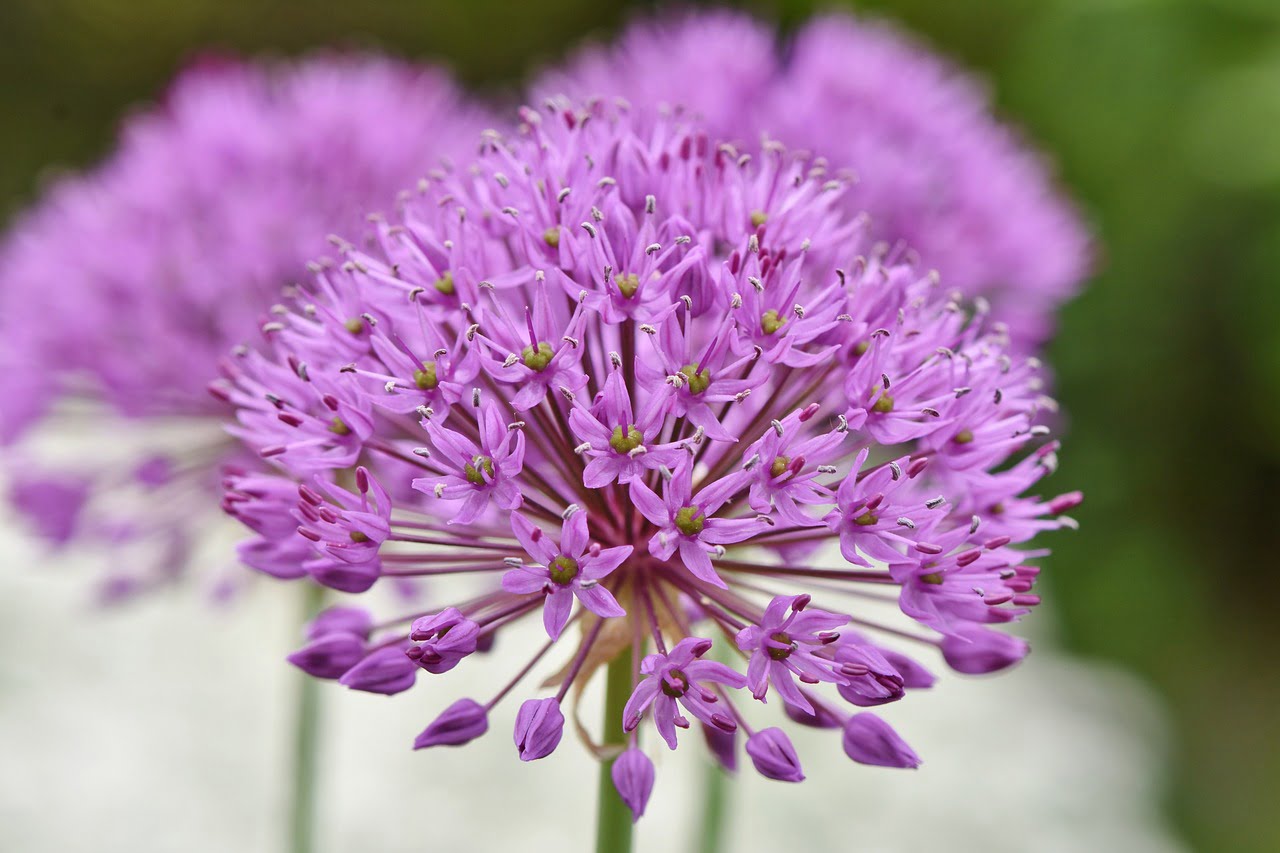
These architectural drumstick flowers are absolute showstoppers in late spring borders. The deep purple spheres seem to float above surrounding plants, creating brilliant structural interest. They look spectacular planted in drifts.
Growing Tips:Plant bulbs in autumn at a depth three times their diameter. They need full sun and well-drained soil. Leave the seedheads standing—they’re architectural through winter and finches love the seeds. Allow foliage to die back naturally. They naturalise beautifully.
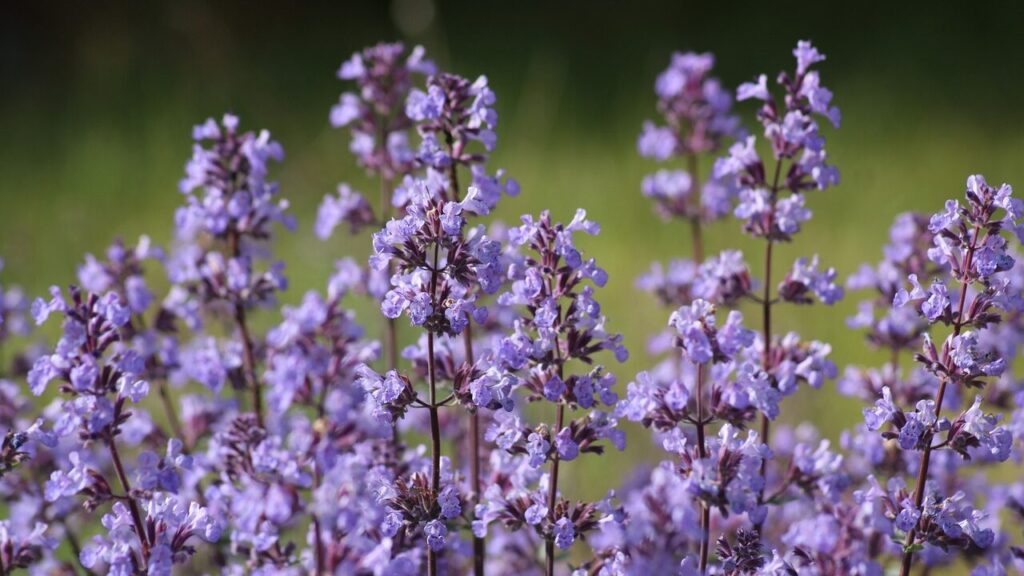
Billowing clouds of lavender-purple flowers from May through September, if you cut them back mid-season. The aromatic grey-green foliage is attractive even when not in flower. Brilliant as edging for paths or roses.
Growing Tips: Full sun and well-drained soil. Shear back hard after the first flush for compact regrowth and more flowers. Drought-tolerant once established. Cats do love it, so protect young plants if you have feline visitors.
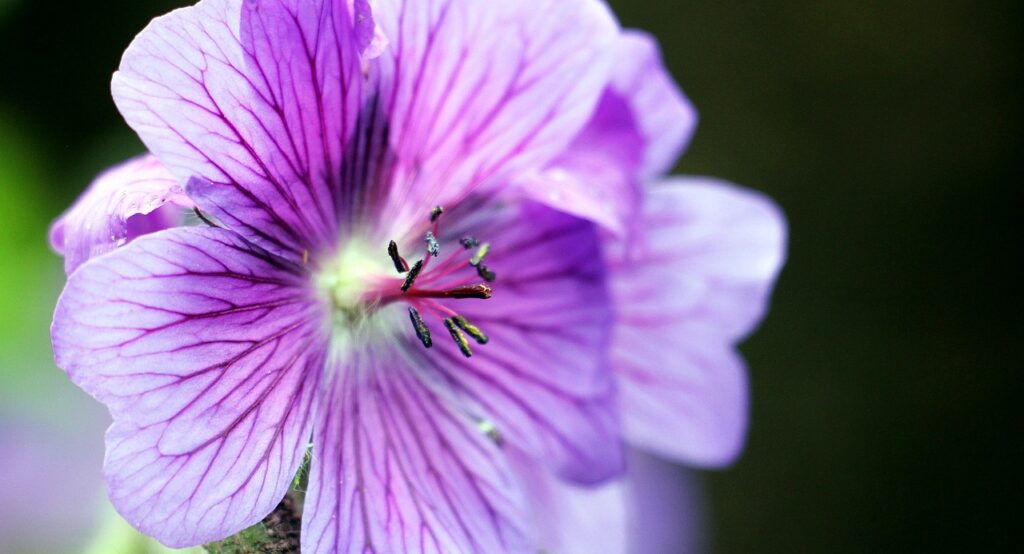
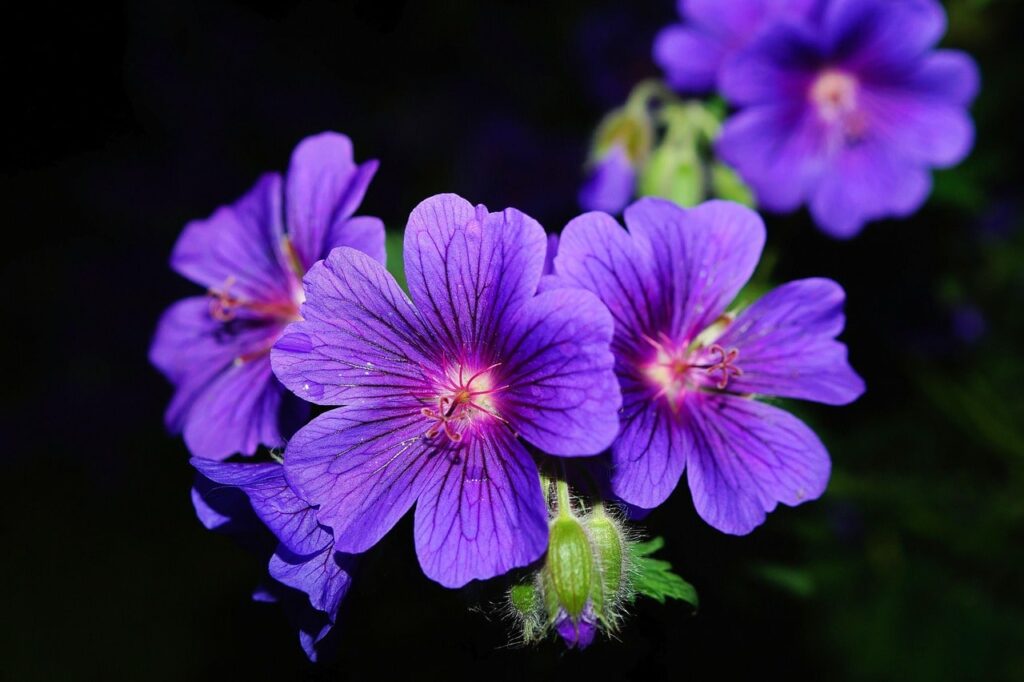
These true geraniums (not to be confused with pelargoniums) produce masses of rich purple-blue flowers in early summer. The foliage often develops lovely autumn tints too. They’re brilliant groundcover plants that suppress weeds beautifully.
Growing Tips: Happy in sun or partial shade. Cut back after flowering for fresh foliage and sometimes a second flush of flowers. Divide congested clumps every 3-4 years. They’re remarkably unfussy and rarely troubled by pests or diseases.
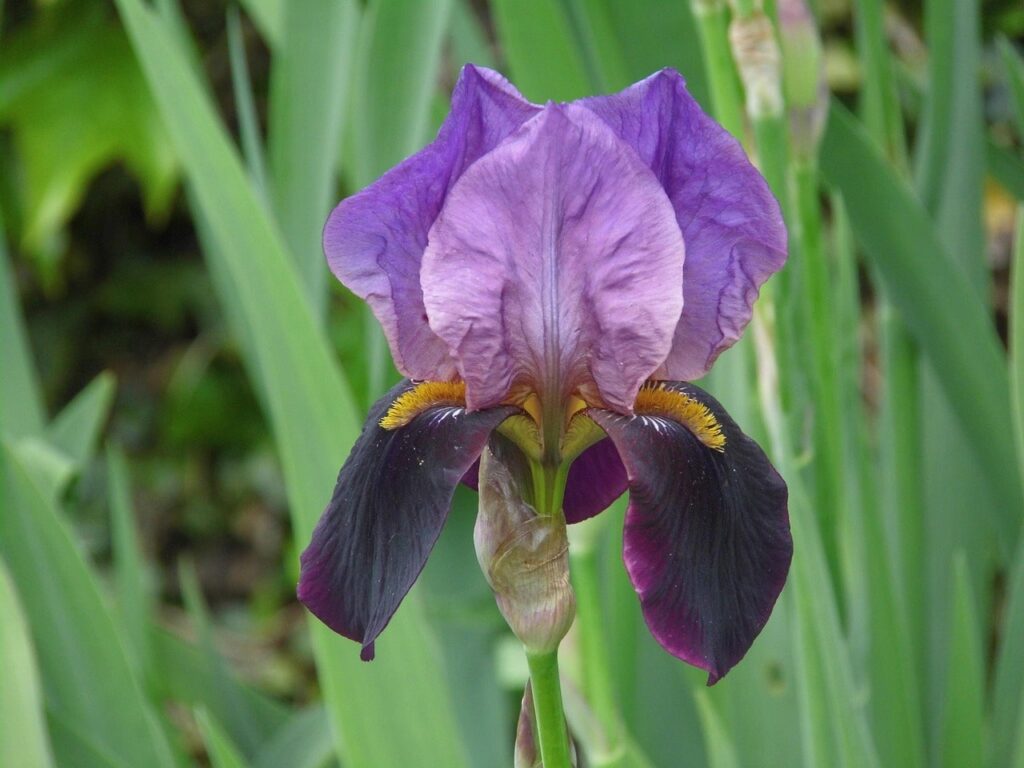
This bearded iris offers huge, velvety, deep purple-black flowers in late spring. The ruffled petals and sweet fragrance make them garden aristocrats. The sword-like foliage provides structure even when it is not in flower.
Growing Tips: Plant rhizomes in summer with the top third exposed to sunlight—this ‘bakes’ them and encourages flowering. They need full sun and excellent drainage. Divide every 3-4 years after flowering. Remove old foliage in autumn to prevent iris borer.
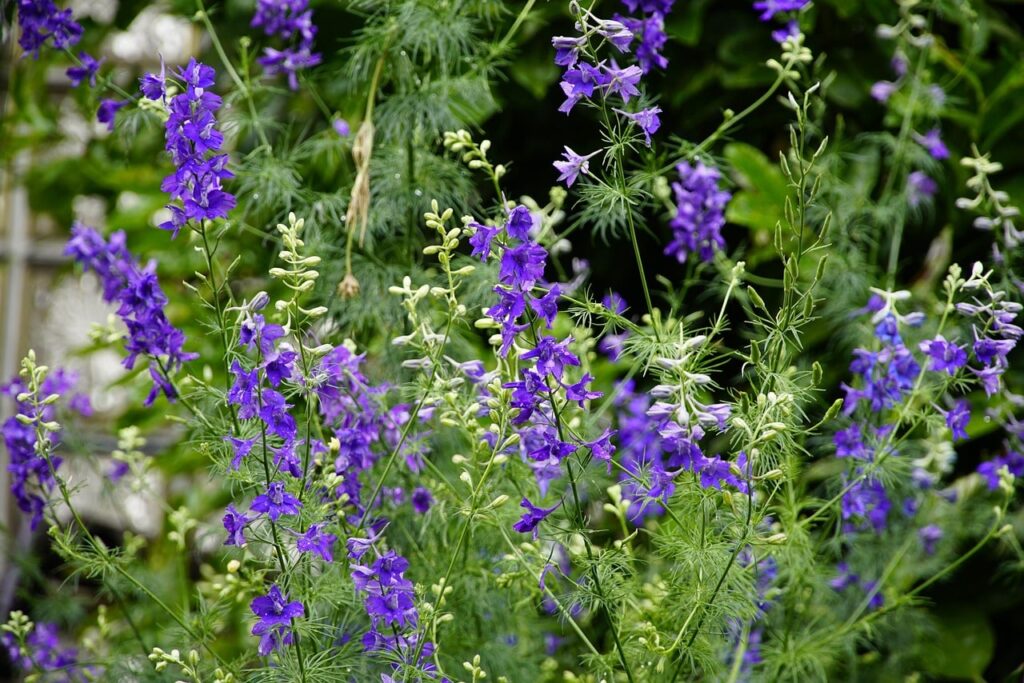
These towering spires of deep purple flowers are cottage garden classics. They’re one of the few plants that’ll give you genuine vertical drama in borders. Yes, they’re a bit fussy, but the display is absolutely worth it.
Growing Tips: Need full sun, rich soil, and staking from early in the season. Cut back after first flowering for a second flush in autumn. Protect young shoots from slugs and snails. They’re relatively short-lived, so take basal cuttings every few years to ensure continuity.
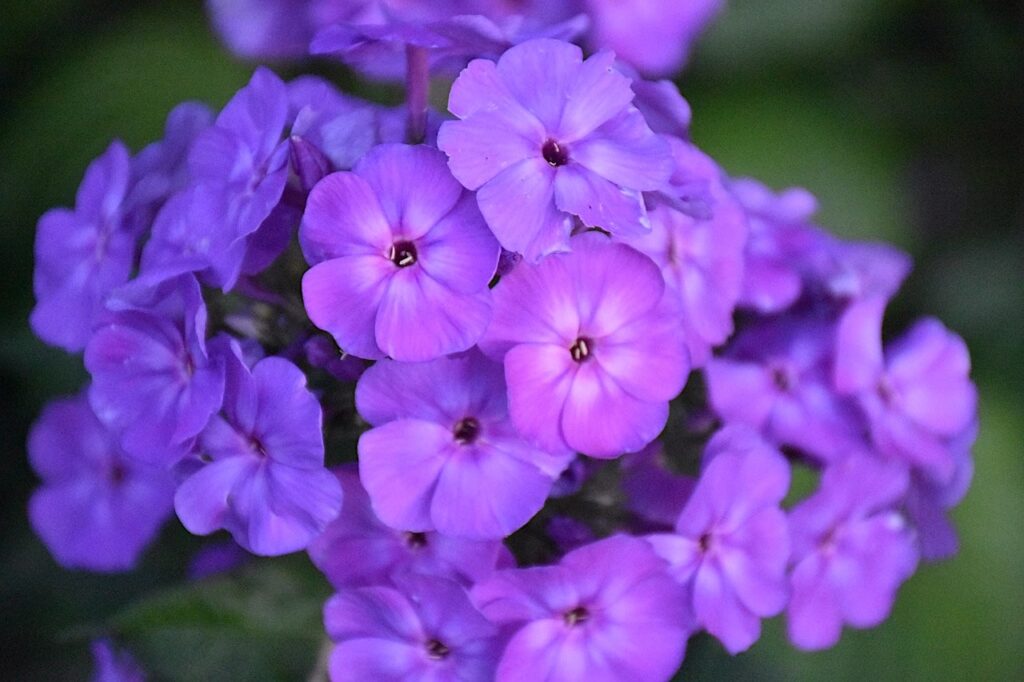
The fragrant purple-blue flower heads of phlox are cottage garden staples. They bloom for weeks in mid-to-late summer and attract masses of butterflies. The scent on a warm evening is delicious.
Growing Tips: Prefer moisture-retentive soil in sun or light shade. Provide good air circulation to prevent mildew—don’t crowd them. Deadhead regularly. Divide every 3-4 years. Water consistently during dry spells for best performance.
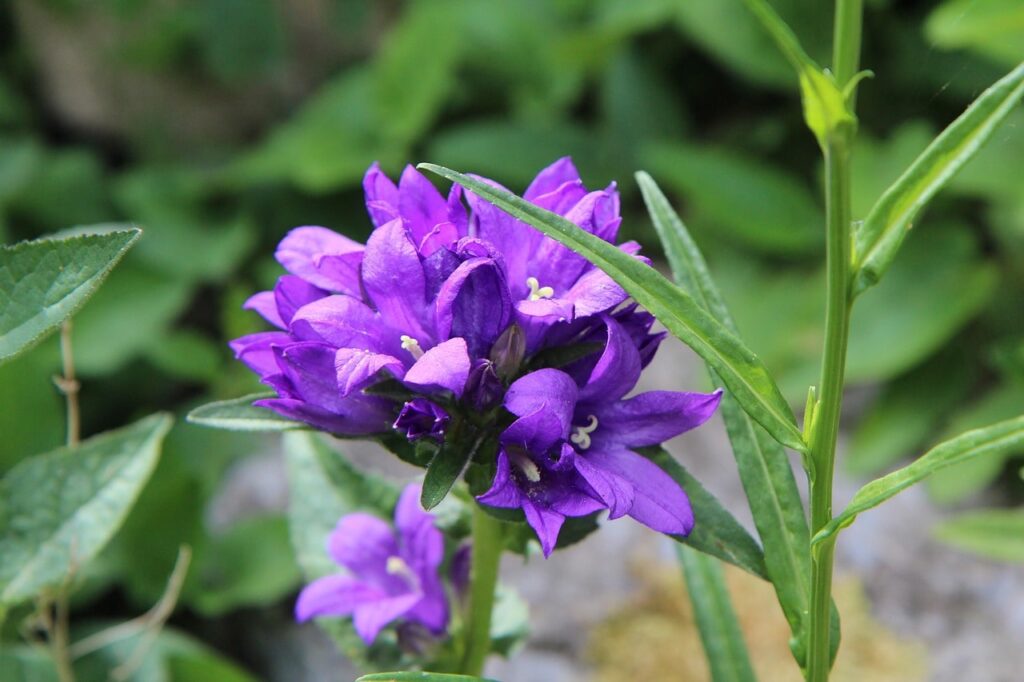
Clusters of deep purple bell flowers smother this reliable perennial in early summer. It’s vigorous without being thuggish and provides solid colour for several weeks. Brilliant for cottage garden schemes.
Growing Tips: Happy in sun or partial shade. Prefers moisture-retentive soil but tolerates some drought once established. Deadhead to prevent self-seeding if you don’t want it spreading. Divide every few years to control the spread.
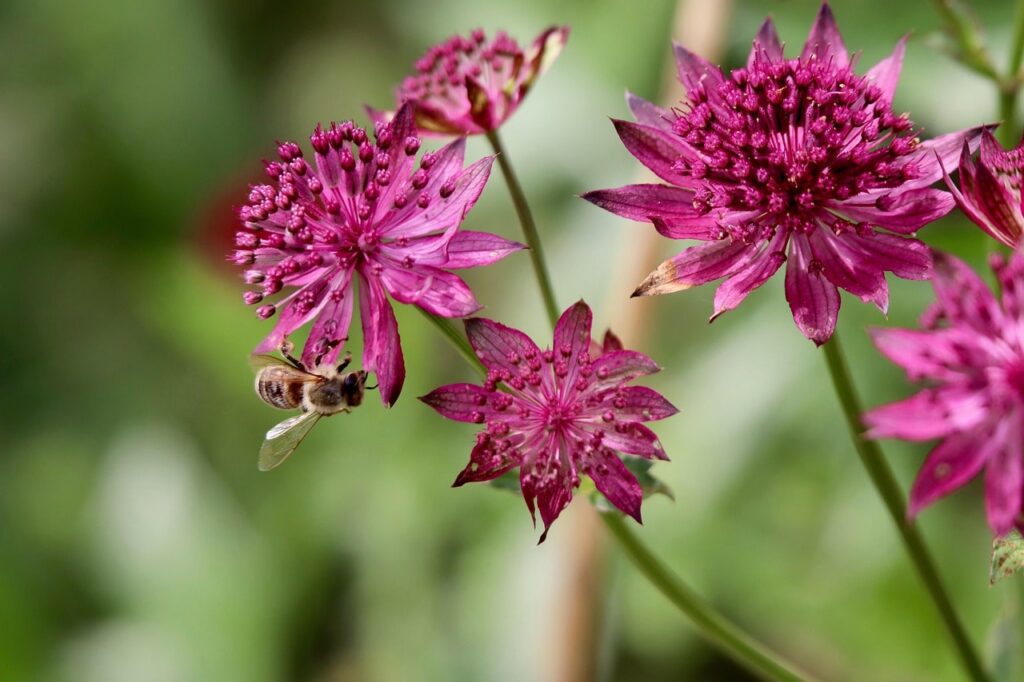
These unusual pincushion flowers in deep wine-purple are utterly charming. They’re brilliant for cottage gardens and work wonderfully in partial shade. The flowers last for ages and dry beautifully for arrangements.
Growing Tips: Prefers partial shade and moisture-retentive soil. It will tolerate more sun if kept consistently moist. Deadhead to prolong the flowering season. They self-seed, which can be welcome or annoying depending on your perspective. Divide every 3-4 years.
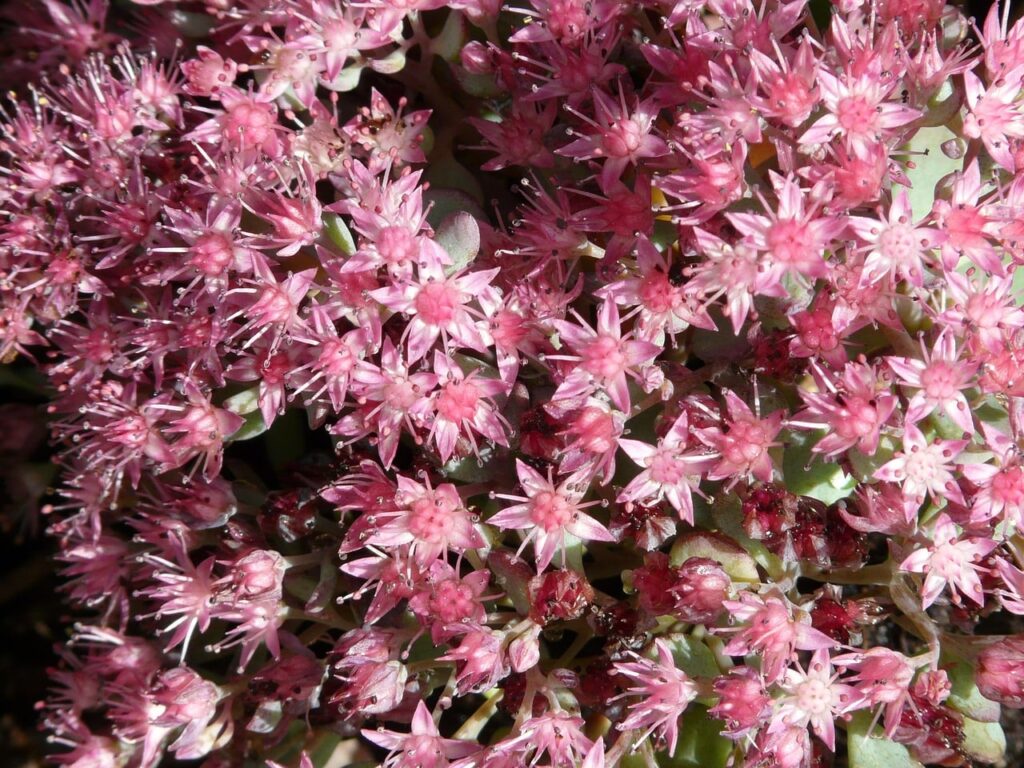
This sedum offers both dark purple foliage and deep pink-purple flowers in late summer. It’s brilliant for attracting butterflies and provides structure right through winter with its sculptural seedheads. Incredibly drought-tolerant.
Growing Tips: Full sun and well-drained soil. Leave seedheads standing through winter for structure and wildlife. Cut back in early spring. Divide every 4-5 years if clumps become congested. Virtually maintenance-free.
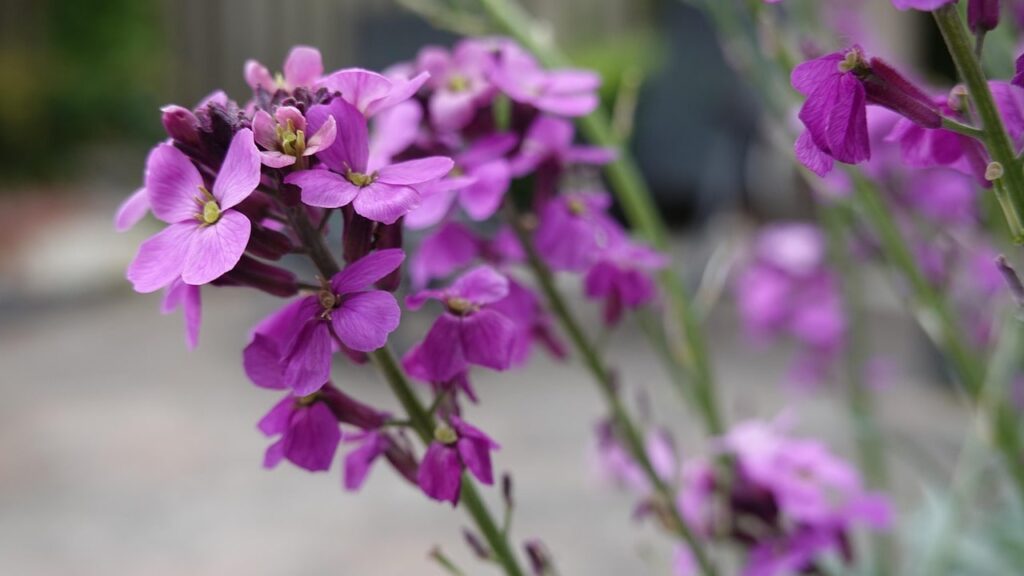
This evergreen perennial produces spikes of mauve-purple flowers almost continuously from March through November in mild areas. It’s an absolute flowering machine. The grey-green foliage looks good year-round.
Growing Tips: Needs full sun and excellent drainage. Short-lived (typically 3-4 years), so take cuttings in summer to ensure continuity. Trim back lightly after the main flush. It can get leggy, so prune in spring to maintain shape.
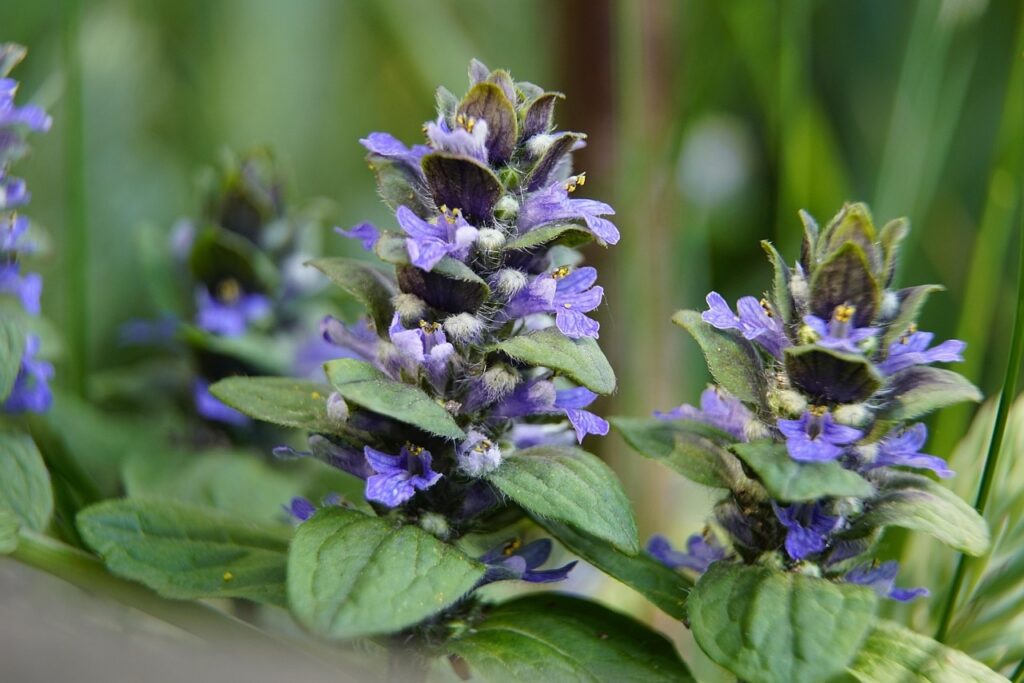
Dark purple-black foliage with spikes of blue-purple flowers in spring make this an excellent groundcover plant. It spreads steadily without being invasive and suppresses weeds brilliantly. Works well in shade.
Growing Tips: Happy in sun or shade, though colours best in some sun. Prefers moisture-retentive soil. Once established, it’s virtually indestructible. Divide and replant if it becomes congested or bare in the centre.
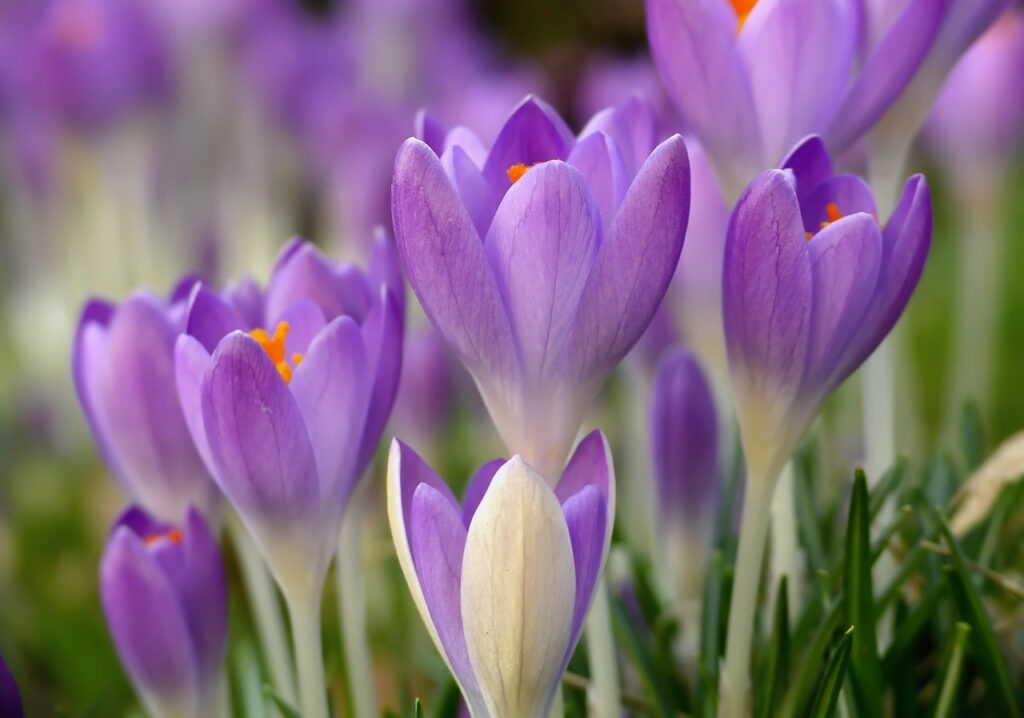
These delicate purple crocuses are one of the first signs of spring, often flowering in February. They naturalise brilliantly in grass or under deciduous shrubs. Bees emerge specifically to visit them on warm February days.
Growing Tips:Plant corms in autumn in drifts for the best effect. They’re happy in sun or light shade and aren’t fussy about soil. Allow foliage to die back naturally. They self-seed and spread steadily, creating larger displays each year.
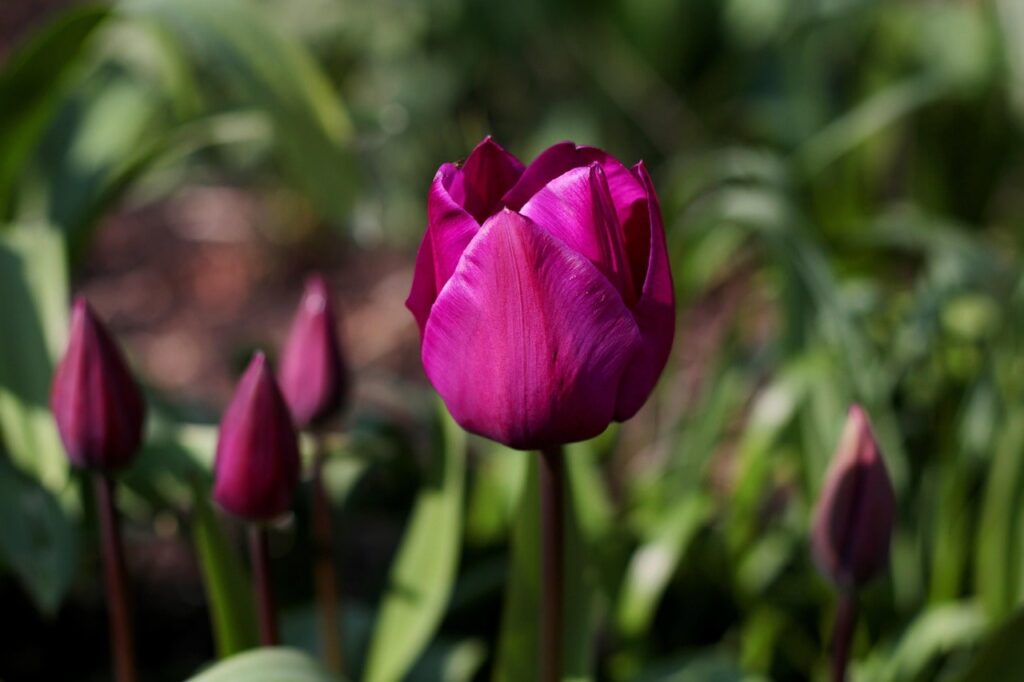
Rich purple blooms with a velvety texture are stunning in spring borders. This single late tulip flowers in May when many early tulips have finished. Brilliant for extending the tulip season.
Growing Tips: Plant in November at three times their depth. Prefer well-drained soil in full sun. After flowering, allow foliage to die back naturally. In heavy soils, lift and store bulbs after flowering, or treat as annuals and replant fresh each year.
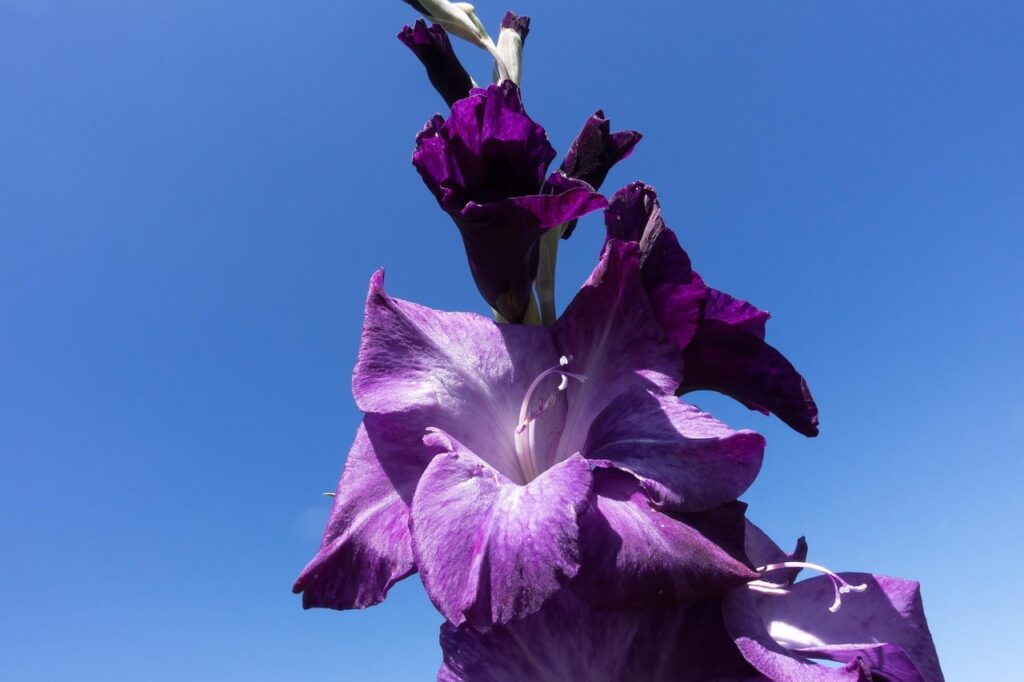
Dramatic purple flower spikes are perfect for cutting and add brilliant vertical interest to summer borders. The ruffled blooms are stunning and last well in vases.
Growing Tips: Plant corms from April through June, spacing plantings two weeks apart for succession. Full sun and well-drained soil. Stake tall varieties. Lift corms in autumn before the first hard frosts and store frost-free over winter in most of the UK.
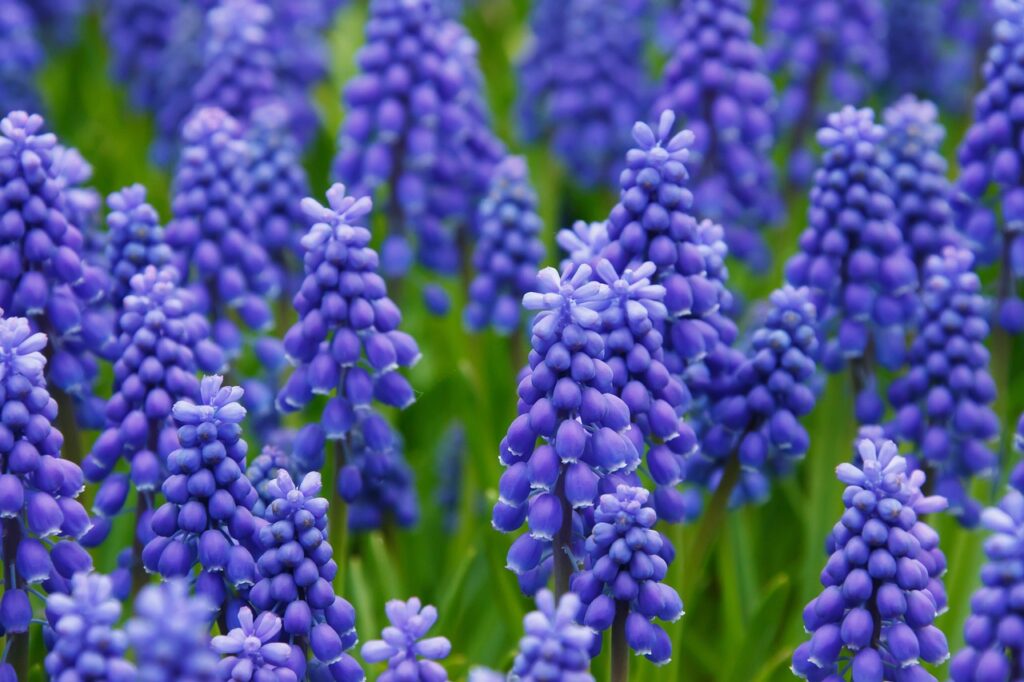
These cheerful purple-blue spikes are spring essentials. They naturalise brilliantly and look wonderful planted en masse under trees or through borders. The sweet honey scent is delightful.
Growing Tips: Plant bulbs in autumn. Happy in sun or partial shade. They can become invasive in ideal conditions, so site carefully. Allow foliage to die back naturally—it does persist longer than some bulbs. Lift and divide congested clumps.
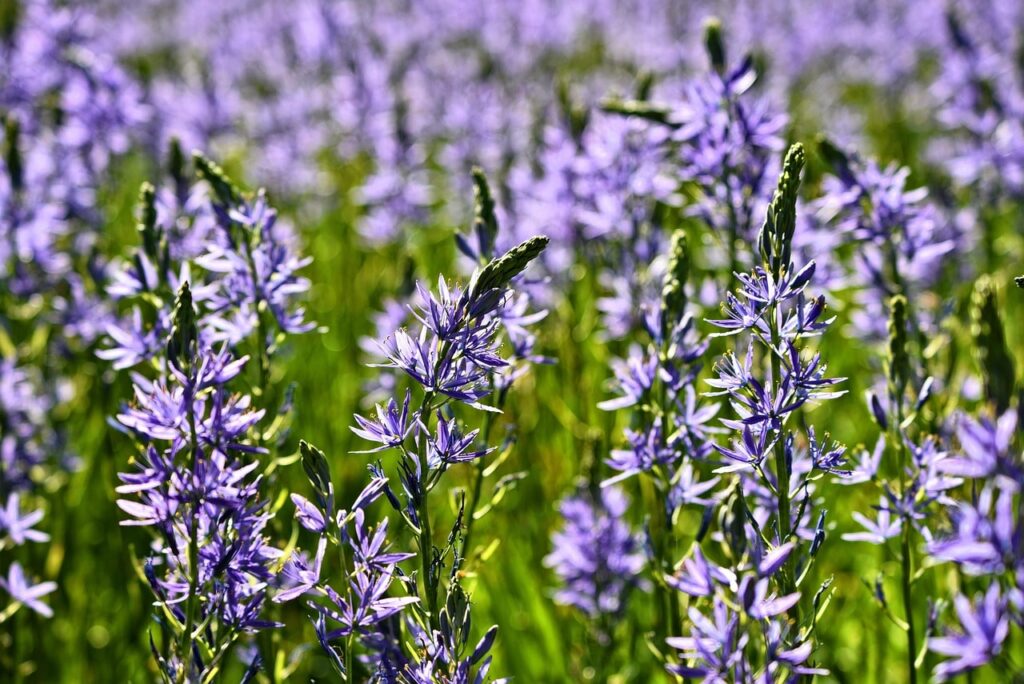
These North American natives produce spectacular spires of star-shaped purple-blue flowers in late spring. They naturalise beautifully in grass and are brilliant for prairie-style plantings. Underused in UK gardens but absolutely stunning.
Growing Tips: Plant bulbs in autumn in moisture-retentive soil. Happy in sun or light shade. They tolerate heavy soils that many bulbs dislike. Leave to naturalise—they’ll spread slowly to create impressive displays.
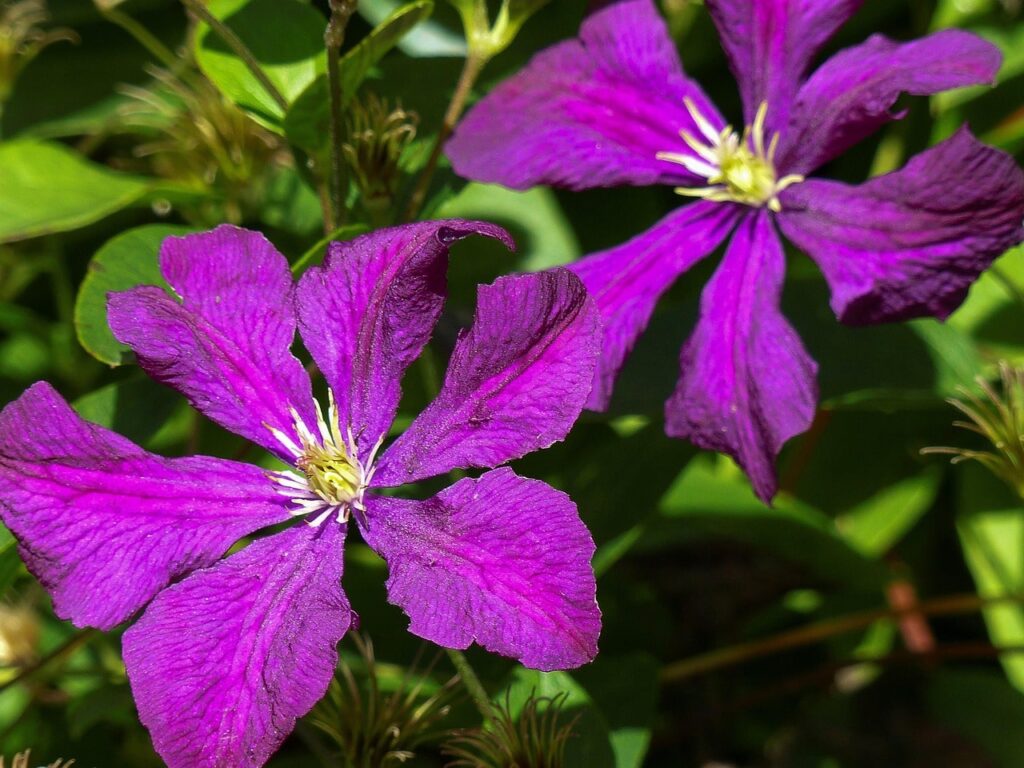
This is probably the most popular clematis in the UK, and for good reason. Rich purple flowers from July through September, easy to prune (Group 3—cut hard back in late winter), and incredibly reliable. It’s the clematis I recommend to beginners.
Growing Tips: Plant with roots in shade and top growth in sun. Enrich soil with compost. Mulch well. Cut back hard to 30cm in February. Feed in spring with rose fertiliser. Water consistently during the growing season, particularly in the first year.
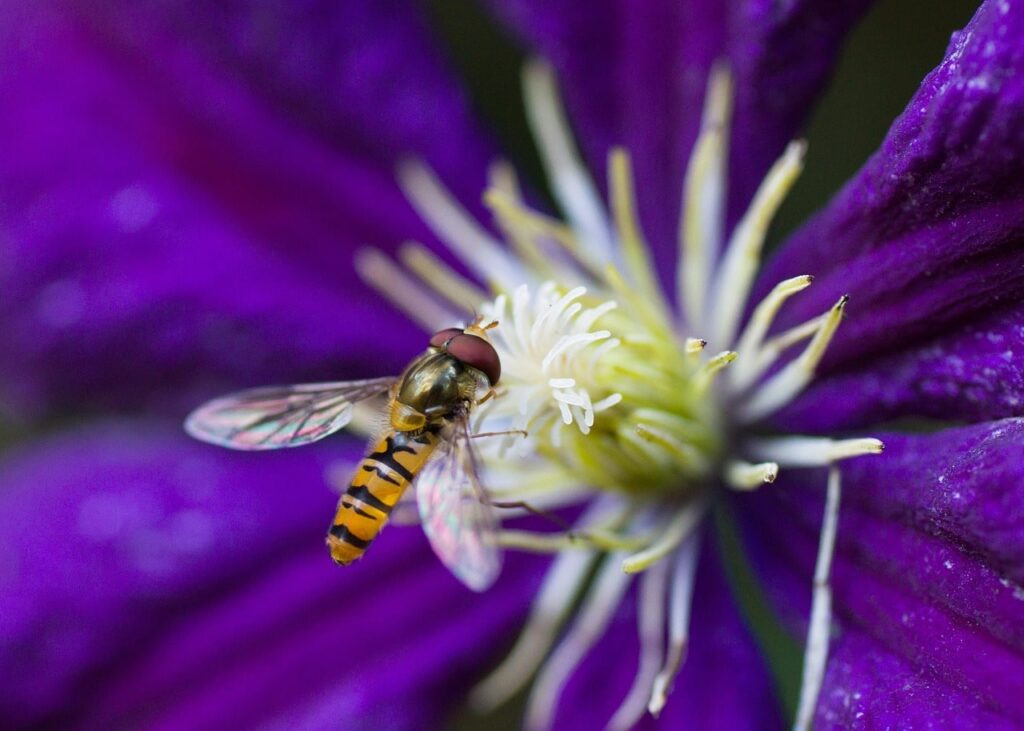
Deep purple-violet flowers with yellow stamens cover this vigorous clematis from June through September. It’s a Viticella clematis, which means it has excellent disease resistance and is easy to care for. Brilliant through roses or shrubs.
Growing Tips: Group 3 pruning (hard prune in late winter). Very vigorous once established. Happy in any aspect. More drought-tolerant than large-flowered hybrids. Perfect for growing through established shrubs that need late-season interest.
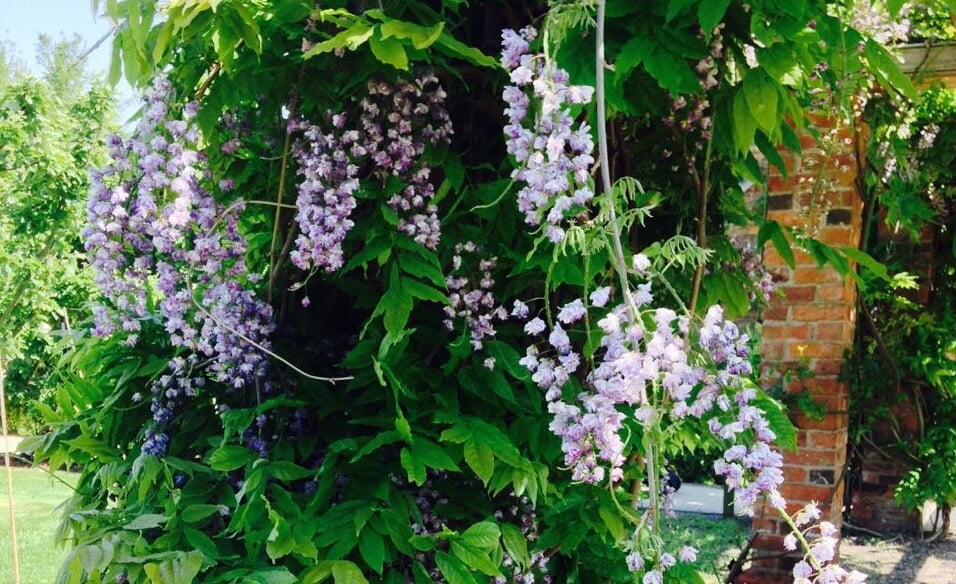
Long racemes of fragrant lilac-purple flowers in May are absolutely breathtaking. Yes, wisteria needs pruning twice a year, but the display is worth every second. It’s one of those plants that makes visitors stop and gasp.
Growing Tips: Requires a strong support system, as it becomes extremely heavy once mature. Prune twice yearly: summer (cut new growth back to 5-6 leaves) and winter (cut the same shoots back to 2-3 buds). Full sun for best flowering. Feed in spring with high-potash fertiliser.
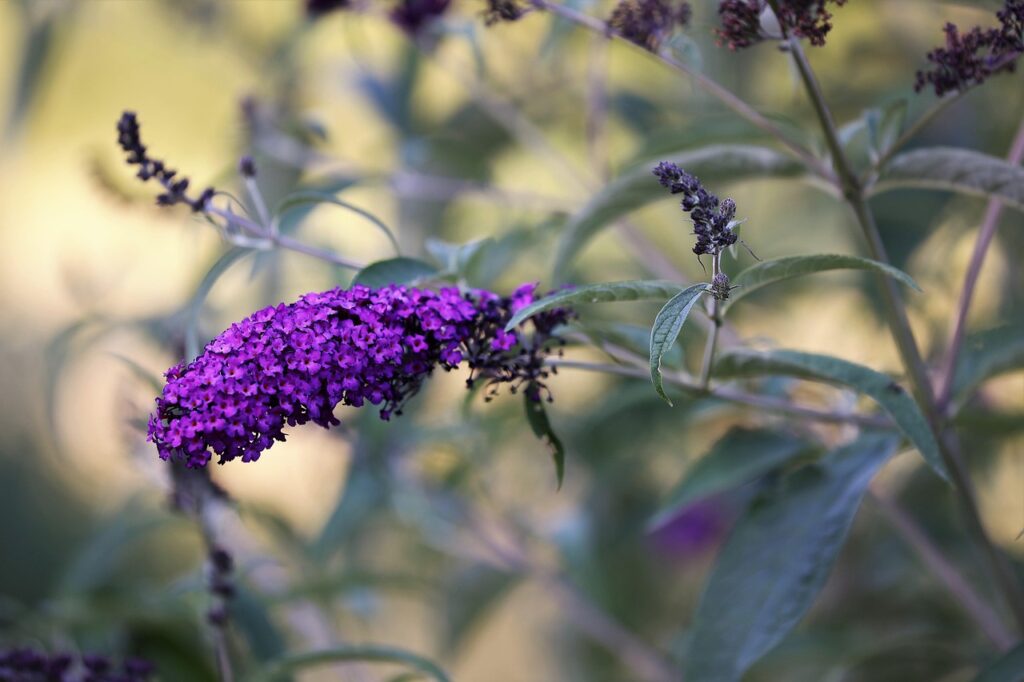
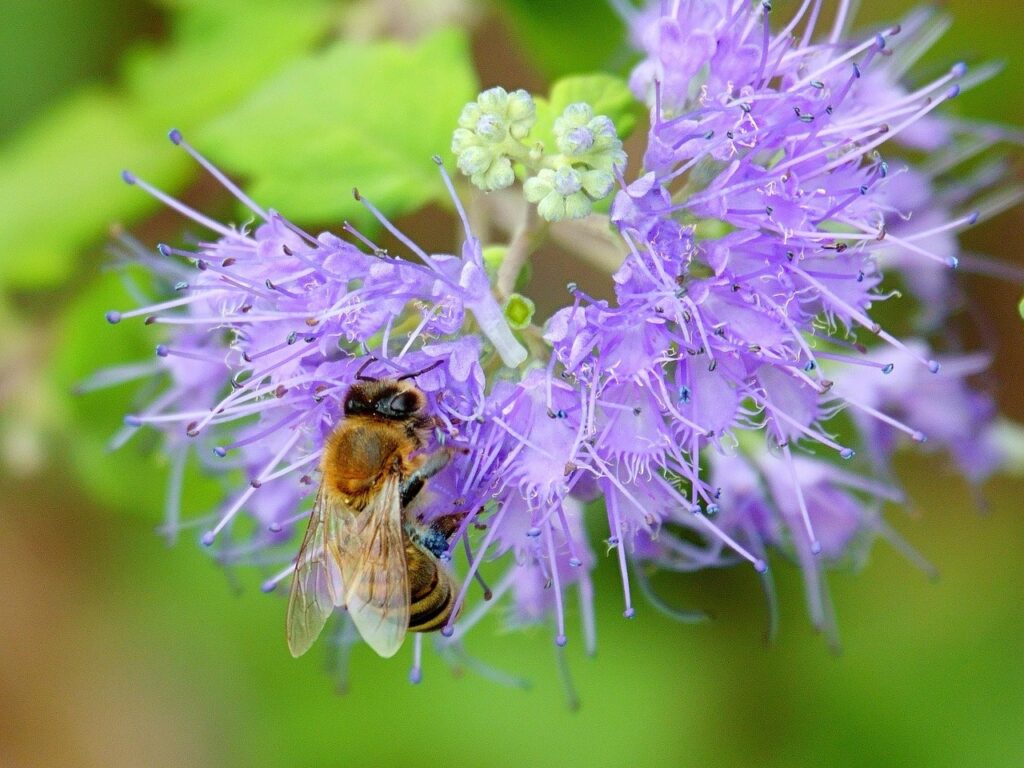
The butterfly bush absolutely lives up to its name. Deep purple flower spikes attract dozens of butterflies in summer. It’s vigorous (some would say invasive), but the wildlife value is immense. Perfect for wildlife gardens.
Growing Tips: Full sun and any reasonable soil. Cut back hard in March to about 60cm to keep it compact and encourage large flower spikes. Deadhead to prolong flowering and prevent self-seeding everywhere. Incredibly tough and tolerant of pollution.
This Californian lilac produces masses of deep purple-blue flowers in late spring. It’s evergreen, providing year-round structure and stability. The display, when in full flower, is absolutely stunning—the entire shrub is completely covered in flowers.
Growing Tips: Best against a warm, sheltered wall in colder areas. Full sun and well-drained soil. Doesn’t need regular pruning. Trim after flowering only if it is necessary to control size. Protect from harsh winter winds. Surprisingly drought-tolerant once established.
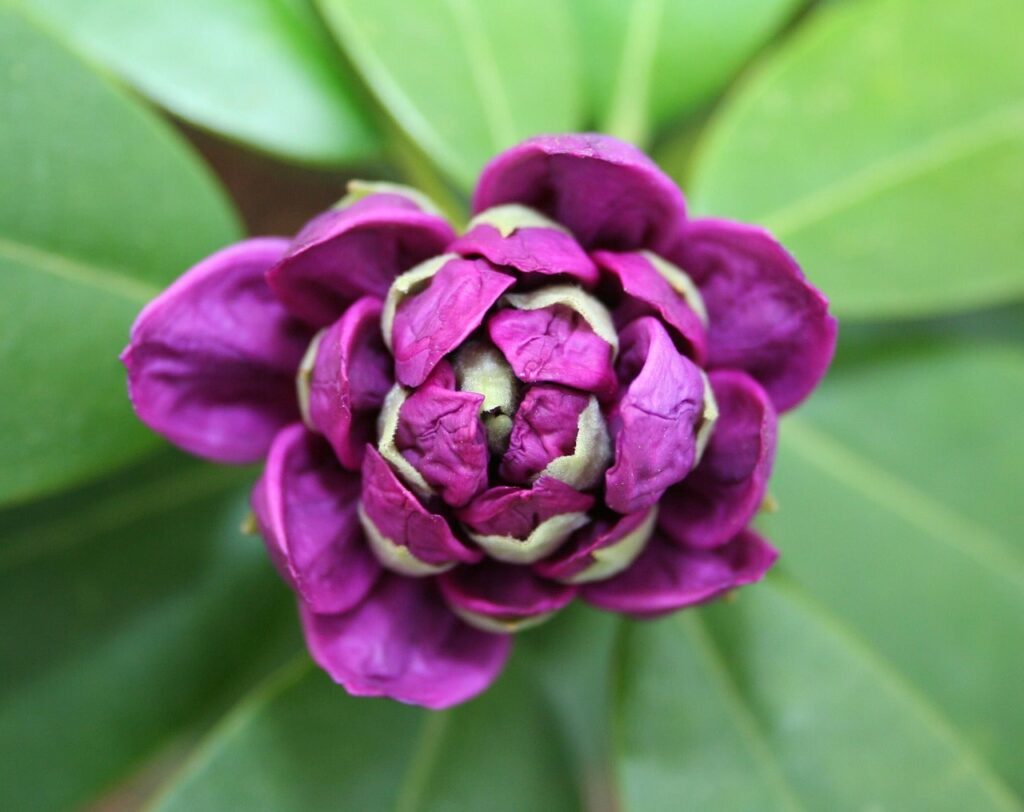
For acid soil gardens, this rhododendron offers deep purple blooms with a dramatic near-black blotch. Evergreen foliage provides year-round structure. The flower display in May and June is magnificent.
Growing Tips: Essential to provide acid soil (pH 4.5-6). Plant in dappled shade—they scorch in full sun. Mulch with ericaceous compost annually. Shallow-rooted, so keep consistently moist. Deadhead carefully after flowering by snapping off spent blooms.
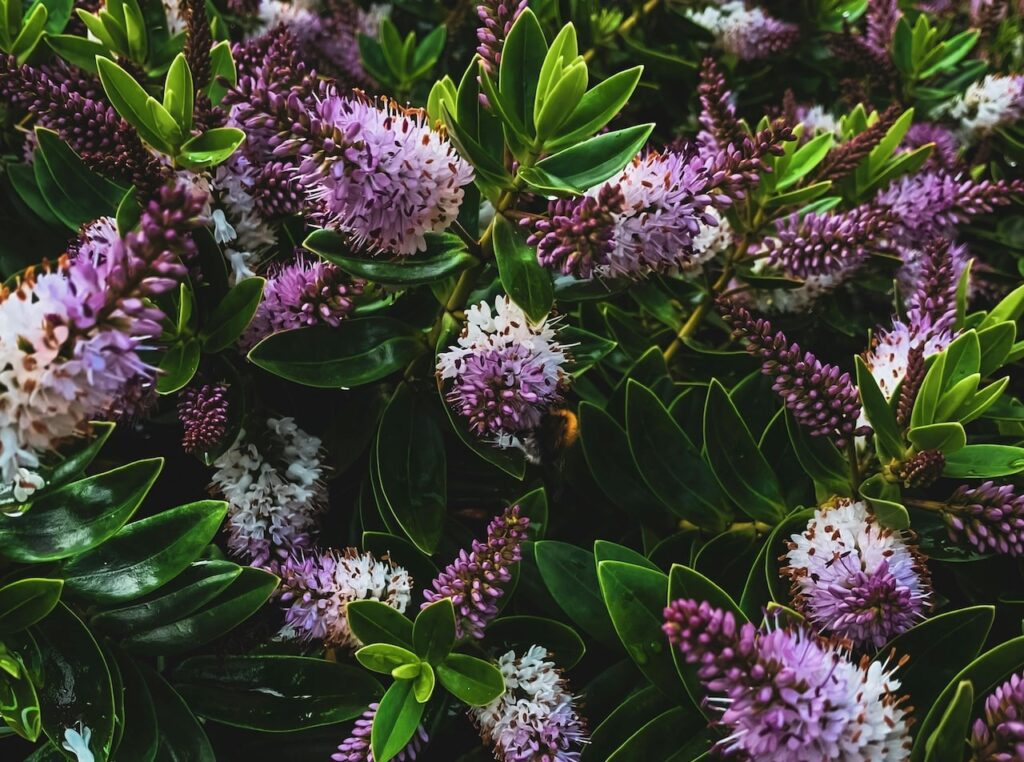
Long purple flower spikes appear from July right through to November. It’s evergreen with attractive foliage and incredibly floriferous. Brilliant for coastal gardens where it tolerates salt spray.
Growing Tips: Full sun and well-drained soil. Needs little pruning apart from a quick tidy after flowering if required. In colder areas, provide winter protection or plant in a sheltered spot. May suffer in severe winters but usually regenerates from base.
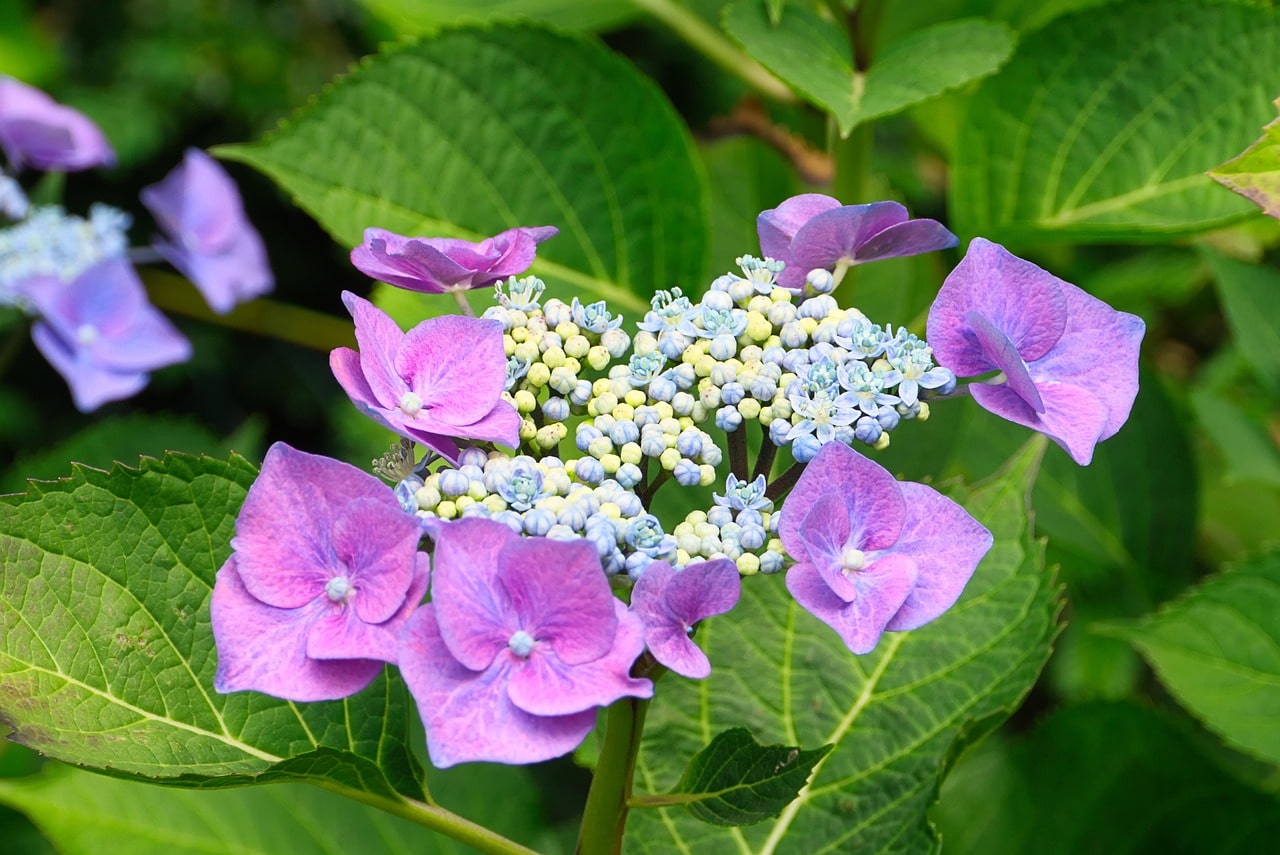
This lacecap hydrangea offers purple flowers (in acid to neutral soil) throughout summer. The layered flower heads are elegant and less blowsy than mophead varieties. Excellent in partial shade.
Growing Tips: Prefers partial shade and moisture-retentive soil. Mulch well. Prune in spring, removing weak or dead growth. On acid soils, flowers will be blue-purple; on alkaline soils, they’ll be more pink-purple. Feed with ericaceous fertiliser to maintain purple tones.
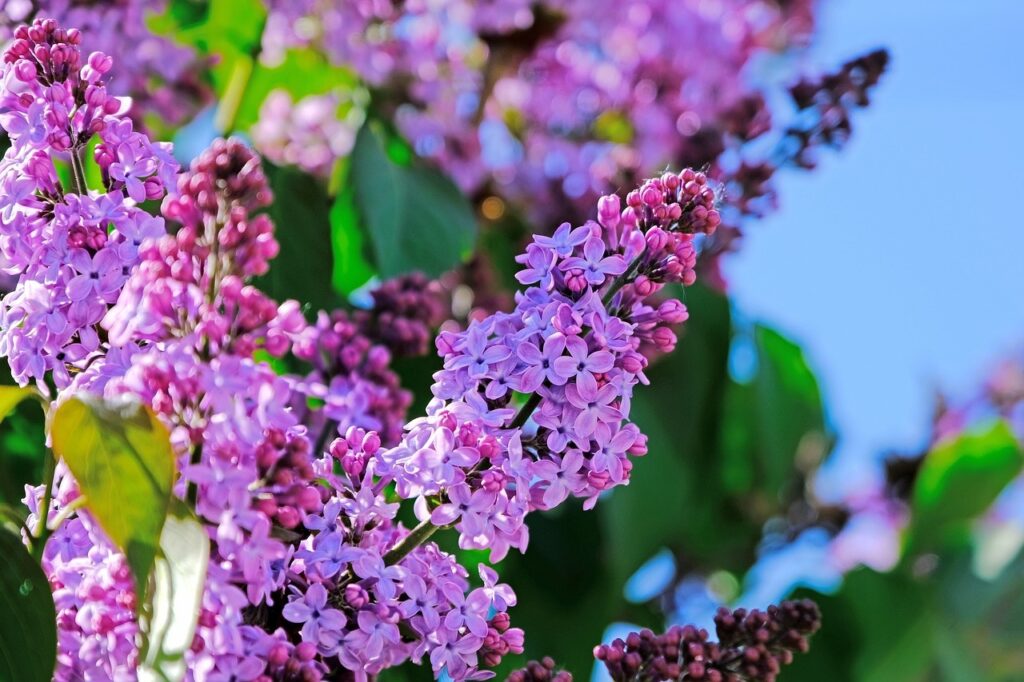
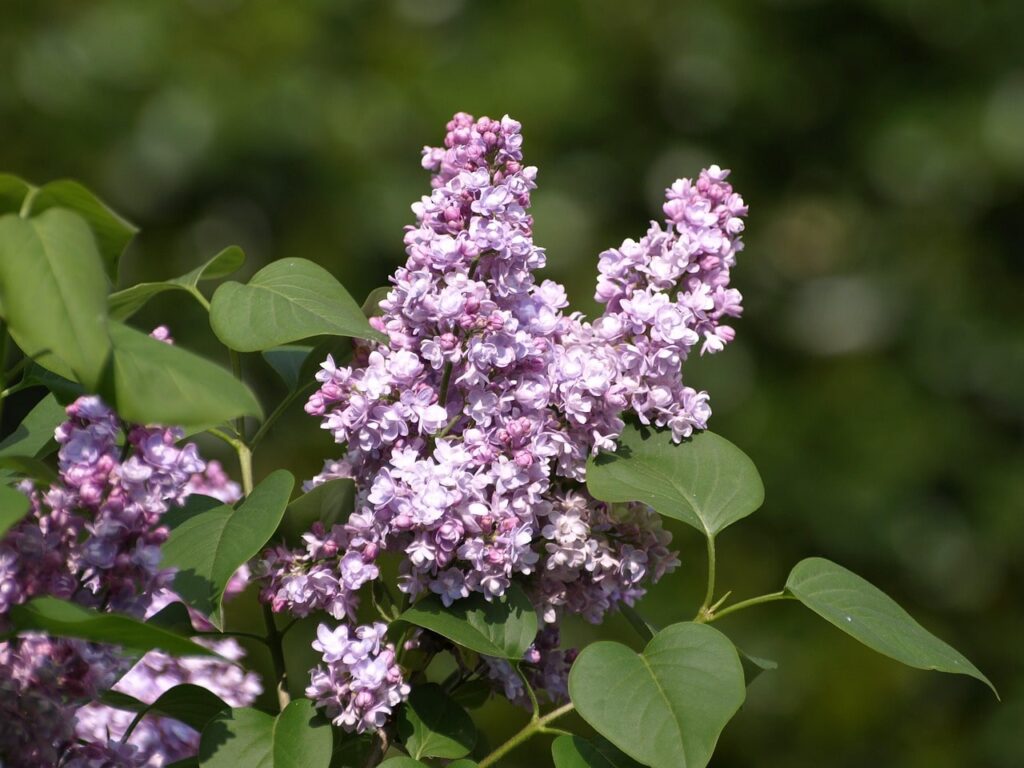
This double-flowered lilac offers intensely fragrant, deep purple blooms in May. The scent will fill your entire garden. It’s a substantial shrub that provides structure year-round, accompanied by a magnificent spring display.
Growing Tips: Full sun and well-drained soil, preferably alkaline. Deadhead after flowering to encourage next year’s blooms. Remove suckers from the base. Prune only to remove dead wood or control size—do this immediately after flowering, as they flower on previous year’s wood.
This late-summer gem produces masses of deep purple-blue flowers in September, when many shrubs have finished blooming. The aromatic grey foliage is attractive too. Bees and butterflies absolutely adore it.
Growing Tips: Full sun and well-drained soil. Cut back hard in spring to about 15cm to maintain compact growth and encourage masses of flowers. Incredibly drought-tolerant once established. Perfect for dry, sunny spots.
Design Tips for Using Purple Flowers in UK Gardens
Right, so you’ve got your plant list. Now, how do you actually use these purple beauties effectively in your garden? Here are my top design principles from years of creating gardens:
1. Understand Your Purple Tones: Lighter purples (lavender, lilac) advance visually and work beautifully in small spaces or shade. Darker purples (aubergine, deep violet) recede, creating depth. Use this to manipulate perceived space.
2. Create Monochromatic Schemes: Purple-on-purple plantings can be stunning. Layer different tones from pale lilac through to deep purple for sophisticated, cohesive borders. Add silver foliage to tie it together.
3. Pair with Complementary Colours: Purple looks stunning with yellow (think alliums with euphorbia), lime green (alchemilla mollis), or white for high contrast. It also pairs beautifully with pink for romantic schemes.
4. Consider Background Colours: Purple shows up brilliantly against pale backgrounds (cream walls, light stone) but can disappear against dark fences. If you’ve got dark boundaries, use lighter purples or ensure strong contrasts.
5. Think About Lighting: Purple flowers glow in evening light and look magical at dusk. If you use your garden primarily in the evenings, concentrate purple flowers near seating areas and along paths.
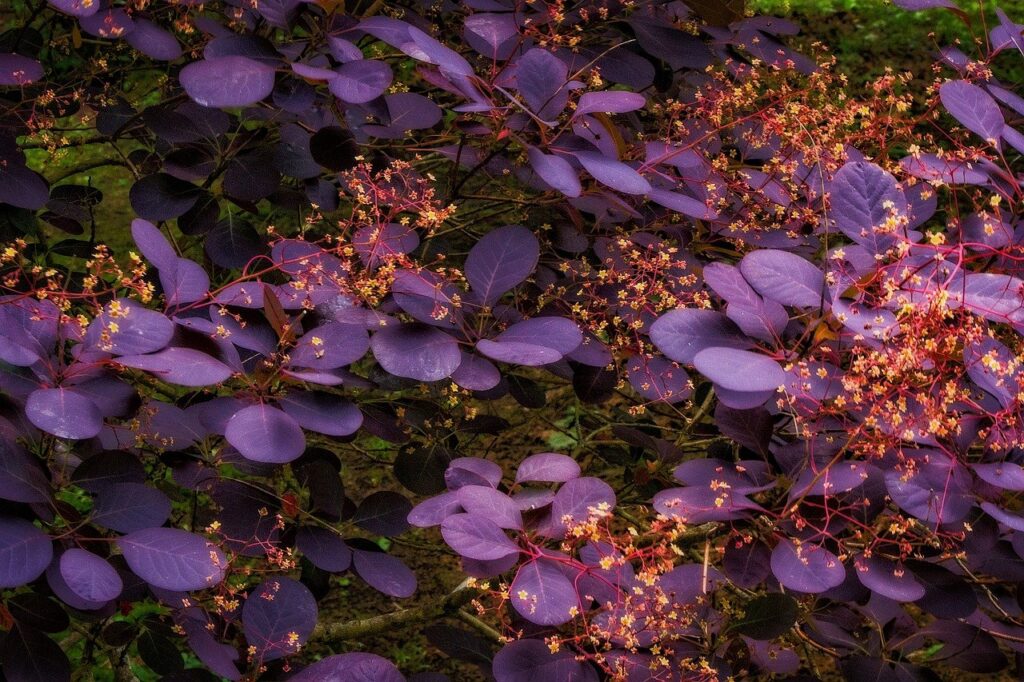
6. Use Purple Foliage as Anchors: Plants like purple smoke bush (Cotinus), dark-leaved heucheras, or purple-leaved dahlias provide continuity when flowers aren’t blooming. They’re brilliant framework plants.
7. Plan for Succession: Purple flowers can feature in your garden from February crocuses right through to October asters. Map out flowering times to ensure continuous purple presence.
8. Don’t Fear the Dark: Deep purple, almost-black flowers like ‘Black Knight’ delphinium or ‘Superstition’ iris add incredible drama. Don’t shy away from them—they’re proper showstoppers.
Common Mistakes to Avoid
I’ve seen these errors countless times, so learn from others’ mistakes:
2. Ignoring Soil pH: Rhododendrons MUST have acid soil. Lavender MUST have excellent drainage. Check requirements before planting, and you’ll save yourself grief.
3. Overcrowding: Purple flowers need space to develop their characteristic forms. Follow spacing guidelines. You can always fill gaps with annuals whilst perennials establish.
4. Planting Half-Hardy Annuals Too Early: Wait until after the last frost for petunias, verbena bonariensis, and asters. In most of the UK, that’s mid-May. I know it’s tempting, but resist! If in doubt, always check the hardiness of the plants you plan to plant.
5. Forgetting to Deadhead: You’ve invested in these plants, so spend 15 minutes weekly removing spent flowers. The extended season is absolutely worth it.
6. Cutting Back Too Hard Too Early: Leave seedheads on plants like alliums, verbena, and sedums for winter structure and wildlife. Cut back in early spring, not autumn.
7. Neglecting Clematis Pruning: Understand which pruning group your clematis belongs to. Get it wrong and you’ll cut off all the flower buds. Group 3 (jackmanii, viticella) is easiest to cut everything back hard in late February.
Learn How to Design Your Own Garden
Now you have a shopping list of 35 purple plants to grow, why not consider taking your skills to the next level with some online design training? My Garden Design for Beginners Course is here to help take your garden from average to extraordinary with an affordable online course, no matter how little your experience with plants.
This course offers step-by-step guidance from me, Lee Burkhill, award-winning garden designer and presenter on BBC1’s Garden Rescue. In this course, you’ll go from a garden design novice to a confident designer equipped to tackle any green space.
Planting Techniques – Select and arrange plants like a pro.
Design Styles & Layout Options – Explore different styles to suit every garden.
Course Features:
20 Hours of Study Time
Flexible Online Learning
Engaging Video Lessons & Quizzes
Real-World Case Studies
Certification upon Completion
Taught by Award-Winning Designer Lee Burkhill
Enrol now for just £199 and start your journey toward garden design mastery!
29
Garden Design Examples for Small Gardens: 30 Design Templates & Planting Plans
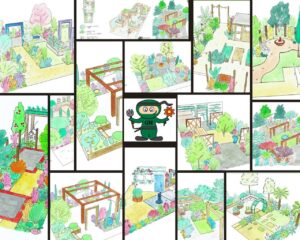
Garden Design Examples for Small Gardens: 30 Design Templates & Planting Plans: In this online gardening course, I’ll walk you through 30 fantastic garden designs, explaining the logic behind the layout, the plant choices, and take-home tips for applying them in your own garden.
Weekend Garden Makeover: A Crash Course in Design for Beginners
Learn how to transform and design your own garden with Lee Burkhills crash course in garden design. Over 5 hours Lee will teach you how to design your own dream garden. Featuring practical design examples, planting ideas and video guides. Learn how to design your garden in one weekend!
Garden Design for Beginners: Create Your Dream Garden in Just 4 Weeks
Garden Design for Beginners Online Course: If you want to make the career jump to becoming a garden designer or to learn how to design your own garden, this is the beginner course for you. Join me, Lee Burkhill, an award-winning garden designer, as I train you in the art of beautiful garden design.
There you have it, 35 absolutely brilliant purple flowers for UK gardens! Whether you’re creating a romantic cottage garden, a contemporary prairie planting, or anything in between, these purple beauties will add sophistication, depth, and drama that few other colours can match.
Remember, gardening is about experimentation and learning what works in your specific conditions. These plants have proven themselves to be reliable performers across various UK climates, but microclimates vary significantly. What thrives in a sheltered London garden might struggle in exposed North Yorkshire, and vice versa.
Begin with a few varieties that appeal to you and are suitable for your conditions. See how they perform. Build your confidence. Some will become firm favourites you wouldn’t garden without, whilst others might not suit your particular situation. That’s gardening, it’s an ongoing conversation with your space and climate.
Lee Burkhill, known as the Garden Ninja, is an award-winning garden designer and horticulturist with over 30 years of gardening experience and 15 years as a professional garden designer. A qualified RHS (Royal Horticultural Society) professional, Lee specialises in sustainable garden design and practical horticultural advice. He designs and presents on BBC1’s Garden Rescue and in leading gardening publications. Lee combines three decades of hands-on gardening knowledge with professional design qualifications to help gardeners create beautiful, functional outdoor spaces.