35 Red Flowering Plants for UK Gardens: Transform Your Borders with Bold Crimson Blooms
Lee Burkhill: Award Winning Designer & BBC 1's Garden Rescue Presenters Official Blog
Beginner level
Discover 35 stunning red flowering plants that'll set your UK garden ablaze with passion and drama. This comprehensive guide features trees, shrubs, perennials, bulbs, and climbers with detailed hardiness ratings, heights, and growing conditions. Learn why red flowers create unbeatable impact, how to design with hot colours, and practical tips for using crimson blooms to command attention, attract pollinators, and create year-round drama in British gardens.
There’s a colour that British gardeners chronically underuse, and it’s the boldest, most dramatic one in the entire palette: vibrant, passionate, show-stopping red! Now, I know what you’re thinking. Red’s too loud, too in-your-face, too risky for proper garden design. Absolute nonsense! Red flowers are the ultimate statement makers, and they deserve way more space in our gardens than they currently get.
I’ve been championing hot colours for years now on Garden Rescue and in my own designs, and red is where gardens truly come alive. These blooms don’t just sit there looking pretty; they grab you by the eyeballs and demand your attention. Which is exactly what a brilliant garden should do.
Whether you’re looking to create a fiery border that stops people in their tracks, add focal points that draw the eye through your space, or attract pollinators like you’re running an exclusive members’ club for bees and butterflies, red flowers deliver drama every single time.
In this comprehensive guide, I’m sharing 35 of my favourite red-flowering plants that absolutely thrive in UK gardens. From early spring bloomers that shake off winter’s grip to late autumn stunners that keep the show going right up to the first frosts, these plants will transform your garden from “quite nice” to “absolutely spectacular”.
And because I know you want proper details, I’ve included hardiness ratings, ultimate heights and spreads for each one. No more wondering whether that plant will survive a proper British winter or grow to eat your garden shed!
Why Red Flowers Deserve Star Billing in Your Garden
Let me be dead straight with you: red gets an unfair reputation in British garden design. Too often, I hear people say it’s “too aggressive” or “clashes with everything“, which I couldn’t agree with more! Red is one of the most powerful colours in the garden designer’s toolkit, and here’s why you should absolutely embrace it:
A) Red flowers create instant drama and focal points
Without even trying. Red naturally commands attention and creates focal points that guide visitors through your garden like nothing else can. Unlike pastel colours that can disappear on overcast days (which, let’s face it, is most days in Britain), red blooms remain visible and dramatic even when the weather’s doing its usual British thing.
B) Pollinators are absolutely mad for red flowers
While bees can’t actually see pure red, they’re attracted to the UV patterns on red flowers, and butterflies and hummingbird hawk-moths absolutely love them. If you’re serious about wildlife-friendly gardening, red flowers are essential for attracting these crucial pollinators throughout the season.
C) Red works brilliantly in both hot and cool colour combinations
Pair it with oranges and yellows for a tropical explosion that screams summer, or combine it with purples and deep blues for stunning complementary contrast that makes both colours absolutely sing. You can even use softer crimsons with silvers and whites for a more sophisticated, elegant scheme. It’s not the red that’s problematic; it’s all about how you use it.
D) Red flowers extend the emotional impact of your garden
Red is the colour of passion, energy, and excitement. It increases heart rate and creates a sense of warmth and vitality that transforms your garden from a passive space into an active experience. On cold British days, a border full of red blooms can make your garden feel warmer and more inviting.
So stop playing it safe with boring, wishy-washy planting schemes!
Let’s dive into these 35 cracking red flowers that’ll transform your garden into something that properly makes people stop and stare. I’ve organised them from trees and shrubs down through perennials to annuals and bulbs, so you can create layers of red drama throughout the entire year.
Trees and Large Shrubs for Structural Red Impact
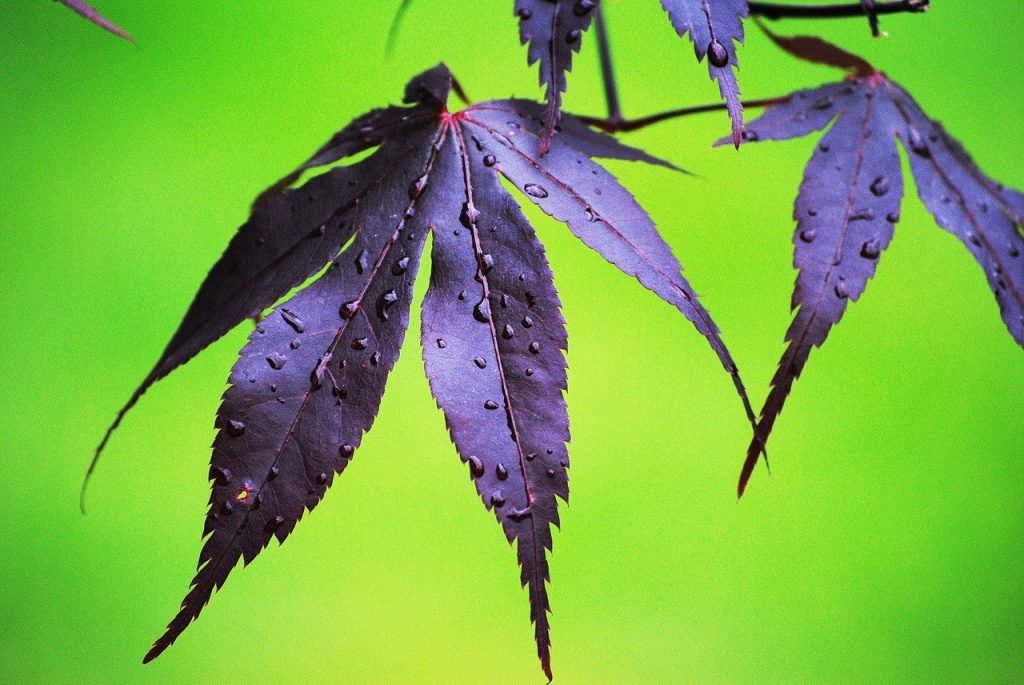
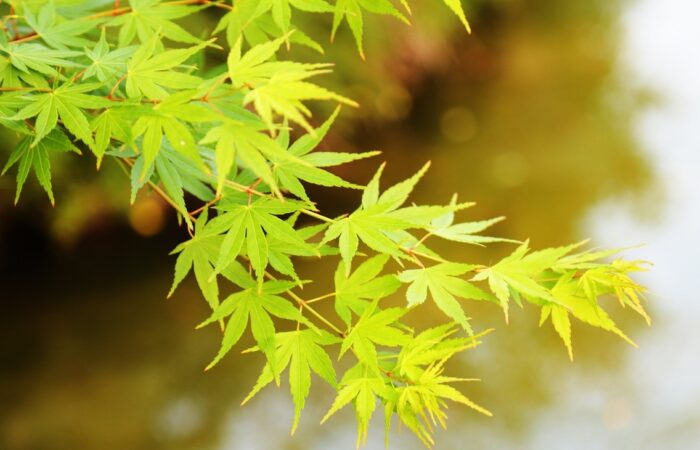
1. Acer palmatum ‘Bloodgood’ (Japanese Maple)
Whilst technically grown for its foliage rather than flowers, ‘Bloodgood’ produces small red flowers in spring, followed by deep purple-red leaves that hold their colour brilliantly through summer. The autumn display is absolutely spectacular, turning brilliant scarlet before dropping.
Hardiness: H5 (Hardy in most UK regions) Ultimate Height: 4-5 metres Ultimate Spread: 4-5 metres
Best Growing Conditions: Partial shade in moist but well-drained, slightly acidic soil. Shelter from cold winds and late frosts.
Top Tip: This is a slow grower, making it perfect for smaller gardens or even large containers. Plant where morning sun can backlight those stunning leaves. The spring flowers are small but add to the overall red theme. Worth every penny for year-round interest!
2. Camellia japonica ‘Adolphe Audusson’
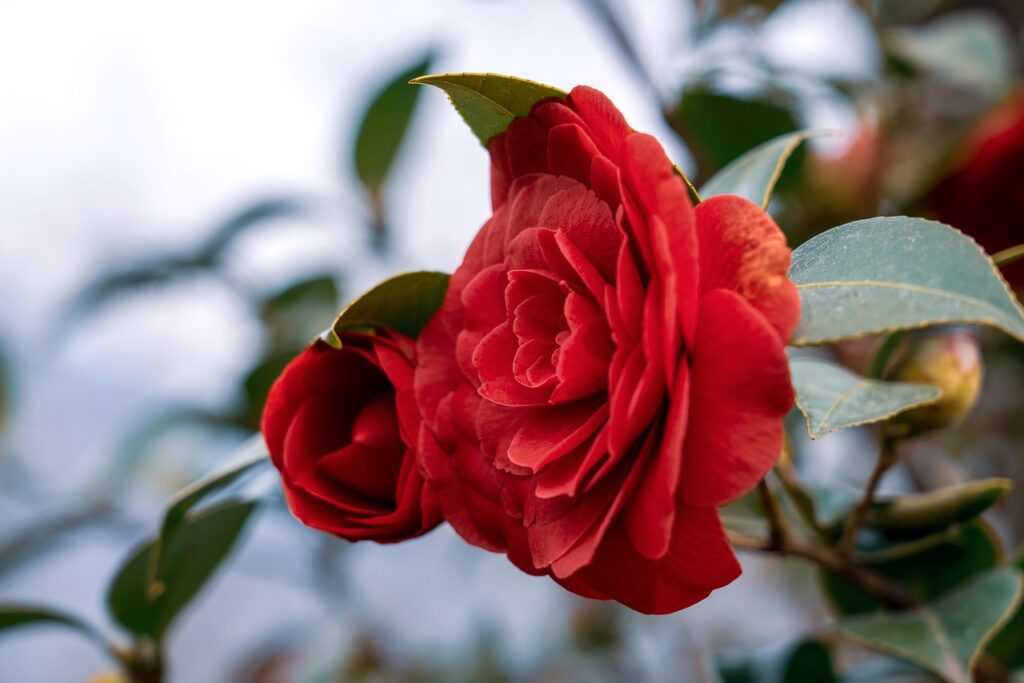
This evergreen showstopper produces those absolutely gorgeous, large semi-double blood-red flowers from February through April when virtually nothing else is blooming. The glossy dark green leaves look brilliant year-round, making it architectural even when not in flower.
Hardiness: H4 (Hardy in most UK regions, may need protection) Ultimate Height: 2-3 metres Ultimate Spread: 1.5-2 metres
Top Tip: Absolutely hates lime, so use ericaceous compost if your soil’s alkaline. Mulch with leaf mould or bark to keep roots cool. Perfectly planted near a path where you can properly appreciate those stunning early flowers on grim winter days!
3. Chaenomeles speciosa ‘Crimson and Gold’ (Japanese Quince)
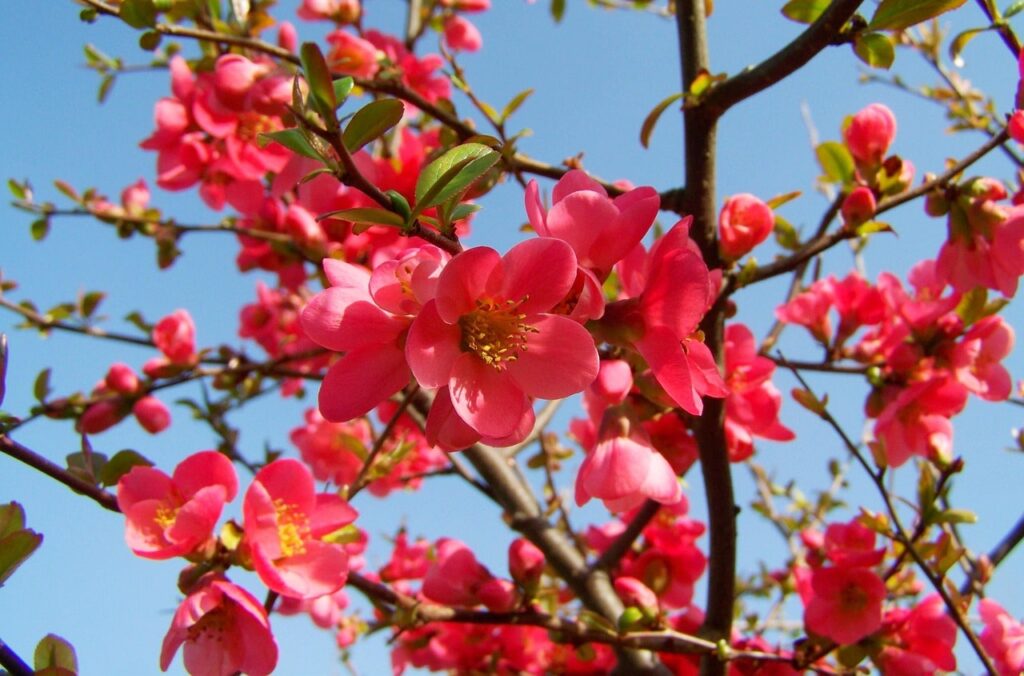
Flowering quince is criminally underused! ‘Crimson and Gold’ produces masses of deep crimson flowers with bright golden stamens on bare stems from March through May. It’s tough as old boots and brilliant for awkward spots.
Best Growing Conditions: Sun or shade, any reasonable soil. Will flower better in sun but tolerates north-facing walls brilliantly.
Top Tip: Follow the spring flowers with edible yellow fruits you can use for jelly. Brilliant trained against a wall or as an informal hedge. The spiny stems make it excellent for security planting under windows. Absolutely bombproof!
4. Rhododendron ‘Elizabeth’ (Dwarf Rhododendron)
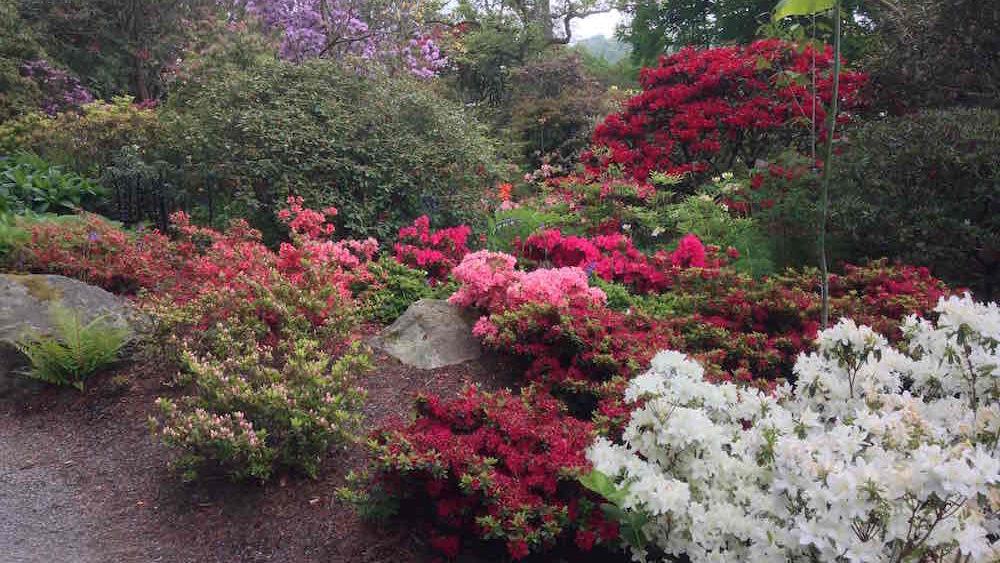
This compact evergreen rhododendron is absolutely brilliant for smaller gardens. It produces masses of trumpet-shaped, brilliant red flowers in April and May that completely cover the plant. Unlike some rhododendrons that can look a bit dull when not flowering, ‘Elizabeth’ has attractive compact foliage year-round.
Hardiness: H5 (Hardy in most UK regions) Ultimate Height: 1-1.5 metres Ultimate Spread: 1-1.5 metres
Best Growing Conditions: Dappled shade in moist, well-drained, acidic soil. Brilliant for woodland gardens.
Top Tip: Like all rhododendrons, it needs acidic soil, so grow in containers with ericaceous compost if your soil’s alkaline. Deadhead after flowering to encourage better blooms next year. Perfect planted en masse for a proper spring spectacle!
5. Ribes sanguineum ‘King Edward VII’ (Flowering Currant)
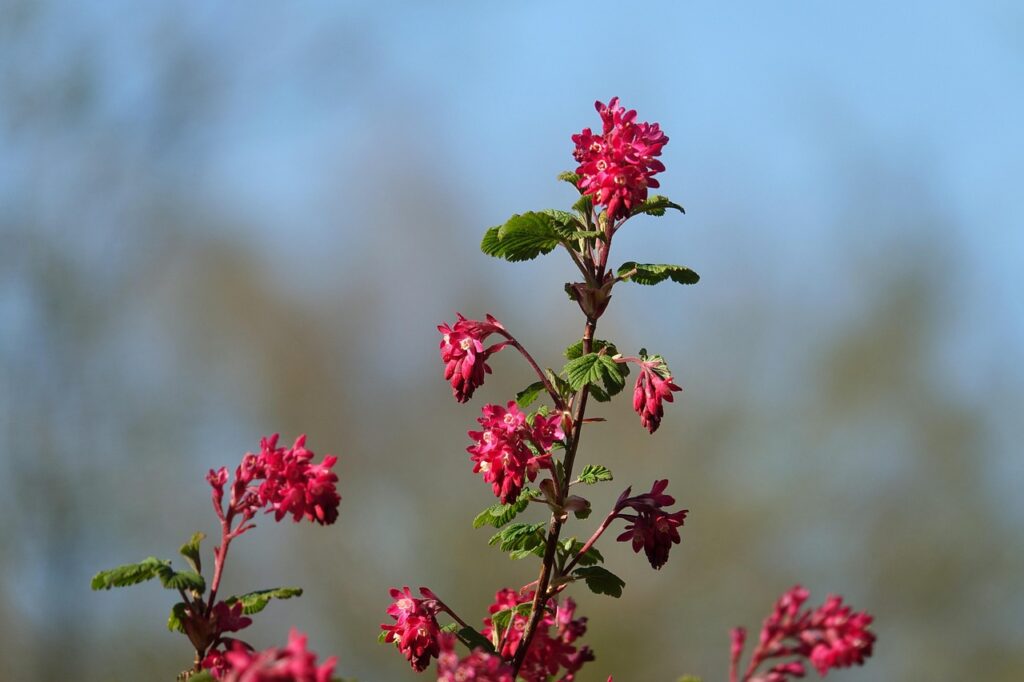
Flowering currant is a proper British garden classic that deserves more love. ‘King Edward VII’ produces masses of deep crimson-red pendant flowers in March and April, providing crucial early nectar when pollinators are emerging from winter. The foliage has that distinctive blackcurrant scent.
Best Growing Conditions: Sun to partial shade in any reasonable, well-drained soil. Absolutely bombproof.
Top Tip: Prune immediately after flowering, removing about a third of old stems at ground level. Follow the flowers with dark blue-black berries that birds absolutely love. Brilliant for hedging or mixed borders. Easy-peasy for beginners!
Medium Shrubs and Roses
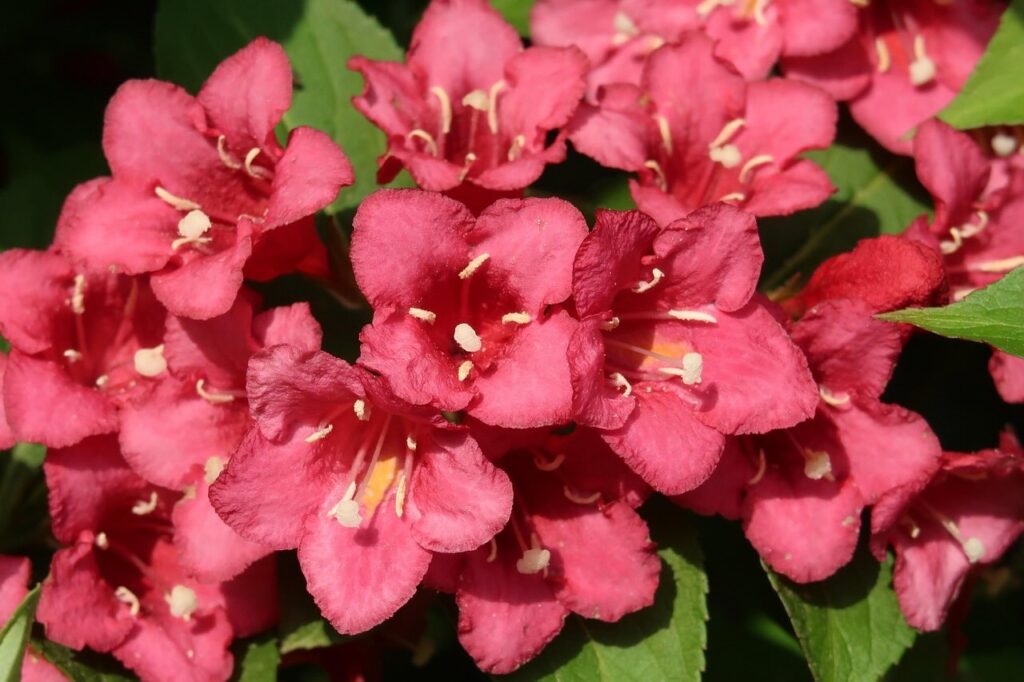
6. Weigela florida ‘Red Prince’
Weigela is one of those reliable workhorses that flowers its socks off. ‘Red Prince’ produces masses of trumpet-shaped, ruby-red flowers from May through July, often with a repeat flush in late summer. It’s vigorous, easy, and absolutely reliable.
Best Growing Conditions: Sun to partial shade in moist but well-drained soil. Flowers better in sun.
Top Tip:Prune after flowering by cutting back flowered shoots to strong buds lower down. The flowers are magnets for hummingbird hawk-moths and bees. Looks brilliant with yellow or purple flowers for contrast. Dead easy to grow!
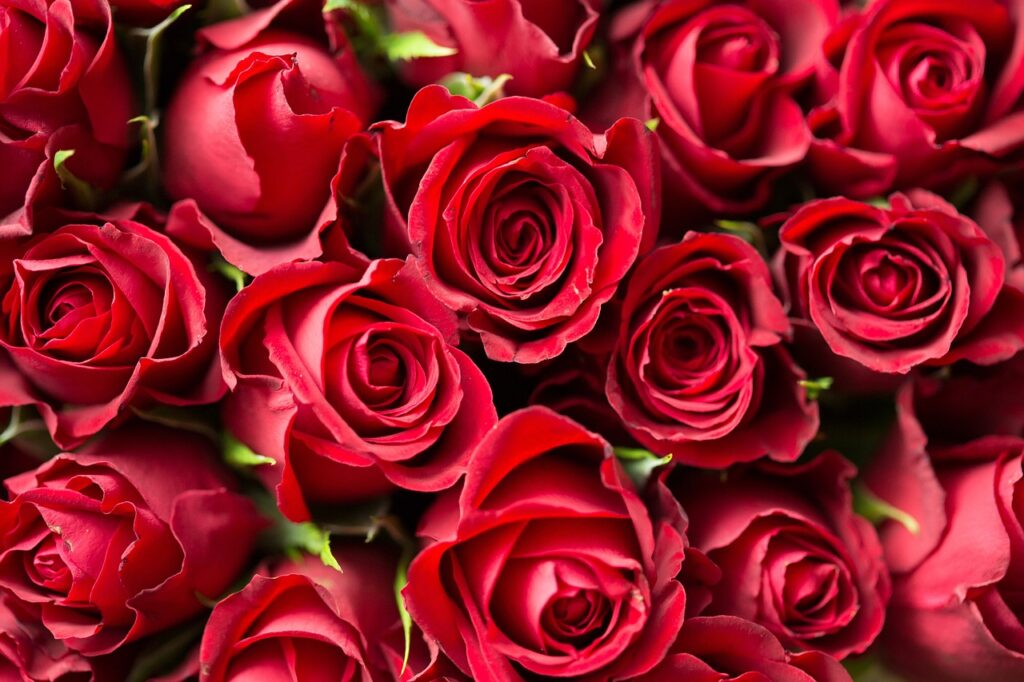
7. Rosa ‘Tess of the d’Urbervilles’
David Austin’s ‘Tess’ is an absolute stunner with huge, deeply cupped crimson-red blooms that have the most incredible old-rose fragrance. It flowers continuously from June through October and is reasonably disease-resistant compared to some red roses.
Best Growing Conditions: Full sun in rich, well-drained soil. Feed generously for best performance.
Top Tip: Mulch with well-rotted manure in spring for bumper blooms. Deadhead regularly to keep flowers coming. The fragrance is absolutely gorgeous, so plant near seating areas or paths. One of the best red English roses available!
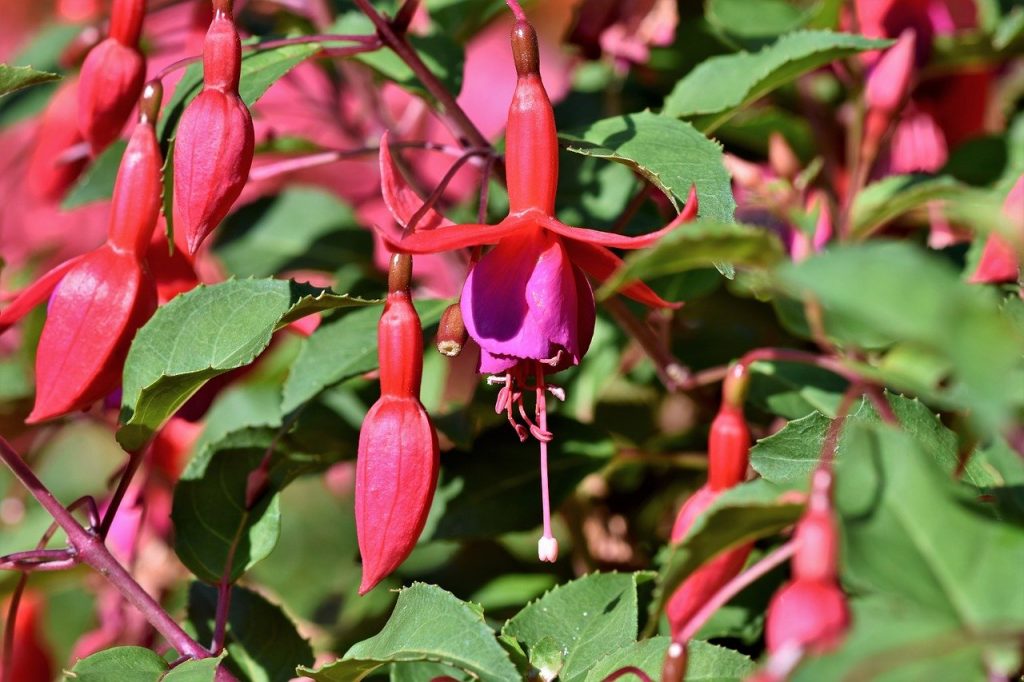
8. Fuchsia ‘Mrs Popple’
This hardy fuchsia is absolutely brilliant for adding drama from July right through to the first frosts. Mrs Popple’ produces masses of those distinctive pendant flowers with scarlet sepals and deep purple skirts. It’s one of the hardiest fuchsias and comes back reliably every year.
Hardiness: H5 (Hardy in most UK regions) Ultimate Height: 1-1.2 metres Ultimate Spread: 75cm-1 metre
Best Growing Conditions: Sun to partial shade in moist but well-drained soil.
Top Tip: Cut back to ground level in spring once new shoots appear at the base. Mulch the crown in winter in colder areas. Brilliant for cottage gardens or the front of borders. Loved by bees and absolutely bombproof once established!
Herbaceous Perennials for Mid-Border Magic
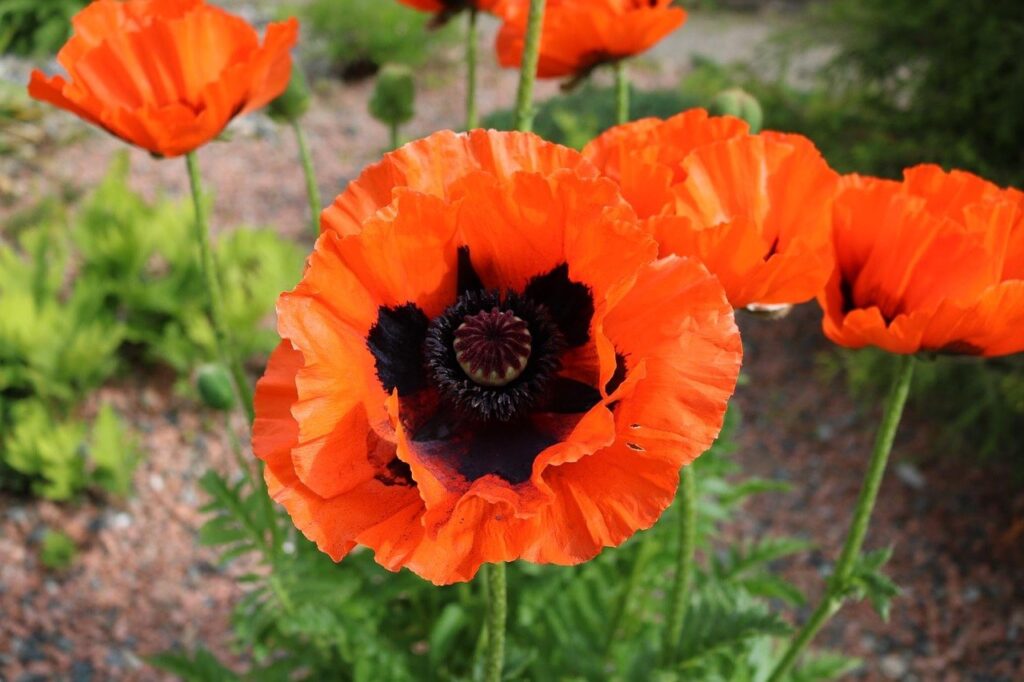
9. Papaver orientale ‘Beauty of Livermere’ (Oriental Poppy)
Oriental poppies are pure drama! ‘Beauty of Livermere’ produces absolutely massive, tissue-paper crimson flowers up to 15cm across in May and June. Each bloom has those distinctive black blotches at the base that make them absolutely stunning. They’re like having fireworks in your border!
Hardiness: H6 (Hardy throughout UK) Ultimate Height: 90cm-1 metre Ultimate Spread: 60-75cm
Best Growing Conditions: Full sun in well-drained soil. Excellent drainage is crucial.
Top Tip: The foliage dies back after flowering, so plant later-flowering perennials nearby to fill the gap. Absolutely hates being moved once established, so get the position right first time. Cut back tatty foliage after flowering. Stunning!
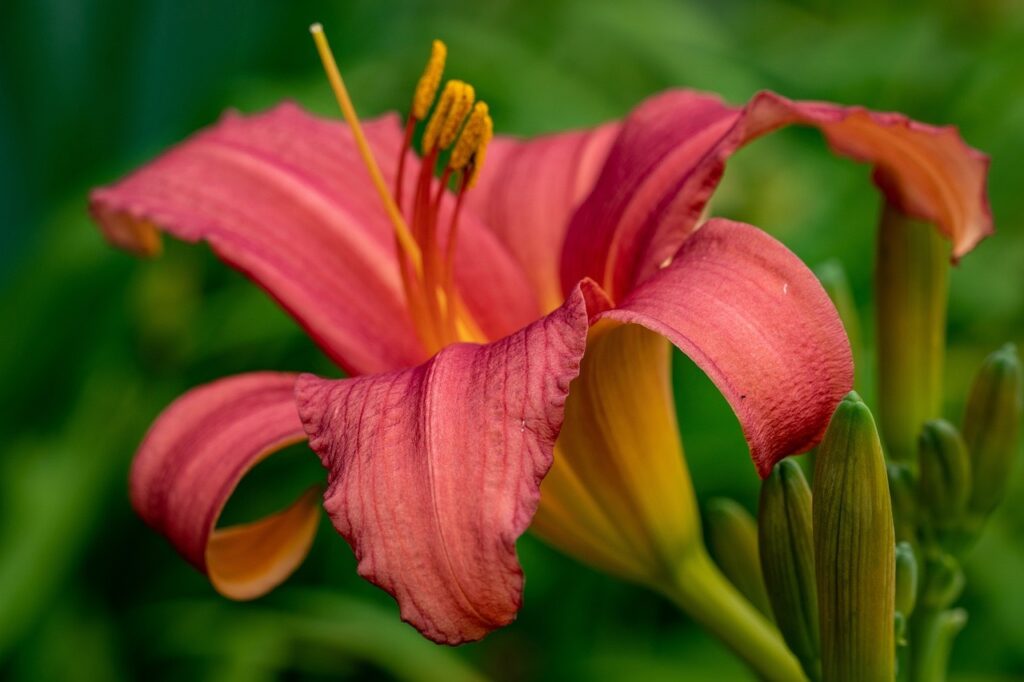
10. Hemerocallis ‘Stafford’ (Daylily)
Daylilies are absolute grafters that perform brilliantly with minimal fuss. ‘Stafford’ produces those gorgeous trumpet-shaped, vivid scarlet flowers with yellow throats from June through August. Each bloom lasts just one day, but there are so many buds you’ll never notice.
Best Growing Conditions: Sun to partial shade in moist but well-drained soil. Tolerant of most conditions.
Top Tip: Remove spent flower stems to keep plants tidy and encourage more blooms. Divide every 3-4 years if clumps get congested. Absolutely brilliant for beginners and tough as nails. Works beautifully with yellows or purples!
11. Lobelia cardinalis (Cardinal Flower)
This stunning perennial produces tall spikes of brilliant scarlet flowers from July through September. It’s perfect for damp spots and absolutely brilliant for late-season colour when many other perennials are finishing.
Hardiness: H5 (Hardy in most UK regions) Ultimate Height: 90cm-1 metre Ultimate Spread: 30-45cm
Best Growing Conditions: Sun to partial shade in moist or boggy soil. Brilliant for pond edges.
Top Tip: One of the few red perennials that genuinely loves wet feet. Mulch the crown in winter in colder areas. Divide every few years to maintain vigour. Hummingbird hawk-moths absolutely love it!
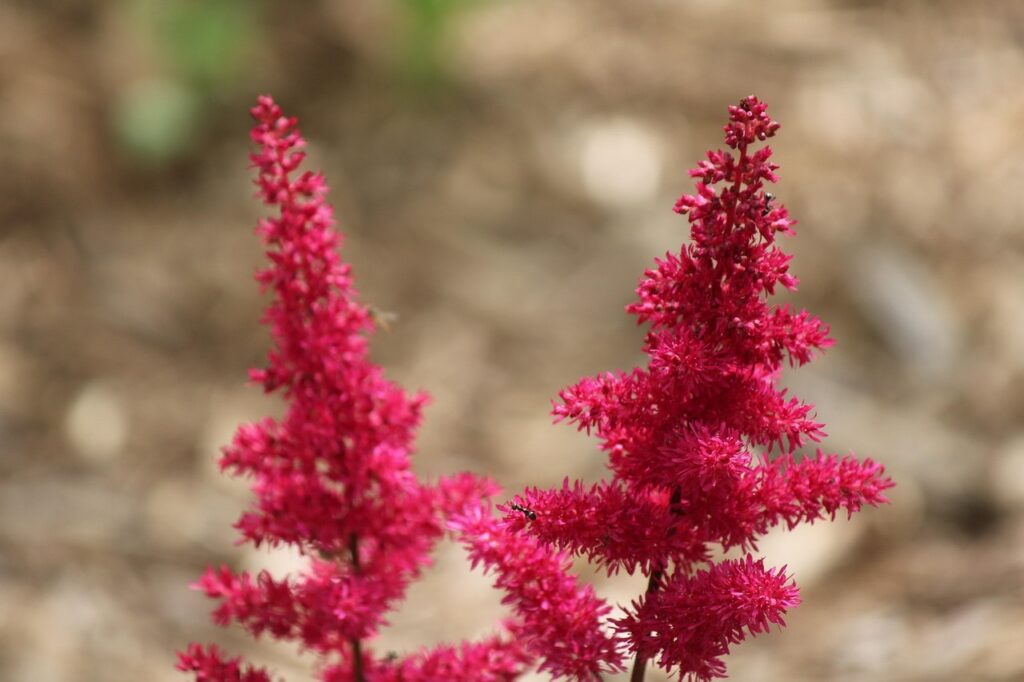
12. Astilbe ‘Fanal’ (False Goat’s Beard)
Astilbes are absolutely brilliant for adding feathery texture to borders. ‘Fanal’ produces those distinctive plume-like, deep crimson-red flowers from June through August above dark green, divided foliage. It’s perfect for shady spots where many red flowers won’t bloom.
Best Growing Conditions: Partial shade to sun in moist, humus-rich soil. Will tolerate sun if kept moist.
Top Tip: Absolutely hates drying out, so mulch well and water during dry spells. Leave seedheads standing through winter for structure. Brilliant for damp, shady borders where not much else will flower. Easy to grow!
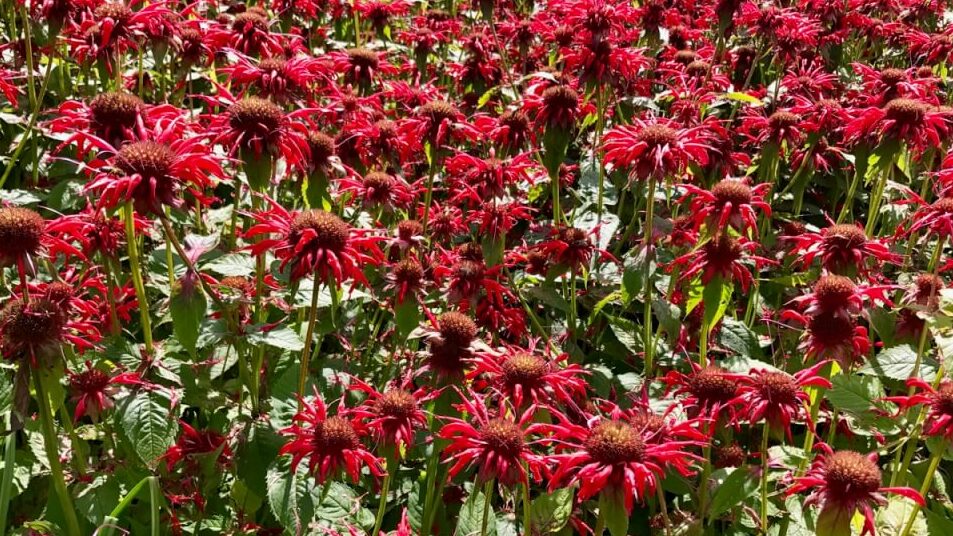
Bee balm produces those distinctive shaggy, scarlet flowers from July through September that bees absolutely go mental for. The aromatic foliage smells gorgeous when brushed, and it’s brilliant for cottage gardens or prairie-style plantings.
Hardiness: H6 (Hardy throughout UK) Ultimate Height: 90cm-1 metre Ultimate Spread: 45-60cm
Best Growing Conditions: Sun to partial shade in moist, fertile soil.
Top Tip: Divide every 3-4 years to maintain vigour and prevent the centre dying out. It can get powdery mildew in dry conditions, so keep it well-watered. The flowers are brilliant for cutting, and the foliage can be used for tea. Loved by pollinators!
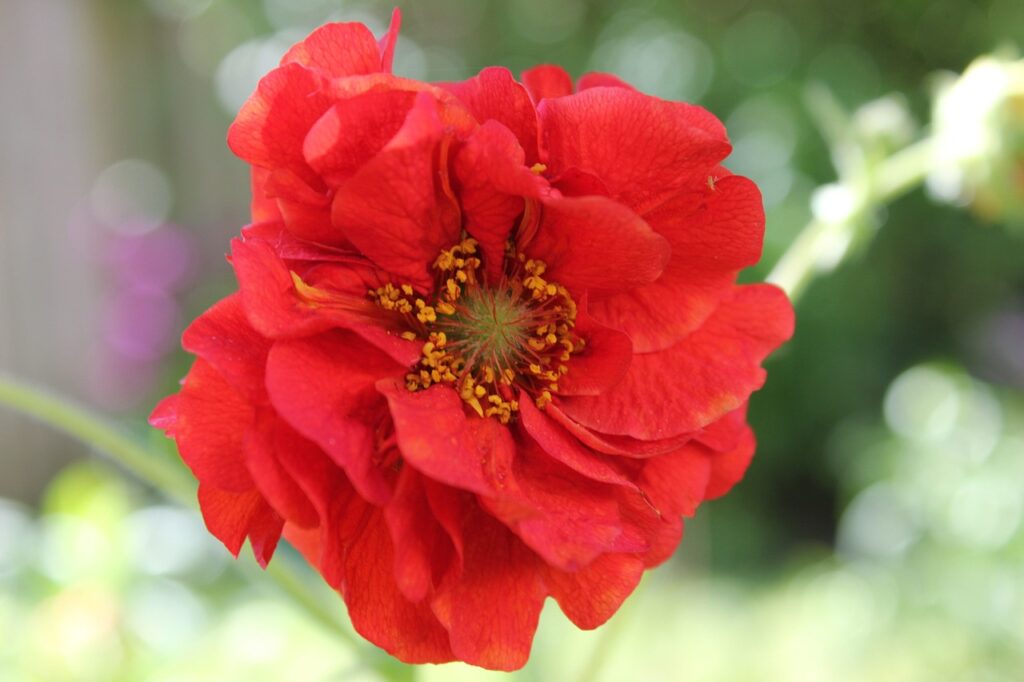
14. Geum ‘Mrs J. Bradshaw’
This cottage garden classic produces masses of semi-double, scarlet-red flowers from May through September above rosettes of evergreen foliage. It’s cheerful, reliable, and flowers for absolutely ages.
Best Growing Conditions: Sun to partial shade in moist but well-drained soil.
Top Tip: Deadhead regularly to keep flowers coming for months. Divide every 3 years to maintain vigour. The evergreen foliage looks good year-round. Perfect for the front of borders or cottage gardens. Easy as pie!
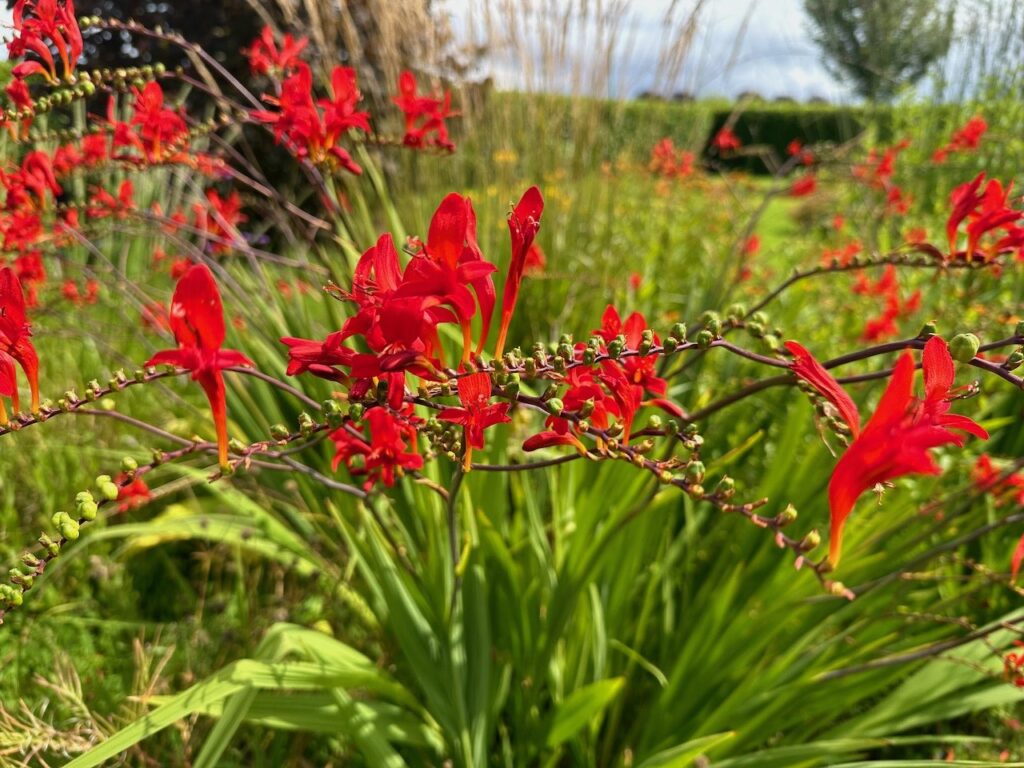
15. Crocosmia ‘Lucifer’ (Montbretia)
‘Lucifer’ is an absolute showstopper that produces those dramatic, arching stems of brilliant flame-red flowers from July through September above sword-like foliage. It’s architectural, bold, and incredibly vigorous once established.
Hardiness: H5 (Hardy in most UK regions) Ultimate Height: 1-1.2 metres Ultimate Spread: 45cm (but spreads via corms)
Best Growing Conditions: Full sun to light shade in well-drained soil.
Top Tip: The corms multiply readily, so you’ll have generous clumps within a few years. Lift and divide congested clumps every 3-4 years. Fabulous for hot borders paired with oranges and yellows. The strappy foliage is slug-proof, which is always a bonus!
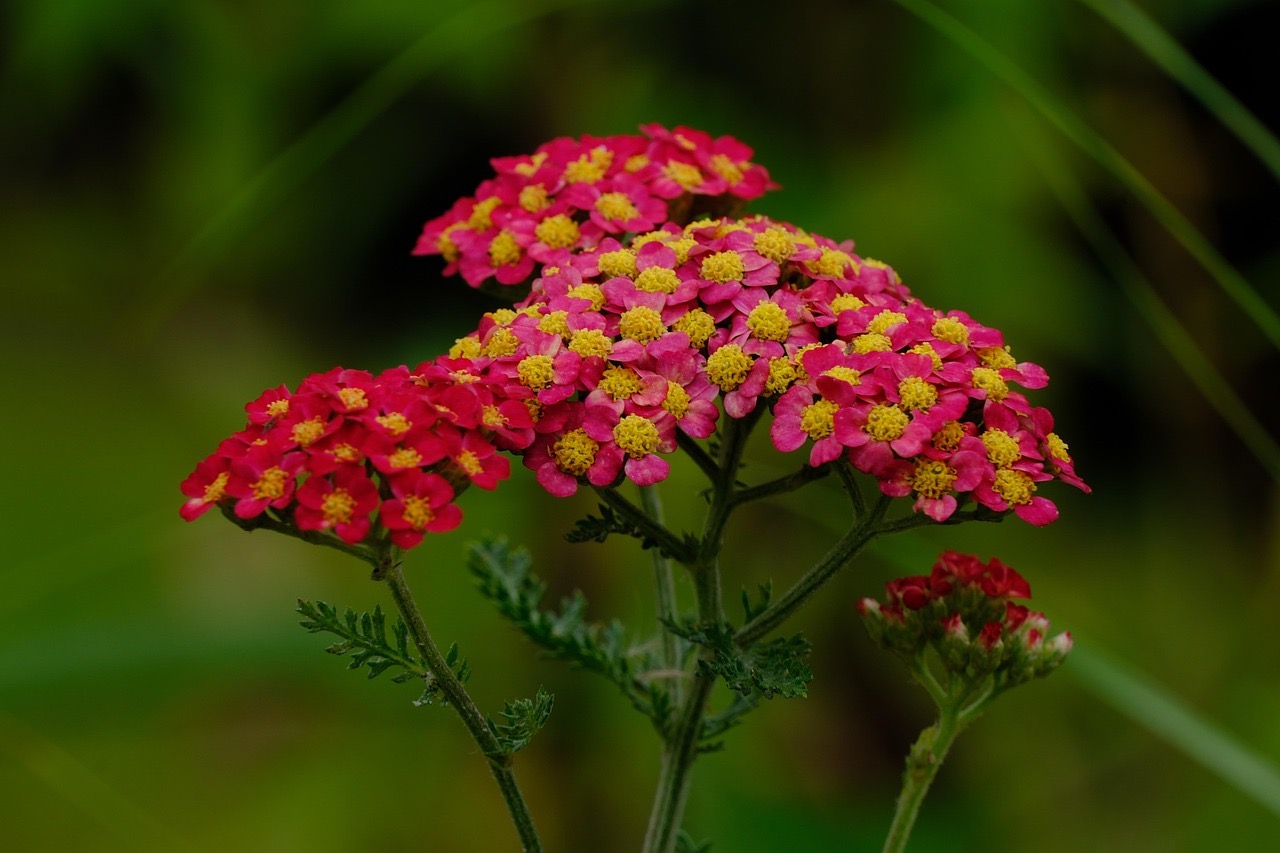
16. Achillea millefolium ‘Red Velvet’ (Yarrow)
Yarrow produces those distinctive flat-topped flower heads that are brilliant for providing landing platforms for insects. ‘Red Velvet’ has deep crimson-red flowers from June through September above ferny, aromatic foliage. It’s tough as old boots and brilliant for hot, dry spots.
Best Growing Conditions: Full sun in well-drained soil. Thrives on neglect and drought.
Top Tip: Perfect for gravel gardens and hot, dry spots. Cut back after flowering for a second flush. The flowers dry beautifully for arrangements. Hoverflies and butterflies absolutely love these!
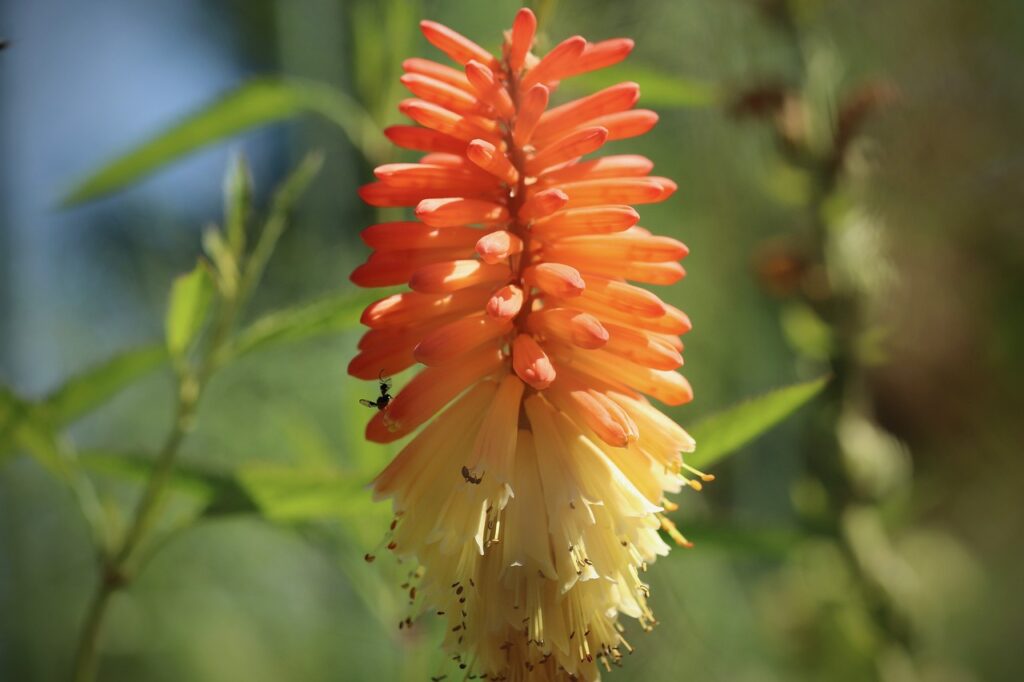
17. Kniphofia ‘Prince Igor’ (Red Hot Poker)
Red hot pokers are architectural stunners, and ‘Prince Igor’ is one of the best. It produces those distinctive poker-like spikes of intense scarlet-red flowers from July through September above grassy foliage. They’re dramatic, bold, and absolutely brilliant for modern or tropical-style plantings.
Hardiness: H5 (Hardy in most UK regions) Ultimate Height: 1.5-1.8 metres Ultimate Spread: 60cm
Best Growing Conditions: Full sun in well-drained soil. Excellent drainage is crucial in winter.
Top Tip: Tie the foliage together over the crown in winter to protect from frost and wet. Divide congested clumps in spring. The flowers are magnets for bees and hummingbird hawk-moths. Stunning planted en masse!
Ground Cover and Front-of-Border Beauties
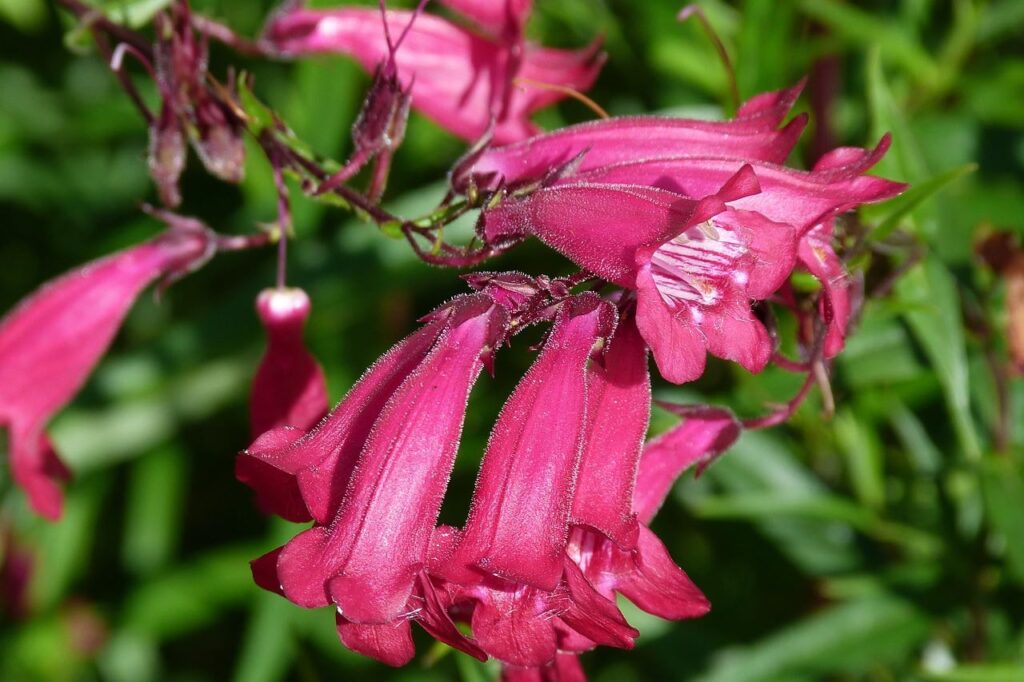
18. Penstemon ‘Firebird’ (Beardtongue)
Penstemons are cottage garden classics that flower their socks off. ‘Firebird’ produces masses of tubular, bright scarlet-red flowers from June through September. They’re brilliant value, flowering for months with minimal care.
Hardiness: H4 (Hardy in most UK regions, may need protection) Ultimate Height: 60-75cm Ultimate Spread: 45cm
Best Growing Conditions: Full sun in well-drained soil. Excellent drainage is crucial in winter.
Top Tip: Take cuttings in late summer as insurance against winter losses. Deadhead regularly to keep flowers coming. Mulch the base in winter in colder areas. Bees absolutely love these, and they’re brilliant for cutting!
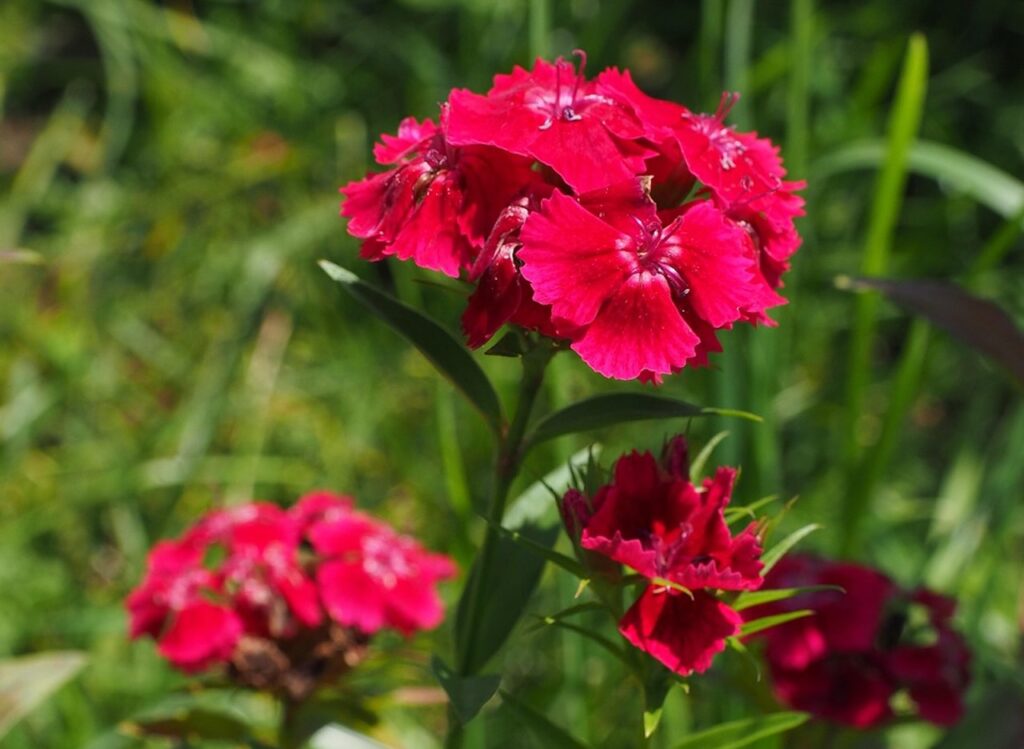
19. Dianthus ‘Houndspool Ruby’ (Garden Pink)
Garden pinks are cottage garden essentials with that gorgeous clove scent. ‘Houndspool Ruby’ produces masses of double, deep crimson-red flowers from May through July above evergreen, silvery foliage that looks good year-round.
Best Growing Conditions: Full sun in well-drained, alkaline soil. Brilliant for chalk gardens.
Top Tip: Deadhead after flowering to keep plants tidy. The scent is absolutely gorgeous, so plant near paths or seating areas. Perfect for the front of borders or rockeries. Easy-peasy!
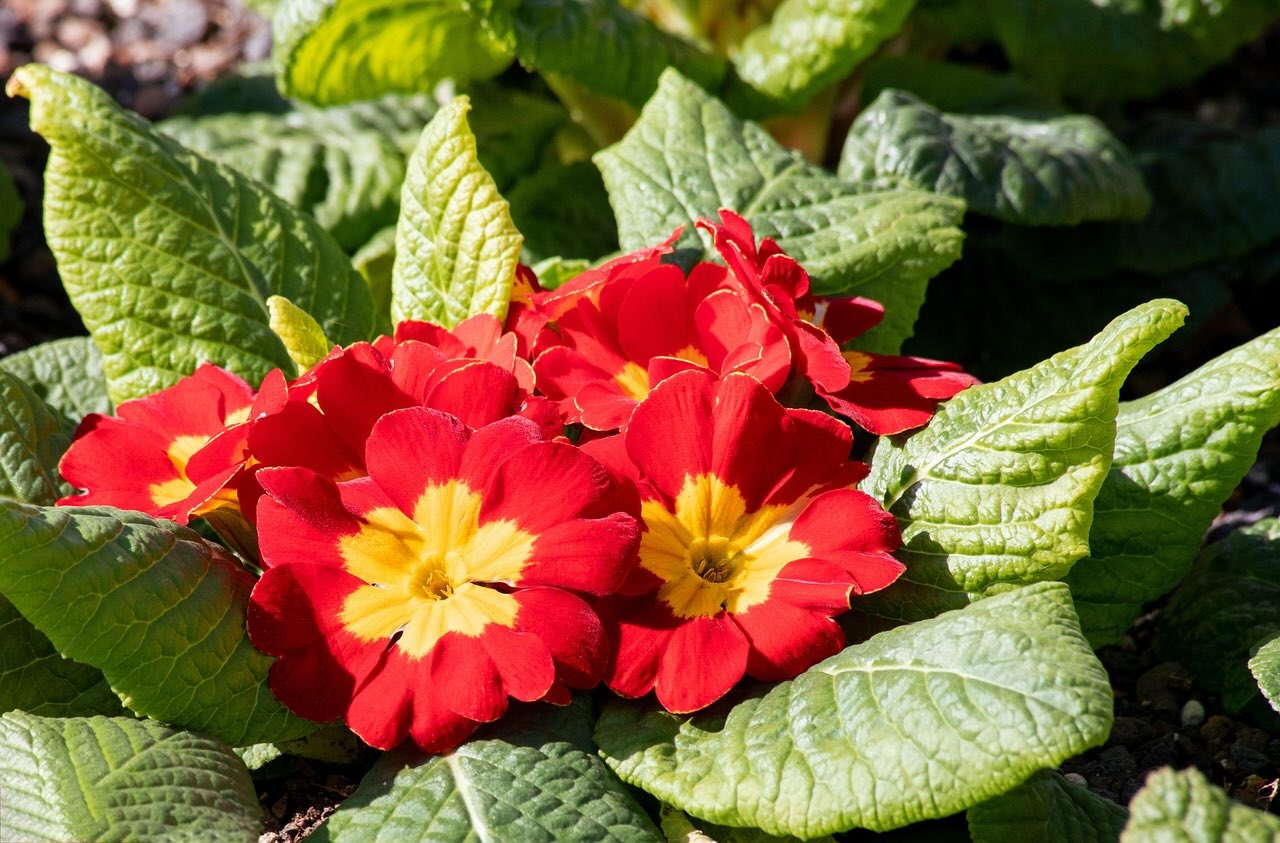
20. Primula vulgaris ‘Best Red’
This gorgeous blood red primrose produces masses of deep crimson-red flowers from February through May. It’s one of the earliest red flowers to bloom, providing that much-needed colour when everything else is still asleep.
Best Growing Conditions: Partial shade in moist but well-drained soil.
Top Tip: Feed after flowering to encourage better blooms next year. Divide congested clumps every 3 years. Perfect for naturalising under deciduous trees or shrubs. The flowers are brilliant for cheering up grim February days!
Best Growing Conditions: Full sun in well-drained soil. Drought-tolerant once established.
Top Tip: Shear back after the first flush for a second wave of flowers. Perfect for the front of borders or ground cover. Absolutely bombproof and brilliant for beginners!
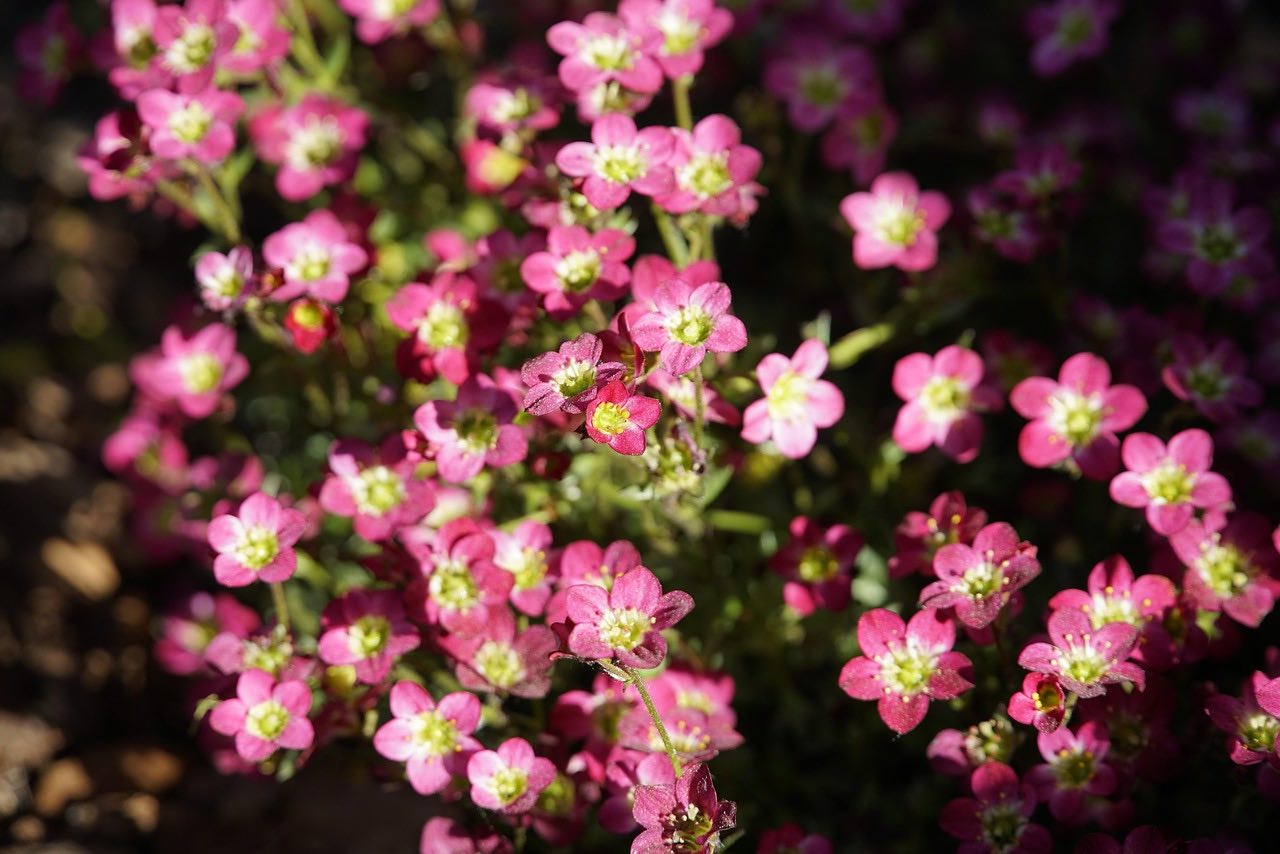
22. Saxifraga ‘Highlander Red’ (Saxifrage)
This compact evergreen perennial produces masses of small, deep red cup-shaped flowers above cushions of attractive foliage in May and June. It’s perfect for rockeries, alpine gardens, or the front of borders.
Best Growing Conditions: Sun to partial shade in well-drained soil.
Top Tip: Brilliant for rockeries, raised beds, or between paving stones. Very low maintenance once established. Perfect for adding early colour to the front of borders!
Annuals and Biennials for Seasonal Sizzle
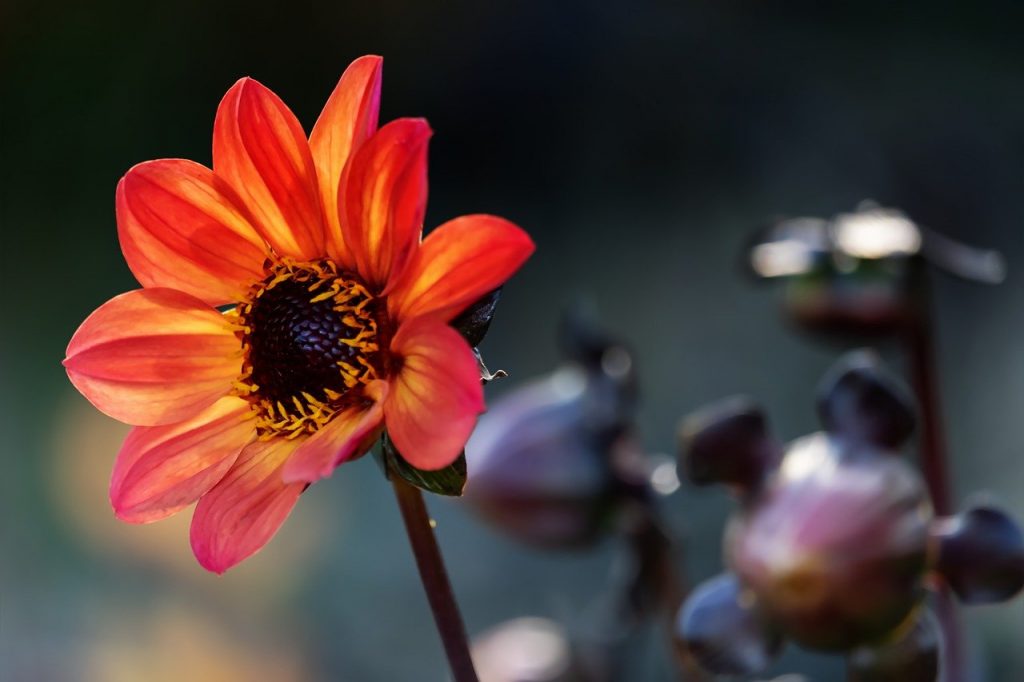
23. Dahlia ‘Bishop of Llandaff’
If dahlias had a hall of fame, ‘Bishop of Llandaff’ would be right at the front! This stunning dahlia produces single, vivid scarlet-red flowers from July right through to the first frosts above dark bronze-purple foliage. The colour combination is absolutely knockout.
Hardiness: H2 (Tender, needs lifting in winter in most UK regions) Ultimate Height: 90cm-1 metre Ultimate Spread: 45-60cm
Best Growing Conditions: Full sun in rich, moist but well-drained soil.
Top Tip: Plant tubers in late spring after last frosts. Stake tall varieties. Deadhead regularly for continuous flowering. Lift and store tubers over winter in cold areas, or treat as annuals. The dark foliage is stunning even before flowering starts!
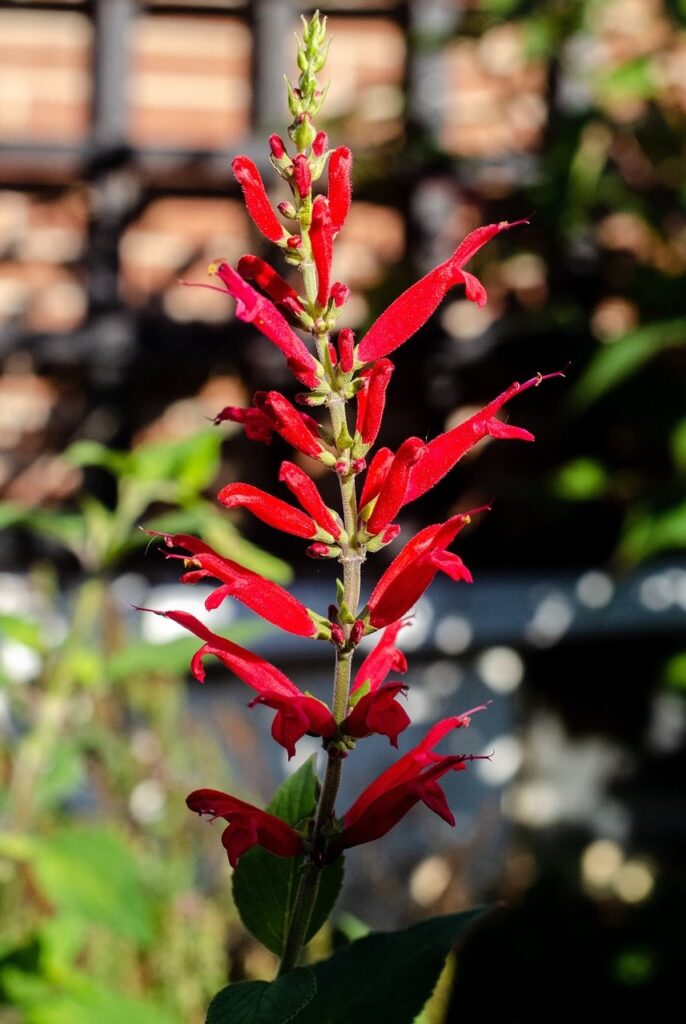
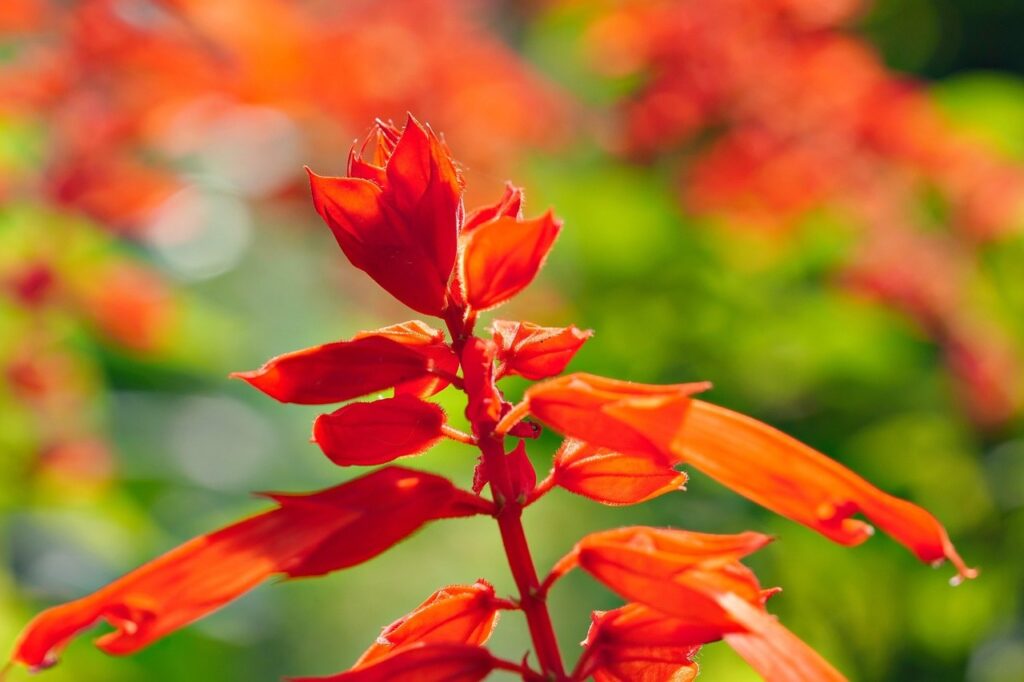
24. Salvia splendens (Scarlet Sage)
Scarlet sage is a bedding plant that produces those distinctive spikes of brilliant scarlet-red flowers from June right through to the first frosts. It’s bold, bright, and absolutely brilliant for containers or bedding displays. I’m not going to lie, you either love this plant or you hate it. I actually can’t stand it, but I put my prejudices aside so that other readers can see if they find the beauty in this one! It’s bold as brass!
Best Growing Conditions: Full sun to partial shade in moist but well-drained soil.
Top Tip: Plant out after last frosts in rich soil. Deadhead regularly for continuous flowering. Brilliant for containers or bedding displays. Hummingbird hawk-moths and bees absolutely love these!
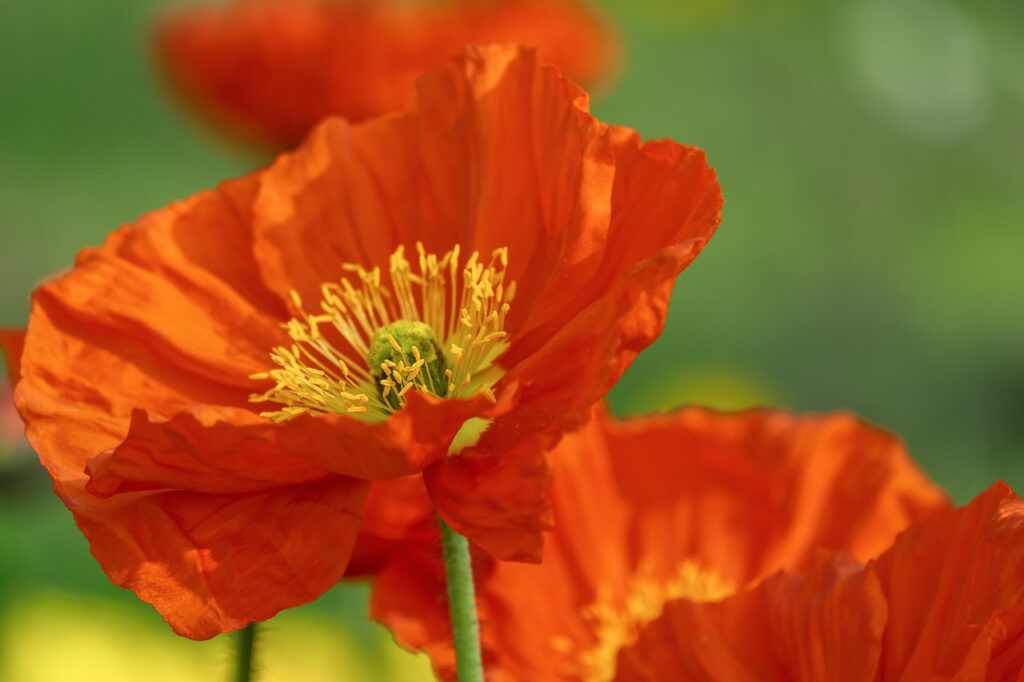
25. Papaver rhoeas (Common Poppy/Corn Poppy)
Our native field poppy is absolutely stunning with those delicate, tissue-paper scarlet flowers from May through August. It’s brilliant for wildflower meadows or cottage gardens, and self-seeds readily once established making it excellent for low fuss gardening or those gardeners who want the garden to feel loose and free.
Best Growing Conditions: Full sun in well-drained soil.
Top Tip: Sow directly where you want them to flower as they hate being transplanted. Self-seeds readily, so you’ll have free plants for years. Brilliant for wildflower areas and crucial for pollinators. Dead easy from seed!
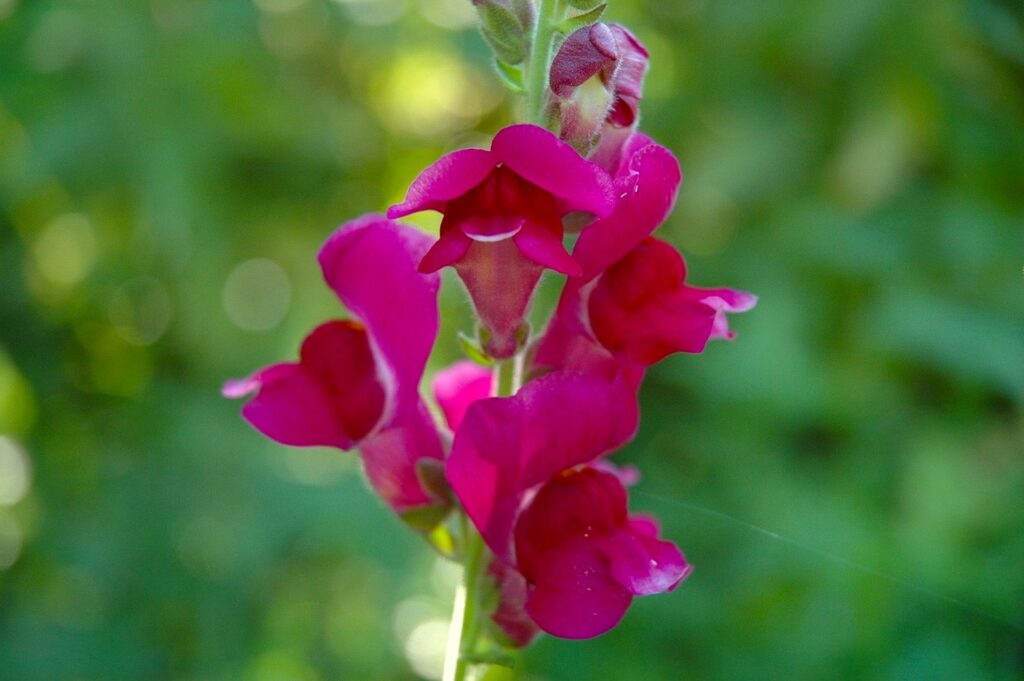
Snapdragons are cottage garden classics that produce those distinctive tubular flowers that snap when squeezed (hence the name!). ‘Scarlet Giant’ has tall spikes of brilliant scarlet-red flowers from June through October and if you have children they will love playing with the flowers and ‘making them talk’ by squeezing them!
Hardiness: Hardy annual (often survives as a short-lived perennial in mild areas) Ultimate Height: 90cm-1 metre Ultimate Spread: 30-45cm
Best Growing Conditions: Full sun in well-drained soil.
Top Tip: Pinch out growing tips when young to encourage bushier plants. Deadhead regularly for continuous flowering. Brilliant for cutting and cottage gardens. Easy from seed or buy as plug plants!
27. Pelargonium (Geranium) Red varieties
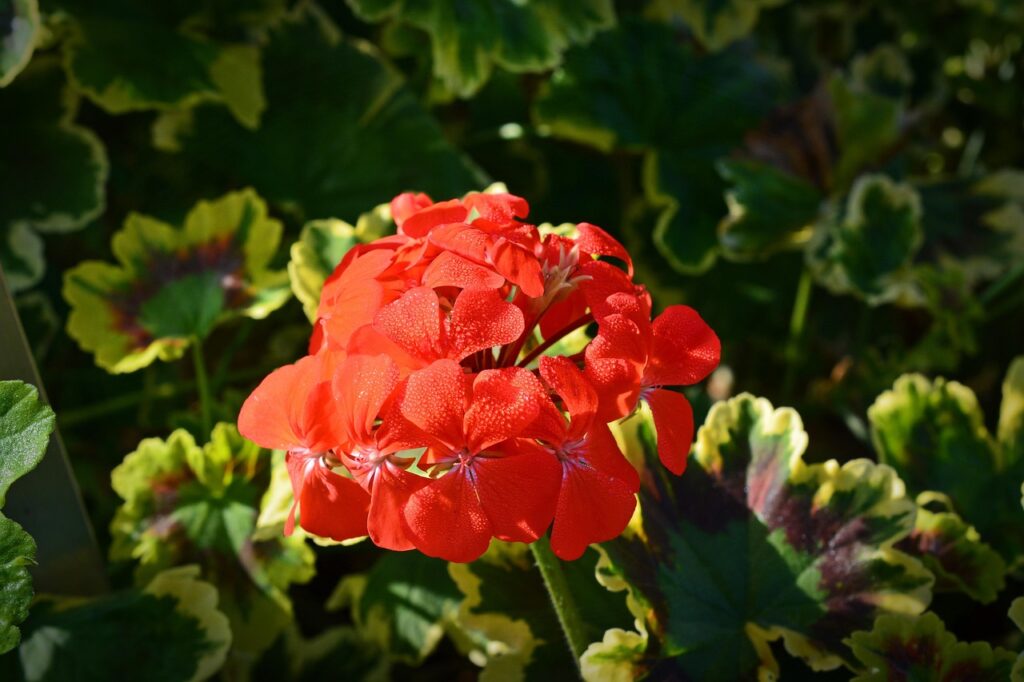
Geraniums (technically pelargoniums) are bedding plant staples that produce masses of red flowers from May right through to the first frosts. Varieties like ‘Patriot Bright Red’ are absolutely brilliant for containers, hanging baskets, or bedding displays, along with balcony garden design schemes.
Hardiness: H1C (Tender annual, though can be overwintered) Ultimate Height: 30-45cm Ultimate Spread: 30-45cm
Best Growing Conditions: Full sun in well-drained soil. Brilliant for containers.
Top Tip: Deadhead regularly to keep flowers coming. You can take cuttings and overwinter them on a windowsill for free plants next year. Brilliant for containers and low maintenance. Classic British summer colour!
Spring Bulbs for Early Season Drama
28. Tulipa (Tulip) Red varieties
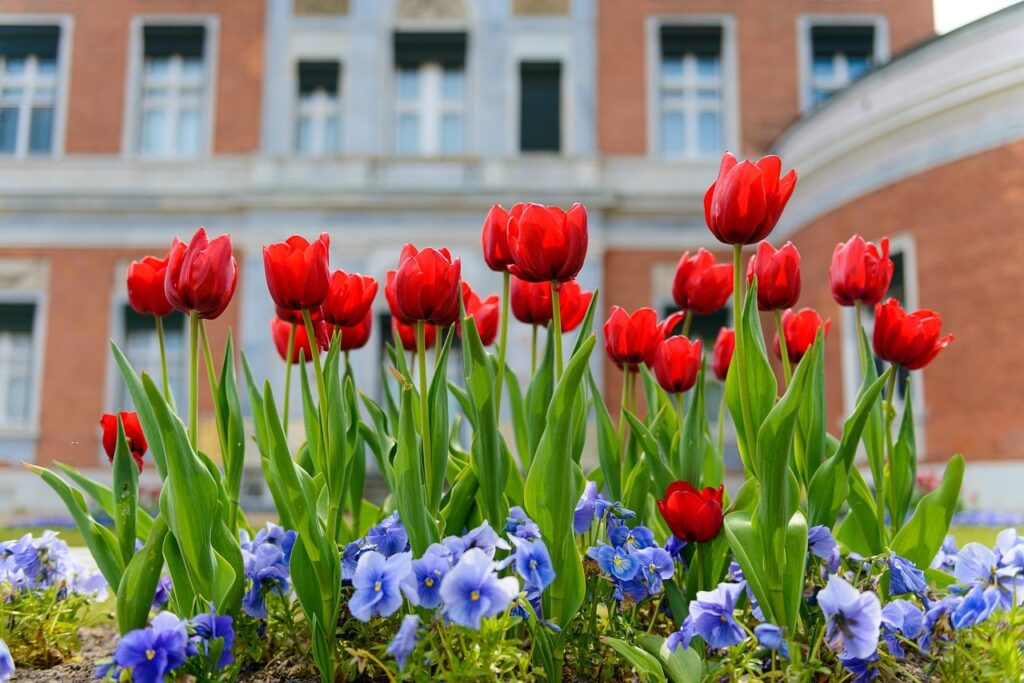
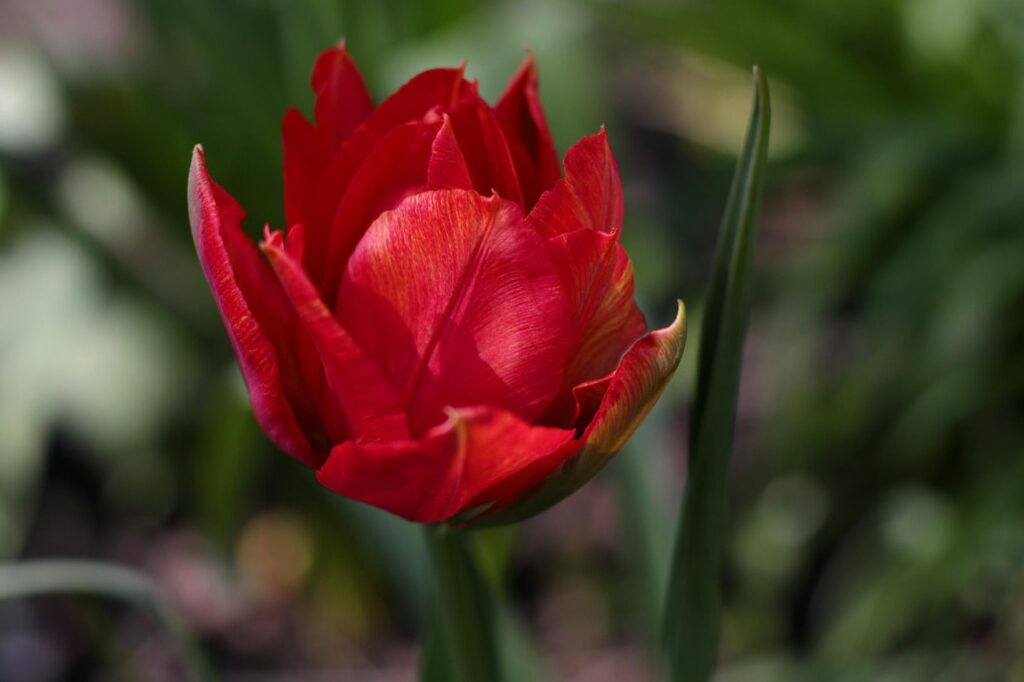
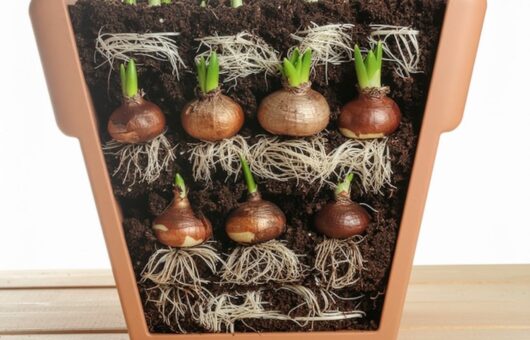
Red tulips are absolute springtime classics that create stunning displays from March through May. Varieties like ‘Red Impression’, ‘Apeldoorn’, and ‘Strong Gold’ (which is actually red despite the name!) provide everything from soft coral-reds to deep blood-reds. Always plant tulips in late november unlike other spring bulbs as they do better once in colder ground unlike Daffodils and snowdrops which should be planted in late september or october.
Hardiness: H6 (Hardy throughout UK) Ultimate Height: 30-60cm depending on variety Ultimate Spread: 15-20cm
Best Growing Conditions: Full sun in well-drained soil.
Top Tip: Plant bulbs in November at three times their depth for best flowering. In heavy soils, lift after flowering and store dry for replanting in autumn, or treat as annuals. Try planting with wallflowers for a classic spring combination. Loads of varieties to choose from!
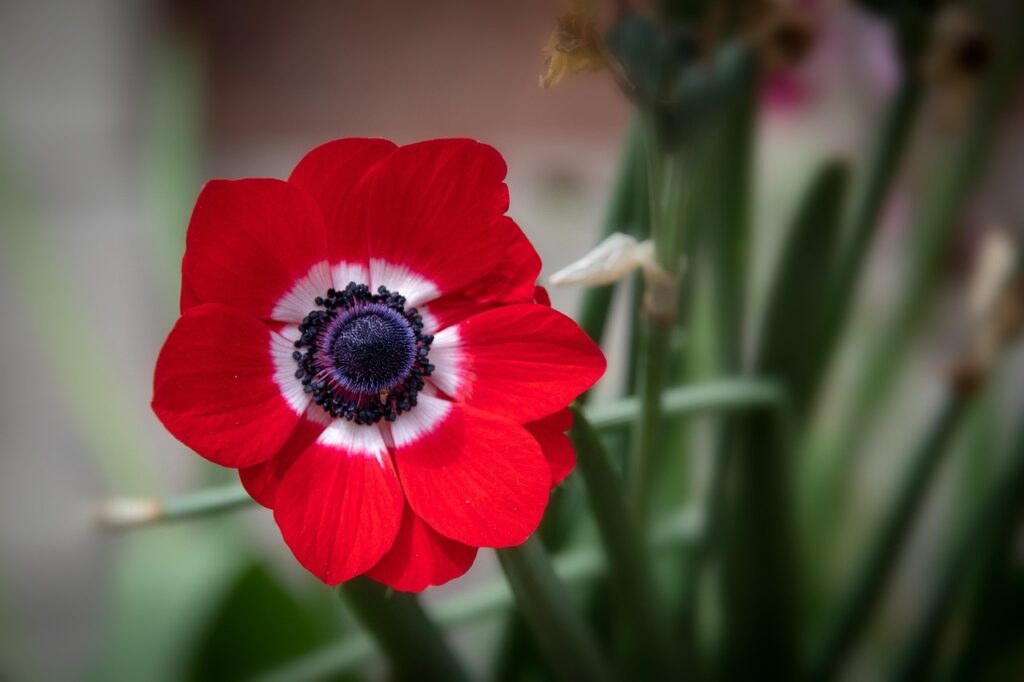
These gorgeous Mediterranean bulbs produce those stunning, poppy-like scarlet-red flowers from April through June. They’re brilliant for cutting and add a sophisticated touch to spring borders, and as the bulbs are tiny, they are easy to dig in, unlike some larger daffodil bulbs. Always place them near the front of the flower bed as they tend to get lost or overshadowed by larger herbaceous perennials.
Hardiness: H4 (Hardy in most UK regions, may need protection) Ultimate Height: 30-40cm Ultimate Spread: 15-20cm
Best Growing Conditions: Full sun to partial shade in well-drained soil.
Top Tip: Soak corms overnight before planting. Plant in autumn for spring flowers or spring for summer flowers. Brilliant for cutting and looks stunning planted in drifts. Mulch in winter in colder areas!
30. Dahlia (from tubers) varieties
While technically covered earlier, it’s worth noting that dahlias planted as tubers in spring act similarly to bulbs. Varieties like ‘Arabian Night’ (deep red) and ‘Fire Mountain’ (scarlet-red) are absolutely stunning for summer and autumn colour.
Hardiness: H2 (Tender, needs lifting in winter in most UK regions) Ultimate Height: 90cm-1.5 metres depending on variety Ultimate Spread: 45-60cm
Best Growing Conditions: Full sun in rich, moist but well-drained soil.
Top Tip: Plant tubers 10-15cm deep in late spring. Stake tall varieties. Lift and store over winter in cold areas. Deadhead regularly for continuous flowering from July to first frosts!
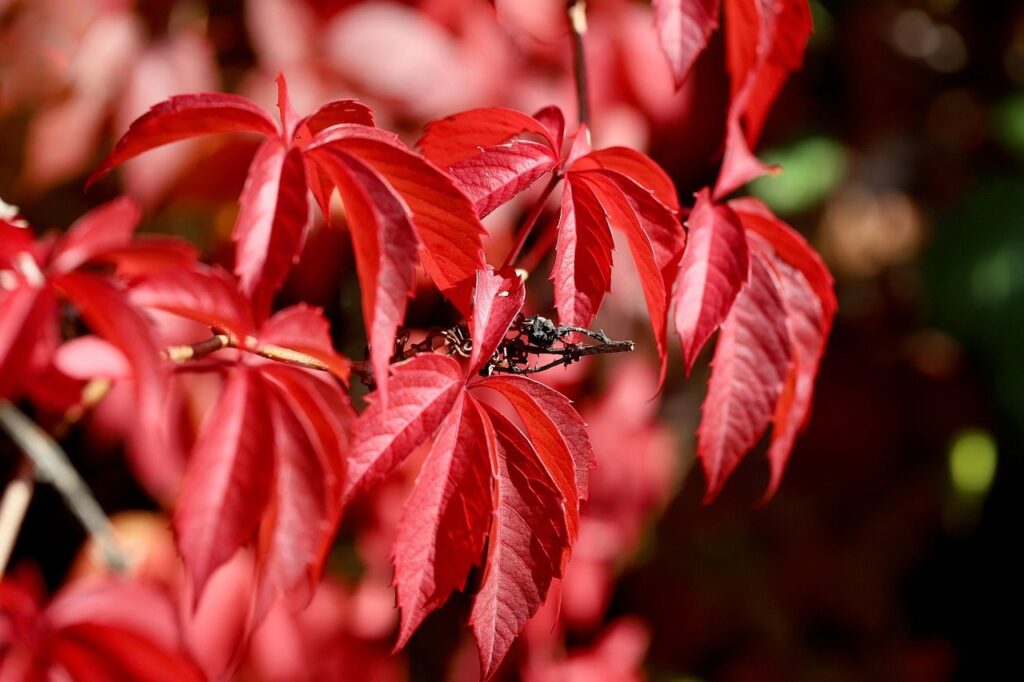
Whilst technically grown for its spectacular autumn colour rather than flowers, Virginia Creeper absolutely earns its place in a red plants guide! This vigorous deciduous climber produces insignificant greenish flowers in summer, but from September through November, the foliage turns the most absolutely stunning shades of brilliant scarlet and crimson. It’s like having your garden walls set on fire!
Hardiness: H6 (Hardy throughout UK) Ultimate Height: 15 metres or more Ultimate Spread: 5 metres
Best Growing Conditions: Sun or shade, any reasonable soil. One of the best climbers for north-facing walls.
Top Tip: Self-clinging via adhesive pads, so brilliant for covering large walls quickly. It can be vigorous, so give it plenty of space or be prepared to prune. Keep away from gutters and roof tiles, as it can get under them. The autumn colour is absolutely worth it, though – one of the most reliable plants for spectacular red autumn display in British gardens. Absolutely bombproof!
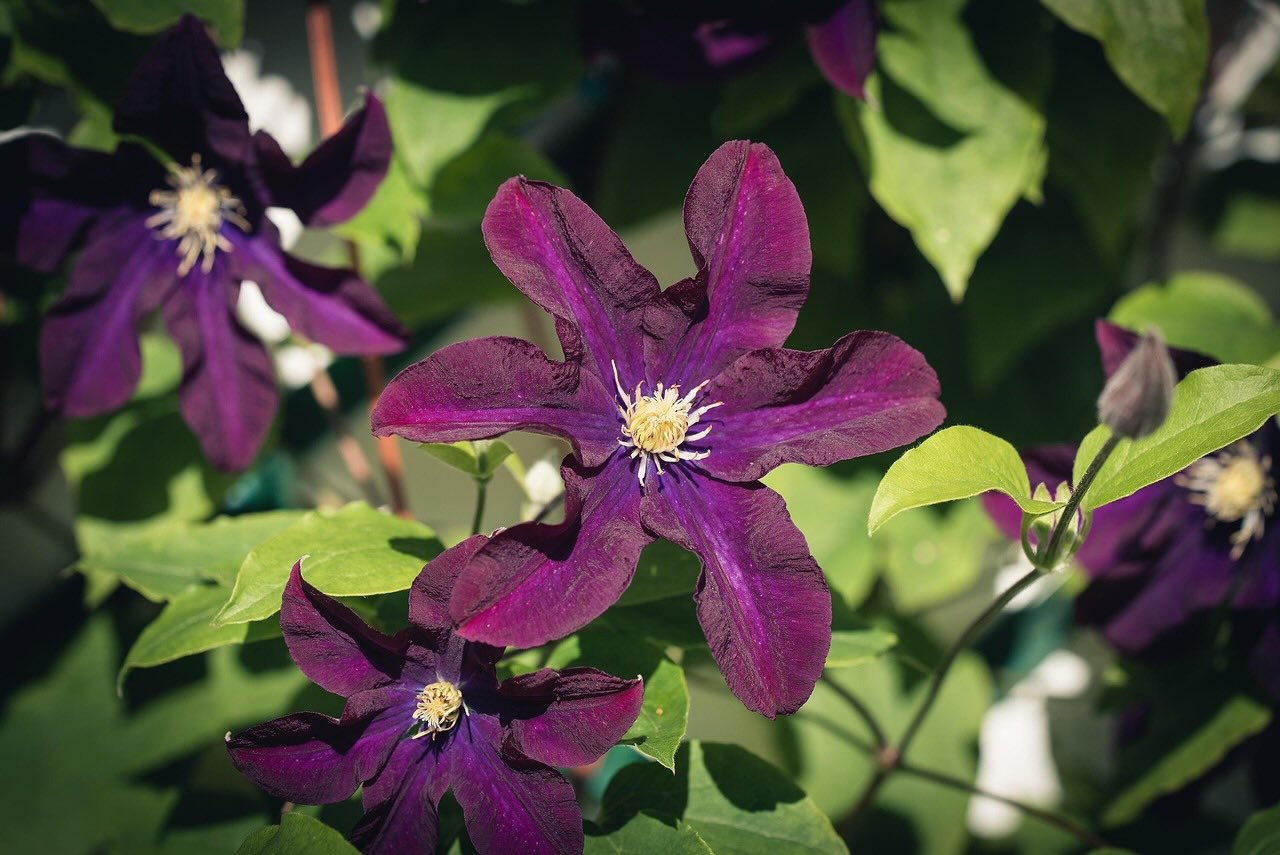
32. Clematis ‘Niobe’
This stunning, large-flowered clematis produces masses of deep ruby-red and wine coloured flowers from June through September. I know this plant is not true red and sometimes it looks purple, but this plant works brilliantly in Gothic gardens and red planting schemes, so it made the cut, Ninjas! The velvety petals with golden stamens are absolutely gorgeous, and it’s one of the most reliable red clematis varieties.
Hardiness: H6 (Hardy throughout UK) Ultimate Height: 2-3 metres Ultimate Spread: 1 metre
Best Growing Conditions: Sun or partial shade with roots in shade and head in sun. Moist but well-drained soil.
Top Tip: Plant deeply with the crown 8cm below soil level. Mulch the base to keep roots cool. Group 2 pruning (light prune in February). Brilliant for growing through shrubs or up obelisks!
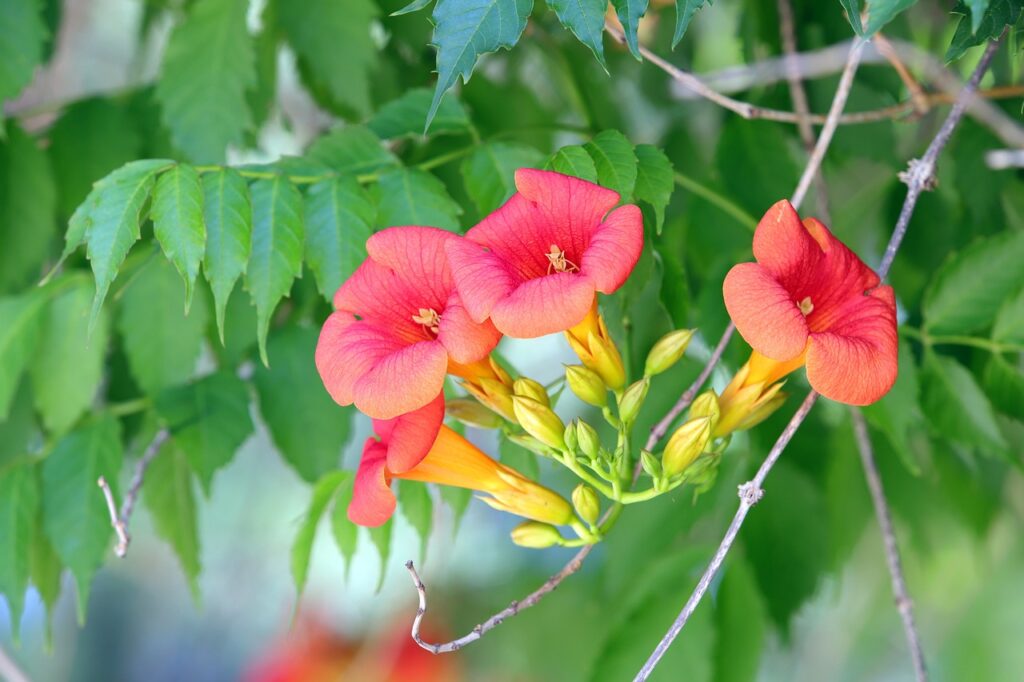
This vigorous deciduous climber produces those absolutely stunning, exotic-looking trumpet-shaped flowers in deep salmon-red from August through September. It’s dramatic, bold, and perfect for creating that tropical vibe.
Hardiness: H4 (Hardy in most UK regions, may need protection) Ultimate Height: 10 metres or more Ultimate Spread: 2-3 metres
Best Growing Conditions: Full sun in any reasonable soil. Needs a warm, sheltered spot for best flowering.
Top Tip: Self-clinging via aerial roots, so brilliant for covering walls. It can be slow to establish, but it is worth the wait. Prune in late winter if needed. The flowers are stunning and loved by bees!
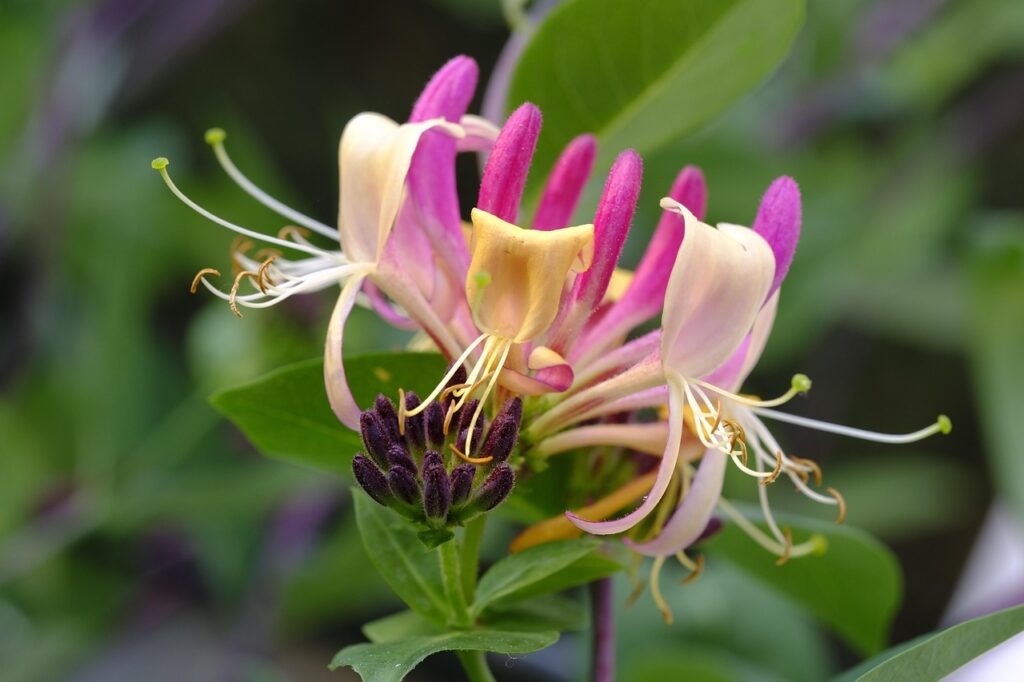
This semi-evergreen honeysuckle produces masses of tubular, bright scarlet-red flowers from June through September. Unlike some honeysuckles, it’s less scented but the colour is absolutely knockout.
Best Growing Conditions: Sun to partial shade in moist but well-drained soil.
Top Tip: Mulch the roots to keep cool. Prune after flowering by removing about a third of old stems. Brilliant for wildlife, attracting moths and providing berries for birds. Great for covering fences or growing through trees!
35. Rosa ‘Parkdirektor Riggers’ (Climbing Rose)
This vigorous climbing rose produces masses of semi-double, deep crimson-red flowers from June through September. It’s one of the most reliable red climbing roses and has good disease resistance.
Best Growing Conditions: Full sun in rich, well-drained soil.
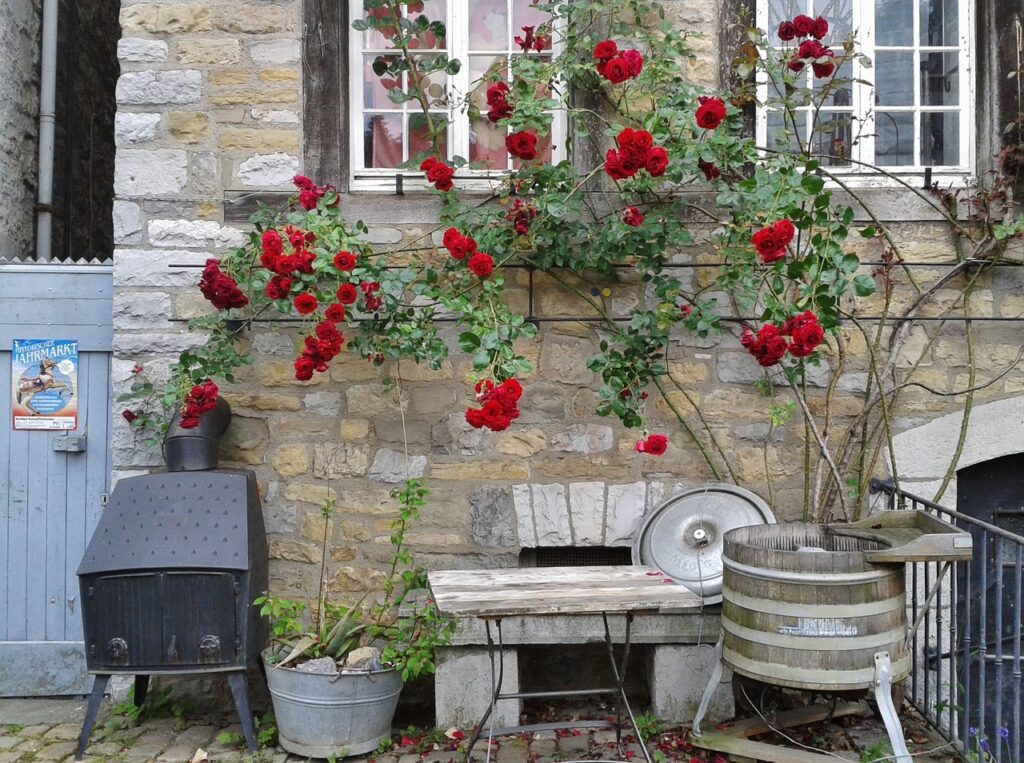
Top Tip: Train horizontally on wires or trellis for maximum flowering. Feed generously with rose fertiliser in spring and summer. Deadhead regularly. The flowers have a light fragrance and are brilliant for covering walls or fences!
Designing with Red Flowers: Top Tips from Garden Ninja HQ
Now you’ve got your plant list sorted, let’s talk about actually using these blazing beauties in your garden. Here are my top tips for getting the most out of red flowers:
i) Use the colour wheel, Ninja!
Red sits opposite green on the colour wheel (which is why red flowers pop so dramatically against foliage) and sits between orange and purple. This makes orange and purple natural companions for red flowers. Plant red Crocosmia with purple Verbena bonariensis or orange Heleniums for combinations that create stunning contrast. Or go full tropical by pairing reds with hot oranges and yellows for a border that screams summer drama.
ii) Layer your reds for extended interest.
Start with early spring bulbs like red tulips and anemones, follow with spring shrubs like Chaenomeles and Ribes, bring in summer perennials like Crocosmia and Monarda, add dahlias for late summer, and finish with late-flowering perennials like Lobelia cardinalis. That way, you’ve got red interest for nearly the whole year.
Don’t be afraid to mix different shades of red. Scarlet reds look brilliant with deeper crimson and burgundy shades. The variation creates depth and interest rather than looking flat. Mix hot scarlets with deeper wine-reds for sophisticated combinations.
Use red strategically to create focal points and guide the eye. Red flowers naturally command attention, so use them to highlight focal points or create destinations in your garden. A drift of red Crocosmia ‘Lucifer’ at the end of a path creates a natural magnet that draws people through your space.
Remember that foliage matters too! Plants like ‘Bishop of Llandaff’ dahlia or Acer palmatum ‘Bloodgood’ provide red interest through foliage as well as flowers. Use them to extend the impact beyond just flowering season.
iii) Scale matters
In small gardens, use deeper crimsons and burgundies for a more sophisticated feel that doesn’t overwhelm. In larger gardens, you can go bolder with bright scarlets and combine them with hot oranges for maximum drama. Consider the viewing distance too – bright scarlets are visible from far away, making them perfect for large gardens.
Balance is crucial with red. Because red is so attention-grabbing, you don’t need masses of it to create impact. A few strategic plants can create stunning focal points. Too much red everywhere can be overwhelming, so use it deliberately where you want to draw the eye.
What if you are on a budget and would like to design your own garden?
My Garden Design for Beginners course is the ideal starting point! With online courses ranging from £29 to £199, there’s something for every aspiring garden designer.
Join me, Lee Burkhill – award-winning garden designer and BBC1’s Garden Rescue presenter – in my most comprehensive course. I’ll guide you step by step from a complete beginner to a confident garden designer ready to create stunning outdoor spaces.
29
Garden Design Examples for Small Gardens: 30 Design Templates & Planting Plans
Garden Design Examples for Small Gardens: 30 Design Templates & Planting Plans: In this online gardening course, I’ll walk you through 30 fantastic garden designs, explaining the logic behind the layout, the plant choices, and take-home tips for applying them in your own garden.
Weekend Garden Makeover: A Crash Course in Design for Beginners
Learn how to transform and design your own garden with Lee Burkhills crash course in garden design. Over 5 hours Lee will teach you how to design your own dream garden. Featuring practical design examples, planting ideas and video guides. Learn how to design your garden in one weekend!
Garden Design for Beginners: Create Your Dream Garden in Just 4 Weeks
Garden Design for Beginners Online Course: If you want to make the career jump to becoming a garden designer or to learn how to design your own garden, this is the beginner course for you. Join me, Lee Burkhill, an award-winning garden designer, as I train you in the art of beautiful garden design.
The thing that gets me most excited about red flowers is how they genuinely transform the emotional impact of a garden and bring fire to your flower beds. On grey British days (which, let’s face it, are most of them), red blooms create drama and warmth that lifts spirits and makes the whole space feel more alive. They’re not just attractive; they’re genuinely mood-improving and attention-grabbing.
So stop playing it safe with boring, wishy-washy colour schemes! Red flowers deserve their moment in the spotlight. Whether you go sophisticated with deep crimsons and burgundies or go full tropical fiesta with hot scarlets and oranges, make your garden a place that stops people in their tracks and draws their attention.
The key is using red deliberately and strategically. You don’t need masses of it, just a few well-placed red plants create stunning focal points that guide the eye and create that “wow” factor every garden should have.
Happy gardening, Ninjas! Now get out there and add some proper passion and drama to your borders! ?
Lee Burkhill, known as the Garden Ninja, is an award-winning garden designer and horticulturist with over 30 years of gardening experience and 15 years as a professional garden designer. A qualified RHS (Royal Horticultural Society) professional, Lee specialises in sustainable garden design and practical horticultural advice. He designs and presents on BBC1’s Garden Rescue and in leading gardening publications. Lee combines three decades of hands-on gardening knowledge with professional design qualifications to help gardeners create beautiful, functional outdoor spaces.