Things to Grow in November: Your Complete UK Gardening Guide
Lee Burkhill: Award Winning Designer & BBC 1's Garden Rescue Presenters Official Blog
Beginner level
November might have a reputation as the month when gardeners finally hang up their tools and retreat indoors with a brew, but I'm here to tell you that there are still brilliant things to grow in November! Whilst your neighbours are convinced the gardening season is over and are busy watching Christmas adverts appear on telly, I'm going to show you exactly what you can plant, harvest, and prepare this month to set yourself up for next year's success.
November often gets dismissed as nothing more than a leaf raking and garden tidying month, with most gardeners thinking there’s nothing left to do except clear up and wait for spring. This mentality drives me absolutely spare! Whilst others are already planning their seed orders for February and ignoring their plots, I’m out here at Garden Ninja HQ making the most of November’s unique opportunities because this underrated month is actually packed with potential for the savvy gardener.
The cooler temperatures and shorter days don’t mean your gardening efforts need to stop. In fact, November offers some fantastic growing conditions that many gardeners completely overlook. The soil still retains warmth from autumn, frost hasn’t fully set in yet, and many crops actually thrive in these conditions.
Plus, November is absolutely brilliant for getting bare root plants in the ground and preparing your garden for winter without doing unnecessary damage to wildlife habitats.
Whether it’s planting garlic, protecting tender plants, or finally getting those fruit trees ordered, November is an essential month for more considered gardening activities. So grab that fleece, put on your wellies, and join me as I reveal exactly what things to grow in November and what jobs will set you up for a cracking year ahead!
Why November Gardening Gets Overlooked (But Shouldn’t!)
Most gardeners in November have already written off the growing season. This is probably because the clocks have changed, it’s dark by half four, and the weather forecast seems to consist entirely of grey clouds and drizzle. It also doesn’t help that traditional gardening advice tells us to “put the garden to bed” and have a complete tidy up, when actually this can be really detrimental to wildlife and beneficial insects that need somewhere to overwinter.
I’m here to tell you, Ninjas, that November is actually a brilliant month for strategic gardening that pays dividends for years to come.
November presents unique opportunities that too many gardeners miss:
Bare root planting season is in full swing with nurseries dispatching quality specimens throughout November. You get premium plants for a fraction of container-grown prices, and the planting conditions are absolutely perfect.
Hardy crops planted now will give you fresh harvests when shop-bought vegetables are at their most expensive and tasteless in late winter and early spring.
Wildlife preparation is crucial, and November is your last chance to create overwintering habitats before the really cold weather hits. Leaving herbaceous perennials standing provides essential shelter for beneficial insects.
Soil preparation work is far easier now than in waterlogged January or frozen February. Getting your beds sorted in November means you’re ready to hit the ground running come spring.
Things to Grow in November: Bare Root Planting Perfection
November is absolutely prime time for bare root planting! The nurseries are in full dispatch mode, and the conditions for getting trees, shrubs, and soft fruit established couldn’t be better. If you didn’t get your bare root orders in during October, don’t panic. November is actually my preferred month for planting bare roots because the soil is still workable, but the plants are fully dormant, meaning they establish beautifully without any transplant shock.
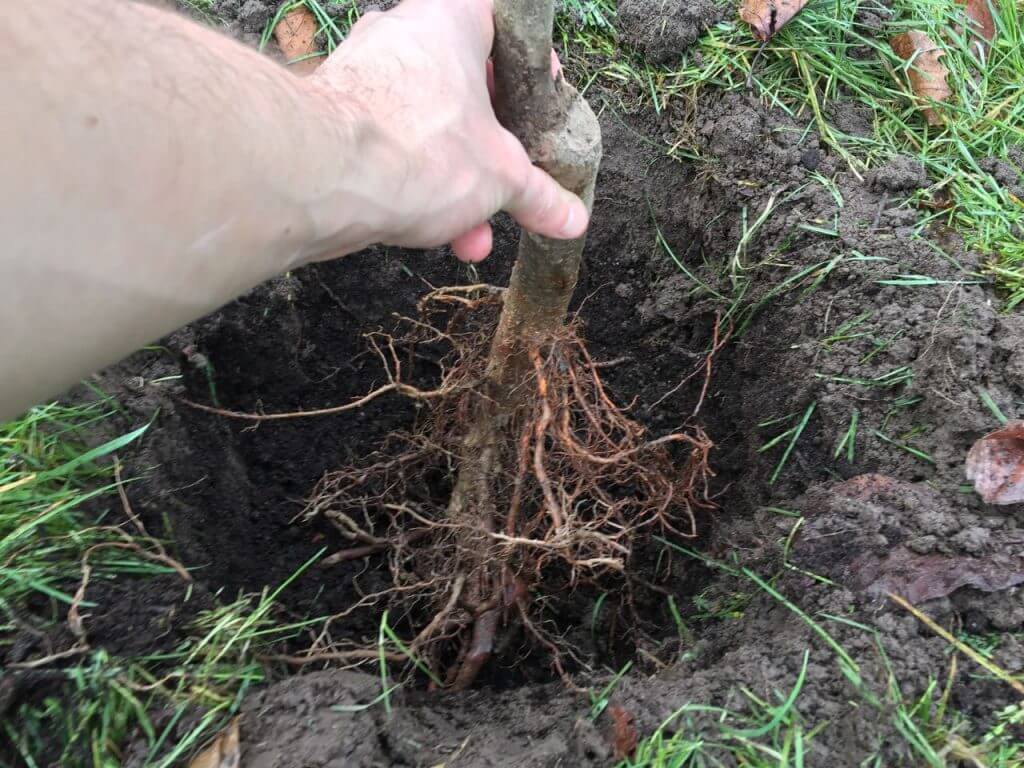
Bare root plants are dormant specimens that have been lifted from nursery fields with their roots exposed and no pot or compost around them. This makes them cheaper to buy and transport, easier to plant, and frankly, they establish far better than pot-grown plants because their roots haven’t been constrained by containers.
Nearly all of the 140+ trees here at Garden Ninja HQ were planted as bare roots, and every single one has thrived.
Top 15 Things to Grow in November as Bare Roots
If you’re wondering what things to grow in November, bare root specimens should be right at the top of your list. Here are my favourite bare root plants that are perfect for November planting, all suitable for beginners and guaranteed to give you excellent results.
Fruit Trees & Bushes
1. Apple Trees (Malus domestica)
November is brilliant for planting apple trees as bare roots. The soil is still warm enough for root establishment, but the tree is fully dormant so there’s no stress whatsoever. Heritage varieties like ‘Bramley’s Seedling’ for cooking or ‘Cox’s Orange Pippin’ for eating are quintessentially British choices.
Modern varieties on dwarfing rootstocks like M27 or M9 keep trees compact for small gardens, whilst trained forms like espaliers look stunning against walls. Every garden deserves an apple tree, and November is the perfect time to plant one!
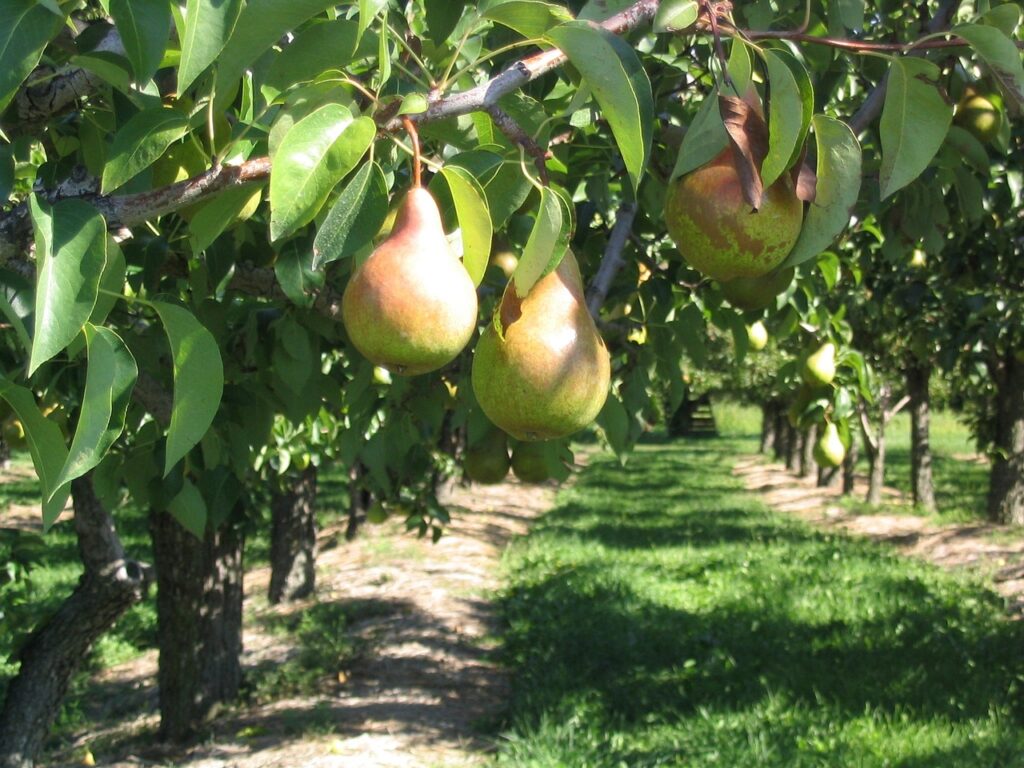
2. Pear Trees (Pyrus communis)
Pears are absolutely brilliant for November planting as they’re incredibly long-lived and productive. ‘Conference’ is the most reliable variety for UK gardens, being partially self-fertile and producing excellent crops even in dodgy summers. Pears take a few years to get going, which is why bare root planting in November gives them a head start. They’re also fantastic for screening as they grow tall and upright without taking up too much horizontal space.
3. Medlar Trees (Mespilus germanica)
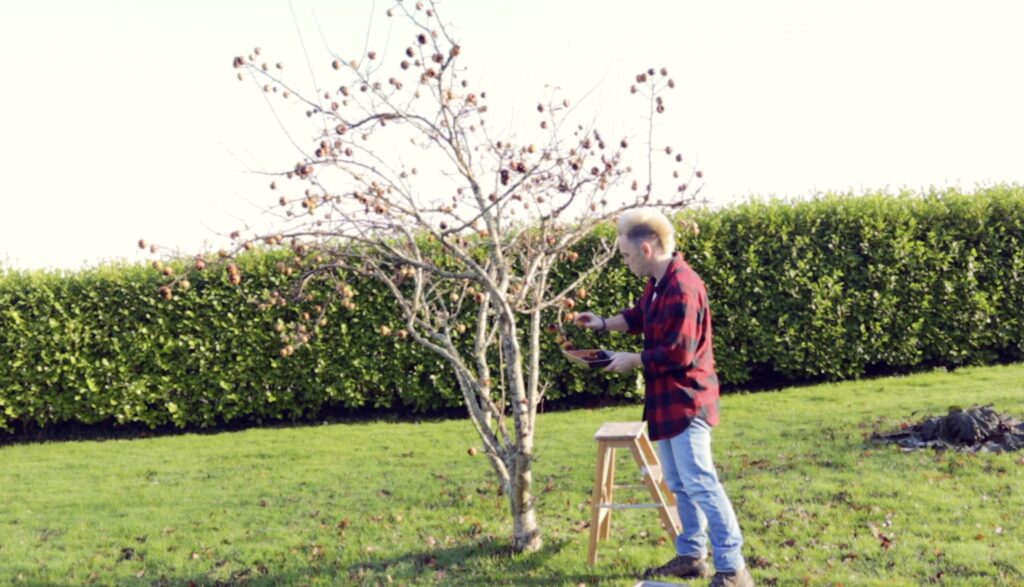
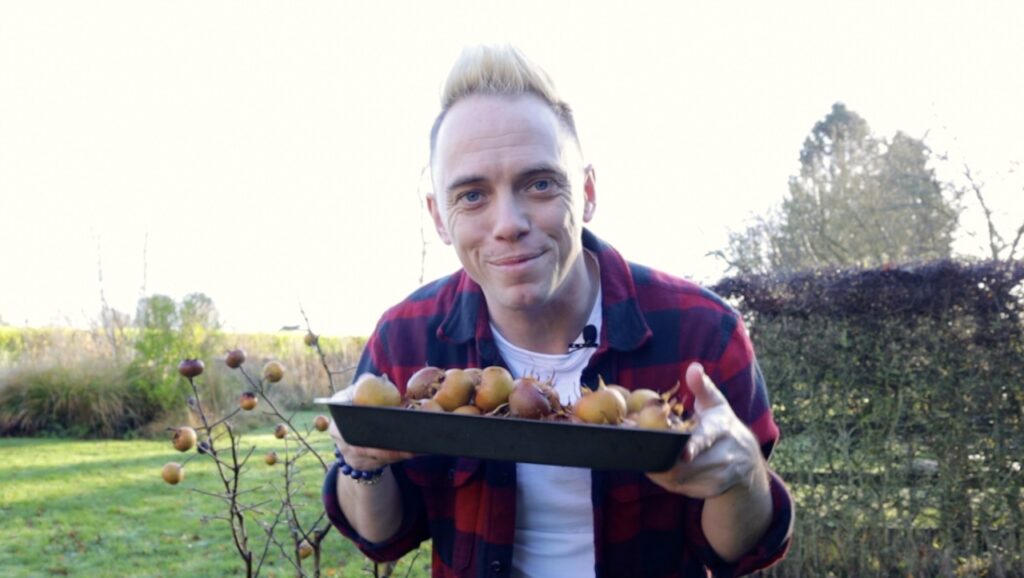
Speaking of November, this is absolutely the month for harvesting medlars if you’ve already got a tree, and planting new ones if you haven’t! Medlars are these wonderfully unusual fruit trees that produce fruits which need to ‘blet’ (partially rot) before eating. They’re harvested after the first frosts in November, then left to soften indoors for a couple of weeks.
The flavour is like spiced apple sauce mixed with wine, absolutely gorgeous in jellies and cheeses. The trees themselves are stunning too, with fantastic autumn colour and a lovely gnarled habit that looks brilliant in cottage gardens.
4. Plum and Damson Trees (Prunus domestica)
November planting gives plums and damsons the best possible start. ‘Victoria’ plums are reliably self-fertile and incredibly productive, whilst damsons are tougher than old boots and will grow almost anywhere. There’s an old saying that ‘you plant a plum for your son and a damson for your grandson’ because they live so long. Plant them now and you’re creating a legacy!
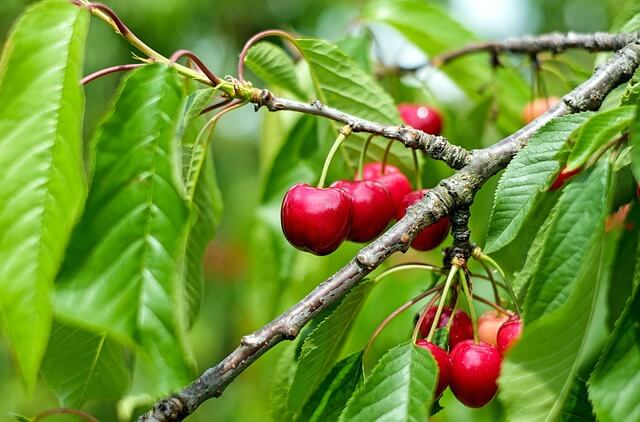
5. Cherry Trees (Prunus avium)
Sweet cherries like ‘Stella’ are self-fertile and provide spectacular spring blossom followed by delicious summer fruits. Sour cherries like ‘Morello’ are brilliant for north-facing walls where other fruits struggle. November is perfect for getting them established before winter truly sets in.
Soft Fruit Canes
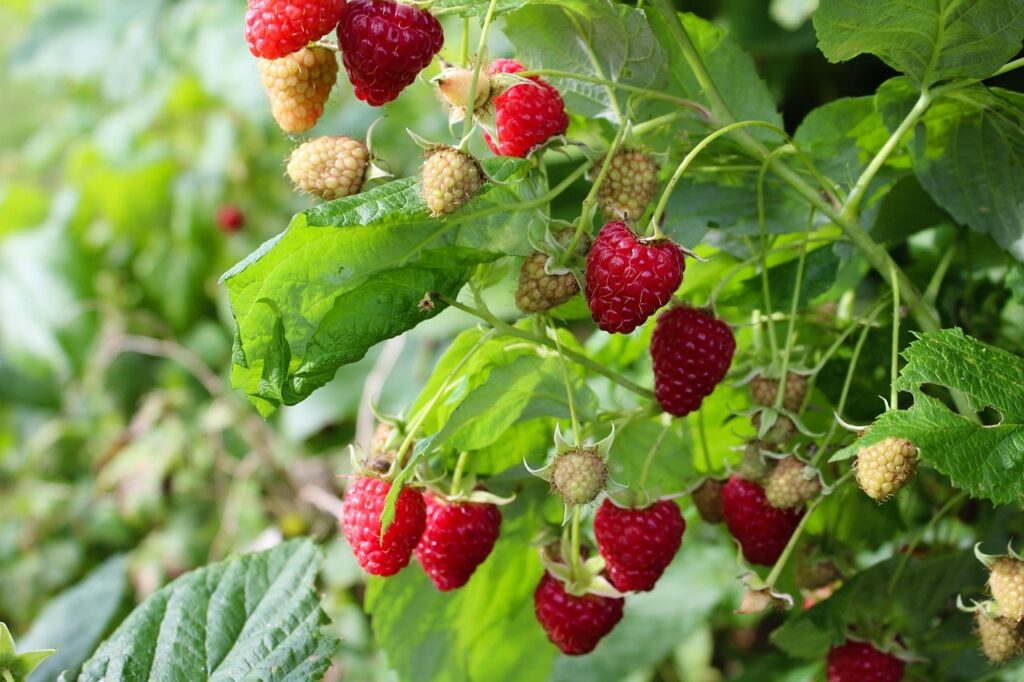
6. Raspberry Canes (Rubus idaeus)
November is absolutely ideal for planting raspberry canes. Summer fruiting varieties like ‘Glen Ample’ and autumn varieties like ‘Autumn Bliss’ both establish brilliantly when planted dormant in November. You’ll get fruit the following year, and these productive canes will keep giving for a decade or more with minimal care.
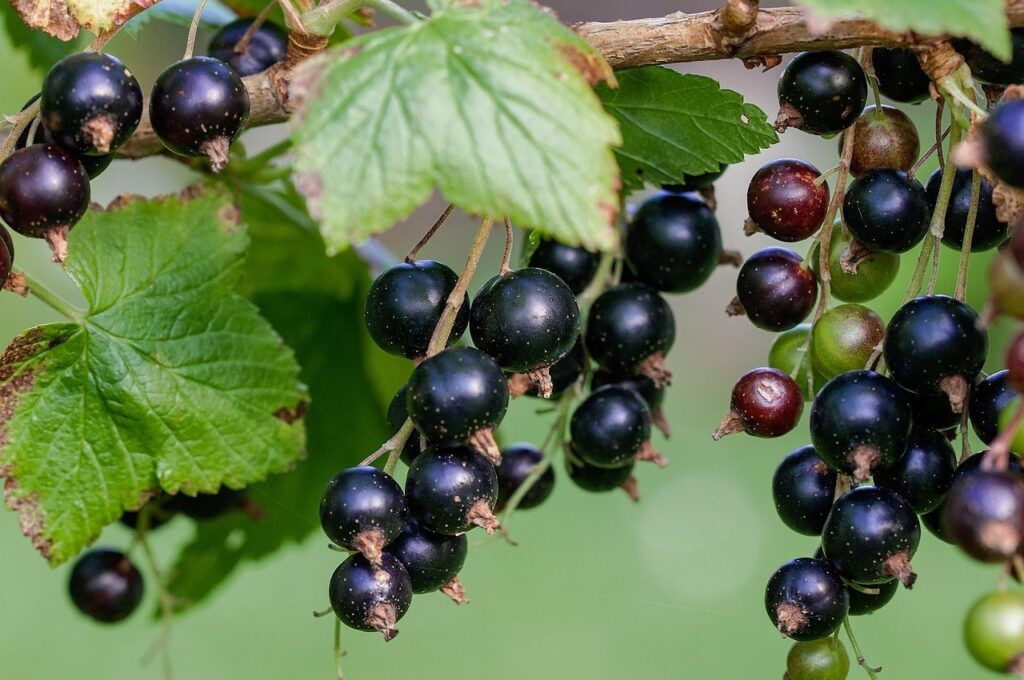
7. Blackcurrants (Ribes nigrum)
These vitamin C powerhouses are perfect things to grow in November. Plant them deeply (5cm below the soil mark on the stem) to encourage strong new growth from the base. Varieties like ‘Ben Sarek’ are compact and disease-resistant, making them perfect for smaller gardens. The aromatic leaves can be used for teas whilst you wait for the summer harvest and they are great to grow in shade too!
8. Gooseberries (Ribes uva-crispa)
Gooseberries tolerate partial shade brilliantly and November planting gives them months to establish before growing season starts. They’re one of the most reliable soft fruits, producing heavy crops with minimal fuss. Early varieties give tart cooking fruits, whilst later dessert varieties are sweet enough to eat fresh.
Hedging Plants
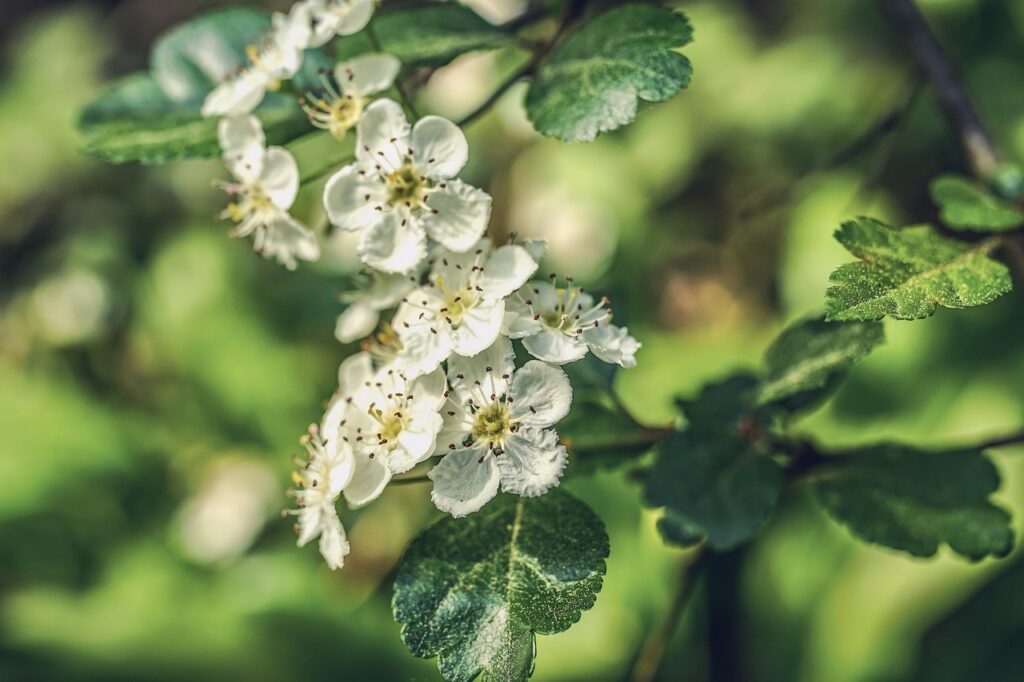
9. Hawthorn (Crataegus monogyna)
Native, tough as nails, and brilliant for wildlife, hawthorn creates proper security hedging whilst supporting incredible biodiversity. November is perfect for planting bare root whips which establish far better than pot-grown specimens. The thorns deter intruders whilst the spring blossom feeds pollinators and autumn berries feed birds.
10. Beech (Fagus sylvatica)
For formal hedging, you can’t beat beech. Plant bare root whips in November and they’ll retain their coppery autumn leaves throughout winter, providing year-round screening. The dense growth creates excellent wind protection, and the rustling leaves are absolutely beautiful even in the depths of winter.
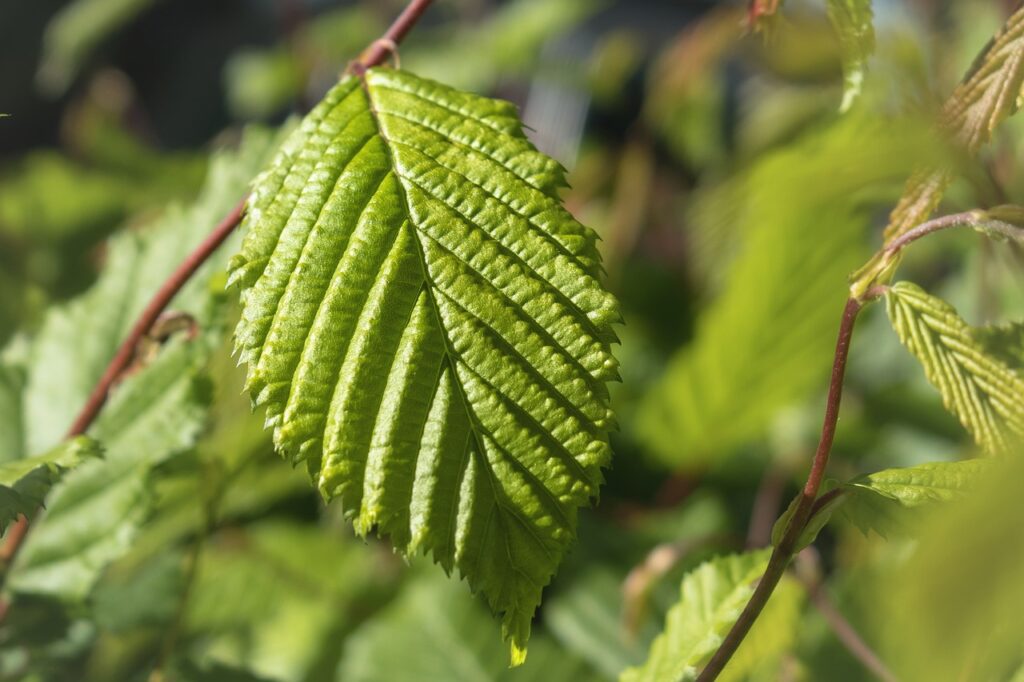
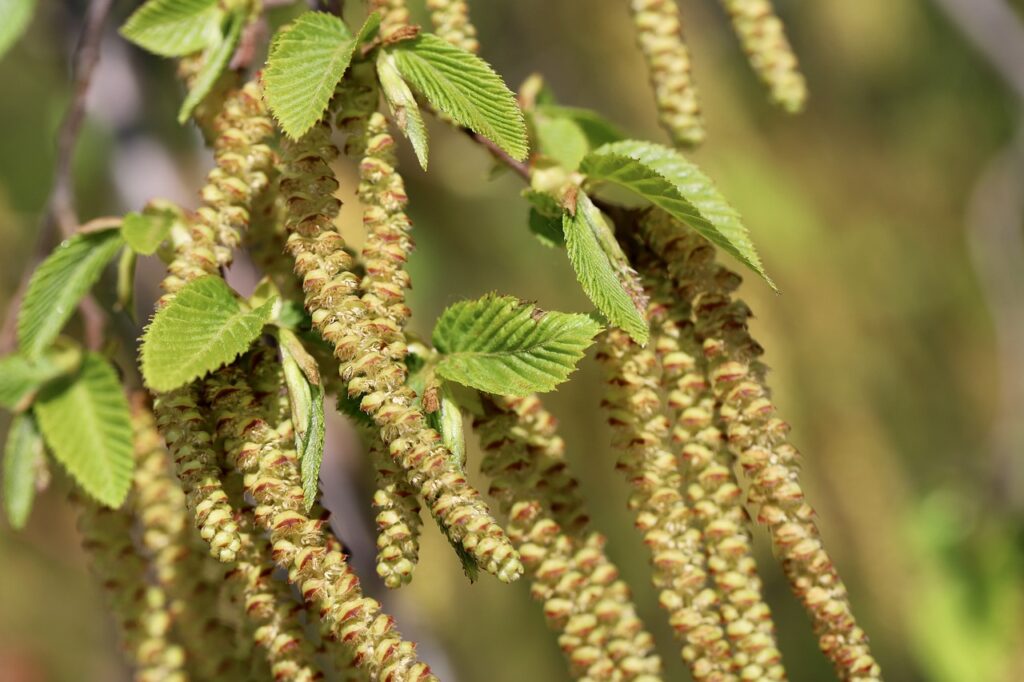
11. Hornbeam (Carpinus betulus)
Similar to beech but more tolerant of heavy, waterlogged soils, hornbeam is brilliant for November planting in challenging conditions. It creates dense, formal hedging and responds beautifully to clipping. Perfect for exposed sites or clay soil where beech might struggle.
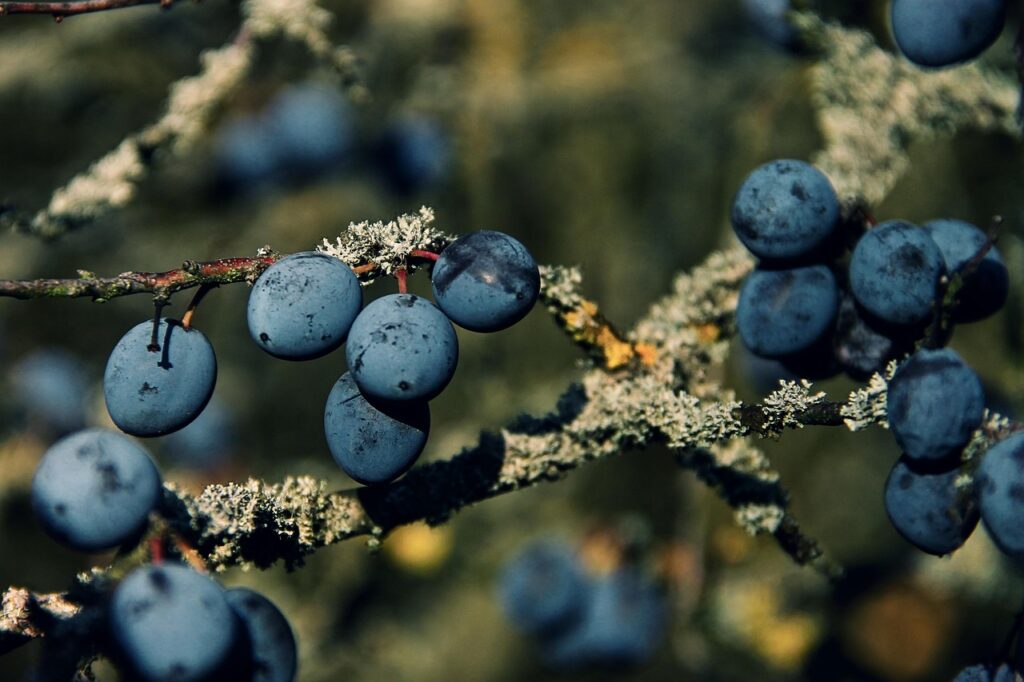
12. Blackthorn (Prunus spinosa)
This native shrub is one of the best things to grow in November if you want security hedging. The vicious thorns create impenetrable barriers, whilst the early white blossom is stunning and the sloe berries are perfect for making gin. Wildlife absolutely loves it too!
But not only that Blackthorn has links to witchcraft and the occult as its branches where often used to make wands. If you like your garden to have more than just good looks this species can add some fab folklore to your hedging.
Native Trees
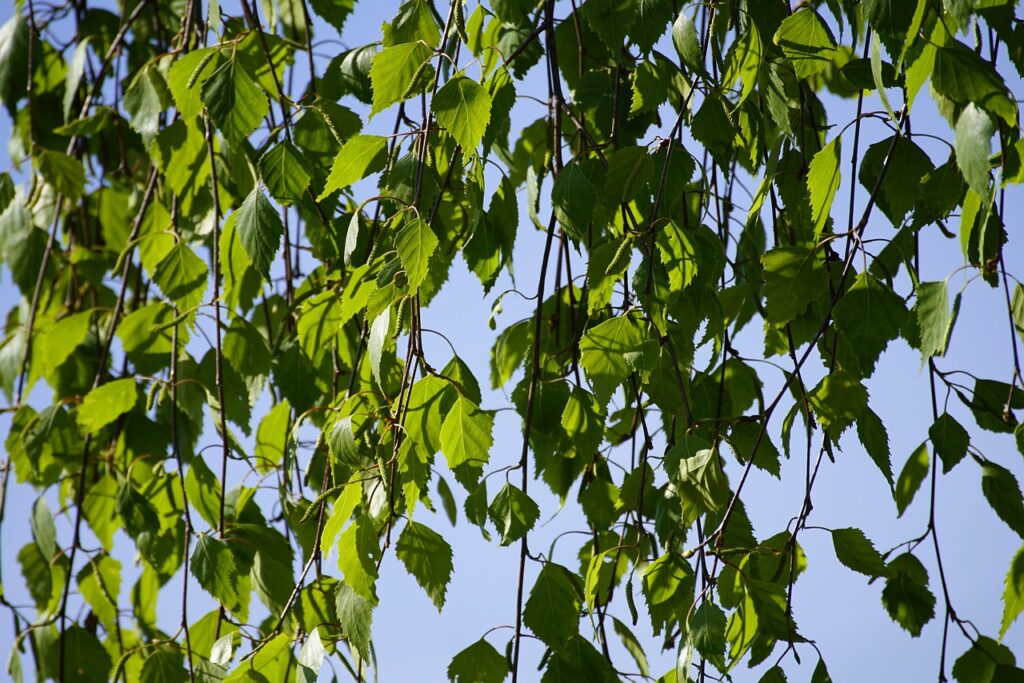
13. Silver Birch (Betula pendula)
The delicate beauty of silver birch makes it perfect for November planting. The distinctive white bark looks stunning in winter, whilst the tree supports over 300 species of insects. It casts dappled shade perfect for underplanting and provides seeds for finches throughout winter.
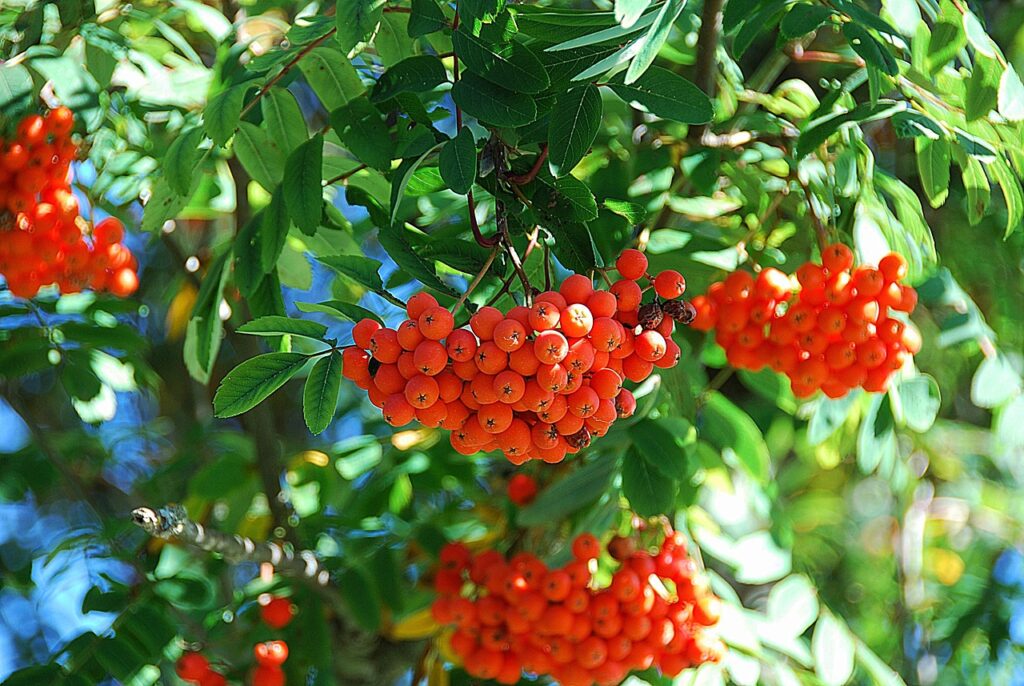
14. Rowan (Sorbus aucuparia)
Rowan trees are brilliant for smaller gardens, providing spring blossom, autumn berries that birds go mad for, and fantastic autumn colour. November planting gives them time to establish before the growing season. They’re tolerant of exposed positions and poor soil, making them incredibly versatile.
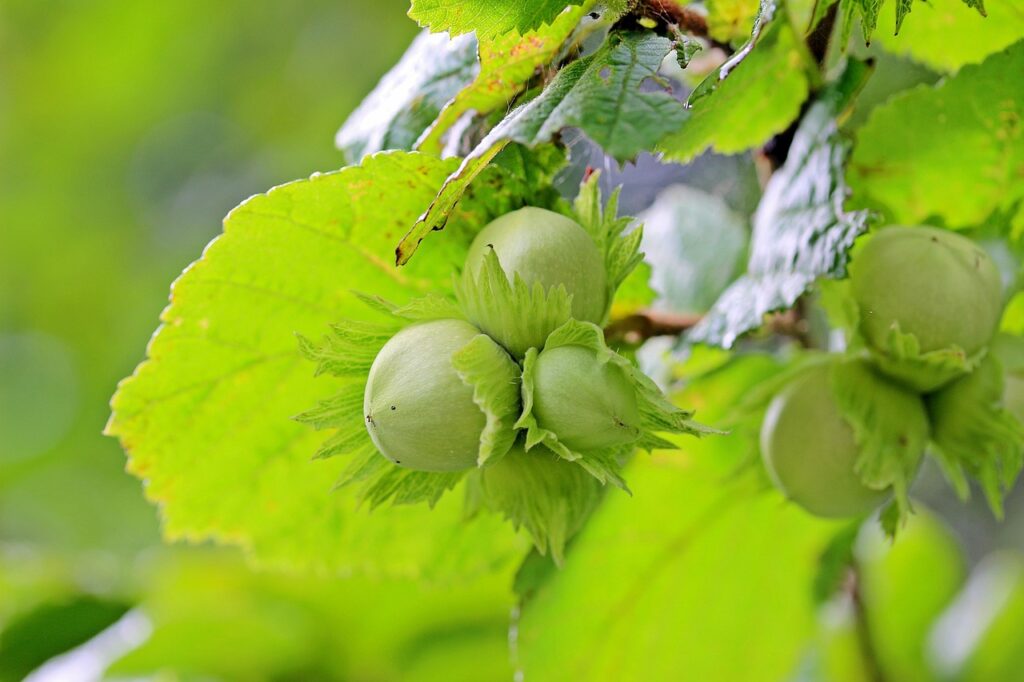
15. Hazel (Corylus avellana)
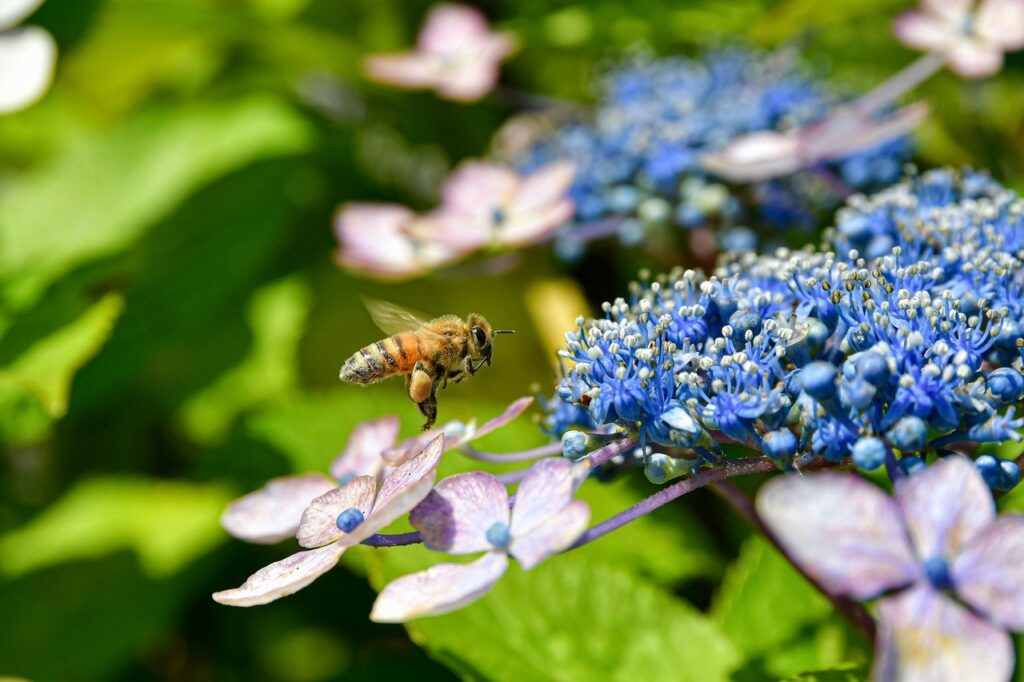
Multi-stemmed hazel provides nuts for humans and wildlife, whilst the catkins offer crucial early pollen for bees. Traditional coppicing creates renewable supplies of poles whilst keeping the tree compact. November is perfect for planting bare root specimens that establish beautifully.
What Vegetables to Grow in November
Whilst November isn’t peak vegetable sowing season, there are still some absolutely brilliant things to grow in November that will provide fresh harvests when you need them most. These hardy crops don’t just survive winter conditions; they actually thrive in them, and many taste better after a frost!
Garlic Planting
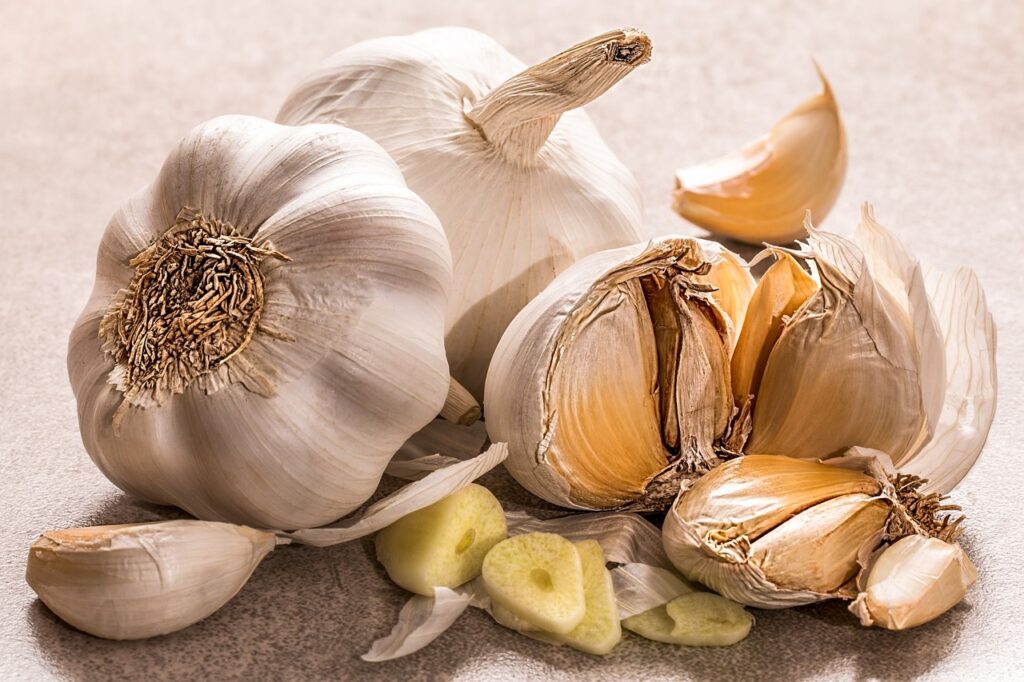
November is absolutely crucial for garlic planting! This is one of the most important things to grow in November if you want a decent harvest next summer. Garlic needs a cold period to develop properly, which is why autumn planting is essential. Split your garlic bulbs into individual cloves and plant them pointy end up, about 5cm deep and 15cm apart. I always plant garlic in November because the cloves need that cold snap to vernalise properly and develop good-sized bulbs.
Hardneck varieties like ‘Lautrec Wight’ produce scapes (flower stems) in early summer that are delicious in stir fries, followed by fantastic flavourful bulbs. Softneck varieties like ‘Solent Wight’ store brilliantly and are perfect for plaiting. Plant them in well-drained soil in full sun, and you’ll have home-grown garlic by next July that puts shop-bought stuff to shame.
Broad Beans
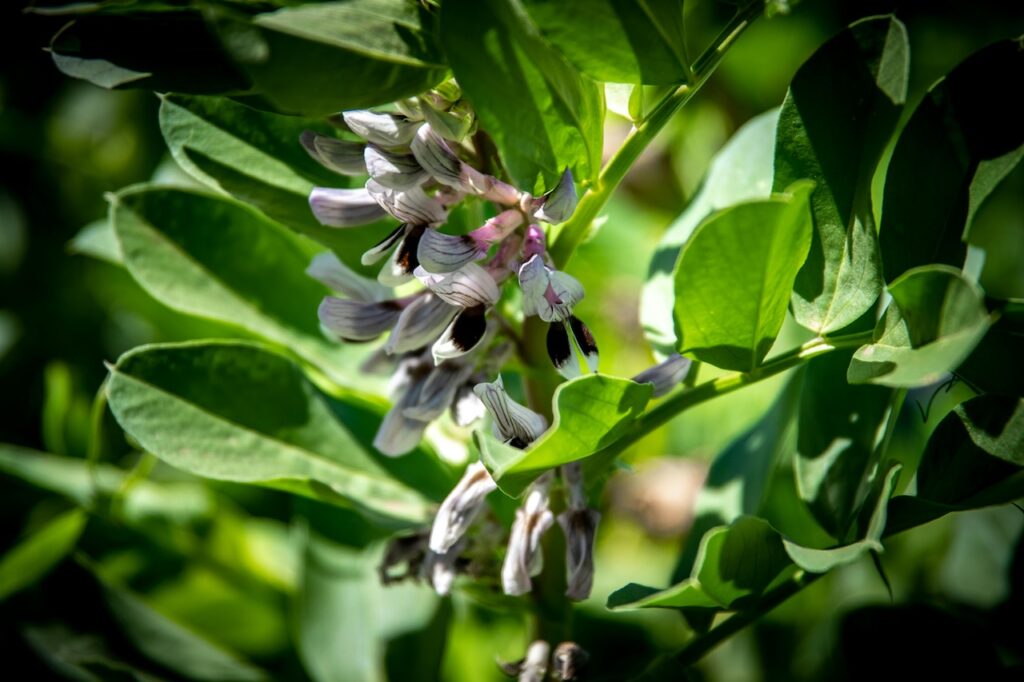
Overwintering broad beans planted in November give you the earliest harvests possible, often a full month before spring-sown varieties. Varieties like ‘Aquadulce Claudia’ are bred explicitly for autumn sowing and can tolerate proper cold weather. Sow them 5cm deep and 20cm apart, either in the ground if your soil drains well, or in guttering or deep trays under cover if your plot tends to get waterlogged.
The plants will grow slowly through winter, developing strong root systems, then burst into growth in spring to give you tender beans in May and June. They also fix nitrogen in the soil, which benefits whatever you plant after them. These are definitely one of the best things to grow in November for productive gardening.
Hardy Salad Leaves
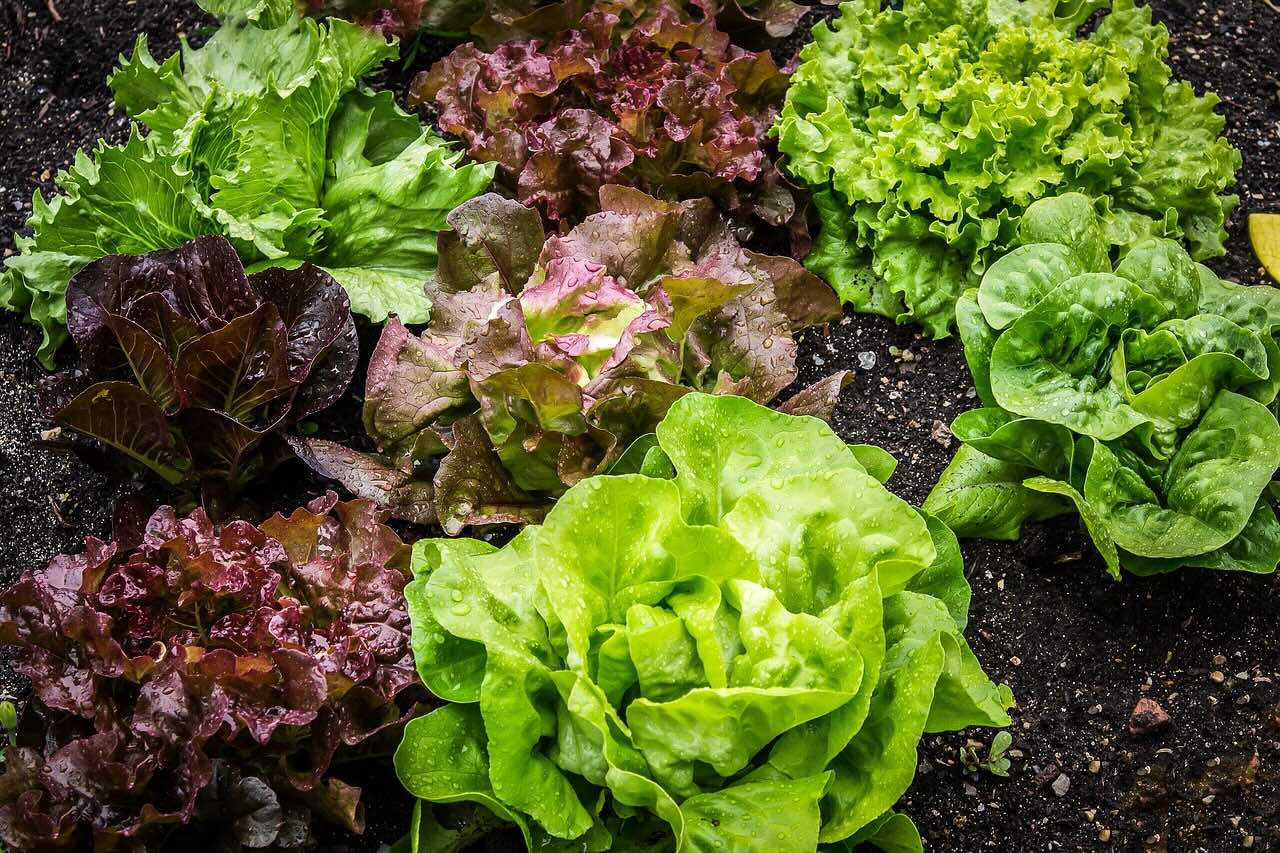
Winter lettuce and salad leaves are brilliant things to grow in November under cloches or in cold frames. I know I recommedn these in each months growing guides but its true you can grow them al year round so why not Ninjas?
Varieties like ‘Winter Density’ and ‘Arctic King’ lettuce tolerate frost and provide fresh leaves throughout the colder months. Corn salad (lamb’s lettuce) is virtually indestructible once established and provides nutty-flavoured leaves that are gorgeous in winter salads.
Mizuna and mibuna are Japanese salad leaves that grow brilliantly in November and taste fantastic. They’re more cold-tolerant than most salads and provide mustard-flavoured leaves perfect for stir fries or salads. One sowing in November will give you pickings right through until spring if you protect them with fleece.
Winter Hardy Herbs
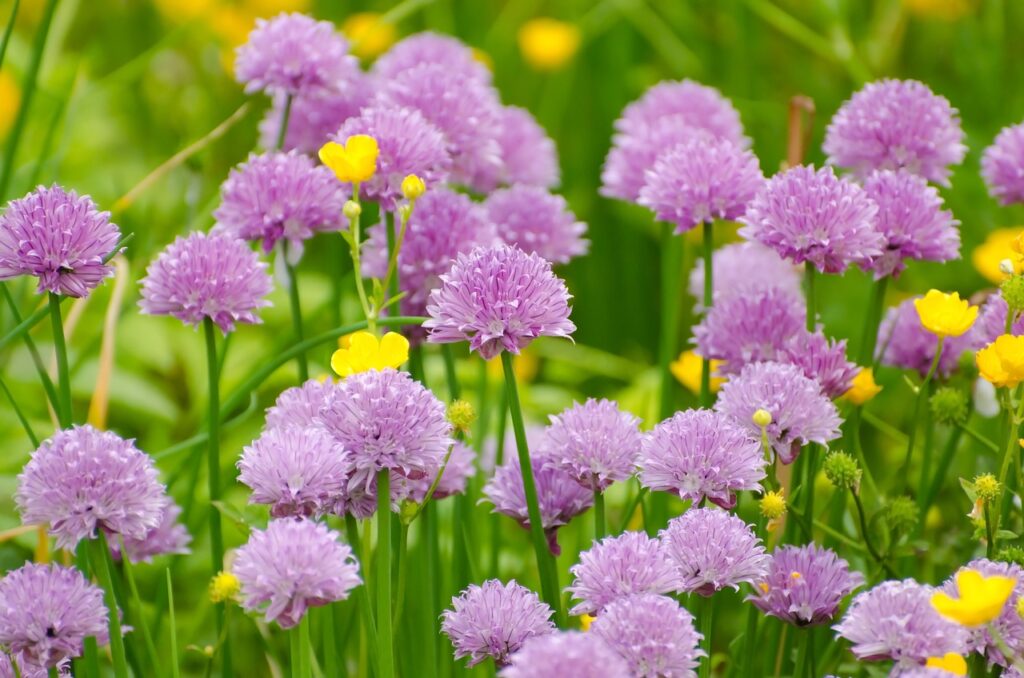
Chives planted in November will establish slowly through winter and give you fresh onion-flavoured leaves from early spring onwards. They’re absolutely bullet-proof and will clump up nicely over the years.
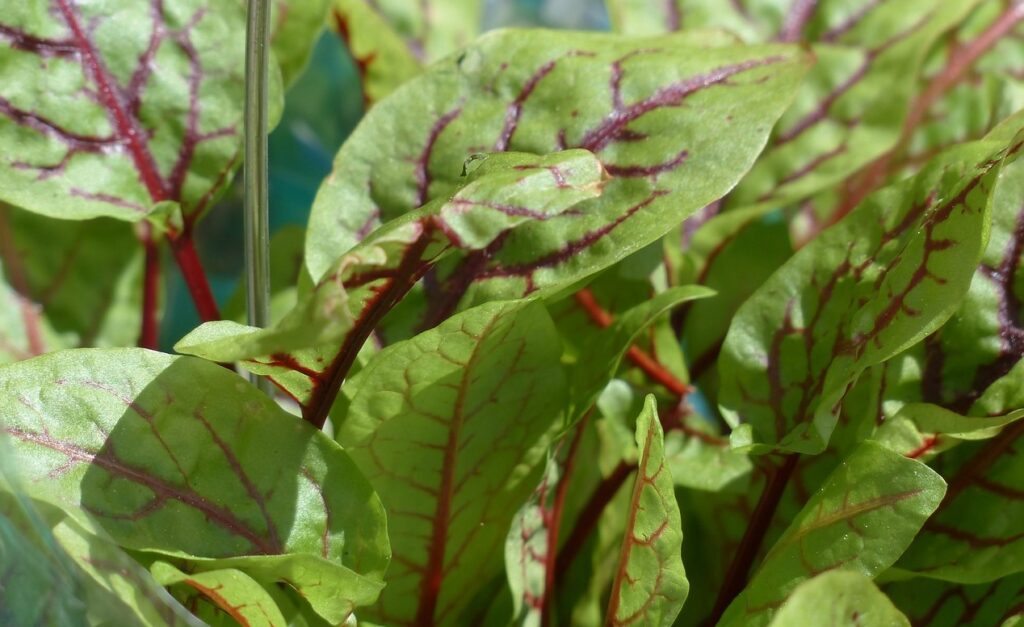
Sorrel is another brilliant thing to grow in November. This perennial herb provides tangy, lemony leaves that are gorgeous in soups and sauces. Plant it once and it’ll come back for years, tolerating shade and poor soil without complaint.
November Bulb Planting: Not Too Late!
If you missed the September and October bulb planting rush, don’t panic! There are still plenty of bulbs that are perfect things to grow in November, and some actually prefer later planting.
Tulips
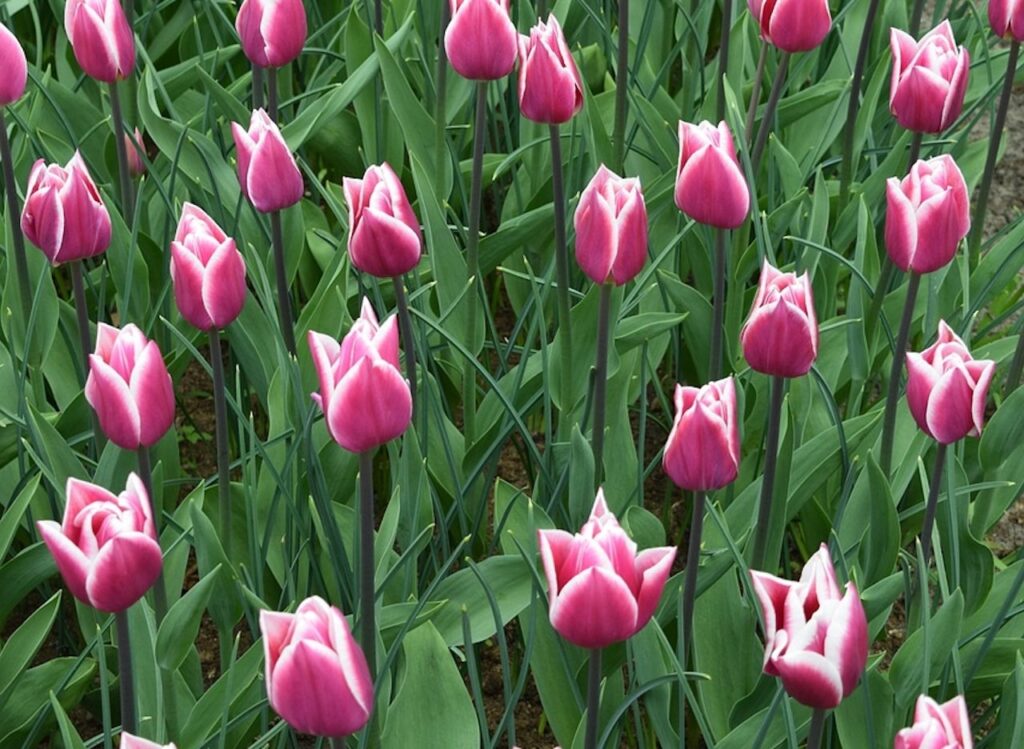
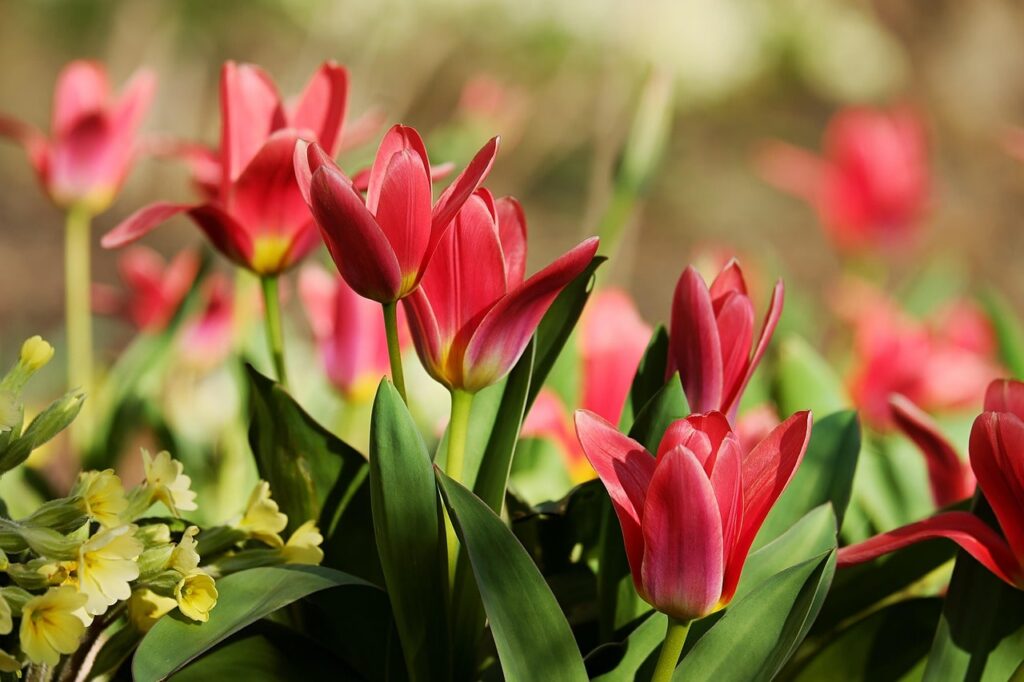
Tulips are absolutely ideal for November planting because they benefit from going in later. Early planting can lead to early emergence and frost damage, whilst November-planted tulips stay safely underground until spring properly arrives. Plant them at three times their depth (so a 5cm bulb goes 15cm deep) in well-drained soil or pots.
Darwin Hybrid tulips like ‘Apeldoorn’ are reliably perennial and come back year after year. Single late tulips like ‘Queen of Night’ provide dramatic dark purple blooms that look absolutely stunning with lime green euphorbias. For cottage garden charm, try species tulips like Tulipa sprengeri which naturalise beautifully in grass or under shrubs.
Daffodils and Narcissi
Late November is your last chance for daffodil planting before the ground gets too cold or waterlogged. Whilst earlier planting is ideal, November-planted daffodils will still flower beautifully, they just might be a week or two later than earlier-planted ones. Native daffodils like Narcissus pseudonarcissus are brilliant for naturalising in grass, whilst large-cupped varieties provide that classic spring daffodil look.
Alliums
Ornamental alliums are fantastic things to grow in November as they actually prefer later planting. These architectural beauties produce spherical flower heads on tall stems in late spring and early summer. Allium ‘Purple Sensation’ is the classic purple drumstick, whilst Allium cristophii has spectacular star-burst flowers that look like purple fireworks. Plant them deeply (three times the bulb depth) in well-drained soil.
Harvesting Medlars: November’s Unusual Fruit
If you’re lucky enough to have a medlar tree, November is your harvest month! Medlars are these wonderfully quirky fruits that need to be ‘bletted’ before eating, which basically means letting them partially rot until the flesh becomes soft and sweet. Whilst that might sound grim, the resulting flavour is absolutely gorgeous and unlike anything else.
How to Harvest Medlars
Wait until after the first proper frosts in November, then pick the fruits when they’re fully coloured (russet brown) but still firm. The frost helps start the bletting process naturally. Cut the fruits with a short piece of stalk attached using clean secateurs.
Bletting Process
Lay the medlars stalk-down on trays in a cool, dry place, not touching each other. Check them every few days. They’re ready when the flesh feels soft like a very ripe pear and the skin wrinkles. This usually takes 2-3 weeks. Once bletted, they need using immediately as they don’t keep.
Using Medlars
The flesh tastes like spiced apple sauce with wine-like notes. Scoop it out and use it for jellies, cheeses (medlar cheese is absolutely gorgeous on crackers), or mix into ice cream. The Victorians loved them, and they’re making a proper comeback in foodie circles. If you haven’t got a medlar tree, November is the perfect time to plant one as a bare root specimen!
Winterising Your Bee Hives: Essential November Tasks
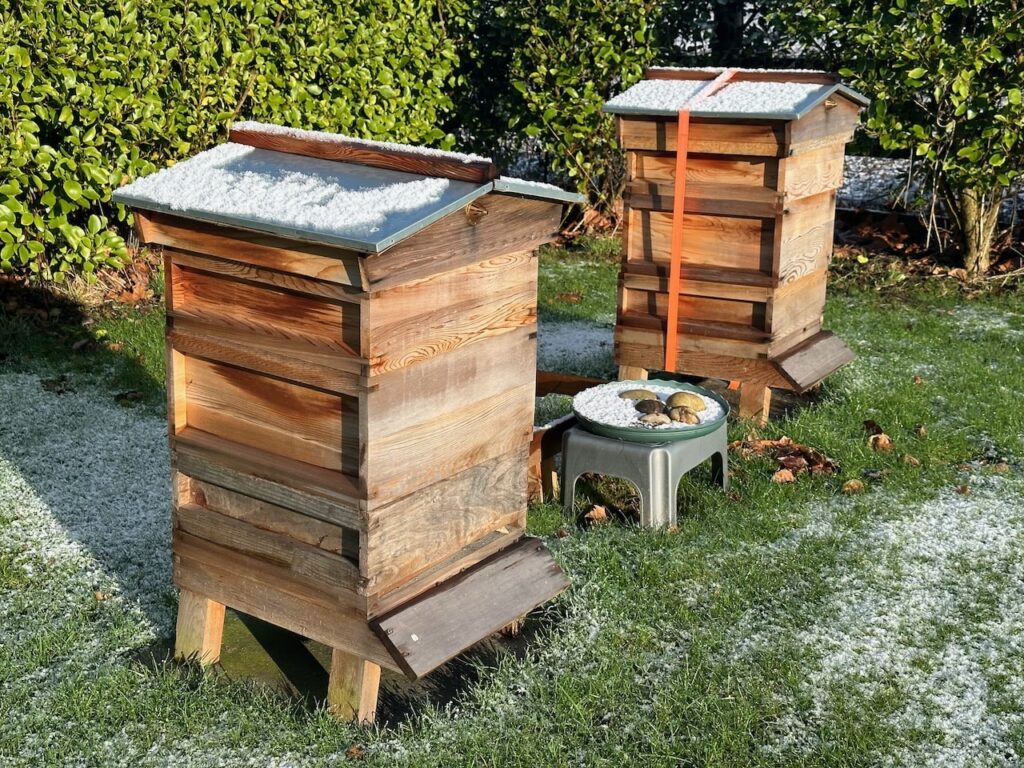
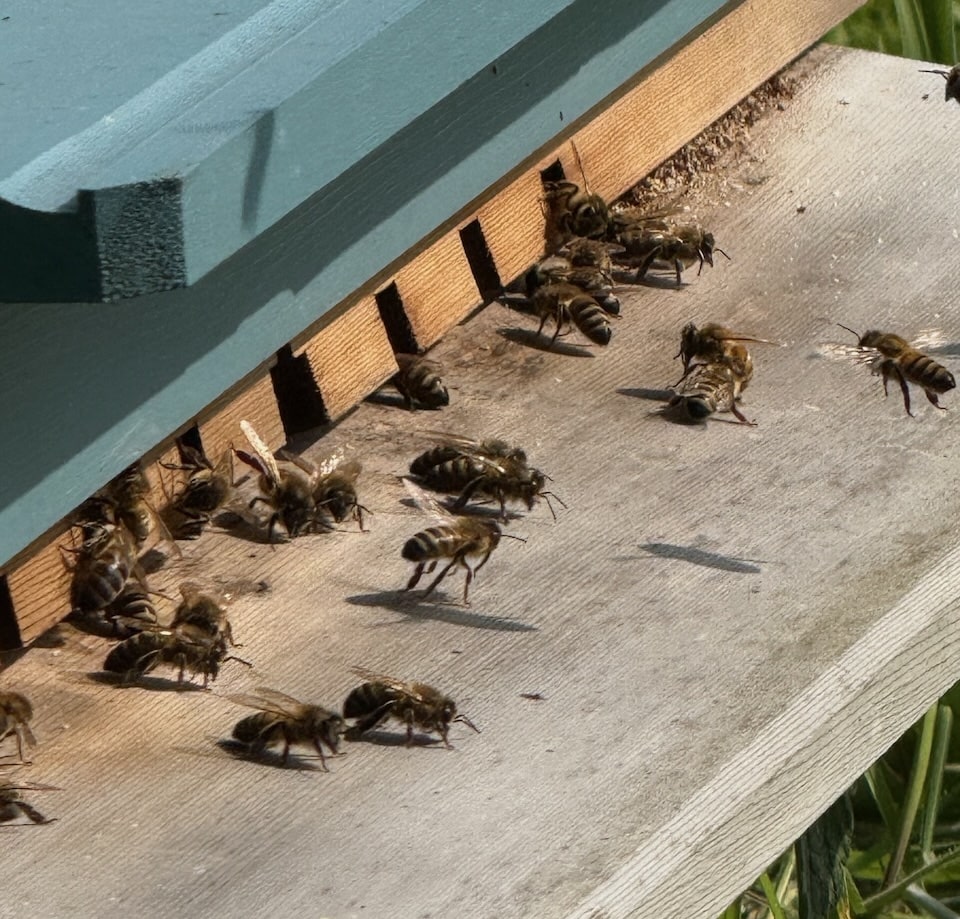
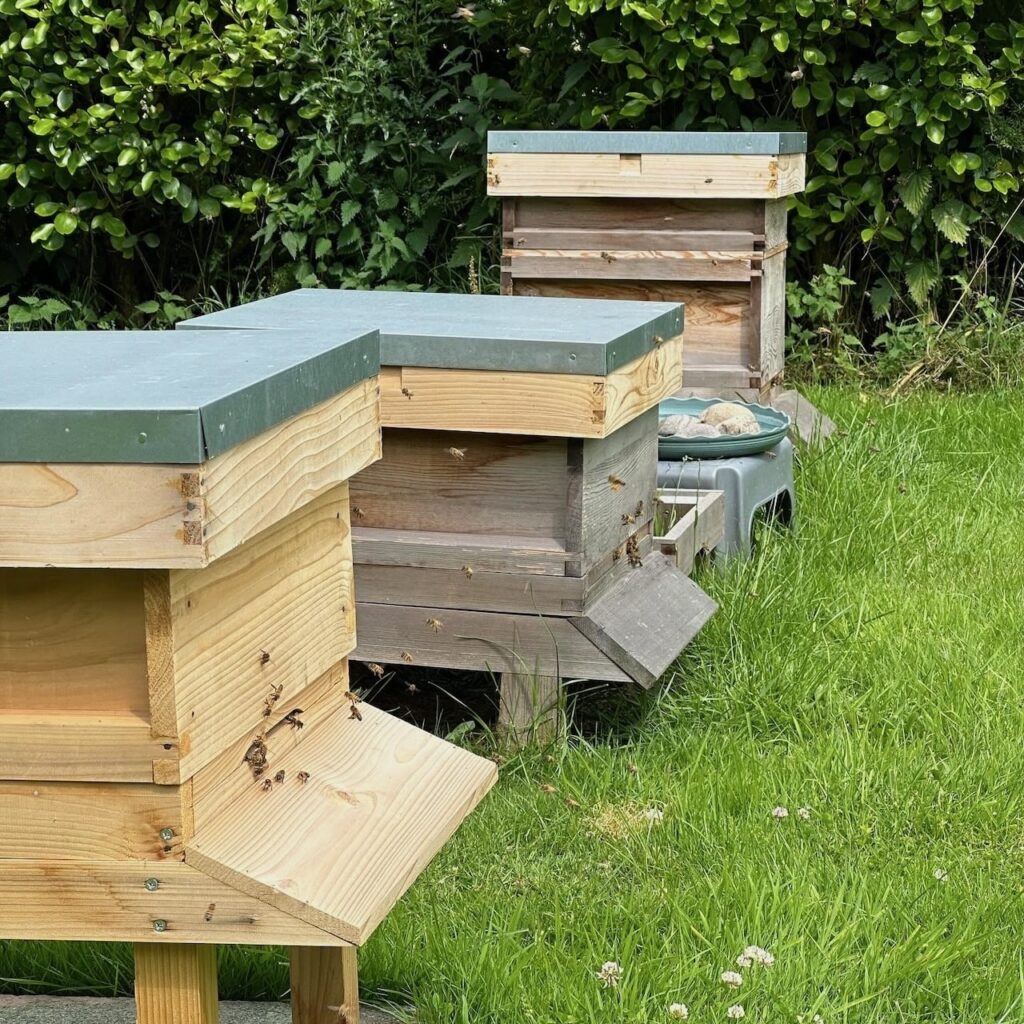
For those of you keeping bees (and if you’re not, you should seriously consider it!), November is absolutely crucial for winterising your hives. Your bees need to be properly prepared for the cold months ahead, and getting this right in November means the difference between thriving colonies in spring and potentially losing hives over winter.
Check Food Stores
This is your last chance before winter properly sets in to check that your bees have enough stores to see them through. A full-sized colony needs about 18-20kg of honey to survive winter. Heft (lift) the hive from the back. If it feels light, you need to provide emergency fondant or candy. Never feed liquid syrup in November as it’s too cold for bees to process it properly.
Reduce Entrances
Fit entrance blocks or mouse guards to prevent mice getting into the hive whilst still allowing the bees to get in and out. Mice love to move into warm bee hives in November and can cause absolute havoc, destroying comb and stressing the colony. A mouse guard is a simple metal strip with bee-sized holes that keeps mice out whilst letting bees through.
Insulation
Whilst bees are brilliant at regulating their own temperature, a bit of insulation helps them do it more efficiently. Place insulation boards or old carpet on top of the crown board to prevent heat loss through the roof. Don’t overdo it though – the hive still needs ventilation to prevent condensation, which is more dangerous to bees than cold.
Strap Down Hives
November gales can be brutal, so make sure your hives are properly secured with straps or weights. A toppled hive in winter can spell disaster for the colony. I use ratchet straps around my hives and place bricks on the roof for extra security.
Leave Them Alone
Once you’ve done your November winterisation, resist the temptation to keep checking the hive. Opening it in cold weather does more harm than good. Your bees know what they’re doing and just need you to have set them up properly. They’ll cluster together to keep warm, and provided they have food and shelter, they’ll be absolutely fine until spring.
Why You Should Leave Herbaceous Perennials Standing
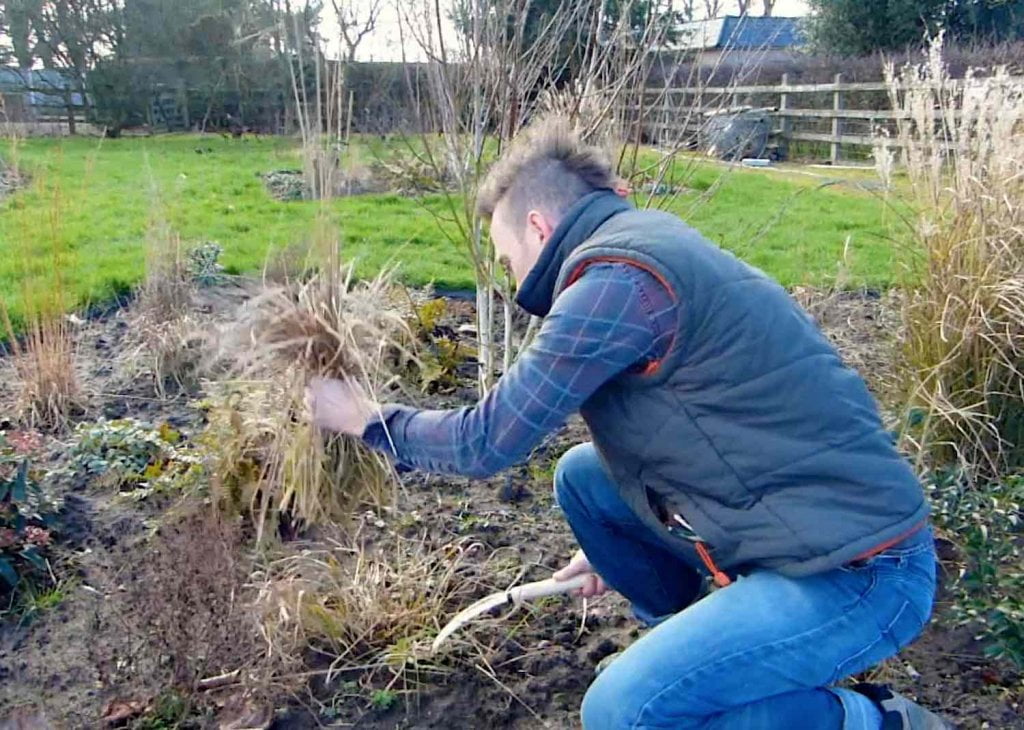
This is where I go against traditional gardening advice, and I make no apologies for it! For years we’ve been told to cut back herbaceous perennials in autumn, to give the garden a “tidy” appearance over winter. This advice is not only outdated, it’s actively harmful to wildlife and can damage your plants. November is the month when the temptation to cut everything back is strongest, but I’m here to tell you to put those secateurs down and leave things standing!
The Wildlife Benefits Are Massive
Those hollow stems you’re itching to cut down provide essential overwintering habitats for beneficial insects, such as ladybirds, lacewings, and solitary bees. These insects crawl into the stems to hibernate, and if you cut them down and stick them on the compost heap, you’re essentially evicting hundreds of your garden’s best pest controllers. The seed heads also provide crucial food for birds like goldfinches and blue tits throughout the lean winter months.
Plant Protection
The dead foliage acts as natural insulation for the plant’s crown, protecting it from frost damage and temperature fluctuations. This is especially important for slightly tender perennials that are borderline hardy. That supposedly “untidy” growth is actually a protective duvet for your plants.
Structural Beauty
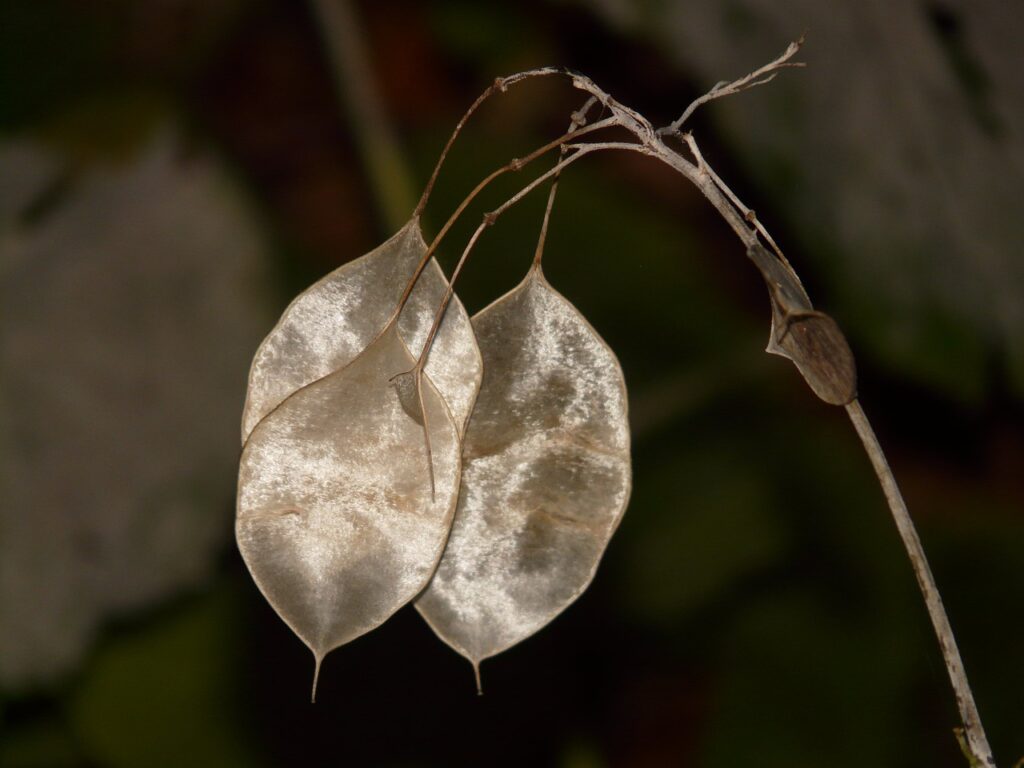
Herbaceous perennials look absolutely stunning in winter, especially when covered in frost or seed heads backlit by low winter sun. Grasses like Miscanthus and Calamagrostis are architectural beauties that provide movement and sound in winter gardens. Echinacea seed heads look like little porcupines covered in frost. Sedum flower heads hold snow like little plateaus. This isn’t mess, this is winter interest!
Which Perennials to Leave Standing
Pretty much all of them, to be honest! But particularly brilliant for leaving are grasses (all types), sedums, echinaceas, rudbeckias, verbena bonariensis, eryngiums, achilleas, and astrantias. Basically, anything with structural seed heads or hollow stems should be left until late February or March.
The Few Exceptions
There are some perennials you should cut back. Anything that’s clearly diseased, slug-damaged, or turning to mush should be removed to prevent disease spread. Hostas turn to slime in November and are better cleared. Delphiniums and lupins can get fungal issues if left, so they’re better cut back. But these are exceptions rather than the rule.
What About Appearances?
I get it, not everyone loves the “wild” look of standing perennials. But honestly, once you start seeing the frost on seed heads and the goldfinches feeding on teasels, you’ll never want a “tidy” November garden again. If you’ve got particularly visible borders near the house and the dead growth really bothers you, compromise by leaving the back of the border standing whilst cutting back the front.
That way you get winter interest and wildlife habitat whilst keeping a neater appearance where it’s most visible.
The traditional advice to cut everything back in November comes from an era when gardens were supposed to look “maintained” and formal year-round. We know better now. Gardens should work with nature, not against it, and leaving herbaceous perennials standing is one of the easiest ways to create wildlife habitat whilst reducing your workload. It’s a win-win situation, so please, step away from the secateurs this November!
November Garden Tasks & Essential Jobs
Beyond planting and harvesting, November is packed with other essential garden tasks that set you up beautifully for winter and beyond. Rather than writing off the month as too cold and dark for gardening, embrace these November jobs that’ll make future you very grateful indeed.
A) Plant Tulip Bulbs
If you haven’t planted tulips yet, November is actually ideal. Get them in before the end of the month for spring colour that’ll blow your socks off. Remember to plant them deeply (three times the bulb depth) in well-drained soil. If you want to colour code your spring bulbs then my guide is essential!
B) Protect Tender Plants
Wrap banana plants, tree ferns, and other tender architectural beauties with fleece or stuff straw into their crowns. A bit of protection now prevents heartbreak in spring when you discover they’ve frozen solid. Pot-grown tender perennials should be moved under cover in a greenhouse or cold frame.
C) Clear Paths and Patios
Whilst I’m all for leaving borders natural, paths and patios need clearing of fallen leaves to prevent them becoming slippery death traps. Wet leaves on paving are lethal, so sweep them up and add them to your leaf mould bin rather than leaving them underfoot.
D) Plant Hedges
November is absolutely ideal for bare root hedge planting. The soil is still workable, plants are dormant, and they’ll establish beautifully over winter ready to burst into growth in spring. Hedges planted now get a year’s head start on spring-planted ones.
E) Check Tree Stakes and Ties
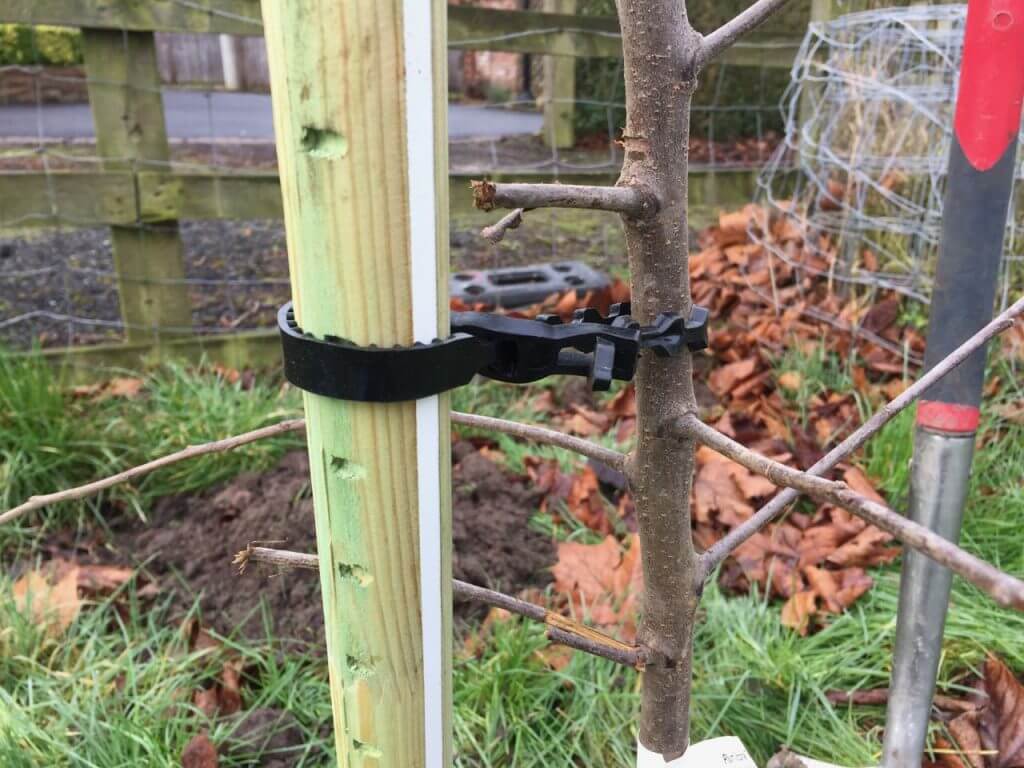
November gales can do serious damage to newly planted trees if their stakes and ties aren’t up to scratch. Check that stakes are firmly in the ground, ties aren’t rubbing or strangling the trunk, and everything is secure. Better to fix issues now than discover wind-rocked trees in spring.
F) Make Leaf Mould
This is one of my favourite November jobs! Collect fallen leaves and stuff them into black bin bags with a few holes punched in, or make a simple wire mesh bin. In 12-18 months you’ll have gorgeous leaf mould, which is absolutely brilliant for improving soil structure and mulching around plants. It’s completely free compost that gardeners pay good money for!
G) Clean Greenhouses
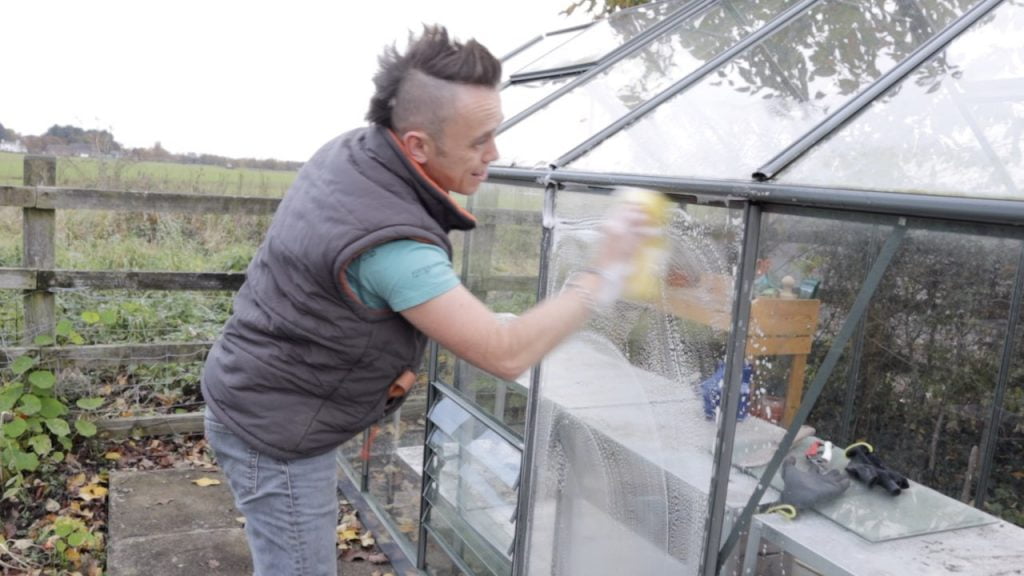
Give your greenhouse a proper clean in November whilst it’s relatively empty. Wash the glass inside and out to maximise light transmission during the dark winter months. Clean pots and staging too, and remove any diseased plant material that might harbour problems over winter.
H) Order Seed Catalogues
November evenings are perfect for browsing seed catalogues and planning next year’s vegetable garden. Get your orders in early for the best selection, especially for unusual or heritage varieties that sell out quickly. There’s something deeply satisfying about planning your garden whilst sitting by the fire with a brew!
I) Protect Brassicas from Pigeons
Wood pigeons absolutely hammer brassicas in November when other food becomes scarce. Net your cabbages, kale, and sprouts unless you want to be left with nothing but stalks. Pigeons are persistent beggars, so make sure netting is properly secured.
J) Plant Bare Root Roses
November is brilliant for planting bare root roses. They establish far better than pot-grown specimens and are considerably cheaper. Modern shrub roses are disease-resistant and flower for months, whilst old-fashioned roses provide incredible fragrance.
Essential November Planting Checklist
Task
Why It Matters
Best Timing
Plant Garlic
Needs cold period to develop properly
Early to mid November
Bare Root Planting
Best establishment, cheaper than pots
Throughout November
Tulip Planting
Late planting prevents frost damage
Throughout November
Winterise Bee Hives
Essential for colony survival
Early November
Protect Tender Plants
Prevents frost damage
Before first hard frost
Leave Perennials Standing
Wildlife habitat and plant protection
All winter
Transform Your Garden Knowledge with Garden Ninja’s Expert Resources
Ready to elevate your gardening beyond November tasks? My comprehensive online courses provide the expertise to transform you from enthusiastic beginner to confident garden creator. With courses starting from just £29, you gain access to award-winning design knowledge without traditional education expenses.
Whether you want to master small garden design, learn professional techniques, or create your dream outdoor space, my courses provide:
Recognised certificates for garden design credentials
Immediate practical applications to your own projects
Professional expertise distilled into accessible, practical guidance
Lifetime access to course materials and updates
29
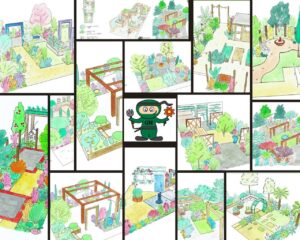
Garden Design Examples for Small Gardens: 30 Design Templates & Planting Plans
Garden Design Examples for Small Gardens: 30 Design Templates & Planting Plans: In this online gardening course, I’ll walk you through 30 fantastic garden designs, explaining the logic behind the layout, the plant choices, and take-home tips for applying them in your own garden.
Weekend Garden Makeover: A Crash Course in Design for Beginners
Learn how to transform and design your own garden with Lee Burkhills crash course in garden design. Over 5 hours Lee will teach you how to design your own dream garden. Featuring practical design examples, planting ideas and video guides. Learn how to design your garden in one weekend!
Garden Design for Beginners: Create Your Dream Garden in Just 4 Weeks
Garden Design for Beginners Online Course: If you want to make the career jump to becoming a garden designer or to learn how to design your own garden, this is the beginner course for you. Join me, Lee Burkhill, an award-winning garden designer, as I train you in the art of beautiful garden design.
In this online gardening course, I’ll walk you through 30 fantastic garden designs, explaining the logic behind the layout, the plant choices, and take-home tips for applying them in your own garden.
Learn how to transform and design your own garden with Lee Burkhill’s crash course in garden design. Over 5 hours Lee will teach you how to design your own dream garden. Featuring practical design examples, planting ideas and video guides. Learn how to design your garden in one weekend!
If you want to make the career jump to becoming a garden designer or to learn how to design your own garden, this is the beginner course for you. Join me, Lee Burkhill, an award-winning garden designer, as I train you in the art of beautiful garden design.
Summary
November gardening rewards those who resist the temptation to hibernate with incredible results that set you up for the entire year ahead. This often dismissed month allows you to secure fantastic bargains on bare root plants whilst establishing them in perfect conditions that give them a head start on spring-planted specimens.
Whether you’re planting garlic for next summer’s harvest, getting bare root fruit trees established, winterising your bee hives, or embracing the wildlife-friendly approach of leaving herbaceous perennials standing, November efforts create the foundation for year-round gardening success. The things to grow in November might not be as showy as summer’s offerings, but they’re absolutely essential for a productive, beautiful, and wildlife-friendly garden.
The traditional advice to “put your garden to bed” in November is outdated nonsense. Gardens should be working with nature, not trying to force everything into artificial tidiness. By planting now, protecting wisely, and resisting the urge to cut back everything in sight, you’re creating a garden that supports wildlife, looks stunning even in winter, and sets you up for success in spring.
Get out there, Ninjas, and make November your secret weapon for creating a garden that works harder and looks better year-round. Your future self (and the wildlife) will thank you for it!
Lee Burkhill, known as the Garden Ninja, is an award-winning garden designer and horticulturist with over 30 years of gardening experience and 15 years as a professional garden designer. A qualified RHS (Royal Horticultural Society) professional, Lee specialises in sustainable garden design and practical horticultural advice. He designs and presents on BBC1’s Garden Rescue and in leading gardening publications. Lee combines three decades of hands-on gardening knowledge with professional design qualifications to help gardeners create beautiful, functional outdoor spaces.