Sensory garden design: The Complete Guide to Creating Gardens That Engage All Five Senses
Lee Burkhill: Award Winning Designer & BBC 1's Garden Rescue Presenters Official Blog
Beginner level
Sensory garden design transforms ordinary outdoor spaces into immersive experiences that engage sight, sound, smell, touch and taste. Whether you're creating accessible gardens for children, dementia patients, or simply want deeper connection with nature, this complete guide covers essential design principles, plant selection tables, and proven techniques from fifteen years designing award-winning sensory gardens across the UK.
Sensory gardens are not just some trendy garden design concept dreamt up by fancy landscape designers with too much time on their hands. Sensory gardens are fundamentally about creating outdoor spaces that actively invite you to experience nature up close through touch, smell, hearing, taste, and sight.
To enrich and awaken your senses, whether thats wonderful floral smells, tactile sensations, auditory soothing or bright pops of visual stimuli!
And after fifteen years designing gardens and presenting BBC Garden Rescue, I can tell you that a ‘proper, true’ sensory garden is one of the most rewarding spaces you can create, whether you’re designing for children, adults with dementia, people with visual impairments, or simply anyone who wants a deeper connection with their garden.
What makes sensory gardens special is their focus on heightening our awareness of the natural world through multiple sensory experiences. Unlike traditional ornamental gardens, where you’re discouraged from touching the plants, sensory gardens actively encourage interaction.
They’re spaces where you’re meant to crush herbs between your fingers, run your hands through ornamental grasses, listen to rustling bamboo, and taste fresh mint straight from the soil. It’s gardening at its most visceral and engaging.
A sensory garden is an outdoor space specifically designed to stimulate and engage all five senses: sight, sound, smell, touch and taste.
Unlike traditional gardens that focus primarily on visual appeal, sensory gardens deliberately incorporate plants, materials and features that create rich multi-sensory experiences. These therapeutic gardens encourage visitors to interact directly with the environment through touching textured foliage, crushing aromatic leaves, listening to rustling grasses and water features, observing vibrant colours and movement, and tasting edible plants and herbs.
Sensory gardens are particularly valuable for children’s education, therapeutic settings, dementia care, and accessible garden design for individuals with visual or mobility impairments, although anyone can benefit from their immersive and engaging approach to garden design.
What Actually Makes a Sensory Garden Different?
Every garden stimulates our senses to some degree, but sensory gardens take this to another level entirely. The key difference is concentration and intention.
While a typical garden might have the odd scented rose or interesting texture by accident, a sensory garden deliberately layers multiple sensory experiences throughout the space. You’re not just looking at pretty flowers; you’re being invited to interact with them.
The magic happens when you engage multiple senses at once. Research shows that the more senses we activate, the richer our experience and the stronger our memories of that experience.
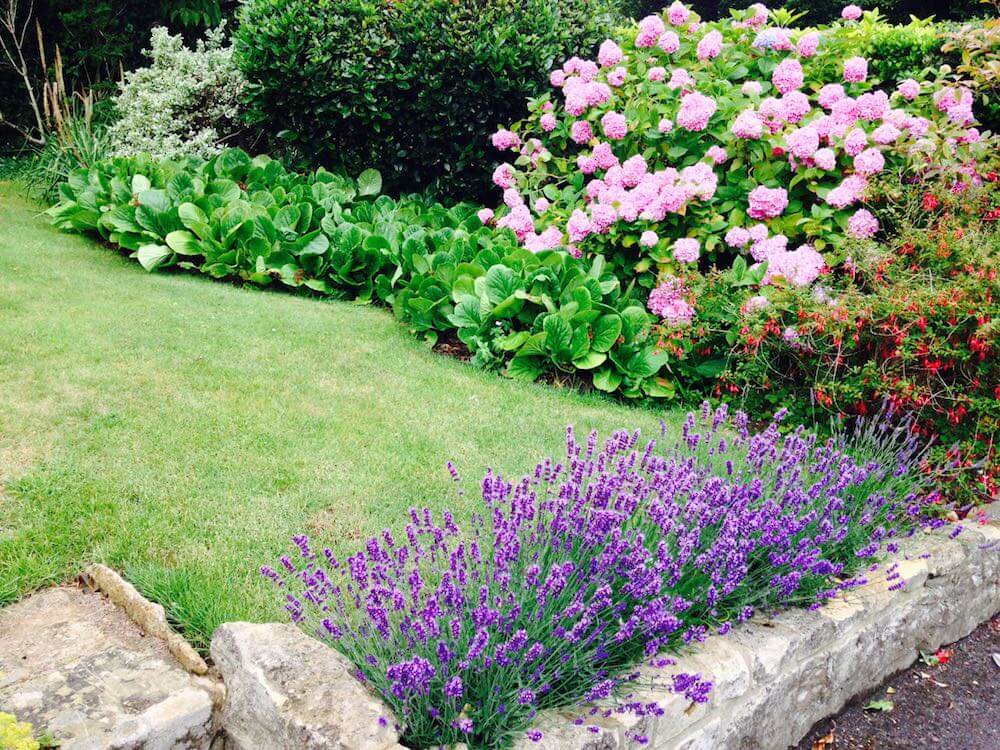
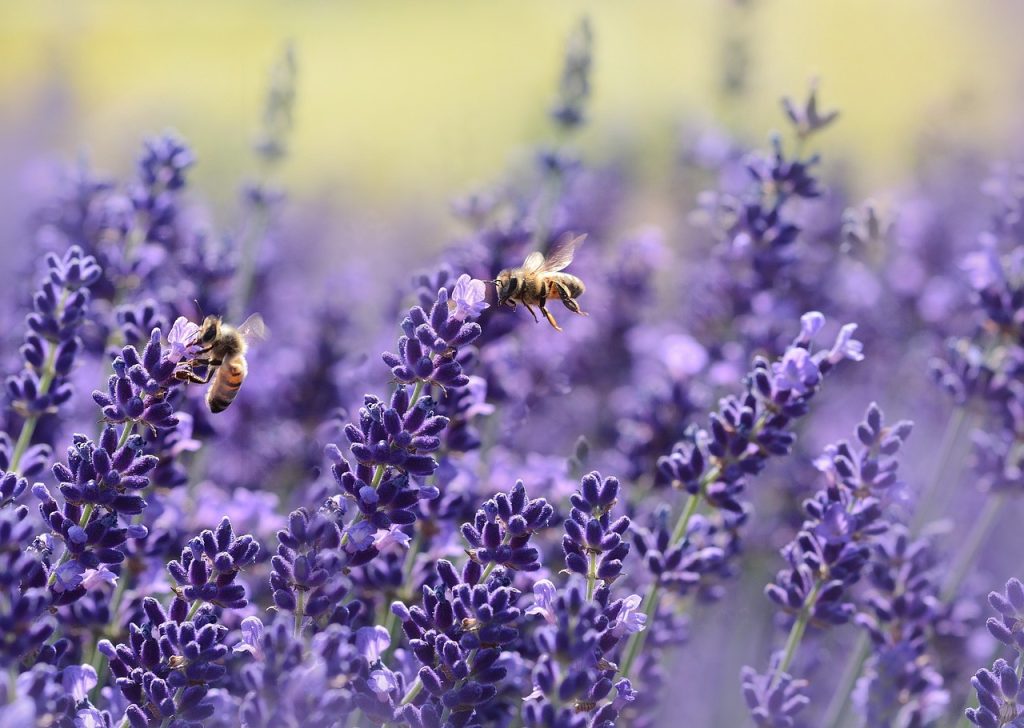
That lavender you brush past on your way to the seating area? It’s not just purple and pretty. You hear the bees buzzing around it, smell its distinctive perfume on your hands, feel its slightly rough flower spikes, and if you’re adventurous, taste its subtle floral notes in your cooking. That’s your five senses engaged by a single plant. That’s what proper sensory garden design is all about.
The other crucial difference is accessibility. Sensory gardens should be designed so that everyone can interact with them, regardless of mobility, vision or other challenges. This means thinking carefully about raised beds, path widths, plant heights and seating areas from the very beginning of your design process.
Planning Your Sensory Garden: Size Genuinely Doesn’t Matter
One of the biggest myths I encounter is that you need a massive space to create a proper sensory garden. You can create a sensory garden in the smallest of spaces or even in balcony gardens. I’ve designed sensory gardens in everything from expansive school grounds to tiny urban plots. The principles remain exactly the same regardless of scale.
For small spaces, think vertically. Use climbing plants on a trellis to maximise your planting area. Choose compact varieties of sensory plants. A single large container filled with scented herbs can provide incredible sensory stimulation on even the smallest balcony.
One example would be a sensory trail for a dementia care home, utilising only pots and containers on a raised decking platform or using raised beds full of tactile and edimental plants!
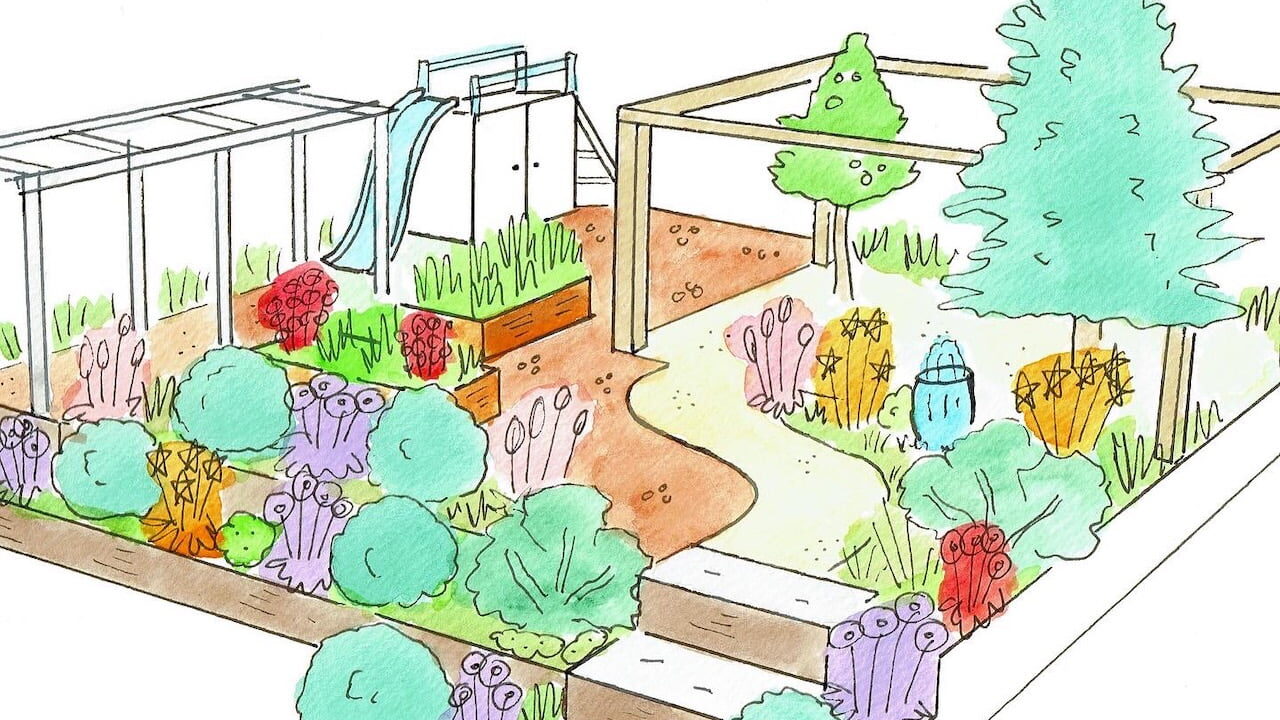
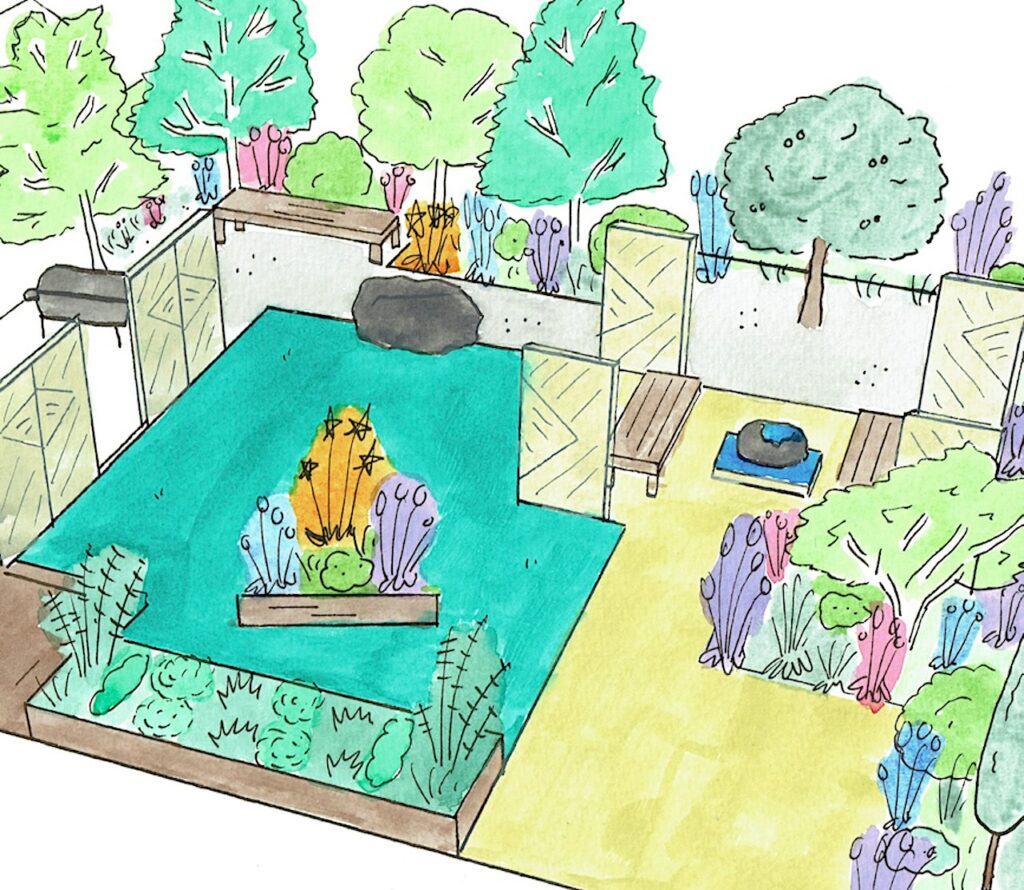
If you’re blessed with more space, you can create distinct sensory zones. Perhaps a calming area with soft blues, purples and whites surrounded by lavender and other aromatic plants. Then a more energetic space featuring bright reds, oranges and yellows with bold architectural plants. The key is creating areas that offer different experiences rather than overwhelming visitors with everything at once.
Essential Design Elements for Sensory Gardens
A) Accessibility First
This isn’t optional. If people can’t physically access and interact with your sensory garden, you’ve fundamentally failed at sensory garden design. Path widths matter enormously, especially if wheelchair users will be visiting.
Aim for minimum 120cm wide paths on main routes, and ensure surfaces are firm and even. Gravel can work brilliantly for sound underfoot, but it needs to be well compacted and not too loose.
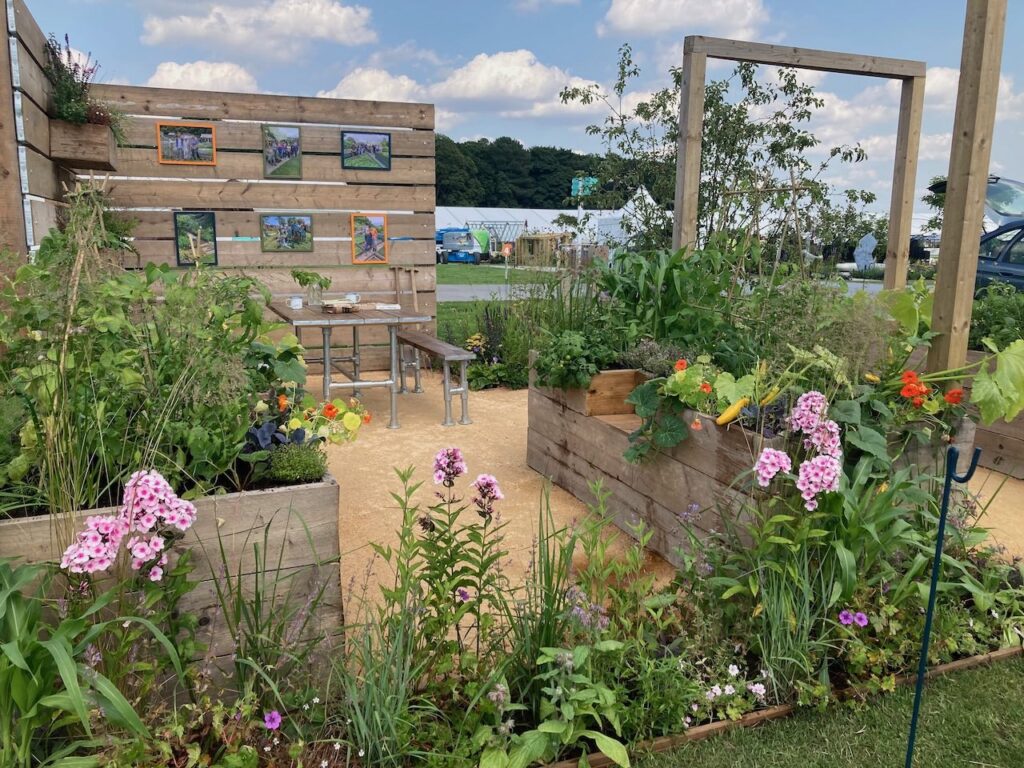
Raised beds are absolutely brilliant for sensory gardens. They bring plants up to a comfortable height for touching and smelling without requiring people to bend down. I typically build mine at around 45-60cm height, which works for most wheelchair users and reduces back strain for everyone else. Use contrasting materials for the edging so they’re easy to see and feel where the bed begins.
B) Seating and Shelter
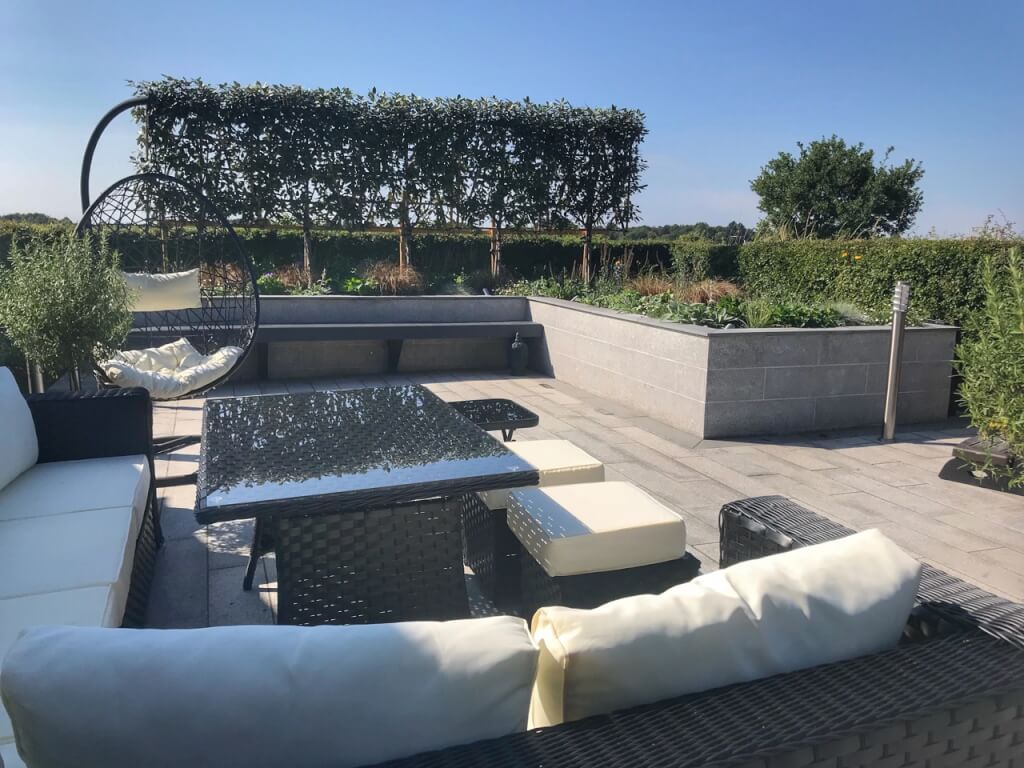
People need places to sit and simply experience the garden. I position seating areas strategically near particularly fragrant plants or where you can hear water features or rustling grasses. Think about sun and shade too. Everyone has different preferences, so try to offer both sunny spots and shaded areas with dappled light.
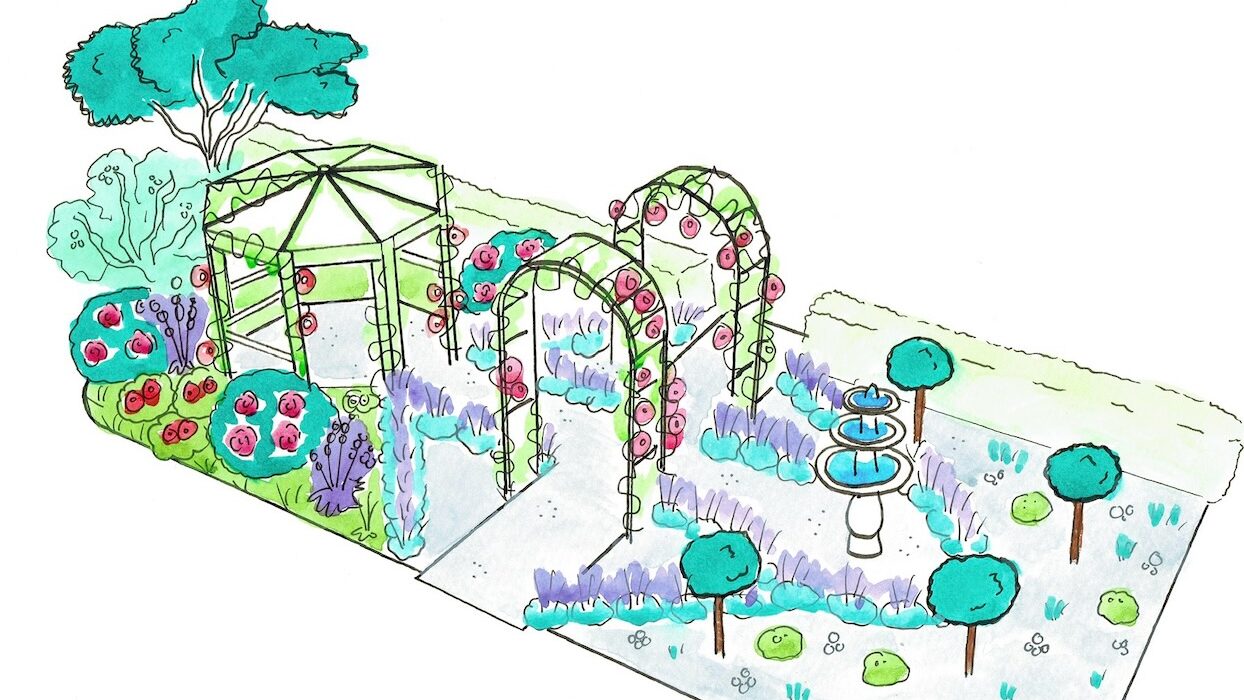
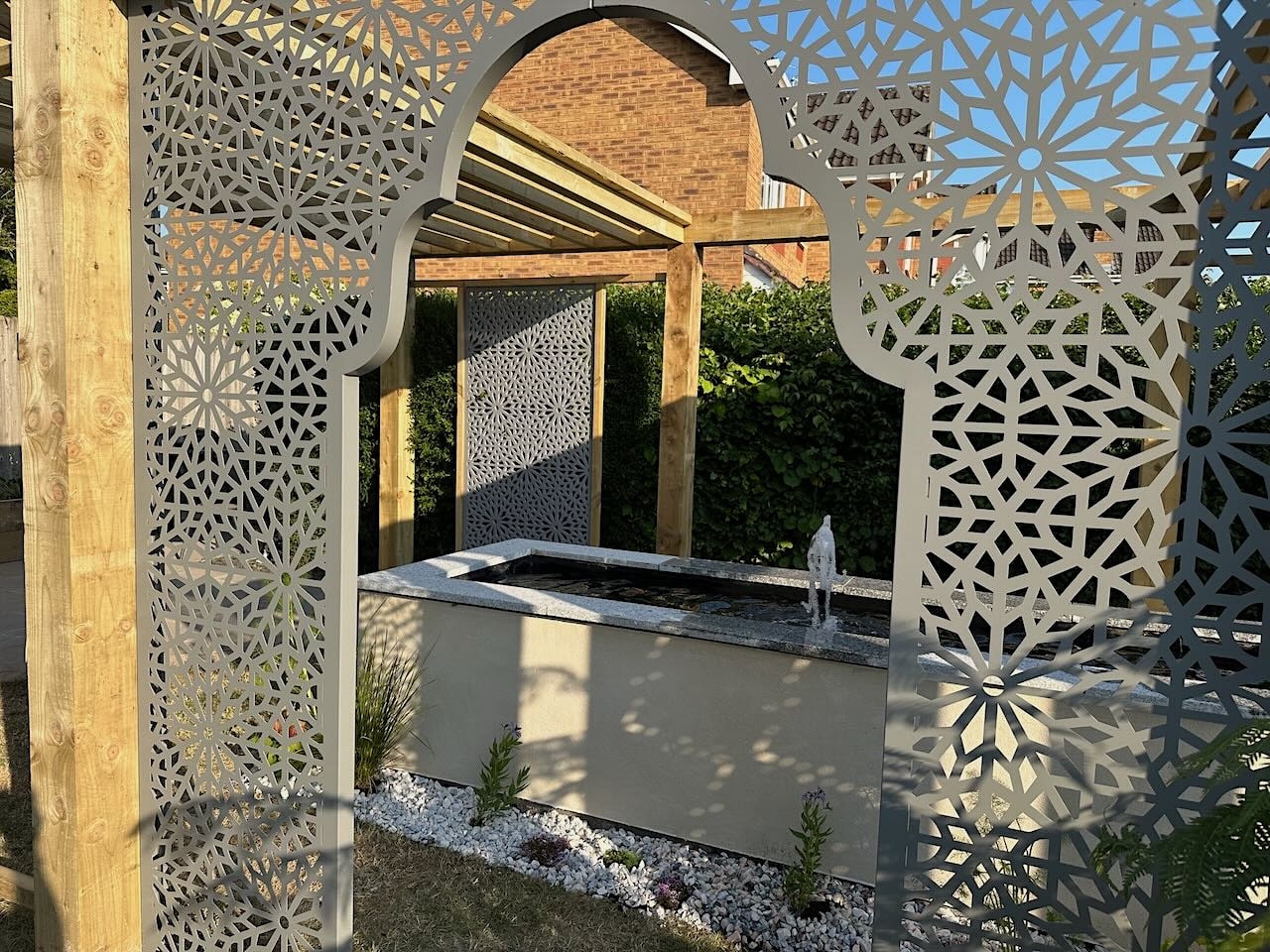
Shelter from wind and rain extends your garden’s usability throughout the year. Pergolas work wonderfully, especially when covered with scented climbers like honeysuckle or jasmine. If the budget allows, consider installing brackets or fixing points for temporary canopies that can be deployed when needed.
C) Sensory Water Features
Nothing beats moving water for creating a calming soundscape. You don’t need anything fancy or expensive. A simple bubble fountain, a small rill, or even a birdbath creates lovely auditory interest.
Water also attracts wildlife, which adds another dimension to your sensory garden with birdsong and buzzing pollinators.
D) Pathways and Surfaces
Vary your path surfaces to create different tactile and auditory experiences. Smooth flagstone feels completely different underfoot compared to crunchy gravel. Wooden decking has its own unique sound and feel. Bark mulch provides a soft, springy surface that’s lovely to walk on. Just ensure all surfaces are safe and won’t become slippery when wet.
Sensory Plants for Touch: Textures That Demand Interaction
Touch is probably the most underutilised sense in traditional gardens because we’re constantly told not to touch the plants. Sensory gardens flip this entirely. You actively want plants that people will run their hands through, stroke, or gently squeeze. The variety of textures available in the plant world is truly staggering, ranging from silky soft to intriguingly rough, from spiky to velvety.
When selecting plants for touch, consider leaves, stems, bark, seed heads, and flowers. Also consider where you’re positioning these plants.
There’s no point in having wonderful tactile plants positioned in the back of a border where nobody can reach them. Bring them forward, plant them in raised beds, or position them along path edges where they’ll naturally be touched as people walk past.
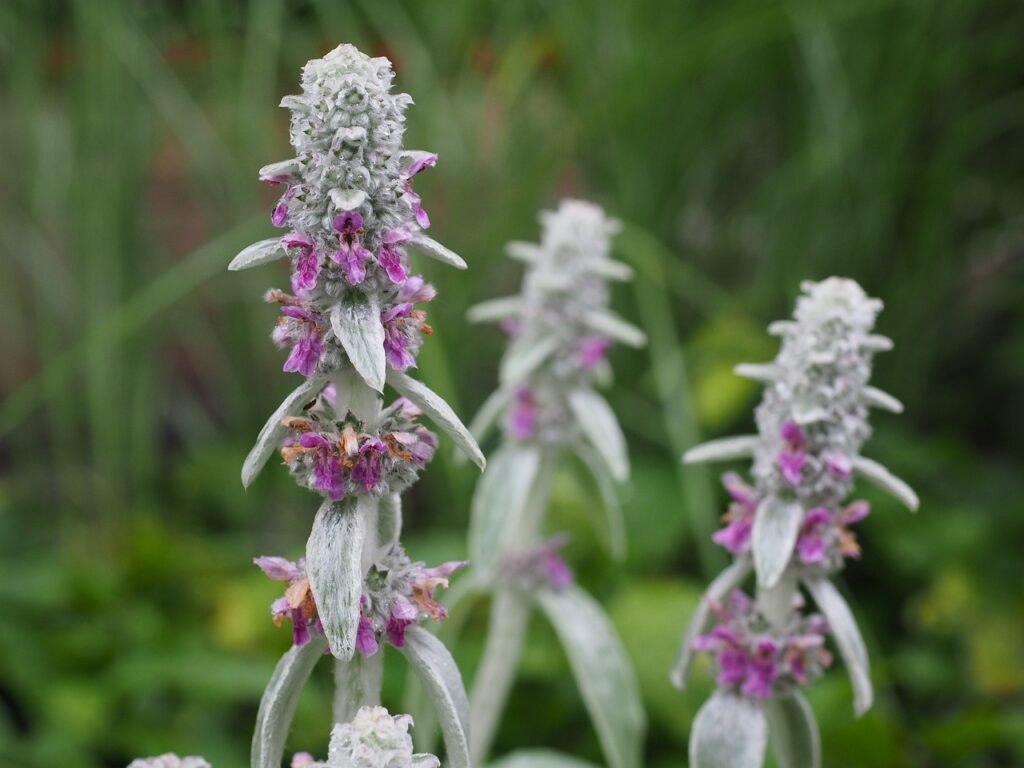
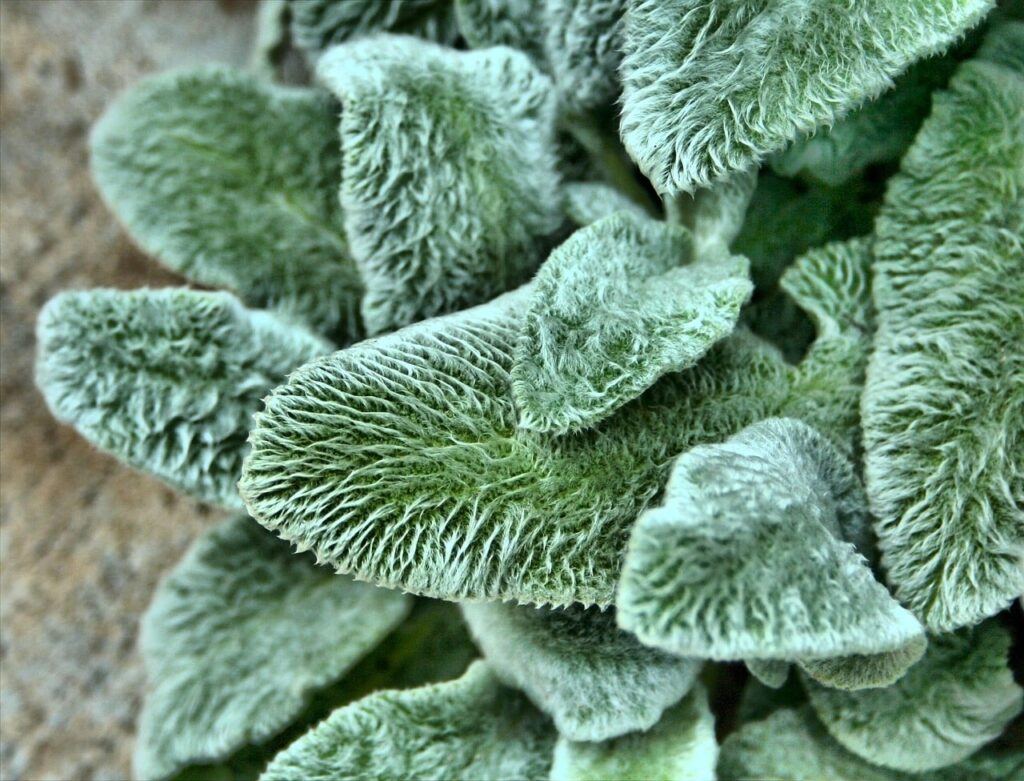
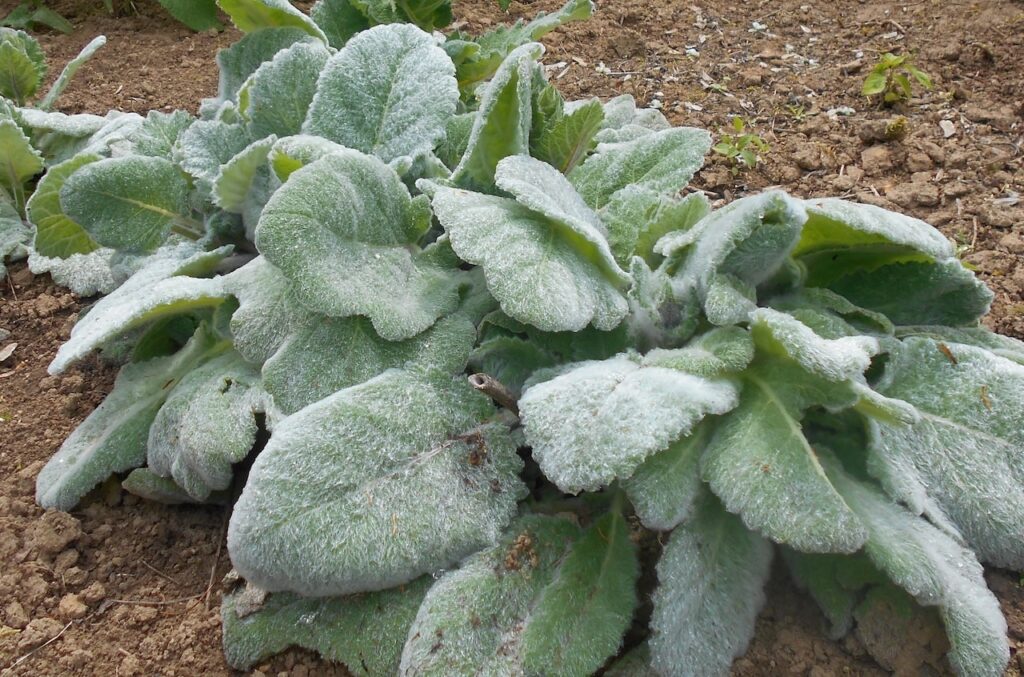
1. Lamb’s Ear (Stachys byzantina)
This is probably the most famous tactile plant in sensory gardens, and for bloody good reason. Those incredibly soft, velvety, almost woolly leaves genuinely feel like stroking a rabbit’s ear. It’s a texture that immediately makes people smile, especially children who can’t resist running their hands over the silvery foliage. Evergreen in mild areas with purple-pink flower spikes in summer that many gardeners remove to maintain the foliage effect.
Hardiness: H5 (Hardy to -15°C)
Ultimate Height: 30-45cm
Ultimate Spread: 60cm
Best Growing Conditions: Full sun in well-drained soil. Tolerates poor soil brilliantly. Absolutely hates winter wet.
Top Tip: Position at the front of borders, in raised beds, or along path edges where it’s easily accessible. May need dividing every few years to keep it looking tidy and prevent the centre dying out.
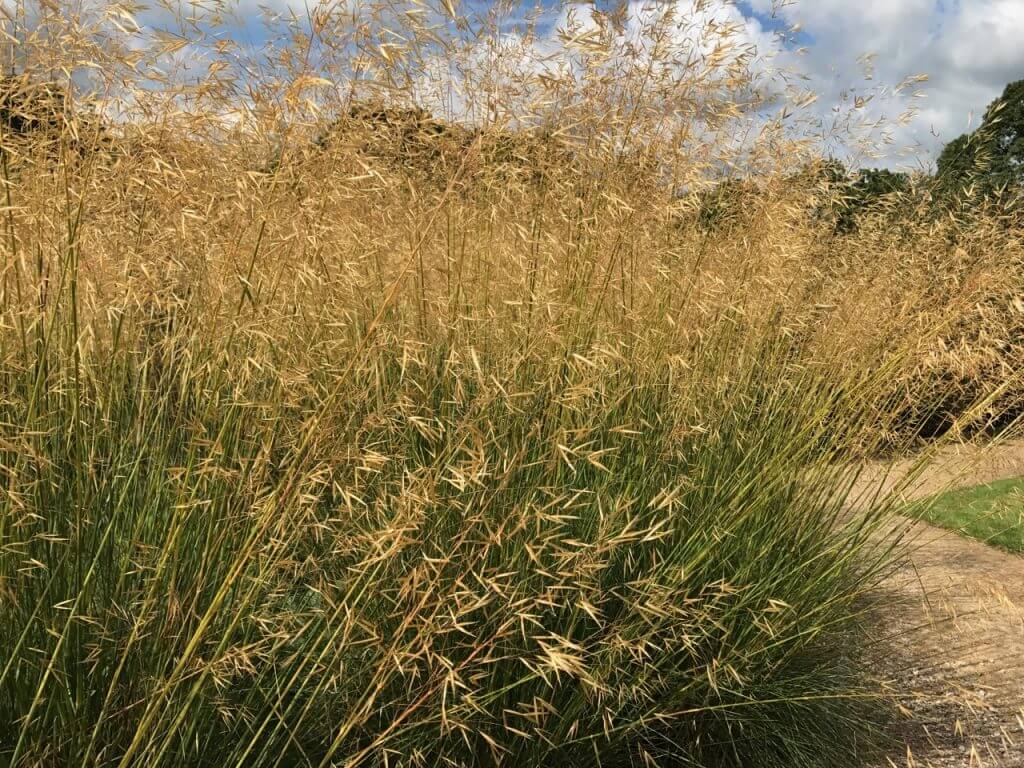
These provide feathery plumes and silky seed heads that whisper and rustle when touched or when the wind blows through them. Essential for adding movement and sound alongside their tactile qualities. Miscanthus sinensis varieties offer tall architectural presence, Stipa tenuissima creates beautiful flowing movement, whilst Pennisetum provides bottle-brush flower heads.
Hardiness: H4-H5 depending on species (Hardy to -10°C to -15°C)
Ultimate Height: 60cm-2m depending on species
Ultimate Spread: 45cm-1.2m
Best Growing Conditions: Full sun to partial shade in well-drained soil. Most tolerate clay once established.
Top Tip: Cut back hard in early spring before new growth emerges. Leave the dried seed heads through winter for structure and wildlife. Miscanthus for height, Stipa for movement, Pennisetum for softness.
3. Ferns (Dryopteris, Polystichum)
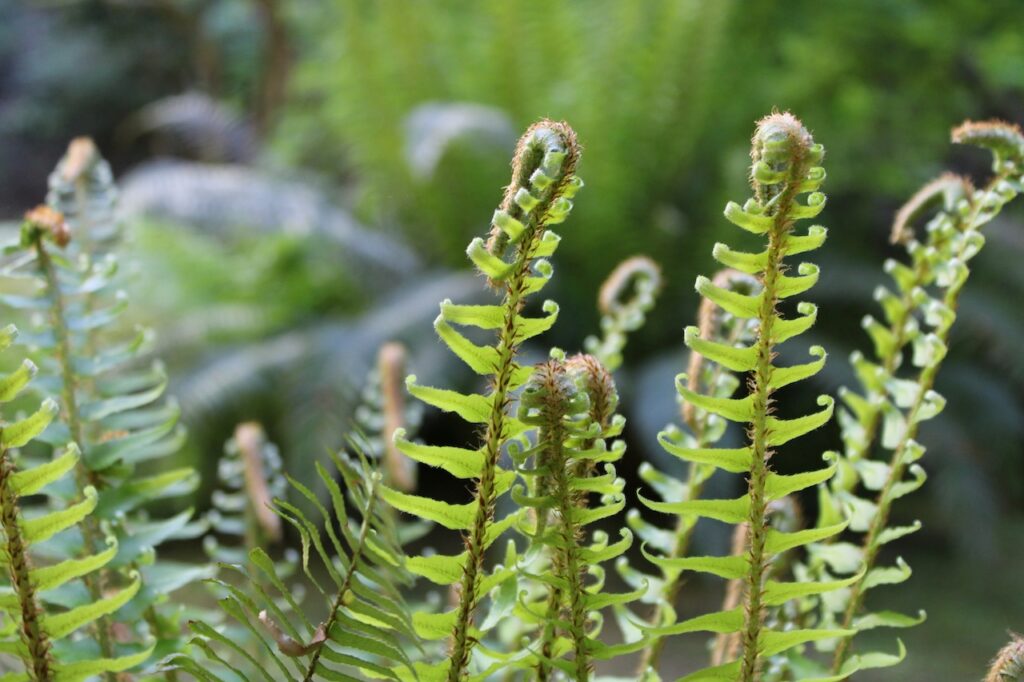
Cool, smooth fronds with intricate patterns that feel almost otherworldly. Some species like the soft shield fern feel quite papery and delicate. Perfect for those shaded corners of sensory gardens where little else will thrive. Polystichum setiferum is particularly good with beautifully divided fronds that create wonderful texture.
Hardiness: H5-H7 (Hardy to -15°C or colder)
Ultimate Height: 60-90cm
Ultimate Spread: 60-90cm
Best Growing Conditions: Shade or dappled light in moist, well-drained soil rich in organic matter. Top Tip: Virtually maintenance-free once established. Just remove old fronds in spring before the new croziers unfurl. Brilliant for adding texture to dark corners where nothing else will grow.
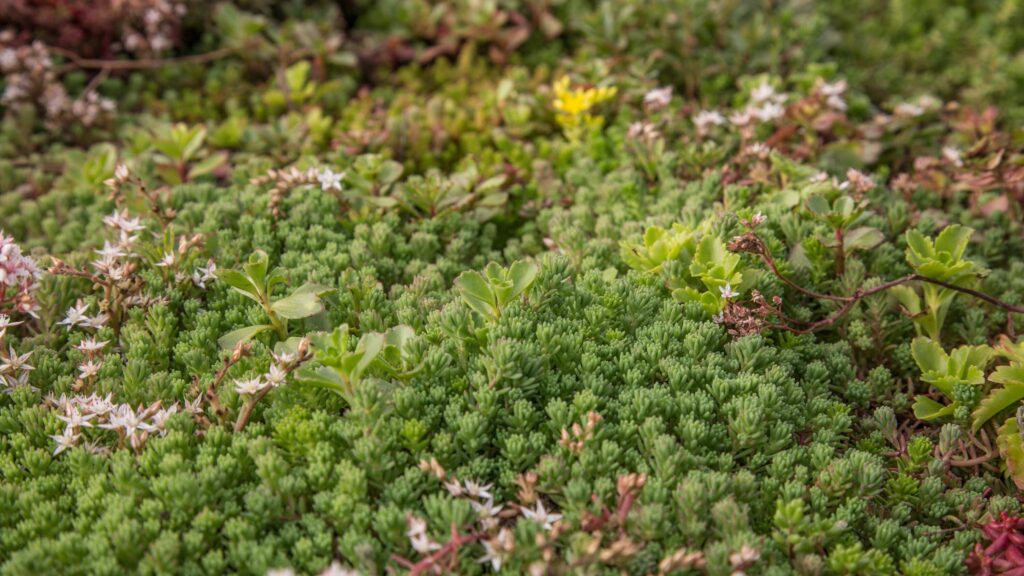
4. Succulents (Sempervivum, Sedum)
Fleshy, plump leaves that are cool and smooth to touch, offering a completely different tactile experience. Kids absolutely love squeezing the fat leaves gently. Sempervivum forms tight rosettes whilst Sedum spectabile provides taller growth with pink autumn flowers beloved by butterflies.
Hardiness: H5-H6 (Hardy to -15°C to -20°C)
Ultimate Height: 5-15cm for Sempervivum, 45cm for Sedum spectabile
Ultimate Spread: Spreading slowly to form mats
Best Growing Conditions: Full sun in well-drained to dry soil. Ridiculously drought tolerant.
Top Tip: Perfect for containers, rockeries, green roofs, or raised beds where they’re easily accessible. Avoid spiky varieties like some agaves in high-touch areas. They literally thrive on neglect.
5. Silver Sage (Salvia argentea)
Large silvery white leaves covered in cotton wool-like down that feels absolutely gorgeous to touch. A spectacular architectural plant that forms impressive basal rosettes of soft foliage. Self-seeds readily so you’ll often get replacements appearing nearby. Similar to lamb’s ears but with bigger foliage, and you don’t get the pink flower spikes.
Hardiness: H4 (Hardy to -10°C)
Ultimate Height: 60-90cm when in flower, 30cm rosette
Ultimate Spread: 45cm
Best Growing Conditions: Full sun in sharply drained soil. Absolutely despises winter wet which kills it rather than cold.
Top Tip: Treat as a biennial or short-lived perennial. Position where drainage is sharp and soil isn’t too rich. The flower spikes are impressive but remove them if you want to maintain the foliage rosette.
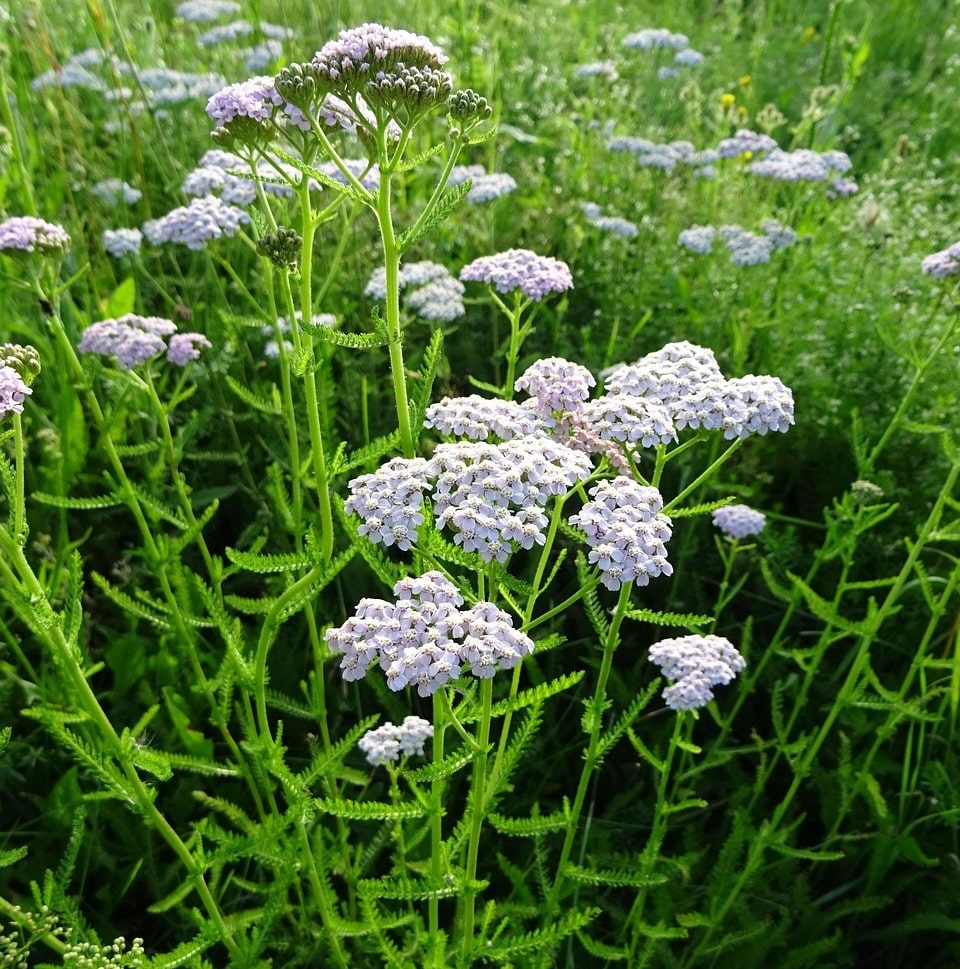
6. Yarrow (Achillea millefolium)
Contrasting textures with stiff flat flower heads held above soft feathery foliage. The flowers feel almost crispy when dried, whilst the fern-like leaves are delicate to touch. An incredibly tough plant that tolerates neglect brilliantly.
Hardiness: H7 (Hardy to -20°C)
Ultimate Height: 60-75cm
Ultimate Spread: 60cm
Best Growing Conditions: Full sun in any well-drained soil. Tolerates poor soil, drought and general neglect.
Top Tip: Deadhead to prolong flowering from June through September or leave seed heads for birds and winter interest. Available in colours from white and yellow to pink and red. Divide every few years to maintain vigour.
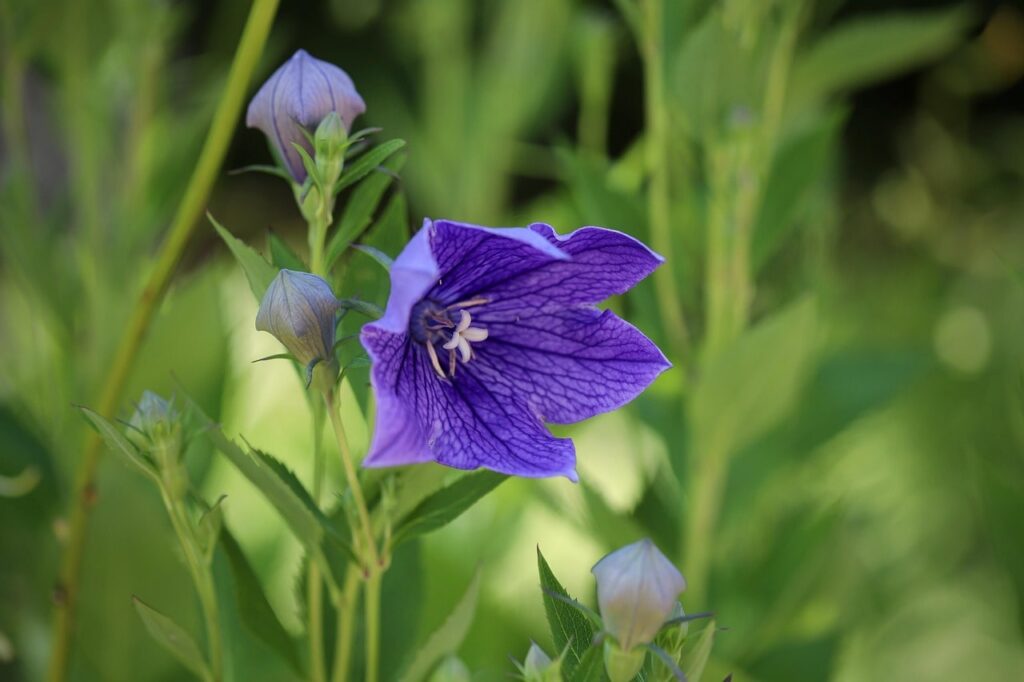
7. Balloon Flower (Platycodon grandiflorus)
Fat buds that make a satisfying pop when gently squeezed, which children absolutely adore. They open into beautiful star-shaped flowers in blue, white or pink. A genuinely underused perennial that deserves more attention.
Hardiness: H5 (Hardy to -15°C)
Ultimate Height: 45-60cm
Ultimate Spread: 30cm
Best Growing Conditions: Full sun in well-drained soil. Resents disturbance once established.
Top Tip: It’s quite late to emerge in spring so mark its position to avoid accidentally digging it up. Plant in its permanent position as it doesn’t like being moved. The balloon buds appear in July and August.
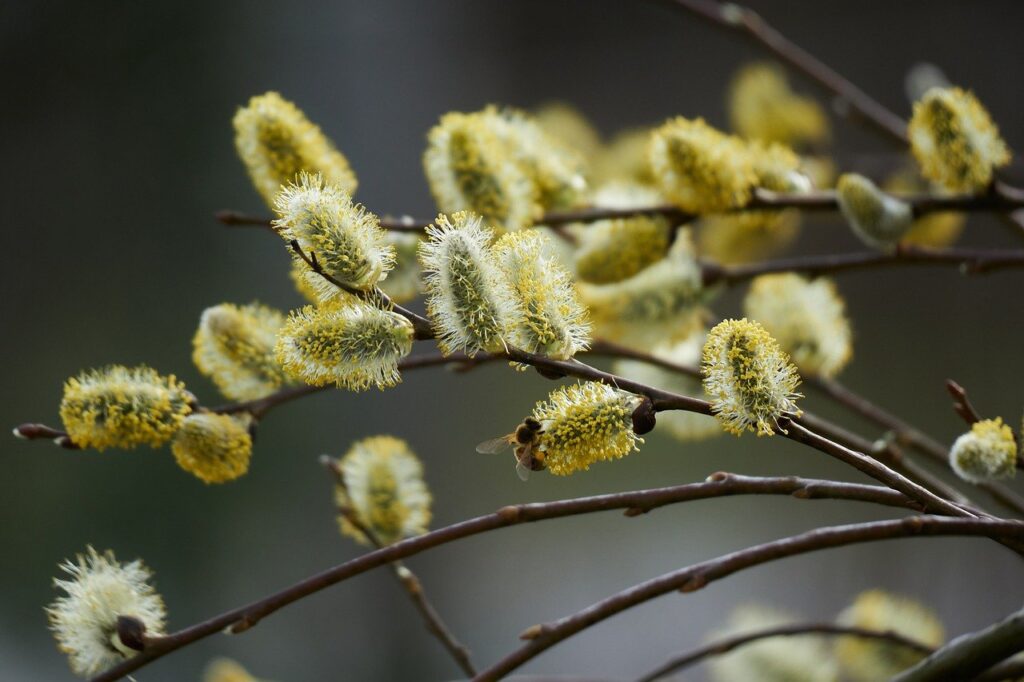
8. Pussy Willow (Salix caprea)
Irresistibly soft, furry catkins in early spring that everyone wants to stroke. The male catkins are particularly tactile with their silvery fur. The smooth bark is attractive year-round and those early catkins provide crucial early nectar for bees in February and March.
Hardiness: H7 (Hardy to -20°C)
Ultimate Height: 8-10m if unpruned, 2-3m if coppiced
Ultimate Spread: 6-8m if unpruned, 2-3m if coppiced
Best Growing Conditions: Full sun to partial shade in any soil, including heavy clay. Copes with wet conditions.
Top Tip: Responds brilliantly to coppicing and can be kept compact by cutting back hard every few years. Position at the back of borders or as a specimen shrub where the early catkins can be appreciated.
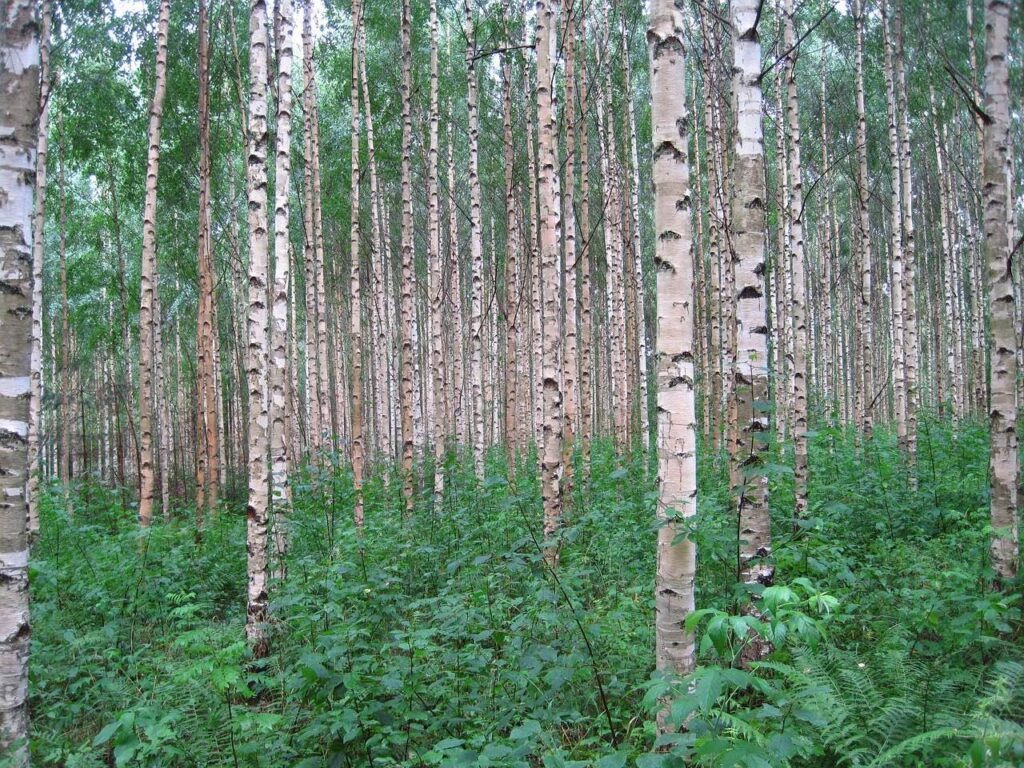
9. Betula (Birch Trees, especially B. utilis var. jacquemontii)
Smooth, papery bark in brilliant white that peels in horizontal strips, revealing bright layers beneath. Visually stunning year-round and endlessly fascinating to touch. Multi-stem forms are particularly attractive as they bring that beautiful bark down to touchable height.
Hardiness: H7 (Hardy to -20°C)
Ultimate Height: 12-18m
Ultimate Spread: 7-10m
Best Growing Conditions: Full sun to partial shade in any well-drained soil.
Top Tip: Position as a specimen tree where the form and bark can be properly appreciated, especially where it’ll catch low winter sun. Underplant with ferns for a woodland feel. Growth is relatively slow so don’t panic about the ultimate size.
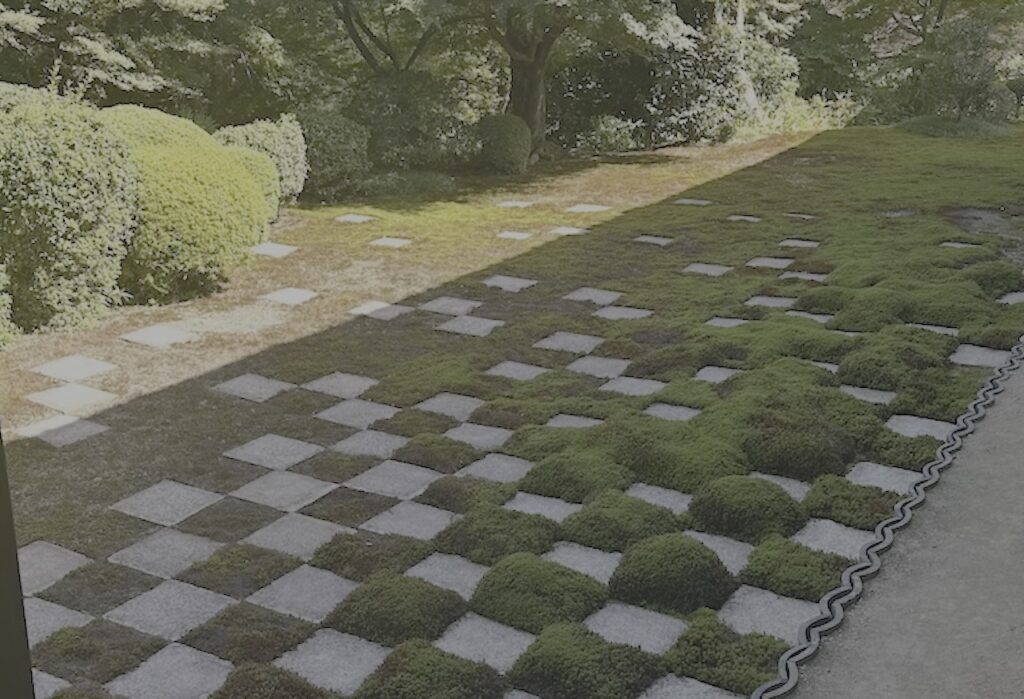
10. Mosses and Irish Moss (Sagina subulata)
Springy, soft carpet-like textures that feel wonderful underfoot or to touch. Walking barefoot on moss is one of gardening’s great sensory pleasures. Irish moss isn’t actually a moss but looks similar with tiny white star flowers in summer.
Hardiness: H5 (Hardy to -15°C)
Ultimate Height: 1-5cm
Ultimate Spread: Forming mats indefinitely
Best Growing Conditions: Shade or partial shade in moist soil. Both require moisture to thrive.
Top Tip: Perfect for filling gaps between stepping stones or carpeting shaded areas where grass won’t grow. Avoid constant foot traffic but occasional touching and gentle walking is fine.
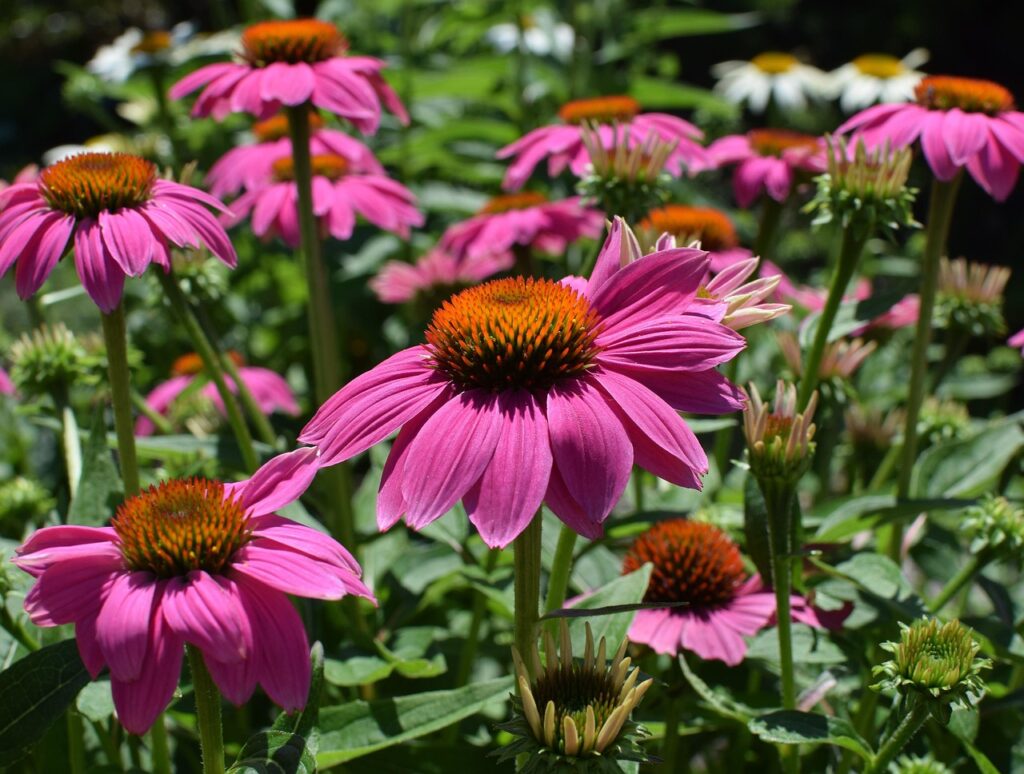
11. Coneflower (Echinacea purpurea)
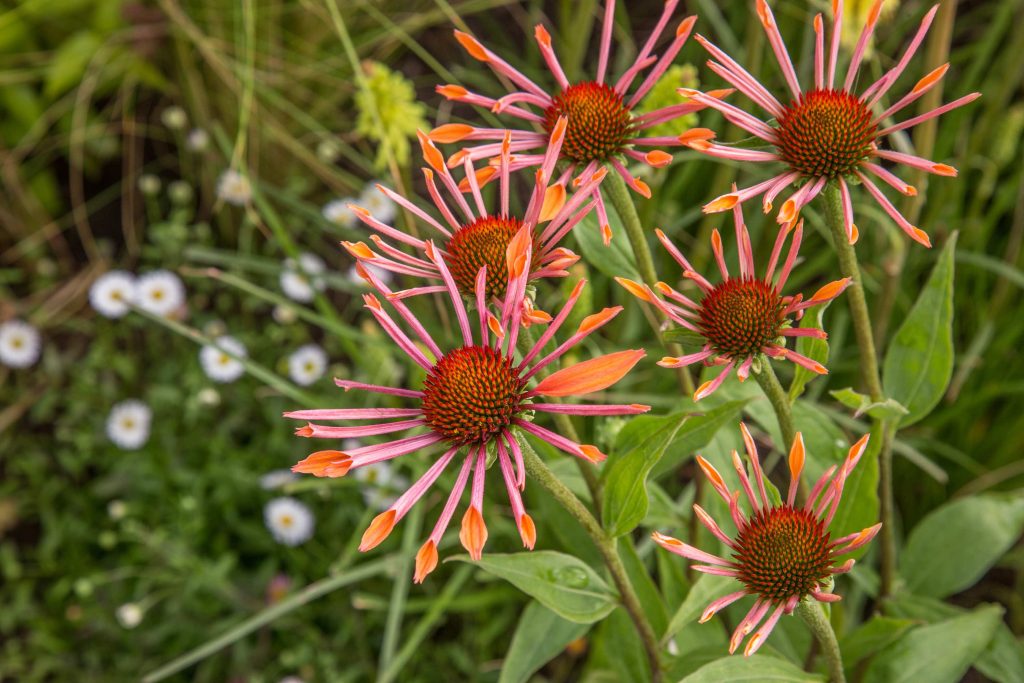
Spiky orange-brown central cone surrounded by softer pink-purple petals. As flowers age, the cone becomes more prominent and rigid, fascinating to touch. The dried seed heads provide winter texture and food for birds.
Hardiness: H6 (Hardy to -20°C)
Ultimate Height: 90-120cm
Ultimate Spread: 45cm
Best Growing Conditions: Full sun in well-drained soil. Remarkably drought-tolerant once established.
Top Tip: Avoid deadheading all the flowers so you get those architectural seed heads for winter interest. Absolutely brilliant for pollinators from July through September. Divide clumps every 3-4 years to maintain vigour.
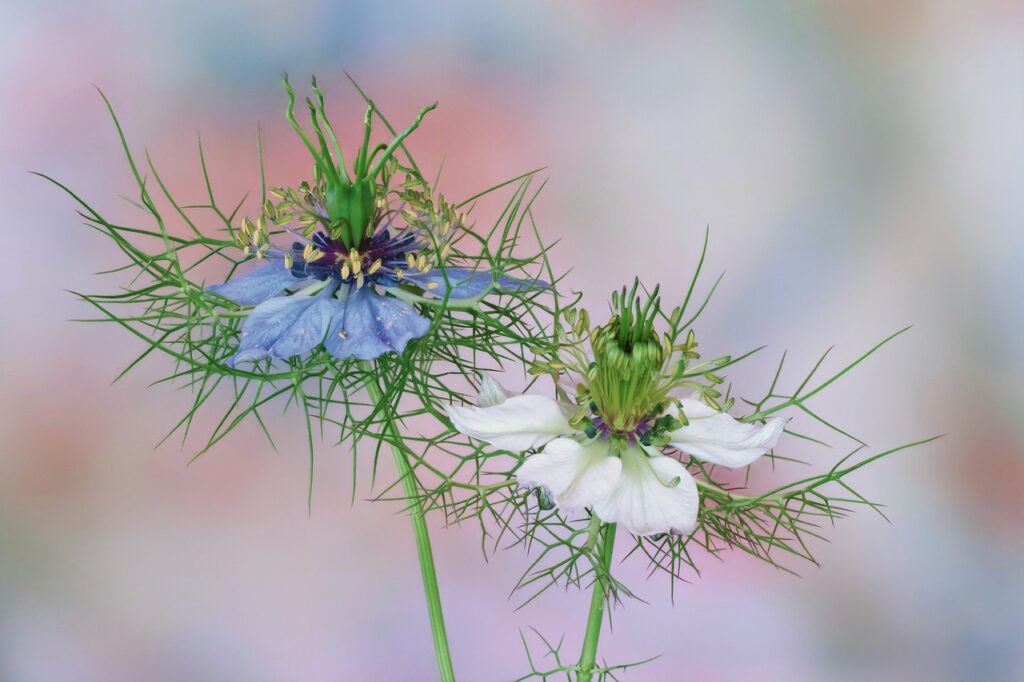
12. Love-in-a-Mist (Nigella damascena)
Papery seed pods that rattle wonderfully when shaken, and the foliage is delightfully feathery and soft. The inflated seed pods develop distinctive horns, making them instantly recognisable and excellent for dried arrangements.
Hardiness: Fully hardy annual
Ultimate Height: 45-60cm
Ultimate Spread: 23cm
Best Growing Conditions: Full sun in any well-drained soil. Actually flowers better in poor soil.
Top Tip: Self-seeds enthusiastically so you’ll only need to plant it once. Flowers appear in blue, pink or white from June through August. Scatter seed in borders or even in gaps between perennials. Thrives on neglect.
Safety Note: Avoid plants with thorns, spines or toxic sap in high-touch areas. Position roses and other thorny plants towards the back of borders where they can be admired visually without risk of injury.
Sensory Plants for Smell: Creating Layers of Fragrance
Scent is incredibly powerful. A single whiff of the right fragrance can transport you back decades to childhood memories or special moments.
When designing for smell in sensory gardens, you need to think about three different types of fragrance release:
Ambient scents that naturally perfume the air
Scents released by touch or crushing of flowers or leaves
Scents that are released when walking and brushing past plants
The art is creating layers of fragrance throughout the seasons without overwhelming the senses. Too many strong scents competing for attention becomes confusing rather than pleasant. I typically group similar intensities together and separate strongly scented plants with neutral foliage.
Also consider when different plants are most fragrant. Many scents intensify in evening warmth, which is brilliant if you use your garden after work.
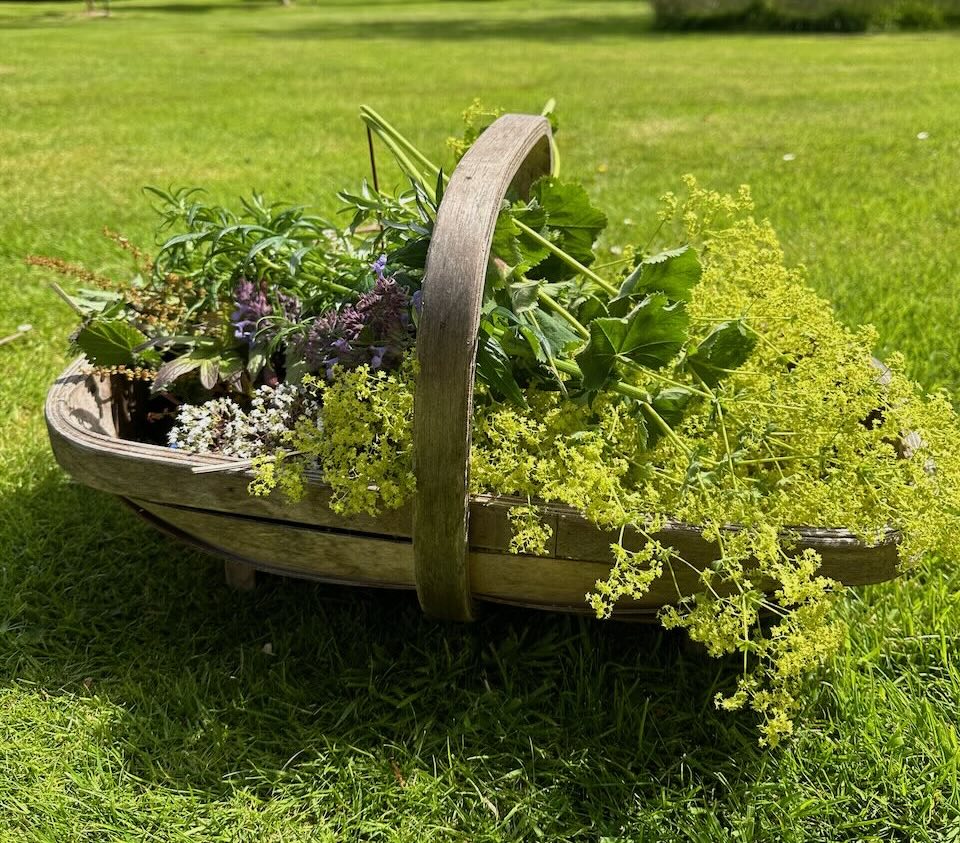
Position scented plants strategically near seating areas, along pathways, around doorways, and anywhere people naturally pause. There’s nothing quite like brushing past rosemary on your way to the back door, releasing that distinctive Mediterranean aroma.
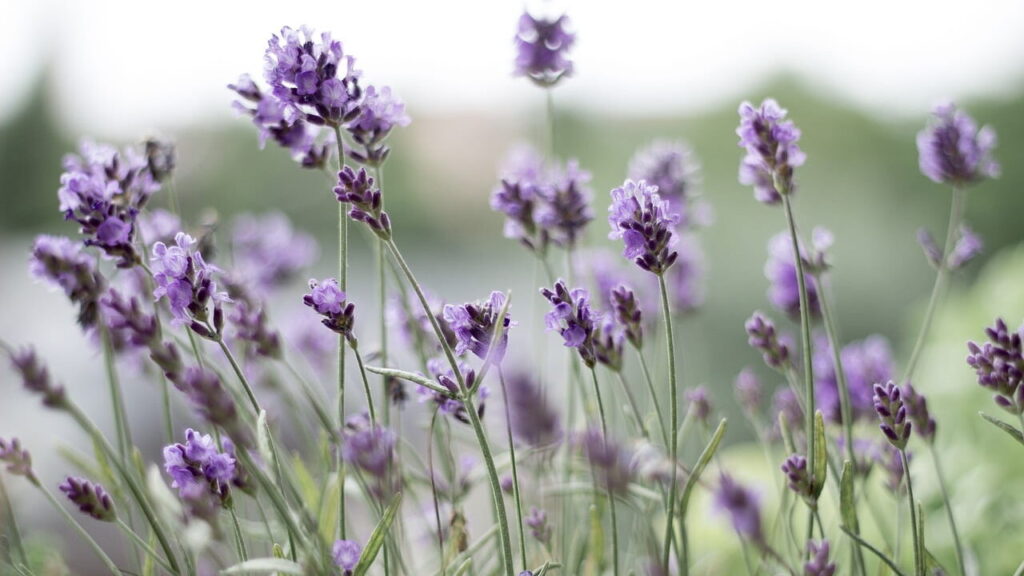
1. Lavender (Lavandula angustifolia)
The absolute classic for sensory gardens with its herbal, slightly sweet, genuinely calming scent. The fragrance releases both as an ambient perfume on warm days and when you touch or brush past the flower spikes. English lavender is the most reliably hardy. Varieties like ‘Hidcote’ and ‘Munstead’ are particularly reliable.
Hardiness: H5 (Hardy to -15°C)
Ultimate Height: 60-90cm
Ultimate Spread: 60-90cm
Best Growing Conditions: Full sun in well-drained soil. Absolutely despises winter wet.
Top Tip: Plant densely along path edges for maximum aromatic impact. Trim back after flowering to maintain compact growth and prevent woodiness. The flowers can be harvested for drying from June through August.
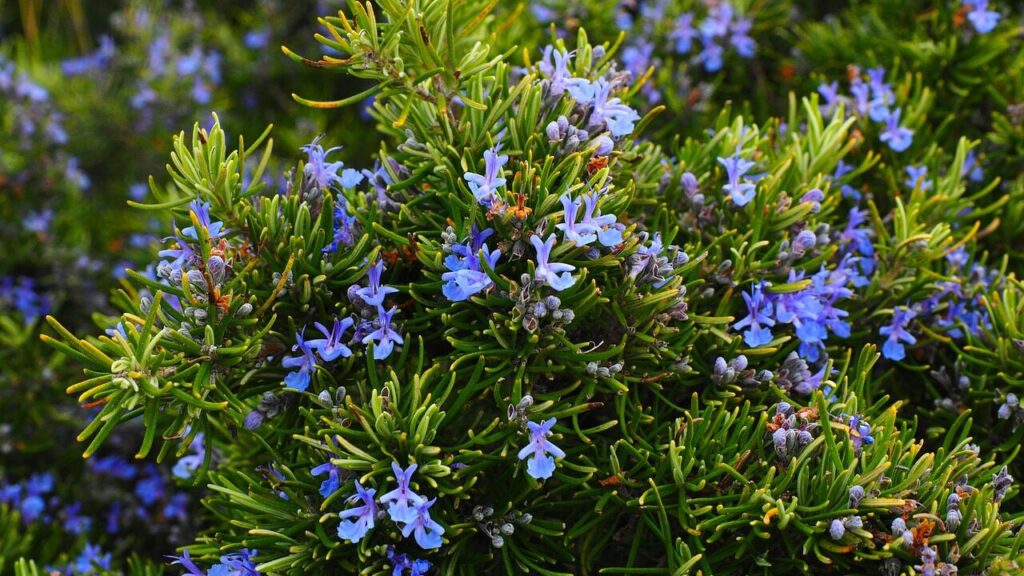
2. Rosemary (Rosmarinus officinalis)
Distinctive, strong, piney, Mediterranean fragrance that releases when you touch or brush past the needle-like leaves. The evergreen foliage is excellent for cooking year-round, and the blue flowers appear mainly in spring, often blooming sporadically throughout the year.
Hardiness: H4 (Hardy to -10°C)
Ultimate Height: 1-1.5m for upright varieties, 30cm for prostrate types
Ultimate Spread: 1-1.5m for upright varieties, spreading for prostrate types
Best Growing Conditions: Full sun in well-drained, alkaline soil. It can be damaged by harsh winds and severe winters.
Top Tip: Brilliantly positioned near doorways, along path edges, or in raised beds where people will naturally touch it. It can be trained as low hedging or left as an informal shrub.
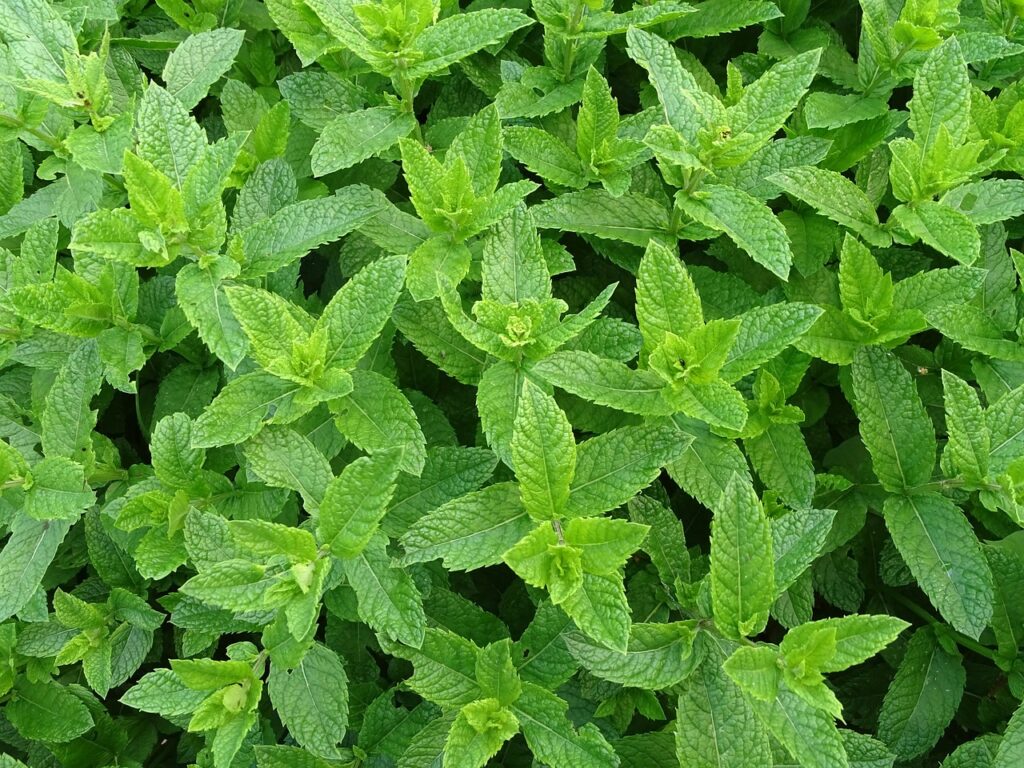
3. Mint (Mentha species)
Fresh, cooling, genuinely invigorating scent when you crush the leaves. The range of varieties is fantastic: peppermint has that strong menthol kick, spearmint is sweeter and gentler, chocolate mint genuinely smells of chocolate, and pineapple mint has fruity overtones.
Hardiness: H5 or better (Hardy to -15°C)
Ultimate Height: 30-60cm
Ultimate Spread: Spreads vigorously via underground runners
Best Growing Conditions: Moist soil in sun to partial shade. Incredibly vigorous.
Top Tip: The critical thing with mint is containment because it spreads like absolute wildfire. Always grow it in containers or use underground barriers. Cut back after flowering to promote fresh leafy growth.
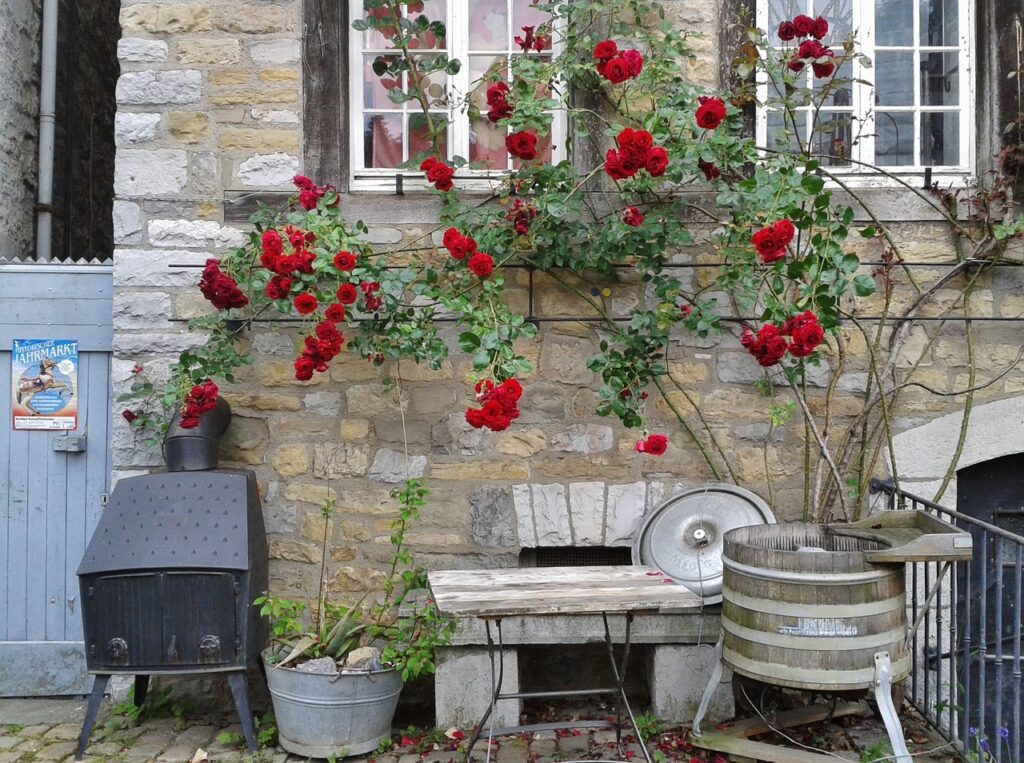
4. Roses (Rosa species, especially English roses)
Range from light and fruity scents to deep and heady perfumes. Not all modern roses are scented, so choose varieties specifically for fragrance. David Austin English roses are particularly reliable. The ambient scent is strongest on warm, still days.
Hardiness: H5-H6 (Hardy to -15°C to -20°C)
Ultimate Height: 90-120cm for bush roses, 3-5m for climbers
Ultimate Spread: 75-90cm for bush roses
Best Growing Conditions: Full sun (at least 4-6 hours daily) in well-drained, fertile soil with good air circulation.
Top Tip: Deadhead regularly to prolong the flowering period. Excellent scented varieties include ‘Gertrude Jekyll’, ‘Munstead Wood’, and ‘The Generous Gardener’. Position where fragrance can be appreciated.
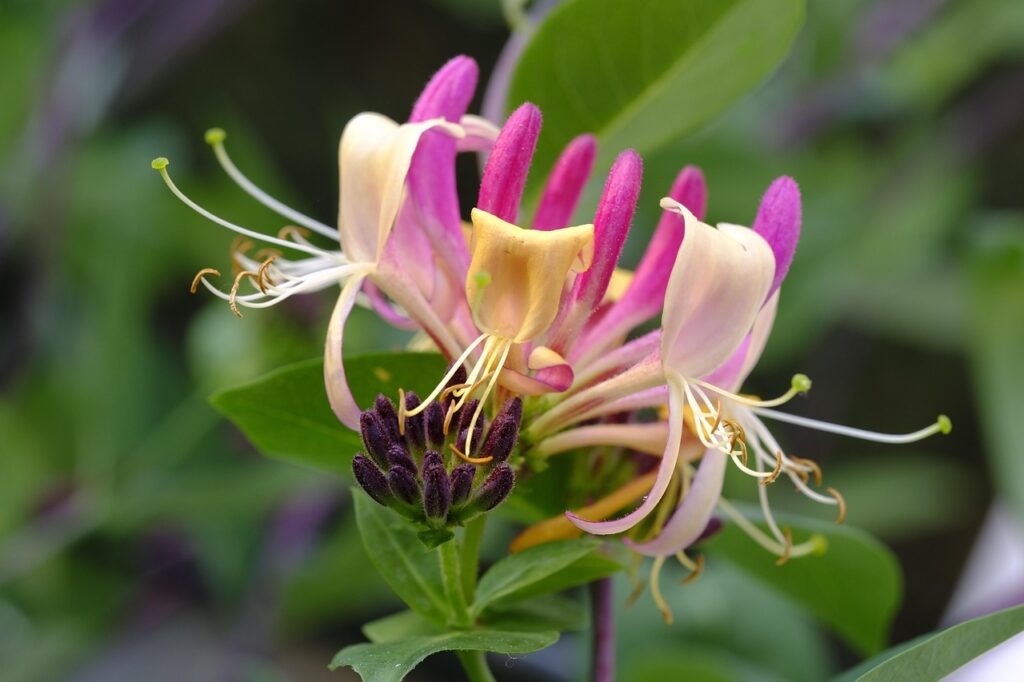
5. Honeysuckle (Lonicera periclymenum)
Intensely sweet fragrance that’s particularly strong in the evening, making it perfect for use near seating areas after work. Our native woodbine is fantastic, with cream to yellow flowers flushed with pink from June through September. The fragrance on a warm summer evening is absolutely intoxicating.
Hardiness: H6 (Hardy to -20°C)
Ultimate Height: 4-7m
Ultimate Spread: 1-2m
Best Growing Conditions: Roots in shade, flowers in sun. Tolerates most soils.
Top Tip: Train on arches, pergolas, walls, or through trees. Varieties like ‘Graham Thomas’ and ‘Serotina’ are particularly good for scent. Prune after flowering to keep it under control.
6. Jasmine (Jasminum officinale)
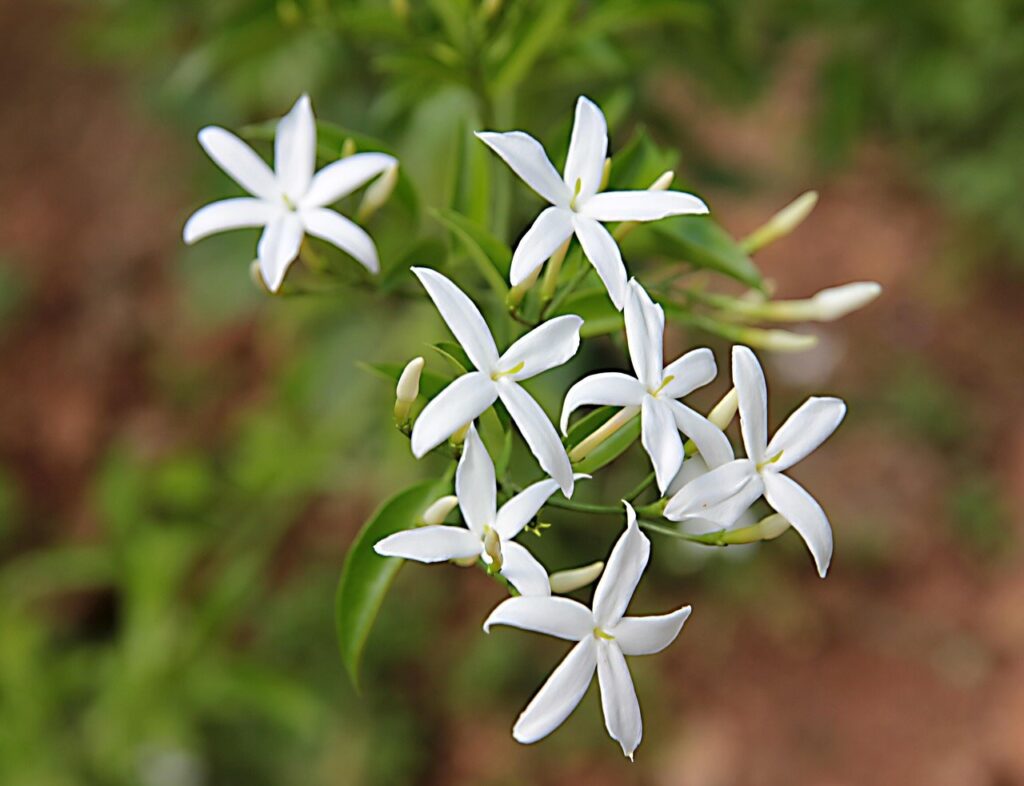
Exotic, sweet, heady fragrance that’s strongest at night, making it brilliant on warm, sheltered walls near seating areas used in the evening. This deciduous or semi-evergreen climber produces masses of white flowers from June through September. The fragrance is genuinely incredible on warm evenings.
Hardiness: H4 (Hardy to -10°C)
Ultimate Height: 8-12m if left unpruned
Ultimate Spread: 2-3m
Best Growing Conditions: Full sun in well-drained soil. Needs a sheltered spot, may lose leaves in harsh winters.
Top Tip: Train on walls, pergolas, or through trees. Needs some support for twining stems. Jasmin can be kept smaller with annual trimming. The perfume is worth the effort of finding the right spot.
7. Thyme (Thymus species)
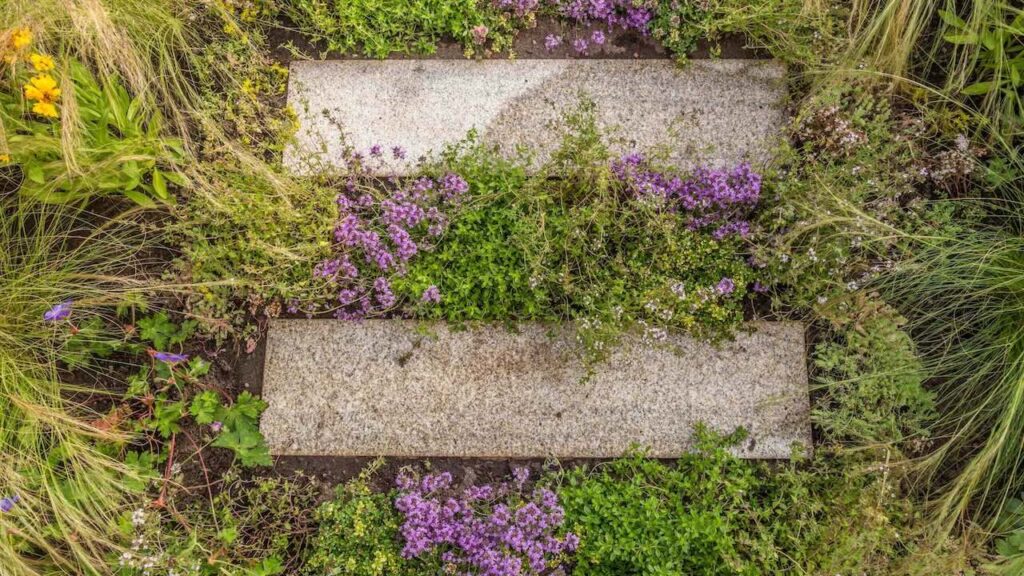
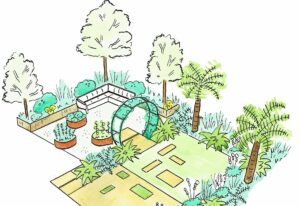
Warm, herbal, Mediterranean scent released when crushed or walked upon. Common thyme grows taller, whilst creeping thyme stays low and is perfect for planting where feet will occasionally tread. Woolly thyme has particularly soft foliage. Bees love the small flowers in summer, and it’s a great one for dry wildlife gardens or beekeepers. I’ve used it in between pathway stepping stones in sensory garden designs as seen below!
Hardiness: H5 (Hardy to -15°C)
Ultimate Height: 5-30cm, depending on species
Ultimate Spread: Spreading to form mats
Best Growing Conditions: Full sun in well-drained soil. Evergreen.
Top Tip: Plant creeping varieties between paving stones where they’ll release scent underfoot. Must have well-drained soil. Tolerates poor, dry soil brilliantly once established.
8. Chamomile (Chamaemelum nobile)
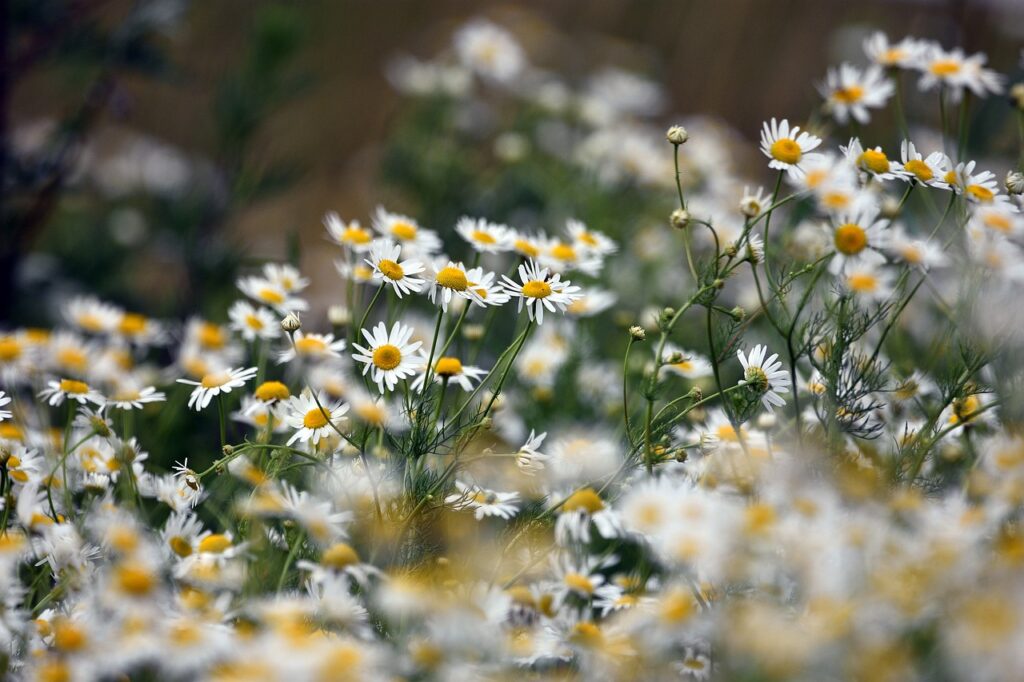
Distinctive apple-like, sweet, soothing scent when trodden upon or touched. The non-flowering variety ‘Treneague’ is used for chamomile lawns, creating fragrant carpets. It releases maximum fragrance when walked on, so it’s perfect for pathways or under seats.
Hardiness: H5 (Hardy to -15°C)
Ultimate Height: 5-30cm, depending on variety
Ultimate Spread: Forming mats
Best Growing Conditions: Full sun in well-drained soil. Evergreen.
Top Tip: Won’t tolerate heavy traffic like grass, but occasional footfall is fine and actually beneficial for releasing scent. Flowering varieties produce daisy-like flowers but are less suitable for walking on.
9. Mock Orange (Philadelphus)
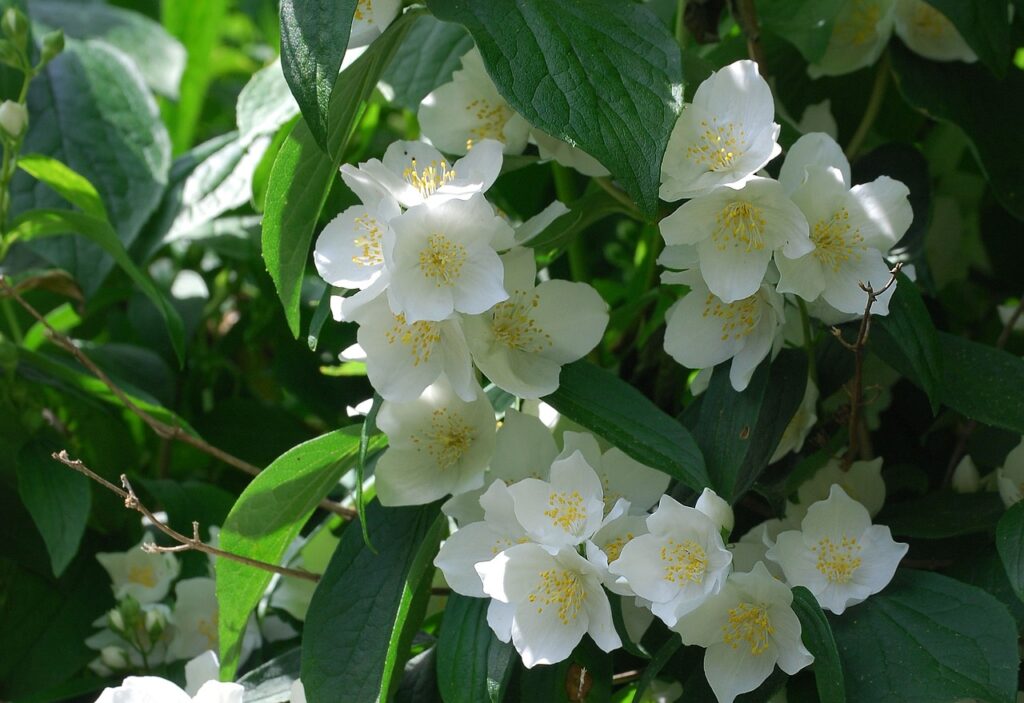
Intense orange blossom fragrance in early summer that carries brilliantly in the air. The white flowers in June and July are absolutely stunning, and the perfume is genuinely heady. The fragrance from just a few flowers can perfume an entire garden.
Hardiness: H6 (Hardy to -20°C)
Ultimate Height: 2-4m, depending on variety
Ultimate Spread: 2-4m
Best Growing Conditions: Full sun to partial shade in any reasonable soil.
Top Tip: Needs space as a specimen shrub or at the back of mixed borders. Prune immediately after flowering by removing some of the oldest stems to ground level. Varieties like ‘Belle Etoile’ and ‘Virginal’ are particularly fragrant.
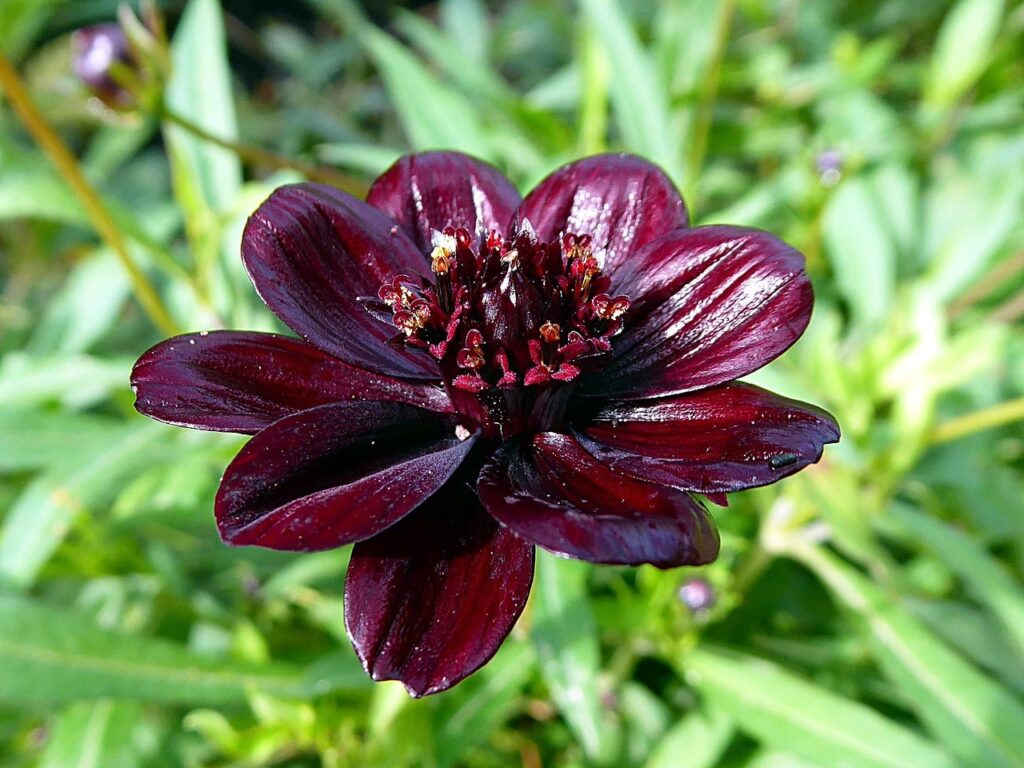
10. Chocolate Cosmos (Cosmos atrosanguineus)
Genuinely smells of chocolate from its dark burgundy, almost black flowers. The scent is strongest in warm sun, so great for south-facing gardens or sun traps. The flowers are also stunning visually, creating a real talking point in the garden.
Hardiness: H3 (Hardy to -5°C)
Ultimate Height: 40-60cm
Ultimate Spread: 30cm
Best Growing Conditions: Full sun in well-drained soil. Needs winter protection in most of UK.
Top Tip: Either lift tubers and store frost-free like dahlias, or mulch heavily and hope for the best. Brilliant in containers near seating, where the unusual chocolate scent can be appreciated. Flowers from July through October.
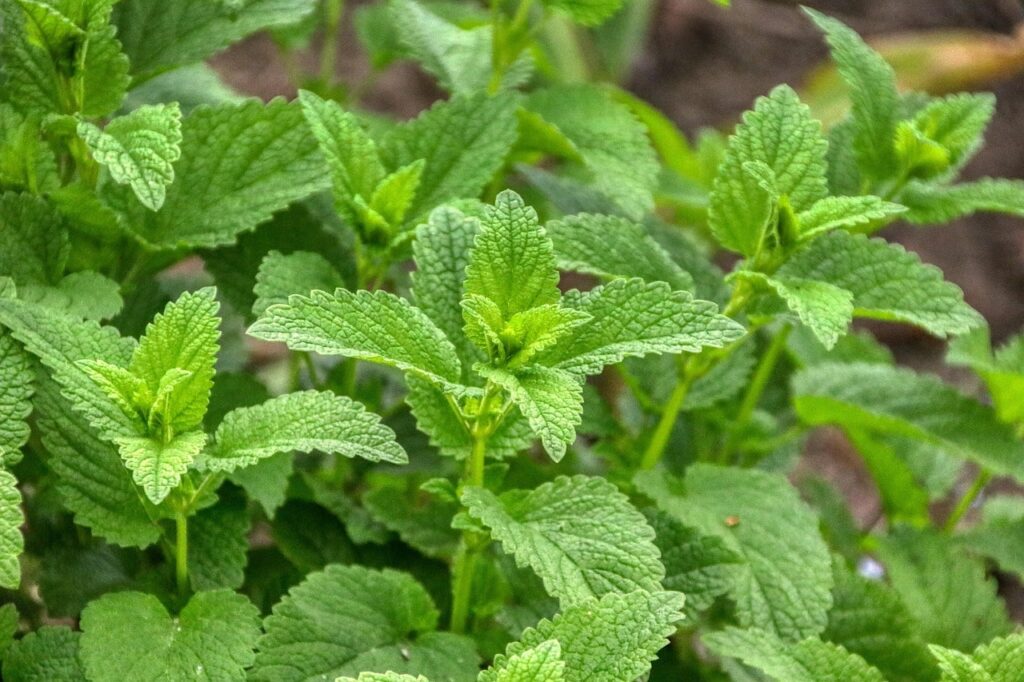
11. Lemon Balm (Melissa officinalis)
Fresh lemon scent when leaves are crushed. The wrinkled leaves look similar to mint and release their citrus fragrance readily when touched. The leaves are excellent for teas and summer drinks.
Hardiness: H5 (Hardy to -15°C)
Ultimate Height: 60-90cm
Ultimate Spread: 45cm
Best Growing Conditions: Sun to partial shade in any reasonable soil.
Top Tip: Can self-seed vigorously and become slightly weedy. Cut back after flowering to promote fresh leafy growth and prevent excessive self-seeding. The variegated form ‘Aurea’ is slightly less vigorous.
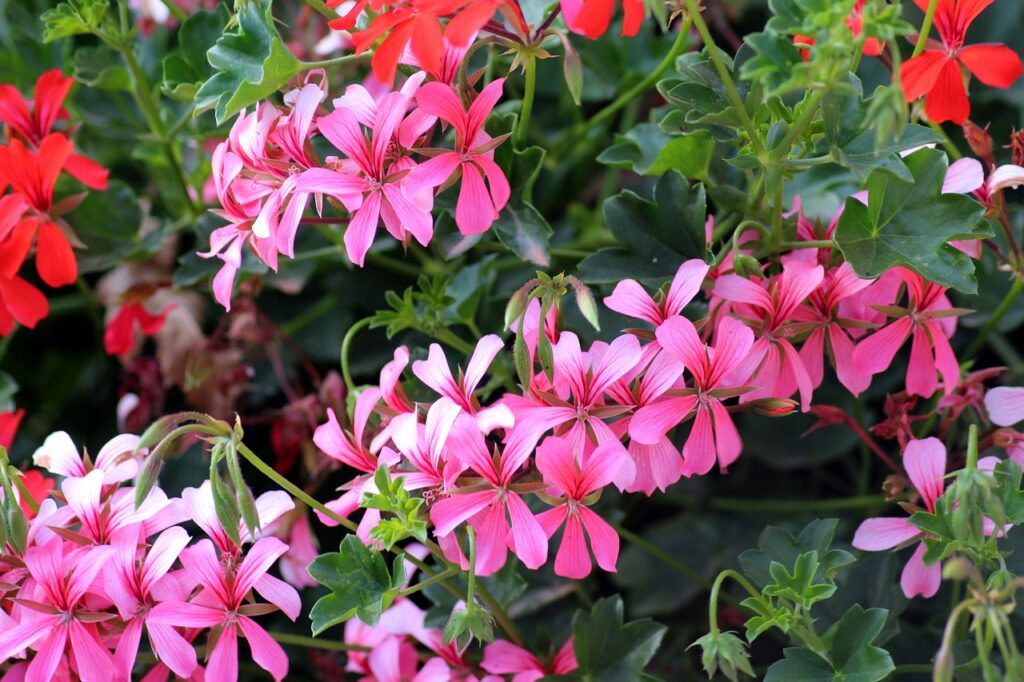
12. Scented Geranium (Pelargonium species)
Incredible range of fragrances released from leaves when touched: lemon, rose, mint, nutmeg, apple and many more. The flowers are attractive but secondary to the fabulous scented foliage. Not to be confused with hardy Geraniums, these are tender plants suitable for warm, clement weather but will need protection from a porch or greenhouse through the winter.
Hardiness: H1c (Not frost hardy)
Ultimate Height: 30-60cm, depending on variety
Ultimate Spread: 30-45cm
Best Growing Conditions: Full sun in well-drained compost. Must be protected over winter.
Top Tip: Position containers near seating, doorways, or paths where leaves can be regularly touched. Overwinter in a frost-free greenhouse or take cuttings in autumn. Varieties like P. ‘Attar of Roses’ and P. tomentosum (peppermint) are excellent.
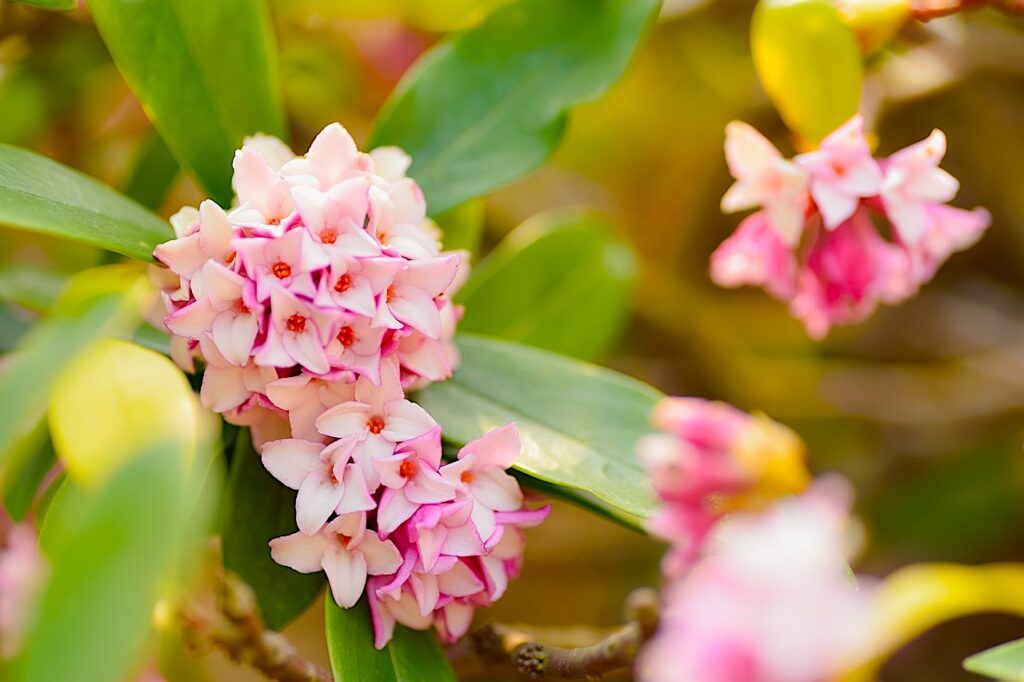
13. Daphne (Daphne bholua, D. odora)
Powerfully sweet fragrance that carries brilliantly on cold winter air. The flowers bloom from January through March, releasing an incredible perfume when little else is in bloom. The fragrance from just a few flowers can perfume an entire garden on even the coldest winter days.
Hardiness: H4 (Hardy to -10°C)
Ultimate Height: 2-3m for D. bholua, 1-1.5m for D. odora
Ultimate Spread: 1.5m
Best Growing Conditions: Well-drained neutral to alkaline soil. Roots in shade, tops in sun.
Top Tip: Fussy about conditions and resent disturbance once established. Position near paths or house entrances where winter fragrance can be appreciated. D. odora benefits from shelter.
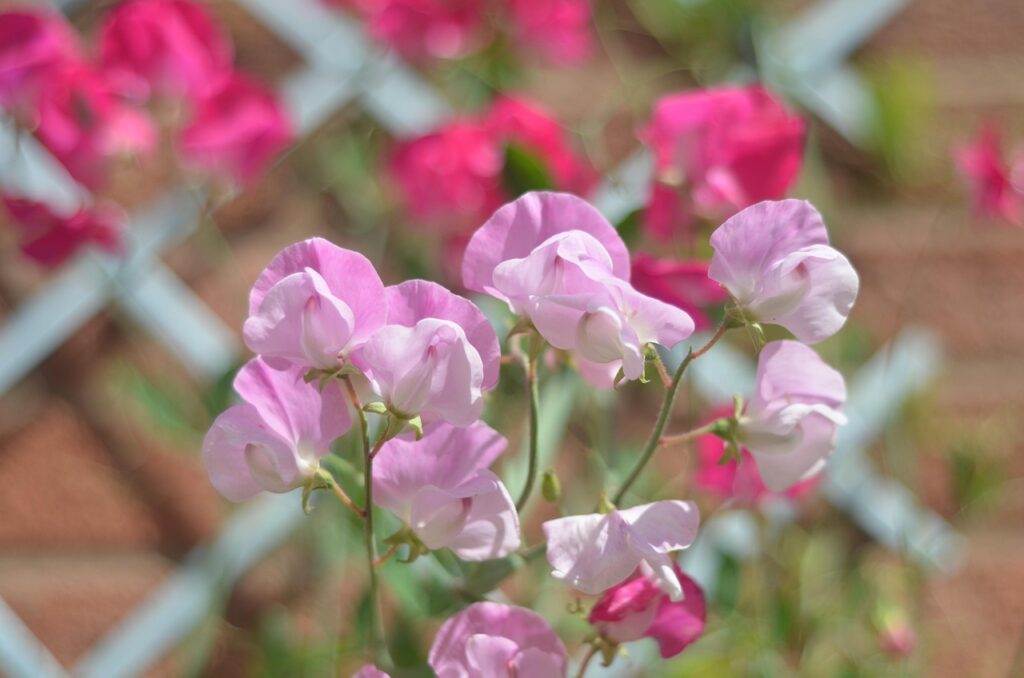
14. Sweet Pea (Lathyrus odoratus)
Delicate, sweet, old-fashioned fragrance, though you must choose scented varieties, as many modern cultivars have been bred for size and colour at the expense of perfume. Spencer varieties and old-fashioned types like ‘Cupani’ are most reliable for scent.
Hardiness: Fully hardy annual
Ultimate Height: 1.5-2m on supports
Ultimate Spread: 30cm
Best Growing Conditions: Full sun in rich well-drained soil. Sow in October to ensure the best flowers the following year.
Top Tip: Train on obelisks, wigwams, or walls. The more you pick, the more flowers you get. Pinch out growing tips when plants are 10cm tall to encourage bushiness. Flowers June through September.
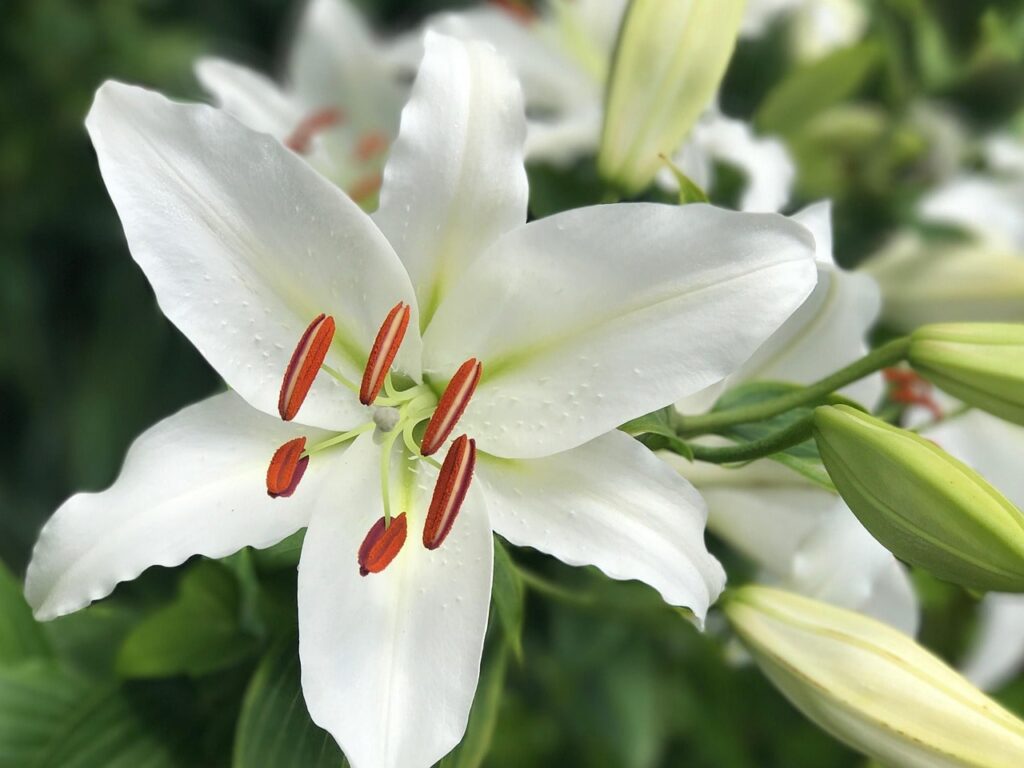
15. Lily (Lilium species, especially Oriental lilies)
Strong, exotic, heady fragrance that can be overwhelming in confined spaces. Oriental lilies, such as ‘Stargazer’ and ‘Casa Blanca’, are wonderfully fragrant. The scent is powerful enough that you might want to position them away from doorways if sensitive.
Hardiness: H4 (Hardy to -10°C)
Ultimate Height: 90-120cm
Ultimate Spread: 30cm
Best Growing Conditions: Full sun to partial shade in well-drained soil. Plant bulbs 15cm deep.
Top Tip: Grow in borders or large containers. Position where fragrance can be appreciated but won’t be overpowering. Asiatic lilies are generally not scented. Flowers July through August.
16. Viburnum (Viburnum x burkwoodii, V. carlesii)
Sweet, spicy fragrance that carries brilliantly on spring air. The clusters of pink buds open to white flowers in March and April. The fragrance from just a few blooms is remarkably powerful and incredibly welcome after winter.
Hardiness: H6 (Hardy to -20°C)
Ultimate Height: 2-3m
Ultimate Spread: 2-3m
Best Growing Conditions: Full sun to partial shade in any reasonable soil.
Top Tip: Position as specimen shrubs or in mixed borders where early fragrance announces spring’s arrival. V. x burkwoodii is semi-evergreen whilst V. carlesii is fully deciduous.
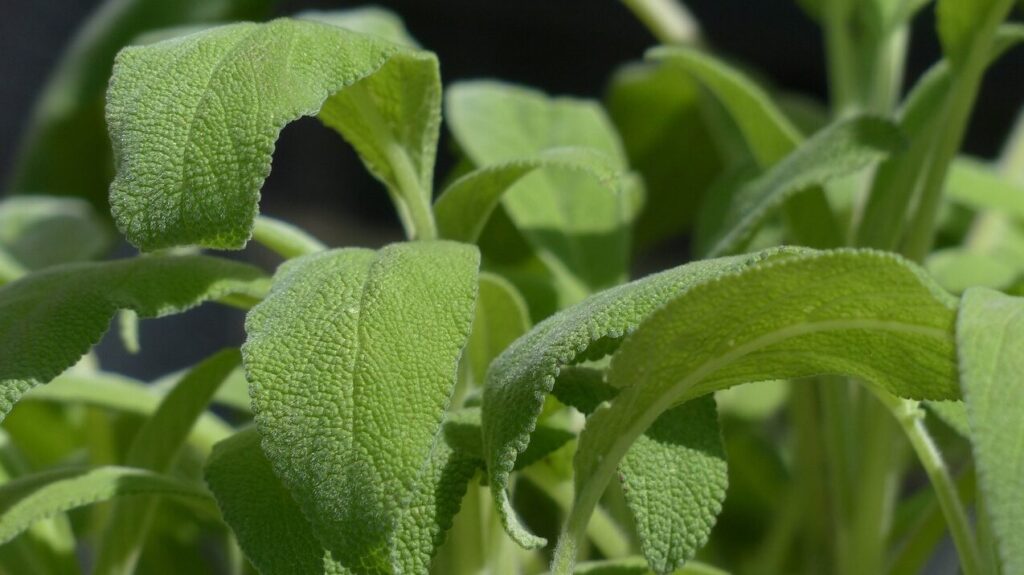
17. Sage (Salvia officinalis)
Strong herbal, slightly peppery scent when the grey-green leaves are touched. The aromatic leaves are excellent for cooking, and the blue-purple flower spikes in summer are loved by bees. Purple sage and tricolour sage are more ornamental.
Hardiness: H5 (Hardy to -15°C)
Ultimate Height: 60-80cm
Ultimate Spread: 60cm
Best Growing Conditions: Full sun in well-drained soil. Evergreen subshrub is great for herb gardens or vegetable patches.
Top Tip: Trim back after flowering to maintain compact growth and prevent woodiness. Replace plants every 4-5 years as they become leggy. Position in herb gardens, sunny borders or gravel gardens.
18. Curry Plant (Helichrysum italicum)
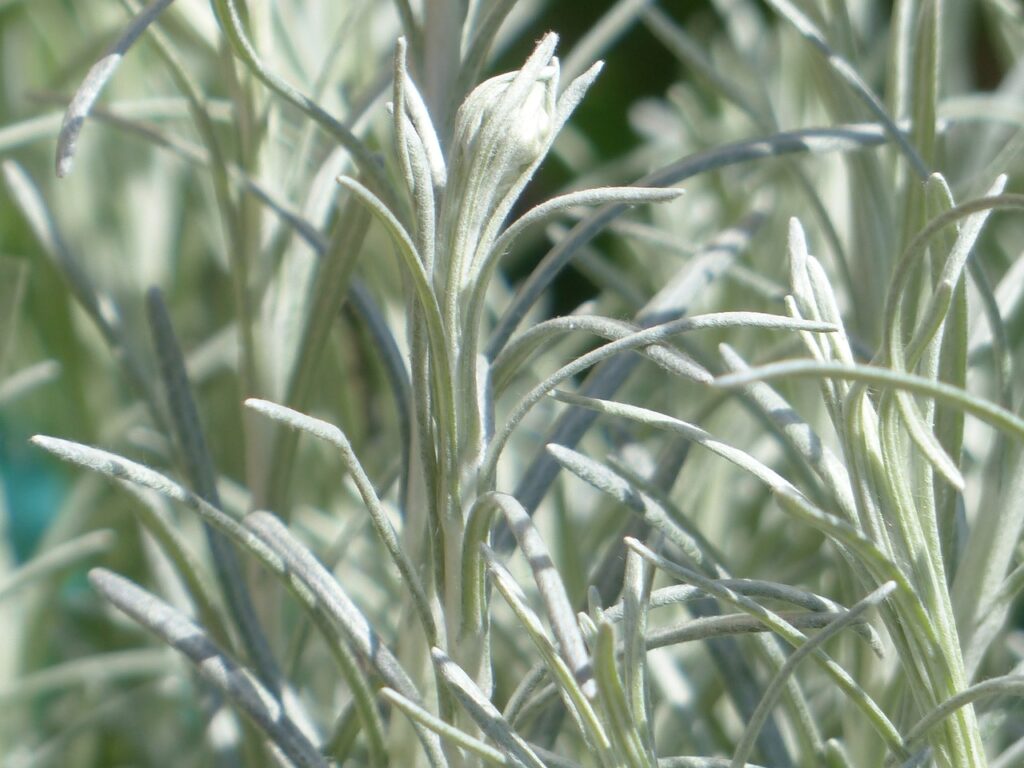
An intense curry aroma emanates from the silver foliage rather than the flowers, which is quite unusual. Just brushing past releases that distinctive smell. The silver foliage is attractive year-round, and the scent is particularly strong on hot days and after rain.
Hardiness: H4 (Hardy to -10°C)
Ultimate Height: 40-60cm
Ultimate Spread: 60cm
Best Growing Conditions: Full sun in sharply drained soil. Evergreen subshrub.
Top Tip: Despite the smell, it’s not edible. Needs full sun and sharp drainage, thriving in poor soil. Trim lightly in spring to maintain compact shape. Small yellow button flowers appear in summer.
Design Tip: Create a scent calendar for your garden. Plan for fragrance throughout the year by selecting plants that flower or release scent in different seasons. Winter scents from daphne and sarcococca are particularly valuable when gardens can feel lifeless.
Sensory Plants for Colour: Visual Impact Throughout Seasons
Colour is usually the first sense that engages us when we enter a garden. In sensory garden design, we’re not just looking for pretty colours, we’re thinking about contrast, brightness, movement, form and how different colours affect mood.
Warm colours like reds, oranges and yellows are energising and draw the eye, promoting activity and excitement.
Cool colours, including blues, purples, and whites, are calming and recessive, encouraging relaxation and tranquillity.
The key is creating balance. A garden that’s entirely hot colours can feel overwhelming and restless. A garden of only cool colours might feel too subdued. I typically design areas with different colour palettes to create distinct moods within the same garden. Perhaps a vibrant children’s play area with bold primary colours, and a separate quiet seating area with soft pastels and silvery foliage.
Don’t forget that colour comes from more than just flowers. Foliage, bark, seed heads, berries and even coloured stems all contribute to your garden’s visual palette. Some of the most striking sensory gardens I’ve designed feature minimal flowers but incredible foliage interest using plants with purple, silver, gold or variegated leaves.
1. Sunflower (Helianthus annuus)
Bright golden yellow flowers with dark centres that are impossible to ignore. The bold architectural form and massive flower heads turning to follow the sun create genuine drama. Brilliant for children’s gardens because they grow so quickly and dramatically. The seed heads provide food for birds in autumn and winter.
Hardiness: Fully hardy annual
Ultimate Height: 30cm-3m+ depending on variety
Ultimate Spread: 30-60cm
Best Growing Conditions: Full sun in any well-drained soil.
Top Tip: Sow direct where they’re to flower in April or May. Stake tall varieties to prevent wind damage. ‘Russian Giant’ reaches massive heights whilst ‘Teddy Bear’ stays compact with fluffy double flowers. Flowers July through September.
2. Coneflower (Echinacea purpurea)
Whether they are white, orange or pink-purple, their petals radiate from orange-brown spiky centres that attract butterflies and other pollinators. The centre cone becomes more prominent as flowers age, providinga contrasting texture. The architectural seed heads provide winter interest, and the flowers are brilliant for cutting.
Hardiness: H6 (Hardy to -20°C)
Ultimate Height: 60-90cm
Ultimate Spread: 45cm
Best Growing Conditions: Full sun in well-drained soil. Remarkably drought tolerant once established.
Top Tip: Deadhead some flowers to prolong blooming but leave others to develop seed heads for birds. Varieties like ‘Magnus’ have particularly large flowers. Divide clumps every 3-4 years. Flowers July through September.
3. Allium (Allium species)
Spherical purple, pink or white pompom flowers held on strong stems, providing architectural interest and movement. The spherical flowers of Alliums are brilliant for cutting and also dry well. They naturalise readily and multiply over time, creating more impact year after year.
Hardiness: H7 (Hardy to -20°C)
Ultimate Height: 30-120cm depending on species
Ultimate Spread: 10-20cm
Best Growing Conditions: Full sun in well-drained soil. Plant bulbs 15cm deep in autumn.
Top Tip: Foliage dies back as flowers emerge, so position between perennials that will hide the fading leaves. ‘Purple Sensation’ reaches 90cm whilst ‘Mont Blanc’ offers white flowers at 120cm. Flowers late spring to early summer.
4. Tulip (Tulipa species)
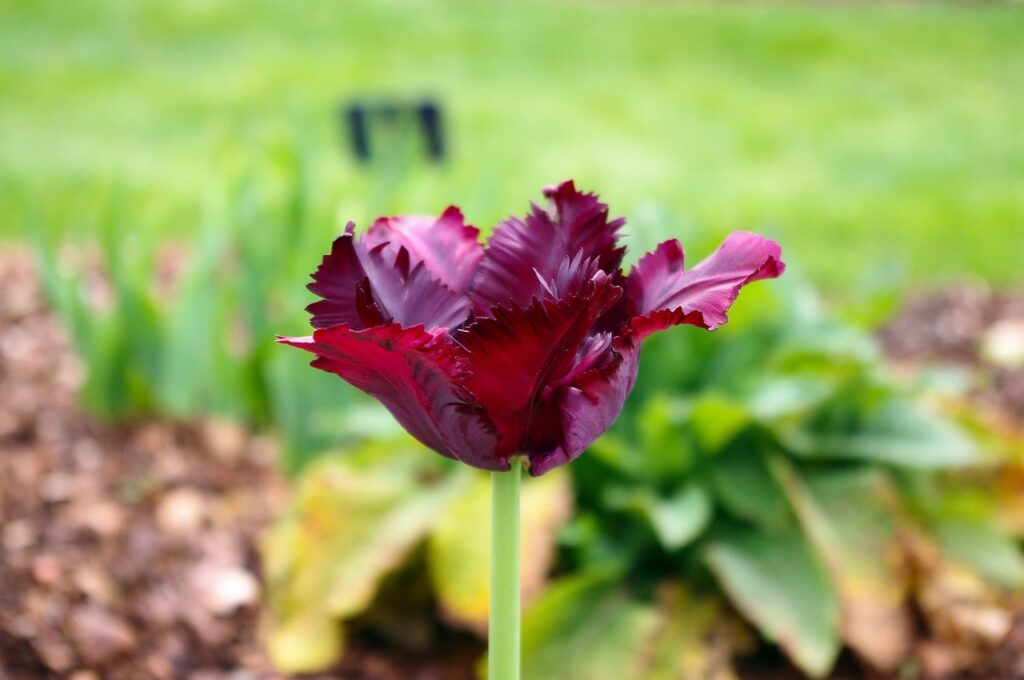
Virtually every colour imaginable, making them perfect for creating bold contrasting combinations or harmonious drifts. Be sure to check out my 60-bulb colour guide, organised by colour, here. Parrot tulips have fringed petals, adding texture, whilst Viridiflora tulips feature green streaking on petals. Early varieties flower in March and April, while late types continue to bloom into May.
Hardiness: H7 (Hardy to -20°C)
Ultimate Height: 20-60cm depending on variety
Ultimate Spread: 10-15cm
Best Growing Conditions: Full sun in well-drained soil. Plant bulbs 15cm deep in November.
Top Tip: Often treated as annuals in borders but will return for several years in well-drained soil. Lift and divide congested clumps every few years. For sensory gardens, choose bold colours that provide maximum visual impact.
5. Zinnia (Zinnia elegans)
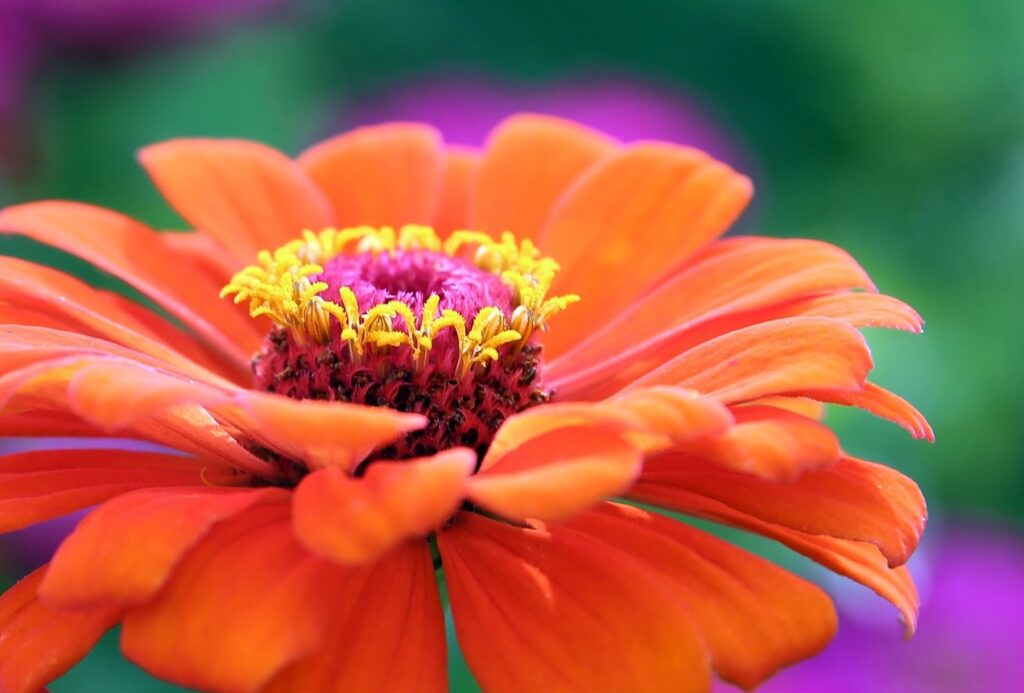
Vibrant colours in red, orange, yellow, pink, purple and white with a long flowering period from July through October. Modern varieties are significantly more resistant to mildew than older types. The flowers attract butterflies and other pollinators and are brilliant for cutting.
Hardiness: H2 (Half-hardy annual, not frost hardy)
Ultimate Height: 30-90cm depending on variety
Ultimate Spread: 30-45cm
Best Growing Conditions: Full sun in well-drained soil.
Top Tip: Sow under cover in April or direct outside after last frost in May. Deadhead regularly to prolong flowering. Zinderella’ series has excellent disease resistance whilst ‘Envy’ offers unusual lime-green flowers.
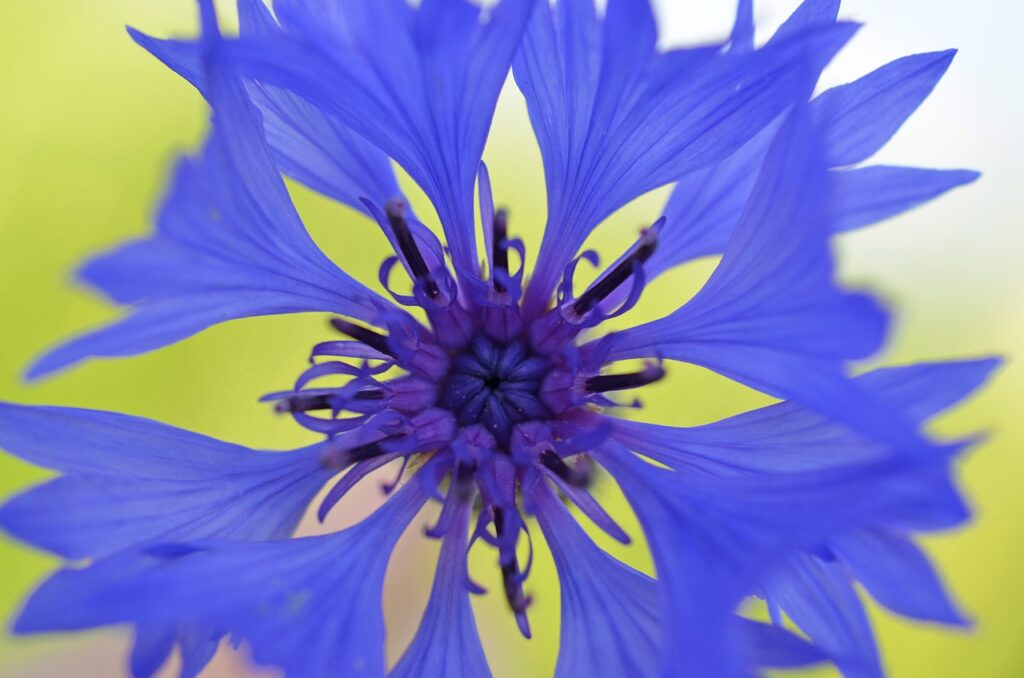
6. Cornflower (Centaurea cyanus)
Intense blue flowers, though pink, white and purple varieties exist. This native wildflower self-seeds enthusiastically, so you’ll only need to plant it once. The flowers are edible and excellent for cutting. Brilliant for wildlife, attracting bees, butterflies and other pollinators.
Hardiness: H7 (Fully hardy annual)
Ultimate Height: 60-90cm (30-40cm for dwarf varieties)
Ultimate Spread: 15-30cm
Best Growing Conditions: Full sun in well-drained soil. Actually performs better in poor soil.
Top Tip: Sow direct in spring or autumn where it’s to flower. Modern dwarf varieties like ‘Blue Boy’ stay compact. Allow some plants to set seed for next year’s display. Flowers June through August.
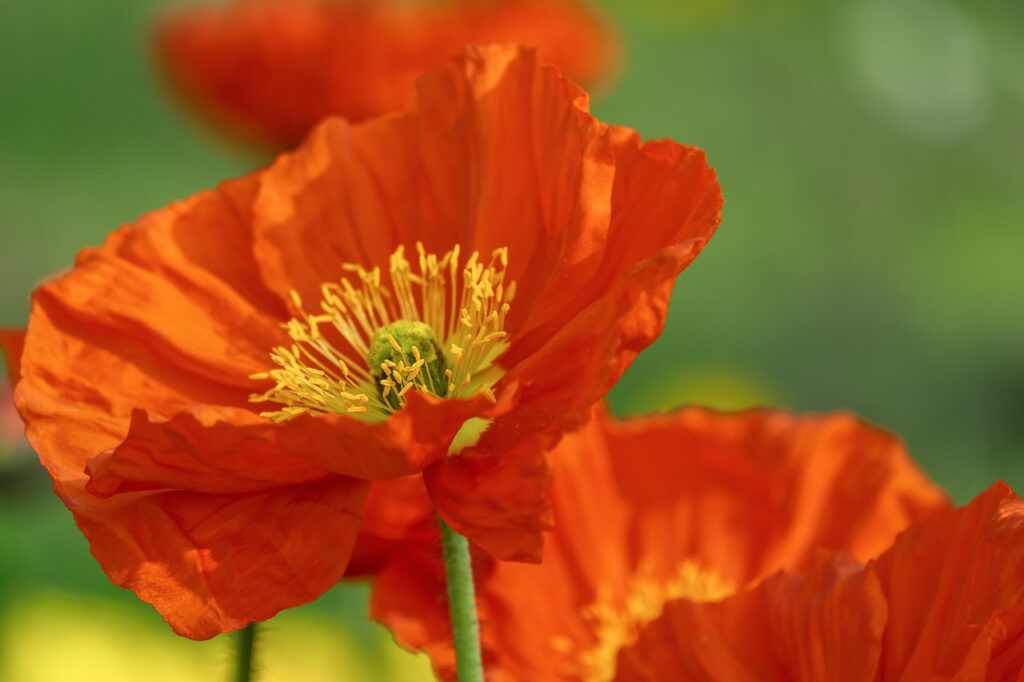
7. Poppy (Papaver rhoeas and P. orientale)
Brilliant reds, oranges, pinks and whites with papery petals that catch light beautifully. Annual field poppies self-seed readily, whilst oriental poppies are perennials with larger, more substantial flowers. Both are brilliant for wildlife and look spectacular in drifts.
Hardiness: H7 (Hardy to -20°C)
Ultimate Height: 30-90cm depending on species
Ultimate Spread: 30-60cm
Best Growing Conditions: Full sun in well-drained soil.
Top Tip: Sow annuals direct in spring or autumn. Oriental poppy seed heads are architectural and excellent for dried arrangements. Foliage dies back after flowering on oriental types, so position where other plants will fill the gap.
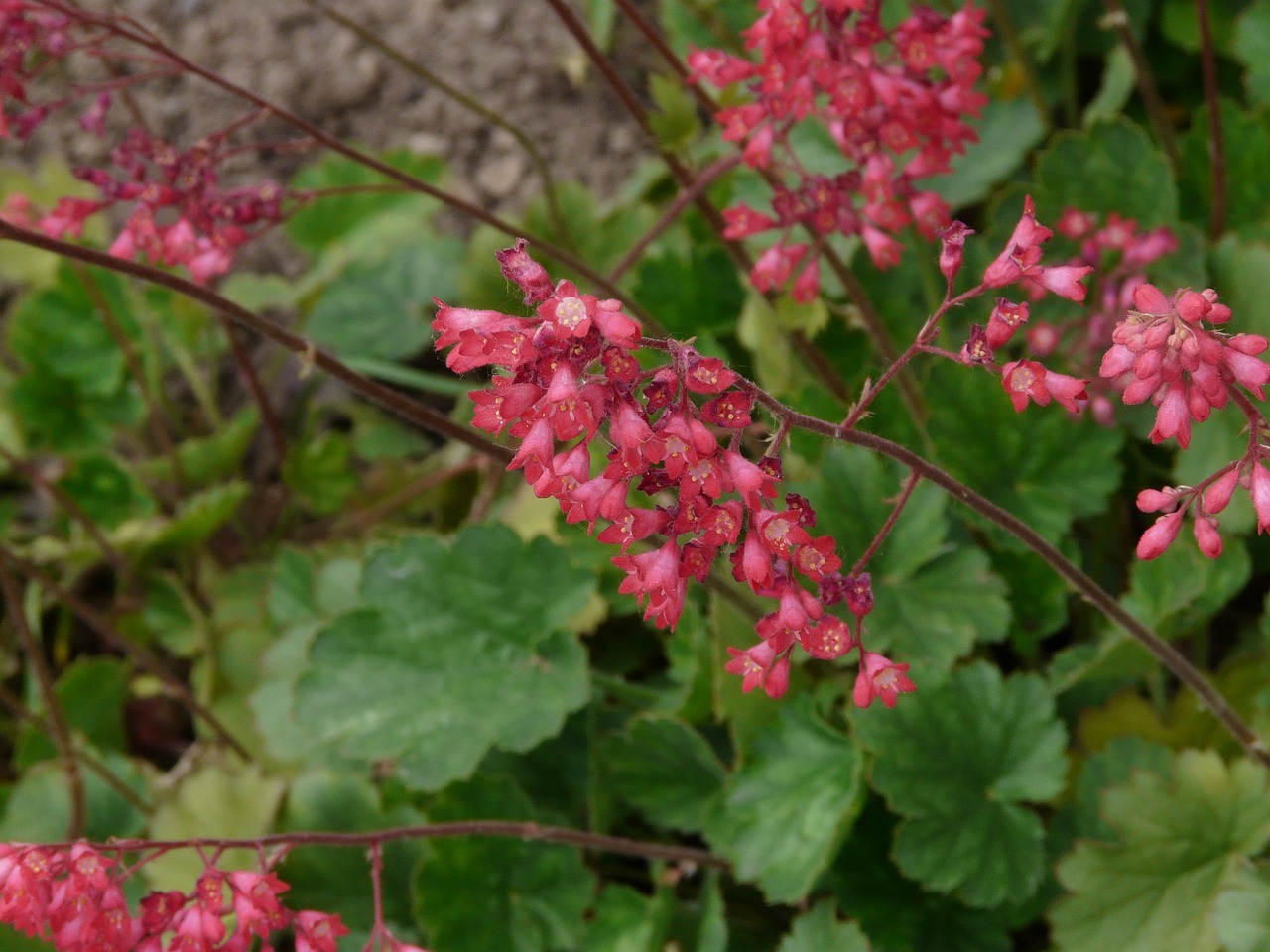
8. Heuchera (Heuchera species and hybrids)
Year-round foliage interest in lime green, burgundy, purple, silver, orange, amber and almost every shade between. The ruffled, often veined leaves form neat mounds. Small flowers appear on wiry stems in summer, but foliage is the main attraction and provides constant colour throughout winter. Watch out for vine weevil grubs, which are the main pest of Heucheras.
Hardiness: H5 (Hardy to -15°C)
Ultimate Height: 30-45cm
Ultimate Spread: 30-45cm
Best Growing Conditions: Sun to partial shade in well-drained soil. Evergreen. Leaf colour often more intense in sun.
Top Tip: Lift and divide every 3-4 years as they become woody at base. ‘Palace Purple’ offers deep burgundy leaves whilst ‘Lime Marmalade’ provides bright chartreuse foliage. Position at front of borders or as edging.
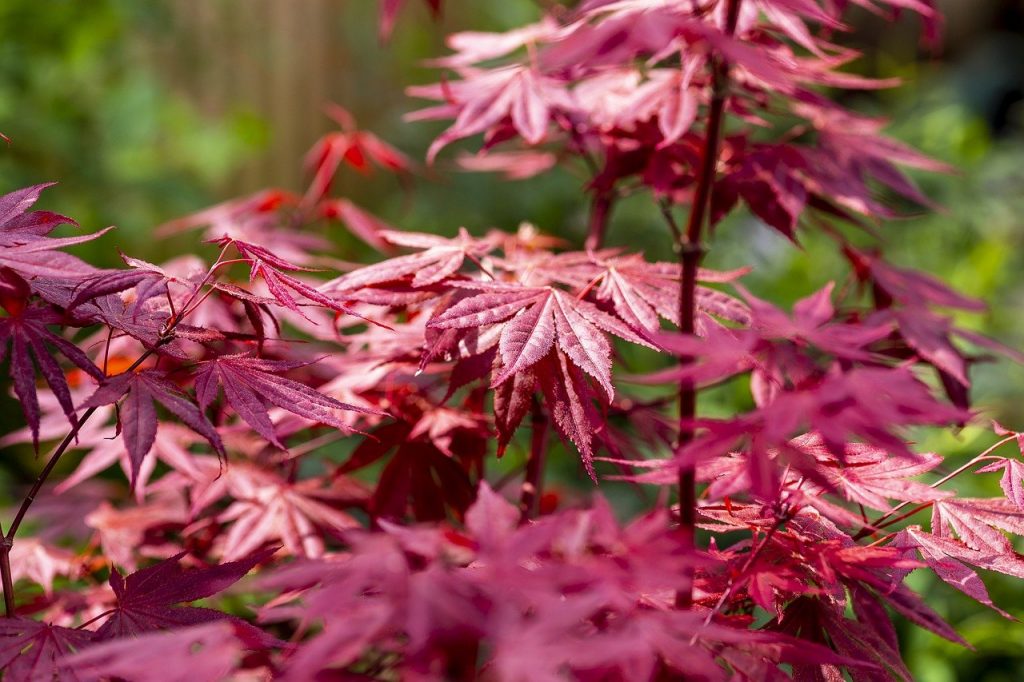
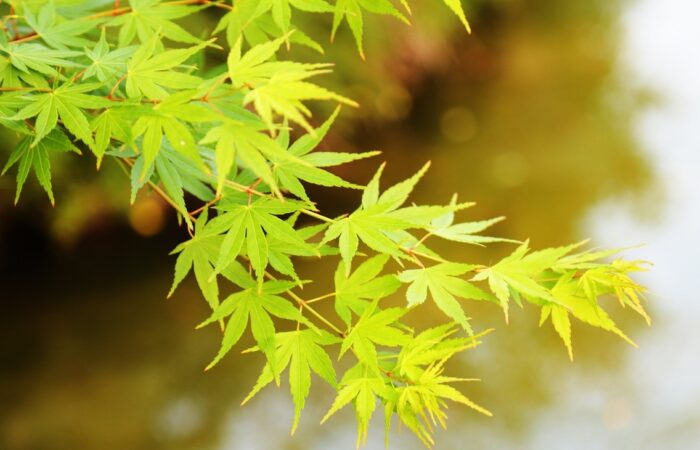
9. Japanese Maple (Acer palmatum)
Foliage ranging from lime green through to deep purple-red with stunning autumn colour. The delicate leaves and elegant branching structure create year-round interest. Purple-leaved varieties maintain colour through summer, whilst green varieties offer red stems for winter interest.
Hardiness: H5 (Hardy to -15°C)
Ultimate Height: 1.5-4m depending on variety
Ultimate Spread: 1.5-4m
Best Growing Conditions: Neutral to acid soil that’s moist but well-drained. Morning sun with afternoon shade produces best leaf colour.
Top Tip: Slow-growing so choose ultimate size carefully. Position as specimen trees with shelter from harsh winds. ‘Bloodgood’ maintains purple colour whilst ‘Sango-kaku’ offers coral bark for winter. Prefer sheltered positions.
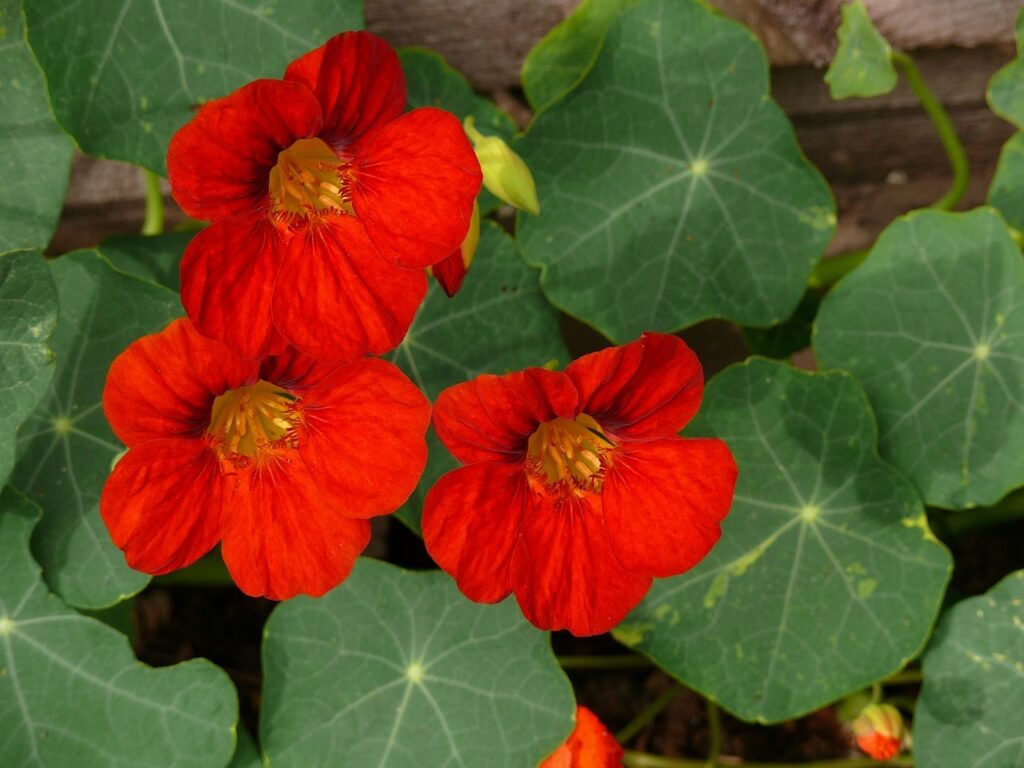
10. Nasturtium (Tropaeolum majus)
Vibrant orange, red and yellow flowers alongside attractive, round lily-pad leaves. Both flowers and leaves are edible with a peppery flavour, brilliant in salads. The flowers attract aphids away from other plants, making them useful companion plants.
Hardiness: H2 (Half-hardy annual, not frost hardy)
Ultimate Height: 30cm for bush types, 3m for trailing varieties
Ultimate Spread: 30-60cm for bush types, spreading for trailing
Best Growing Conditions: Full sun in poor, well-drained soil. Actually flowers better in poor soil.
Top Tip: Sow direct in April or May. Rich soil produces leaves at expense of flowers. Deadhead regularly to prolong flowering. Self-seeds readily. ‘Alaska’ has attractive cream-splashed foliage. Flowers June through October.
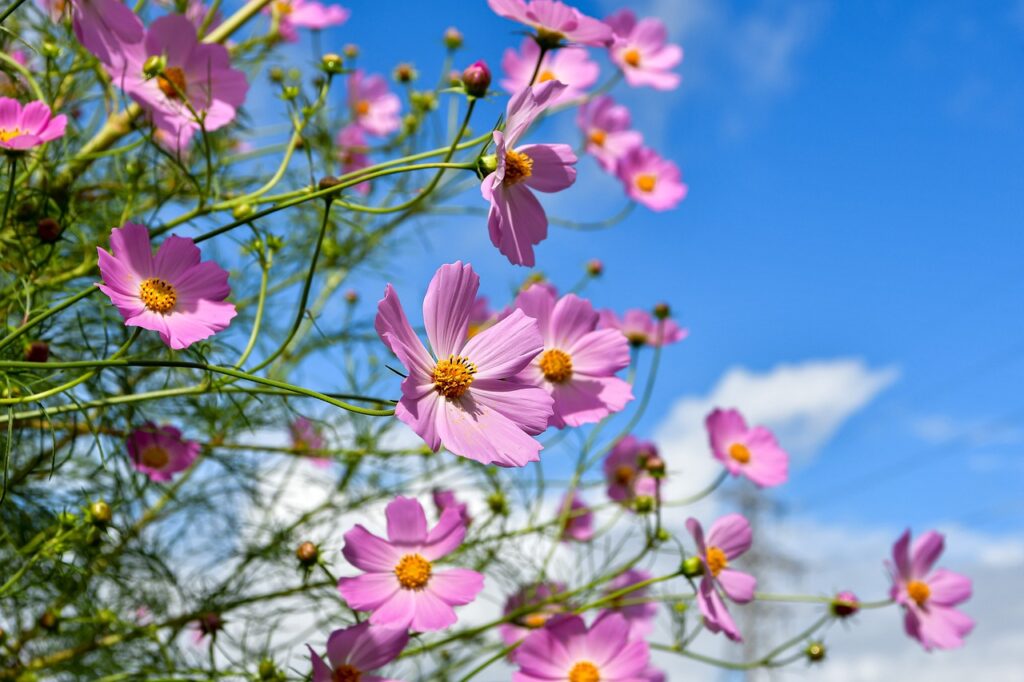
11. Cosmos (Cosmos bipinnatus)
Pink, white or purple flowers on delicate stems that move beautifully in even the gentlest breeze. The ferny foliage adds texture. The flowers attract butterflies, bees and hoverflies. Self-seeds readily and often returns year after year.
Hardiness: H2 (Half-hardy annual, not frost hardy)
Ultimate Height: 60-120cm depending on variety
Ultimate Spread: 30-45cm
Best Growing Conditions: Full sun in well-drained soil.
Top Tip: Sow under cover in April or direct outside in May. Deadhead regularly or cut for the vase to prolong flowering. ‘Purity’ offers pure white flowers whilst ‘Sensation Mixed’ provides the full colour range. Flowers July through October.
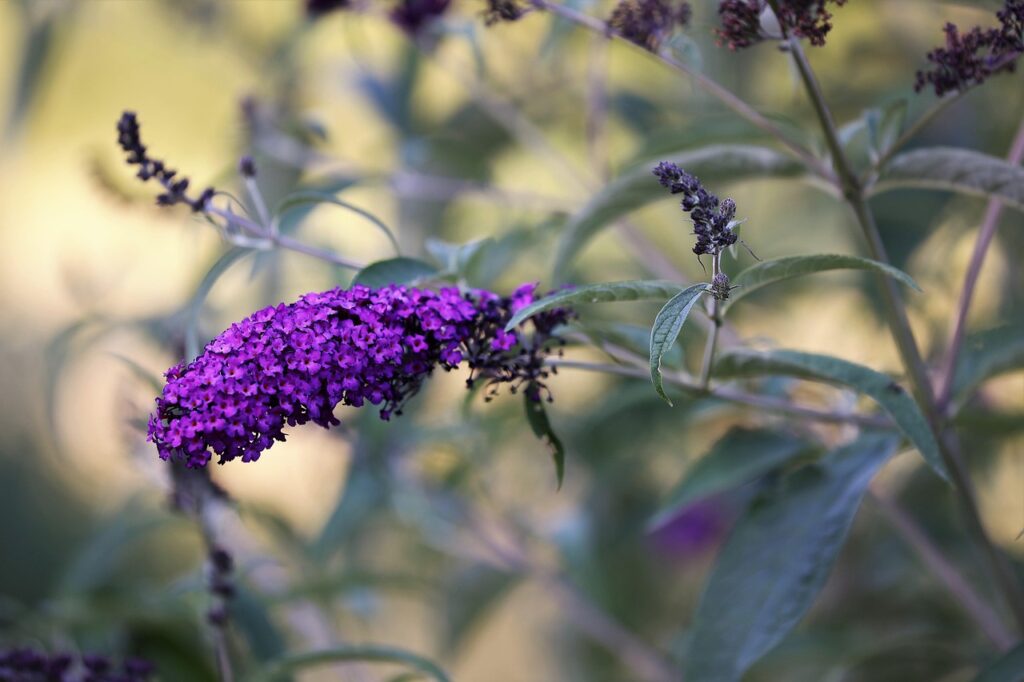
12. Buddleja (Buddleja davidii)
Buddleja has distinct, long flower spikes in purple, pink, white or yellow that are absolute butterfly magnets in summer. The common name butterfly bush is completely justified; on sunny days, the flowers will be covered in butterflies and bees. The fragrance is pleasant though not overpowering.
Hardiness: H6 (Hardy to -20°C)
Ultimate Height: 2-3m if unpruned
Ultimate Spread: 2-3m
Best Growing Conditions: Full sun in well-drained soil.
Top Tip: Hard prune to 30-60cm in early spring to maintain compact size and encourage flowering on new wood. ‘Black Knight’ offers deep purple flowers whilst ‘White Profusion’ provides pure white spikes. Deadhead spent flowers. Flowers July through September.
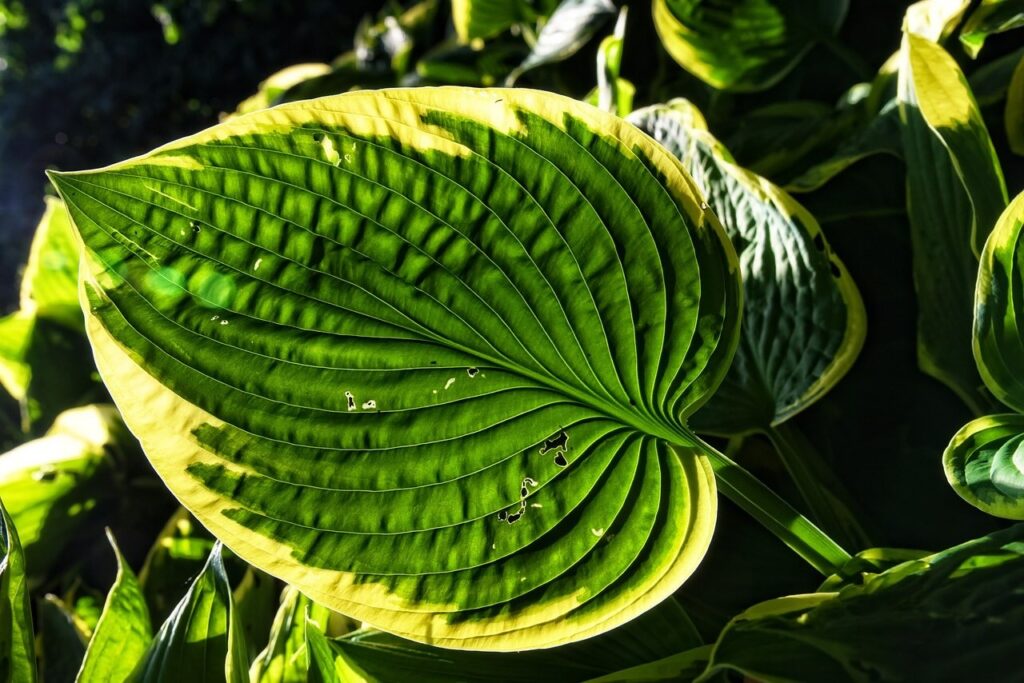
13. Hosta (Hosta species)
Foliage ranging from blue-green through to gold with many stunning variegated forms featuring cream, white or yellow markings. The ribbed leaves of Hostas provide texture, and the flower spikes in summer attract bees. Brilliant for adding colour to shaded sensory gardens where flowering plants struggle.
Hardiness: H7 (Hardy to -20°C)
Ultimate Height: 30-90cm depending on variety
Ultimate Spread: 60-120cm
Best Growing Conditions: Shade to partial shade in moist, well-drained soil. Foliage dies back completely in winter.
Top Tip:Slugs and snails absolutely love hostas, so protection is essential. ‘Halcyon’ offers powder-blue leaves whilst ‘Sum and Substance’ provides massive gold-green foliage. Position where bold leaves can be appreciated with wind protection.
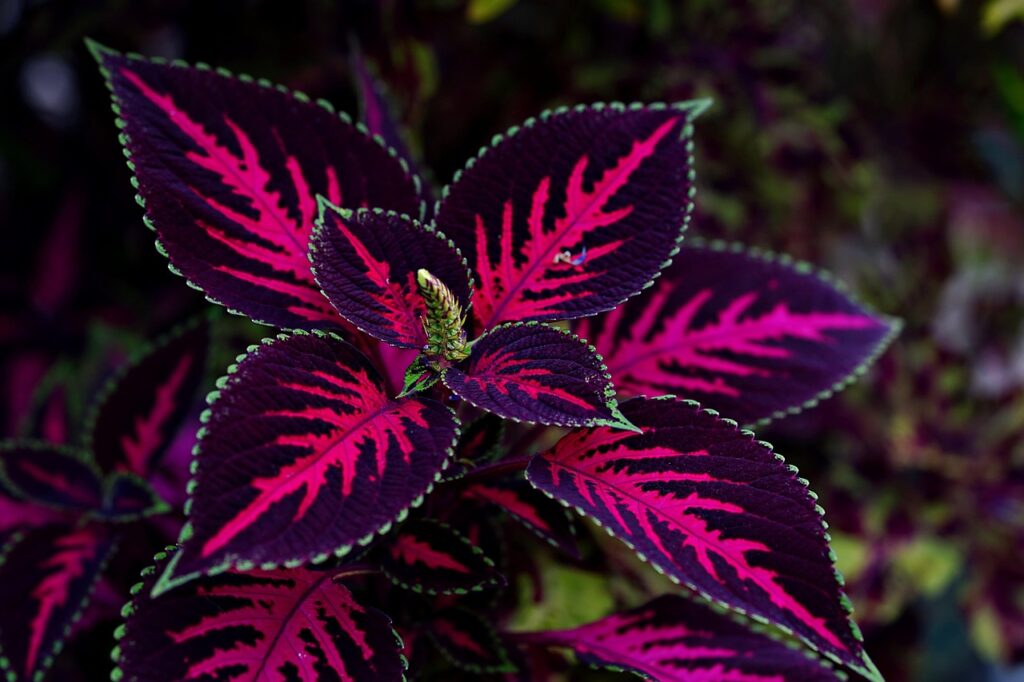
14. Coleus (Solenostemon scutellarioides)
Incredibly vibrant foliage in combinations of red, orange, yellow, purple, green and pink. The leaves are the main attraction with intricate patterns and colour combinations. Modern varieties are more compact and heat-tolerant than older types.
Hardiness: H1c (Not frost hardy)
Ultimate Height: 30-60cm
Ultimate Spread: 30-45cm
Best Growing Conditions: Sun to partial shade in moist soil. The more sun, the more intense the leaf colours.
Top Tip: Plant out after the last frost in late May. Pinch out growing tips to encourage bushiness and remove flower spikes to maintain foliage quality. Take cuttings in autumn to overwinter frost-free. Brilliant in containers for summer colour.
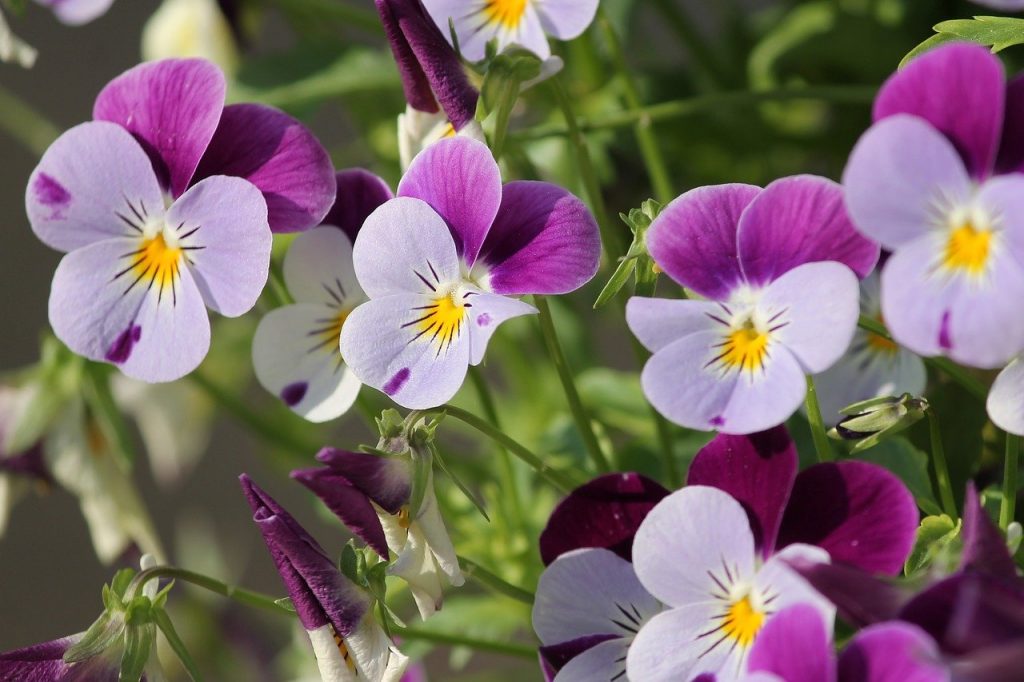
15. Pansy (Viola x wittrockiana)
Cheerful faces in virtually every colour imaginable, with long flowering periods. Winter-flowering pansies bloom from autumn through spring, whilst summer varieties flower from May through September. The flowers are edible and make attractive cake decorations.
Hardiness: H3-H4 depending on variety (Hardy to -5°C to -10°C)
Ultimate Height: 15-23cm
Ultimate Spread: 23-30cm
Best Growing Conditions: Sun to partial shade in moist but well-drained soil.
Top Tip: Deadhead regularly to prolong flowering. Universal series pansies flower almost continuously throughout the year. Brilliant for containers, edging, and filling gaps. Provide essential colour when little else is performing.
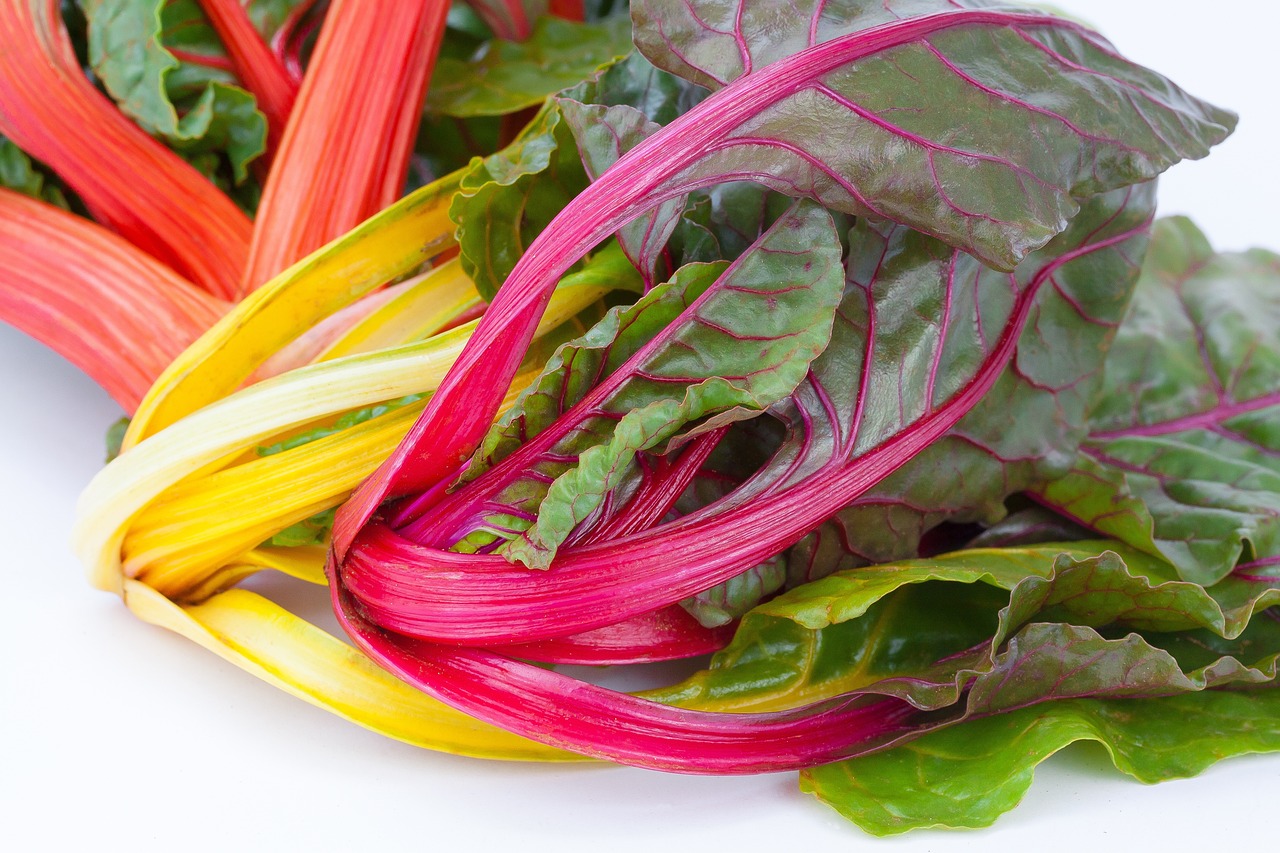
16. Swiss Chard (Beta vulgaris ‘Bright Lights’)
Stems in vibrant red, orange, yellow, pink, and white, with large, glossy green leaves. An ornamental vegetable that’s as beautiful as any flower, whilst also being delicious to eat. The colourful stems are particularly striking when backlit by low sun.
Hardiness: H4 (Hardy to -10°C)
Ultimate Height: 45-60cm
Ultimate Spread: 30-45cm
Best Growing Conditions: Full sun to partial shade in any reasonable soil. Annual or biennial vegetable.
Top Tip: Sow direct in April through July for succession. Harvest leaves from outside, allowing the plant to continue growing. Regular picking encourages fresh growth and prevents bolting. Brilliant for children’s sensory gardens combining colour, food and education.
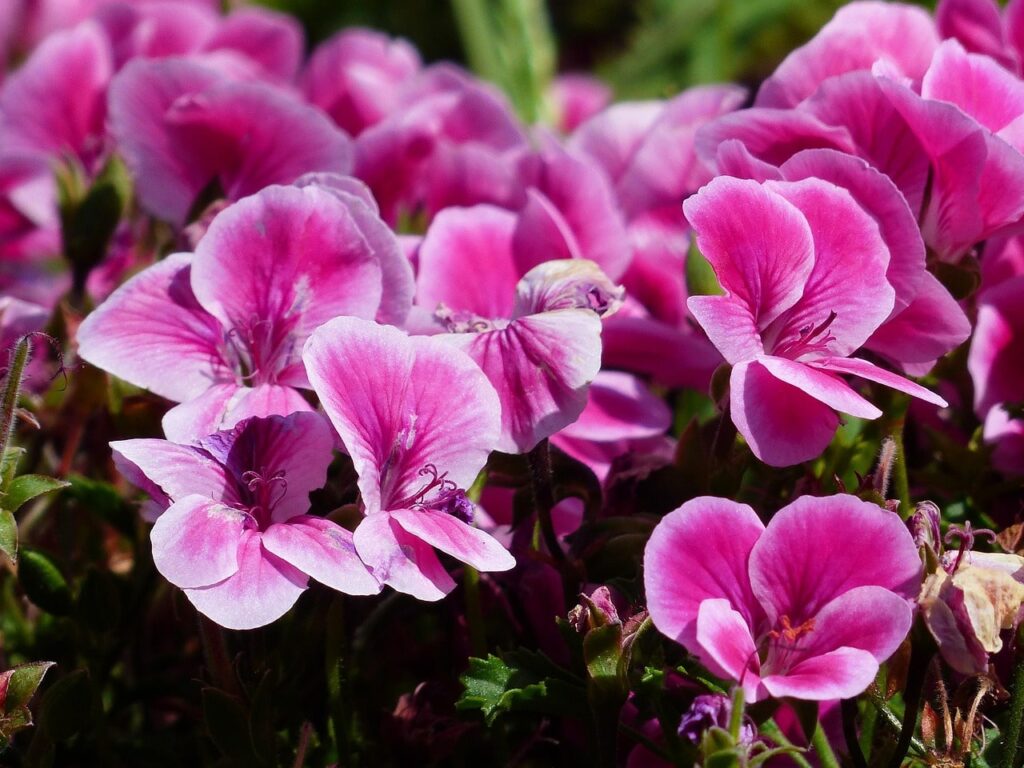
17. Pelargonium (Pelargonium species)
Flowers in red, pink, purple, white and orange, often with scented foliage as a bonus. Zonal pelargoniums have rounded flower heads, whilst regal types have larger ruffled flowers. Scented-leaved varieties offer additional sensory interest with foliage that smells of lemon, rose or mint.
Hardiness: H1c (Not frost hardy)
Ultimate Height: 30-60cm
Ultimate Spread: 30-45cm
Best Growing Conditions: Full sun in well-drained compost.
Top Tip: Plant out after the last frost. Flowers continuously from June through October. Deadhead regularly to prolong flowering. Overwinter in frost-free conditions or take cuttings in late summer. Brilliant for containers near seating.
18. Hydrangea (Hydrangea macrophylla)
Large flower heads in blue, pink, white or purple, depending on soil pH. Acid soils produce blue flowers whilst alkaline soils give pink Hydrangeas. Mophead varieties have spherical flower head,s whilst lacecap types have flatter flowers. The flowers can be left on through winter for interest.
Hardiness: H5 (Hardy to -15°C)
Ultimate Height: 1-2m
Ultimate Spread: 1-2m
Best Growing Conditions: Sun to partial shade in moist, well-drained soil enriched with organic matter.
Top Tip: Prune in spring by removing old flower heads and dead or weak stems. For blue flowers on alkaline soil, add aluminium sulphate. Brilliant for providing substantial blocks of colour. Flowers July through September.
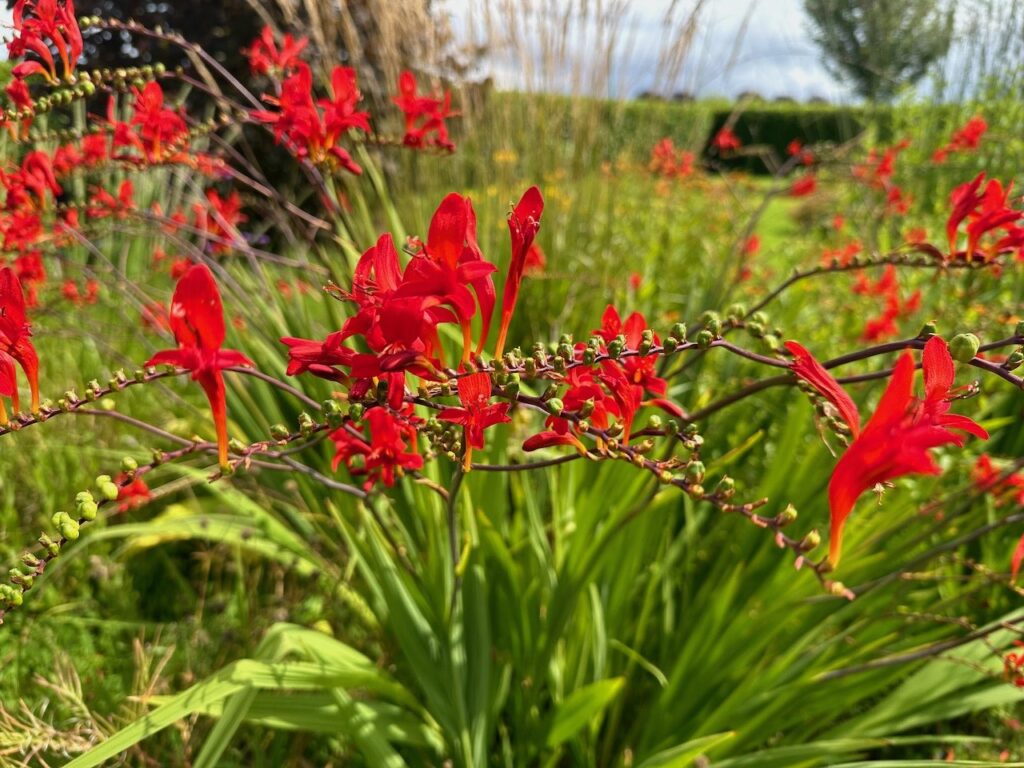
19. Crocosmia (Crocosmia species)
Arching stems of orange, red or yellow flowers with sword-like foliage that provides structure. The flowers attract hummingbird hawk-moths. The corms multiply rapidly, and clumps become congested, creating a greater impact but eventually requiring division every few years.
Hardiness: H5-H6 depending on variety (Hardy to -15°C to -20°C)
Ultimate Height: 60-120cm depending on variety
Ultimate Spread: 30cm
Best Growing Conditions: Full sun to partial shade in well-drained soil.
Top Tip: Lift and divide every 3-4 years. ‘Lucifer’ offers intense red flowers reaching 120cm whilst ‘Emily McKenzie’ stays smaller with orange flowers marked with red. The seed heads provide winter interest. Flowers July through September.
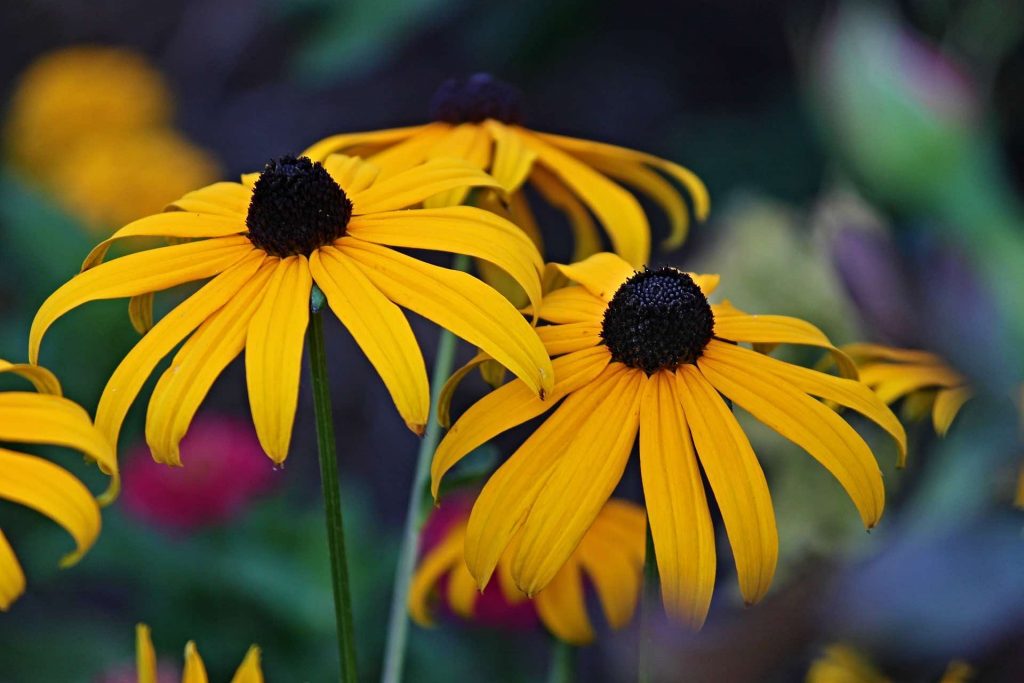
20. Rudbeckia (Rudbeckia fulgida)
Golden yellow petals radiating from dark brown to black centres, flowering prolifically from July through October. The variety ‘Goldsturm’ is particularly notable for its profusion of flowers and compact growth. The flowers attract butterflies, bees and other pollinators.
Hardiness: H7 (Hardy to -20°C)
Ultimate Height: 60-90cm
Ultimate Spread: 45cm
Best Growing Conditions: Full sun to partial shade in most soils. Remarkably tolerant of clay and copes with short dry periods.
Top Tip: Deadhead to prolong flowering or leave seed heads for birds and winter structure. Divide congested clumps every 3-4 years in spring. Brilliant for providing reliable late-season colour when many other plants are fading.
Colour Combination Tips: Create contrast by pairing complementary colours: purple with yellow, orange with blue, red with green. For a more harmonious feel, use analogous colours that sit next to each other on the colour wheel: blues with purples, oranges with yellows, pinks with purples. Don’t underestimate the power of foliage. Silver and grey plants like artemisia, lavender and stachys make brilliant buffers between strong colour clashes.
Adding Sound to Your Sensory Garden
Sound is often overlooked in garden design, but it’s absolutely crucial for creating a truly immersive sensory experience. Natural sounds like rustling leaves, buzzing pollinators and birdsong create a calming backdrop that helps us disconnect from urban noise and stress.
Ornamental grasses are your best friends for creating sound. Their foliage whispers and susurrates in even the gentlest breeze. Bamboo creates a completely different sound, more of a hollow rattle as the canes knock together. Seed heads provide interest, too.
Honesty (Lunaria annua) develops papery seed pods that rustle in autumn winds. Love-in-a-mist seed pods rattle when shaken, which children absolutely love.
Water features create lovely trickling or splashing sounds. Even a small bubble fountain provides surprising auditory interest. Position these near seating areas where people can properly appreciate them. Bird feeders and bird baths encourage wildlife, bringing the bonus of birdsong to your garden.
Don’t forget about the sounds your own feet make. Gravel crunches satisfyingly. Fallen leaves rustle and crackle. Wooden decking has its own resonance. Varying your path surfaces creates different acoustic experiences throughout your garden journey.
Engaging Taste: Edible Elements in Sensory Gardens
Growing edible plants in sensory gardens serves multiple purposes. Obviously, there’s the taste experience itself, but many edibles are also visually attractive, fragrant and texturally interesting. Cherry tomatoes are perfect little taste explosions. Strawberries are sweet treats growing at child height. Fresh herbs provide fragrance, flavour and fascinating foliage all in one package.
If designing for children or vulnerable adults, clearly separate edible from non-edible plants. Create a designated edible area, or use containers specifically for food plants. Labels help enormously. Never assume someone will instinctively know what’s safe to eat.
The connection between growing food and eating it is incredibly valuable, especially for children. There’s something magical about picking a sun-warm strawberry and eating it immediately. That’s sensory gardening at its absolute finest.
Maintenance Considerations for Sensory Gardens
Let’s be realistic about maintenance because I’m not going to pretend sensory gardens look after themselves. However, selecting the right plants can dramatically reduce your workload. Choose plants suited to your conditions. Trying to grow moisture-loving plants in dry soil is setting yourself up for endless watering and inevitable disappointment.
Perennials generally require less maintenance than annuals once established. Yes, you might need to replace a few annuals each year for continuous colour, but the backbone of your sensory garden should be reliable perennials, grasses and shrubs that return year after year.
Mulching is your friend. A good layer of organic mulch suppresses weeds, retains moisture and actually feeds your soil as it breaks down. Wood chip, bark or compost all work brilliantly. I’m a massive advocate of plastic-free gardening, so avoid those horrible landscaping membranes if possible.
Deadheading extends flowering periods on many plants and keeps things looking tidy. Some plants like lavender and hardy geraniums benefit from a trim after flowering. Grasses need cutting back once annually in early spring. It’s all manageable if you plan sensibly from the start.
Sensory Gardens for Specific Needs
Children and Educational Spaces
Sensory gardens for children should encourage exploration, curiosity and interaction. Include plants that do things: balloon flowers that pop, touch-me-nots that spring open, snapdragons that open like mouths. Create hideaways using willow structures or bean tepees. Make it fun and slightly mysterious.
Bold colours work brilliantly for children’s sensory gardens. Primary colours are visually stimulating and easy to identify. Include plenty of plants that attract butterflies, bees and other insects for wildlife education. Magnifying glasses positioned near interesting plants encourage closer inspection.
Dementia and Care Settings
Sensory gardens for people with dementia should feel safe, enclosed and familiar. Include plants that might trigger positive memories: old-fashioned roses, lavender, herbs used in cooking, fruit bushes. Avoid anything potentially toxic or thorny.
Clear pathways with obvious destinations work better than complicated layouts. Seating areas should offer views back towards buildings so people don’t feel lost. Raised beds bring plants up to a comfortable height for interaction without requiring mobility.
Visual Impairment
For visually impaired visitors, focus heavily on scent, touch and sound. Use plants with powerful fragrances positioned where they can be easily reached. Include varied textures at different heights. Consider adding textured handrails or rope guides along pathways. Wind chimes and water features provide auditory landmarks for navigation.
High contrast colour combinations help people with partial sight. Plant labels in Braille are ideal if budget allows. The key is creating a space that’s navigable and enjoyable without requiring vision.
Common Sensory Garden Design Mistakes to Avoid
After years of designing and assessing sensory gardens, I’ve seen the same mistakes repeated. Here’s what to avoid:
i) Overcrowding the space
More plants do not necessarily equal more sensory stimulation. It equals confusion. Give each sensory zone its own space to breathe. Allow people to focus on individual experiences rather than being overwhelmed.
ii) Ignoring accessibility from the start
Retrofitting accessibility is expensive and complicated. Design it in from day one. Wide paths, firm surfaces, appropriate bed heights, good lighting, and accessible seating.
iii) Choosing high-maintenance plants
Be honest about how much time you’ll actually spend maintaining this garden. Select tough, reliable plants that can survive a bit of neglect.
iv) Positioning plants incorrectly
Tactile plants stuck at the back of borders are pointless. Scented plants hidden behind taller specimens waste their fragrance. Think about how people will actually interact with each plant.
v) No seasonal planning
A sensory garden that only looks good in July is failing eleven months of the year. Plan for year-round interest with bulbs, evergreens, winter stems, autumn colour, and spring flowers.
vii) Forgetting about safety
Thorny plants near pathways, toxic plants within reach, slippery surfaces, trip hazards. All are completely avoidable with proper planning.
Transform Your Garden Design Skills
Creating a sensory garden requires understanding fundamental garden design principles alongside knowledge of sensory-specific considerations. If you’re serious about improving your garden design skills, whether for your own space or professionally, proper education makes an enormous difference.
I’ve spent years developing comprehensive online garden design courses specifically for people who want to create better gardens but don’t have access to traditional horticulture education. My courses cover everything from soil science and plant selection through to design principles, planning techniques and professional presentation skills. They’re specifically designed to be accessible for beginners whilst providing the depth that more experienced gardeners need.
29
Garden Design Examples for Small Gardens: 30 Design Templates & Planting Plans
Garden Design Examples for Small Gardens: 30 Design Templates & Planting Plans: In this online gardening course, I’ll walk you through 30 fantastic garden designs, explaining the logic behind the layout, the plant choices, and take-home tips for applying them in your own garden.
Weekend Garden Makeover: A Crash Course in Design for Beginners
Learn how to transform and design your own garden with Lee Burkhills crash course in garden design. Over 5 hours Lee will teach you how to design your own dream garden. Featuring practical design examples, planting ideas and video guides. Learn how to design your garden in one weekend!
Garden Design for Beginners: Create Your Dream Garden in Just 4 Weeks
Garden Design for Beginners Online Course: If you want to make the career jump to becoming a garden designer or to learn how to design your own garden, this is the beginner course for you. Join me, Lee Burkhill, an award-winning garden designer, as I train you in the art of beautiful garden design.
The online format means you can learn at your own pace, revisit materials whenever needed, and apply what you’re learning directly to your own garden projects. You’ll join a community of like-minded gardeners all working to improve their skills and create better outdoor spaces. Many students have gone on to establish their own garden design businesses or significantly enhanced their existing gardens using the knowledge gained.
If you’re passionate about creating gardens that genuinely engage people’s senses and improve their wellbeing, invest in developing your skills properly. Visit my online garden design courses to discover how you can transform your approach to garden design and create truly exceptional outdoor spaces that people will love spending time in.
Remember, the best sensory gardens aren’t about following rigid rules or copying what others have done. They’re about understanding principles, knowing your plants, and creating spaces that genuinely connect people with nature through sight, sound, smell, touch and taste. That’s garden design worth pursuing.
Lee Burkhill, known as the Garden Ninja, is an award-winning garden designer and horticulturist with over 30 years of gardening experience and 15 years as a professional garden designer. A qualified RHS (Royal Horticultural Society) professional, Lee specialises in sustainable garden design and practical horticultural advice. He designs and presents on BBC1’s Garden Rescue and in leading gardening publications. Lee combines three decades of hands-on gardening knowledge with professional design qualifications to help gardeners create beautiful, functional outdoor spaces.