Spring Bulbs by Colour: 60 Varieties Organised by Hue for Easy Planning
Lee Burkhill: Award Winning Designer & BBC 1's Garden Rescue Presenters Official Blog
After twenty-odd years of planting thousands upon thousands of bulbs across Manchester, Liverpool, and beyond, I’ve developed something of an obsession with getting colour combinations absolutely spot on. There’s nothing quite like that moment in February when your carefully orchestrated rainbow of bulbs starts emerging through the frost, transforming what was a barren winter wasteland into a riot of colour that would make even the grumpiest neighbour crack a smile.
I’ve lost count of the times clients have stood in their gardens, overwhelmed by bulb catalogues thicker than phone books, wondering how on earth they’re supposed to choose from the hundreds of varieties available. The secret? Start with colour.
Once you’ve nailed your colour palette, everything else falls beautifully into place. Whether you’re after a sophisticated monochromatic display of pristine whites or a full-on kaleidoscope of mixed hues, organising your bulb selection by colour is the quickest route to spring success.
Yellow bulbs might complement that forsythia you’ve been meaning to prune for three years, whilst purple varieties could echo the emerging allium foliage that’s already poking through. This methodical approach transforms bulb planting from a hopeful scatter-gun exercise into a deliberate garden design.
The genius of thinking about bulbs by colour isn’t just aesthetic; it helps you incorporate spring flowers into your overall garden design theme and planting scheme. So let me explain why!
Why Colour-Coded Bulb Planning Works
In my years designing gardens for Garden Rescue and working with clients across the North West, I’ve discovered that colour is the single most powerful tool in creating emotional responses to gardens. Spring bulbs, arriving when we’re all desperate for signs of life after months of grey, have an even more profound impact. Get the colours right, and you’re not just planting bulbs; you’re orchestrating pure joy.
The practical benefits of organising by colour are equally compelling. When you group varieties by hue, you can create deliberate colour stories that unfold through the season. Early yellow crocuses might give way to mid-season golden daffodils, culminating in late butter-yellow tulips, creating a sustained theme that feels intentional rather than haphazard.
From a design perspective, understanding which colours are available when allows you to plan sophisticated combinations. You can’t pair pink hyacinths with orange tulips if they flower six weeks apart, no matter how stunning that combination might look in your mind’s eye.
This guide eliminates that guesswork, showing you exactly what’s available in each colour family and when they’ll perform.
Nothing banishes winter blues quite like a sea of yellow spring bulbs. They’re nature’s way of turning up the brightness dial when we need it most, and thank goodness for that!
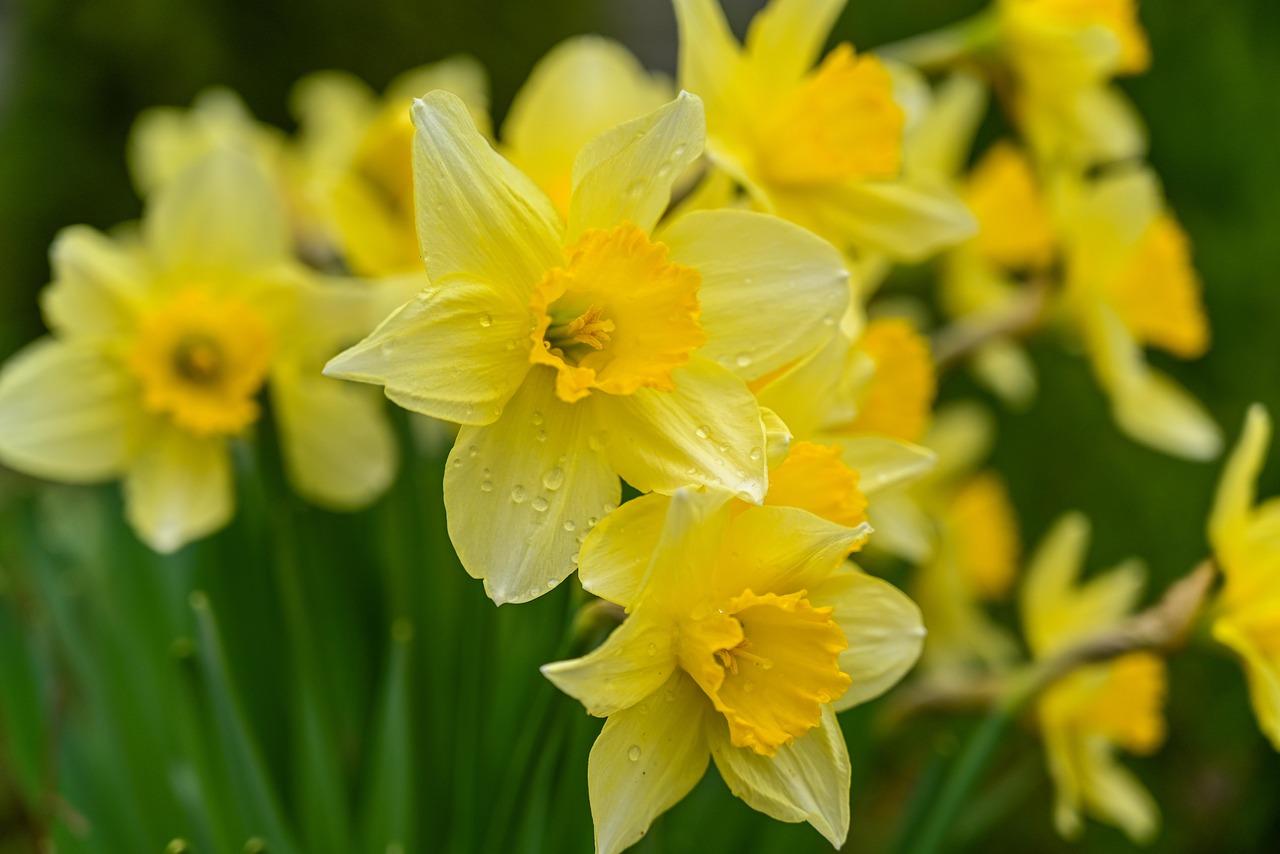
1. Narcissus ‘Dutch Master’
Hardiness: H6 | Height: 45cm
The absolute classic of spring yellows, this trumpet daffodil stands proud at 45cm with blooms that could light up the gloomiest March day. It’s been the backbone of British spring displays since Victorian times, and for good reason. The flowers are substantial enough to withstand our notorious spring weather whilst maintaining that perfect daffodil shape we all recognise instantly.
Growing Tips: Plant these beauties 15cm deep in September or October, spacing them about 10cm apart for a natural look. They’ll return year after year, gradually forming impressive clumps. Fantastic for naturalising in grass, though wait six weeks after flowering before mowing to allow the bulbs to recharge.
2. Narcissus ‘February Gold’
Hardiness: H6 | Height: 30cm
Despite its name, this eager beaver often appears in January during mild winters, making it one of the earliest large-flowered daffodils. At just 30cm tall, it’s perfect for containers or the front of borders where its swept-back petals and bright orange-yellow trumpet create a cheerful display that lasts for weeks.
Growing Tips: Particularly tolerant of heavy clay soils that would defeat fussier varieties. Plant in bold groups of at least twelve for proper impact. Divides readily after three years, giving you free plants to spread the golden joy elsewhere.
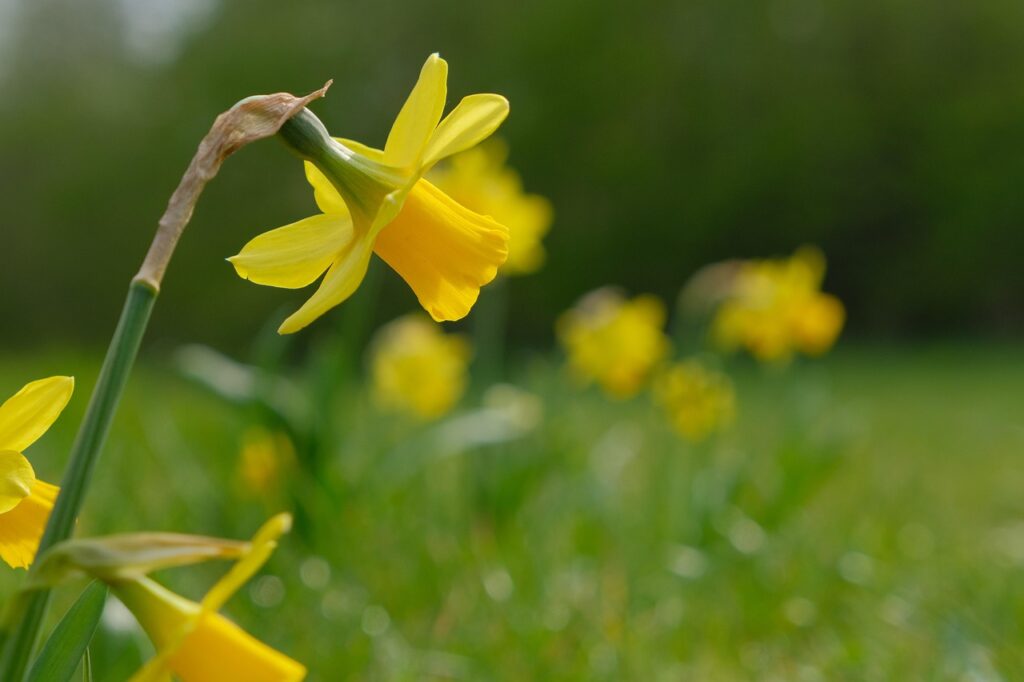
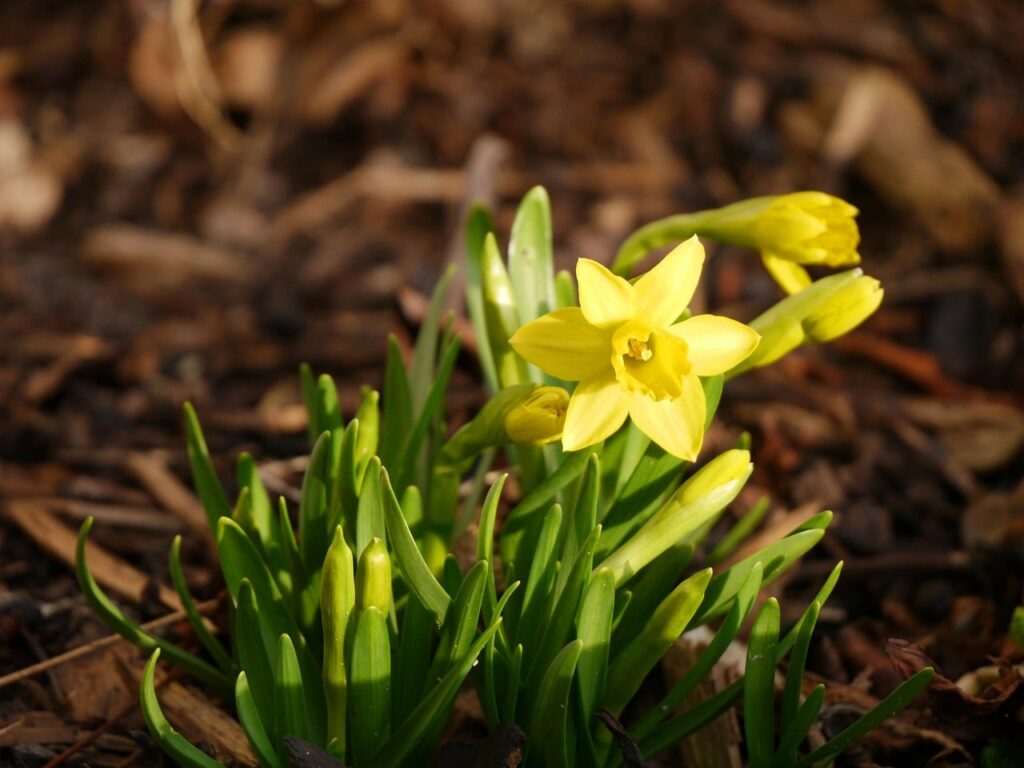
3. Narcissus ‘Tête-à-Tête’
Hardiness: H6 | Height: 15cm
This miniature marvel produces multiple flowers per stem, standing at just 15cm tall, making it perfectly suited for window boxes and small pots. It’s become the UK’s bestselling daffodil, and once you’ve grown it, you’ll understand why. The proportions are simply perfect, like someone shrunk a full-sized daffodil without losing any of its charm.
Growing Tips: Brilliant for forcing indoors for early colour. Plant bulbs in pots in September, keep them cool and dark for twelve weeks, then bring them indoors for flowers in time for Christmas. In the garden, they multiply enthusiastically, creating ever-expanding pools of gold.
4. Tulipa ‘Golden Apeldoorn’
Hardiness: H5 | Height: 60cm
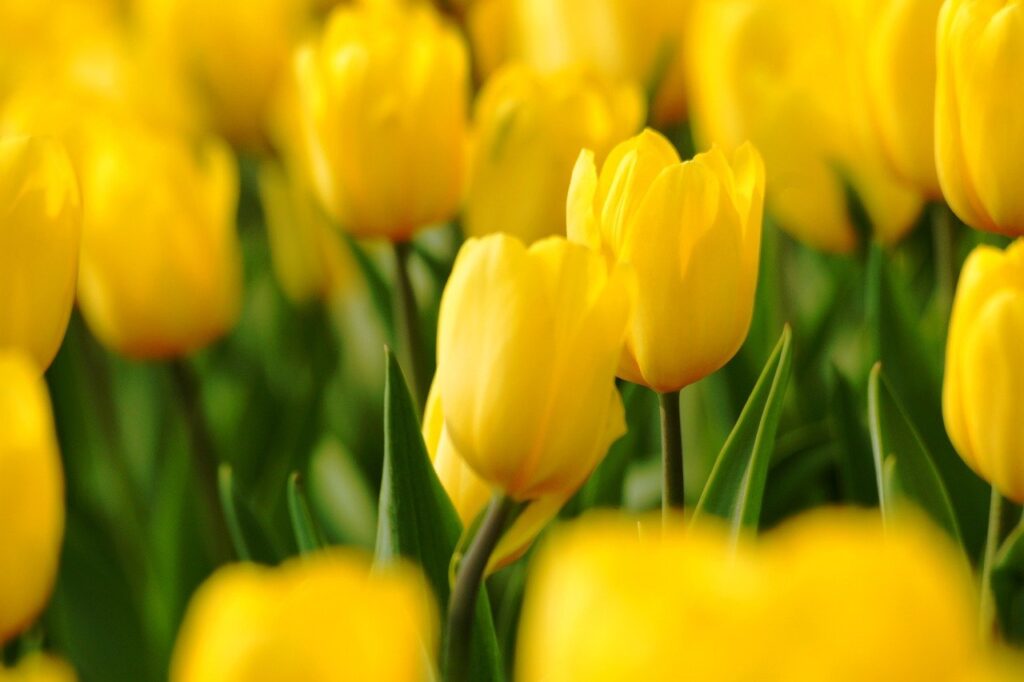
A Darwin hybrid that actually comes back year after year (unlike many tulips that sulk after their first performance), producing enormous golden globes on 60cm stems in April. The flowers are so large they look almost artificial, yet they’re tough enough to stand up to April showers without flopping.
Growing Tips: Plant these in November to reduce the risk of tulip fire disease. They need full sun and good drainage but aren’t as fussy as some varieties. Leave the foliage to die back naturally, and you’ll be rewarded with reliable flowering for at least five years.
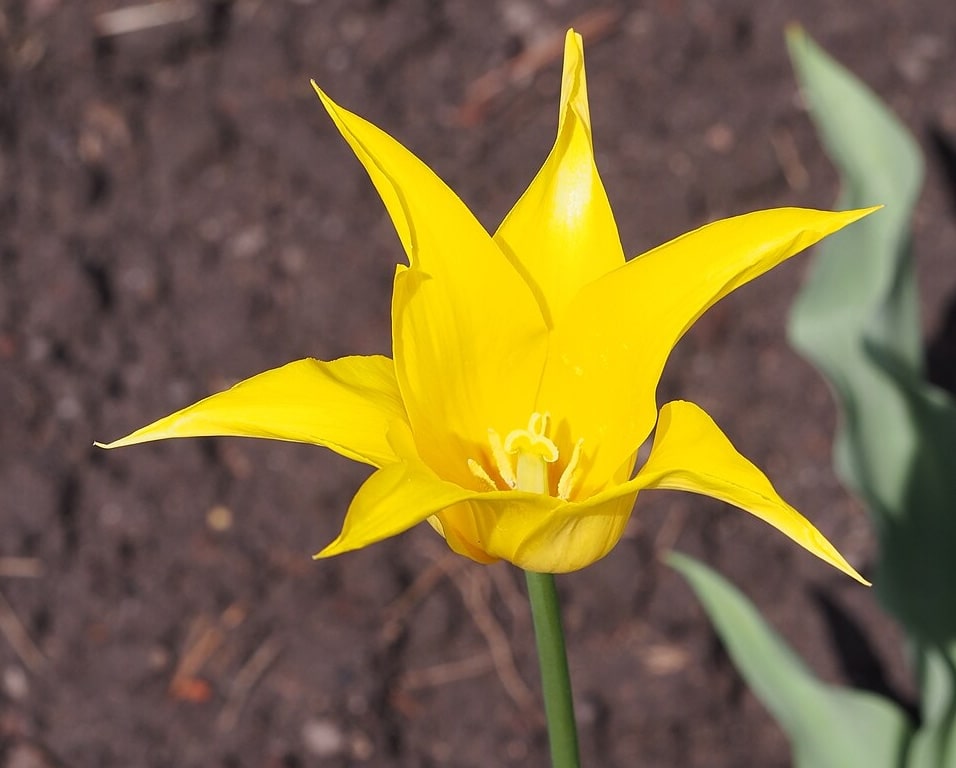
5. Tulipa ‘West Point’
Hardiness: H5 | Height: 50cm
A lily-flowered variety with elegant, pointed petals in clear, bright yellow that open into a star shape during sunny days. At 50cm tall, it’s tall enough to rise above emerging perennials but not so tall that it needs staking. The refined shape makes it perfect for more contemporary garden designs.
Growing Tips: Particularly effective when planted with purple alliums, which will hide the dying tulip foliage later in the season.Plant deeply at 20cm for better perennial performance. Thrives in containers with good drainage and weekly feeding during growth.
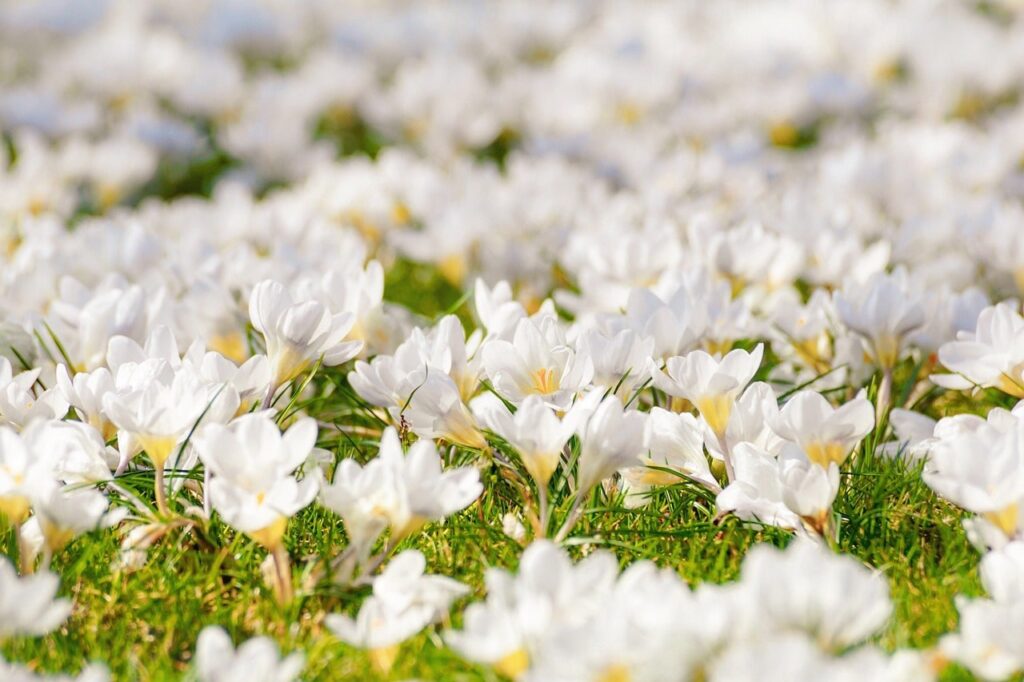
6. Crocus chrysanthus ‘Cream Beauty’
Hardiness: H6 | Height: 10cm
This delicate beauty opens its pale yellow petals to reveal a glowing orange centre, creating a two-tone effect that’s absolutely magical in late winter sunshine. At just 10cm tall, it’s perfect for naturalising in lawns or creating rivers of colour along path edges.
Growing Tips: Plant corms 8cm deep in autumn, scattering them for a natural effect. They’ll self-seed in favourable conditions, gradually increasing their territory. Brilliant for attracting early bumblebees desperate for nectar. Leave unmown until six weeks after flowering.
7. Eranthis hyemalis (Winter Aconite)
Hardiness: H6 | Height: 10cm
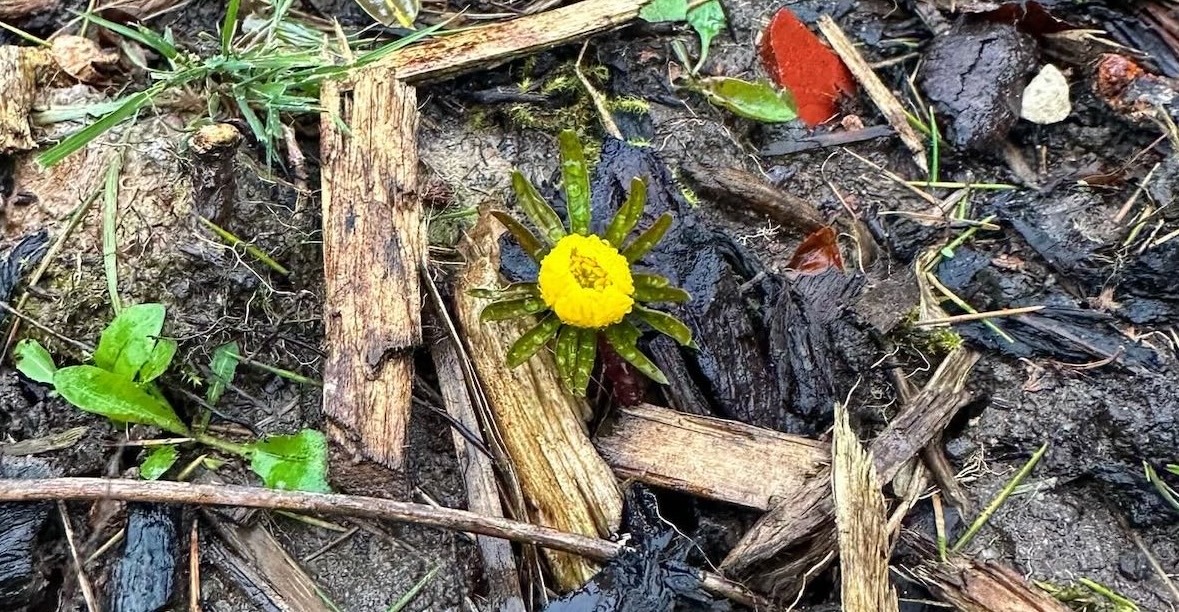
These little golden buttercups surrounded by ruffs of green leaves are often the very first bulbs to flower, sometimes pushing through snow in January. They’re only 10cm tall but create impressive carpets when happy, particularly under deciduous trees where they complete their growth cycle before the canopy leafs out.
Growing Tips: Notoriously tricky to establish from dry tubers, so buy ‘in the green’ if possible. Once settled, they self-seed prolifically in humus-rich soil. Perfect for that difficult spot under trees where little else thrives. Combine with snowdrops for a classic winter combination.
8. Fritillaria imperialis ‘Lutea’
Hardiness: H5 | Height: 1.2m
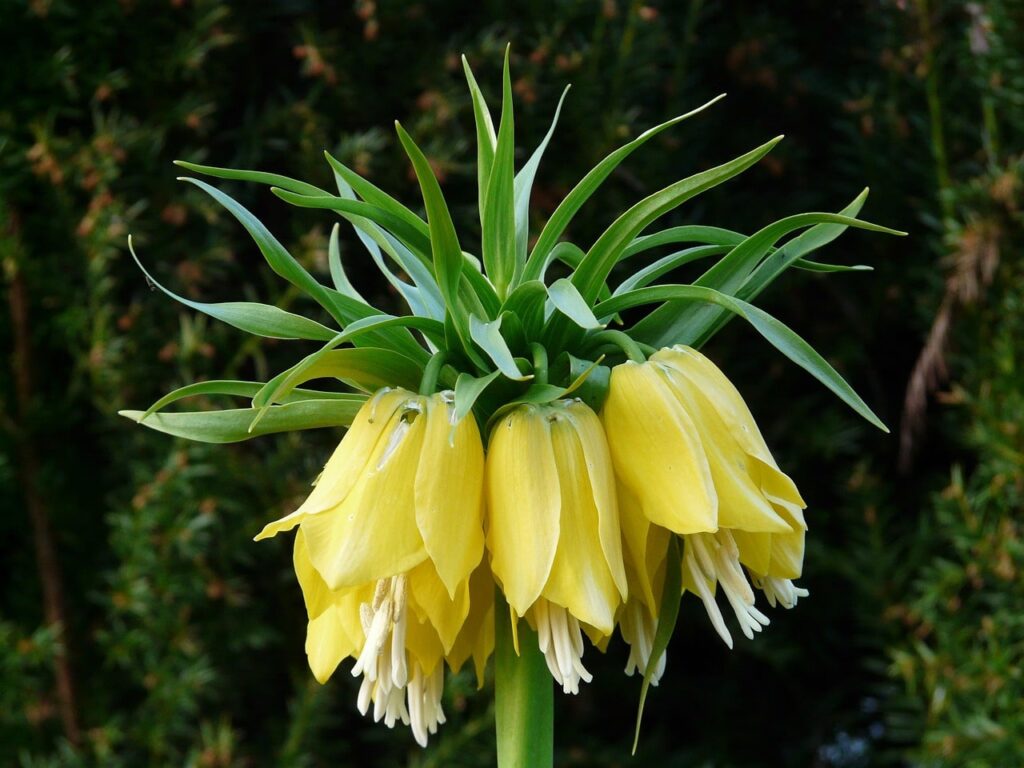
The crown imperial in yellow is a proper showstopper, reaching 1.2m with a crown of nodding yellow bells topped by a pineapple-like tuft of leaves. It’s architectural, dramatic, and slightly bonkers—precisely what you need to create a focal point in April borders.
Growing Tips:Plant these whoppers 30cm deep on their sides to prevent water from collecting in the hollow crown and causing rot. They have a distinctive, foxy smell that divides opinion, but it definitely keeps rodents at bay. Feed generously after flowering for optimal results the following year.
9. Tulipa ‘Strong Gold’
Hardiness: H5 | Height: 40cm
A Triumph tulip that lives up to its name with incredibly sturdy 40cm stems that laugh in the face of wind and rain. The colour is a rich, saturated gold that photographs beautifully and holds its intensity even as the flowers age.
Growing Tips: One of the best yellows for exposed sites where other tulips would be battered. Plant in blocks of single colours for maximum impact, or combine with deep purple tulips for a striking contrast. Deadhead promptly, but leave foliage intact.
10. Allium moly
Hardiness: H4 | Height: 25cm
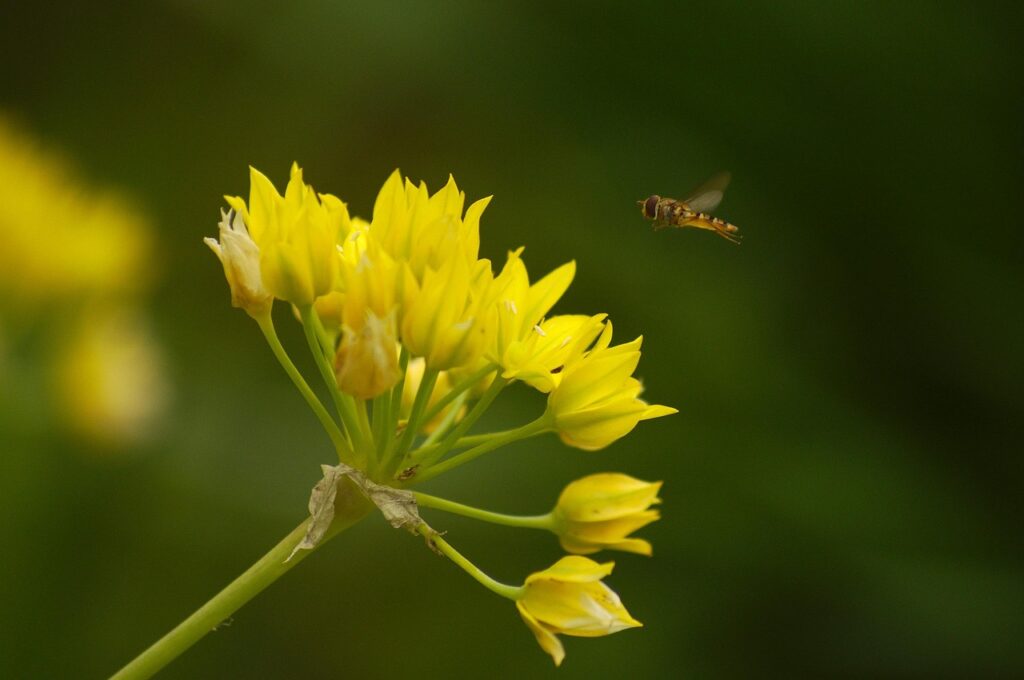
Not technically a traditional spring bul,b as it flowers in early June, but this golden garlic is too good to omit. It produces clusters of star-shaped yellow flowers on 25cm stems and, unlike its giant cousins, has attractive strappy foliage that doesn’t embarrass itself by dying before the flowers appear.
Growing Tips: Incredibly easy to grow and will self-seed gently without becoming a nuisance. Plant bulbs 10cm deep in autumn. Tolerates partial shade better than most alliums. The flowers are excellent for cutting and last ages in a vase.
Purple Spring Bulbs: The Jewel Tones
Purple bulbs bring a regal sophistication to spring displays that other colours simply can’t match. From the deepest purples that are almost black to gentle lavenders, this colour family offers incredible versatility.
11. Crocus ‘Remembrance’
Hardiness: H6 | Height: 15cm
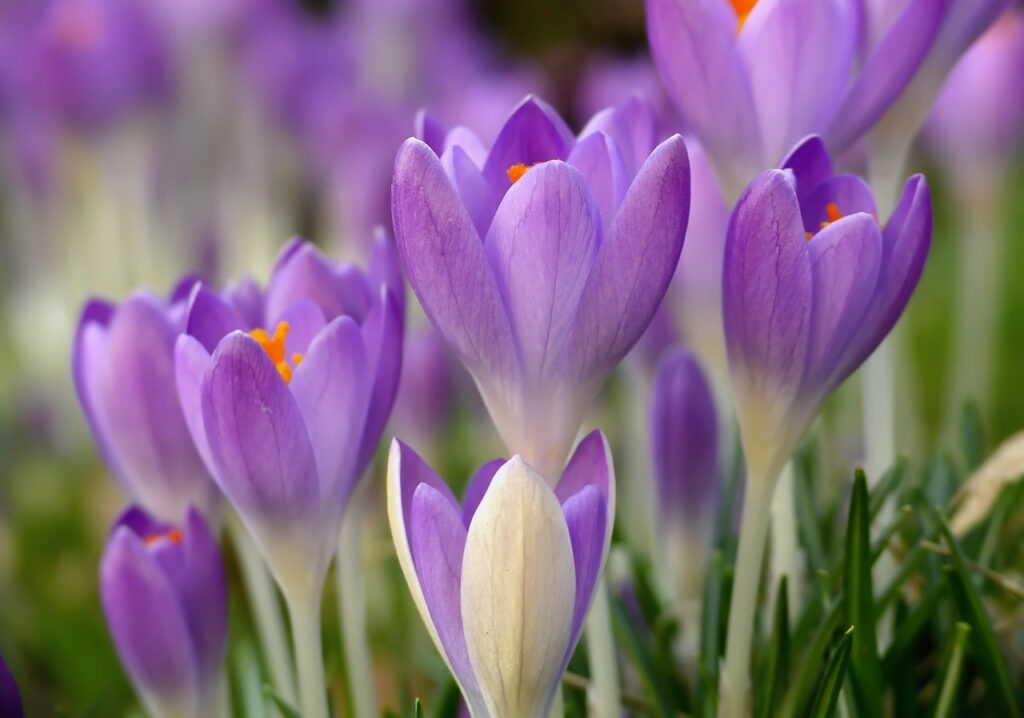
This large-flowered Dutch crocus produces glossy violet-purple flowers with a silvery sheen that catches the light beautifully. At 15cm tall, it’s substantial enough to make an impact but low enough to tuck into the smallest spaces. The flowers open wide in sunshine, revealing bright orange stamens that bees adore.
Growing Tips: Plant corms 10cm deep in September for flowers in March. Excellent for naturalising in grass where they’ll increase steadily. Group in drifts of at least 25 for proper impact. Can handle partial shade but flowers best in full sun.
12. Crocus tommasinianus ‘Whitewell Purple’
Hardiness: H6 | Height: 10cm
These delicate flowers appear in February, often pushing through snow, with slender purple petals that have an ethereal quality. They’re brilliant at naturalising and will self-seed to create stunning drifts that increase year on year without any effort from you.
Growing Tips:The easiest crocus for naturalising in grass or under shrubs. Plant just 5cm deep and let them get on with it. Squirrel-resistant, which is a massive bonus. They close up in dull weather but open into perfect stars in sunshine.
13. Allium hollandicum ‘Purple Sensation’
Hardiness: H4 | Height: 90cm
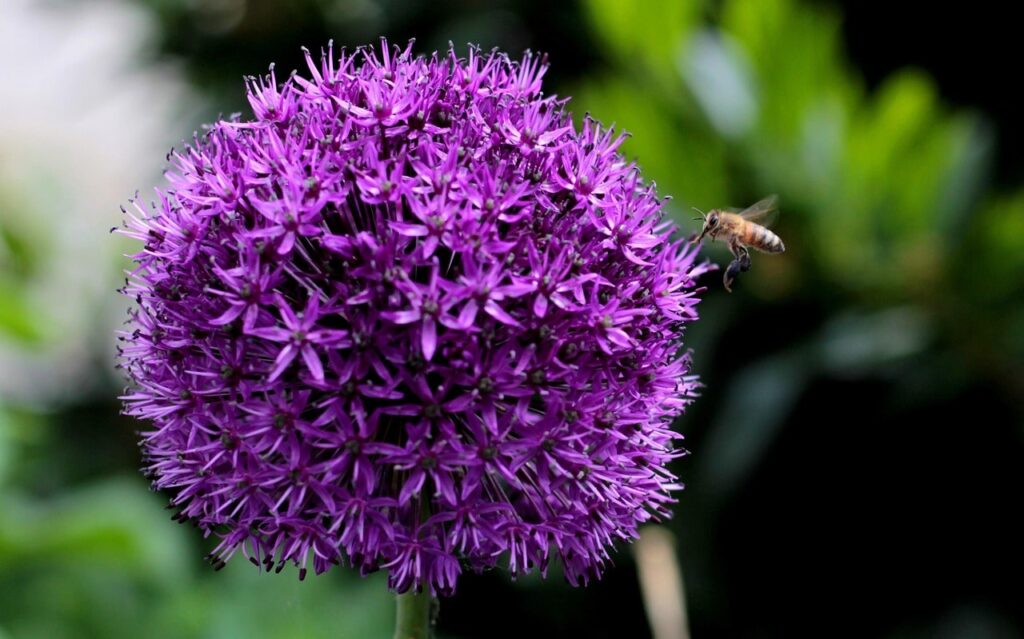
The absolute star of May, producing perfect 10cm spheres of deep purple flowers on 90cm stems. It’s architectural, dramatic, and works brilliantly in both traditional and contemporary settings. Every garden should have at least a dozen, though you’ll want more once you see them in flower.
Growing Tips: Plant bulbs 15cm deep in October. The foliage dies back as flowers appear, so plant among later perennials that will hide the yellowing leaves. Leave seedheads standing for winter interest. They’ll self-seed gently, producing slight colour variations.
14. Allium ‘Gladiator’
Hardiness: H4 | Height: 1.5m
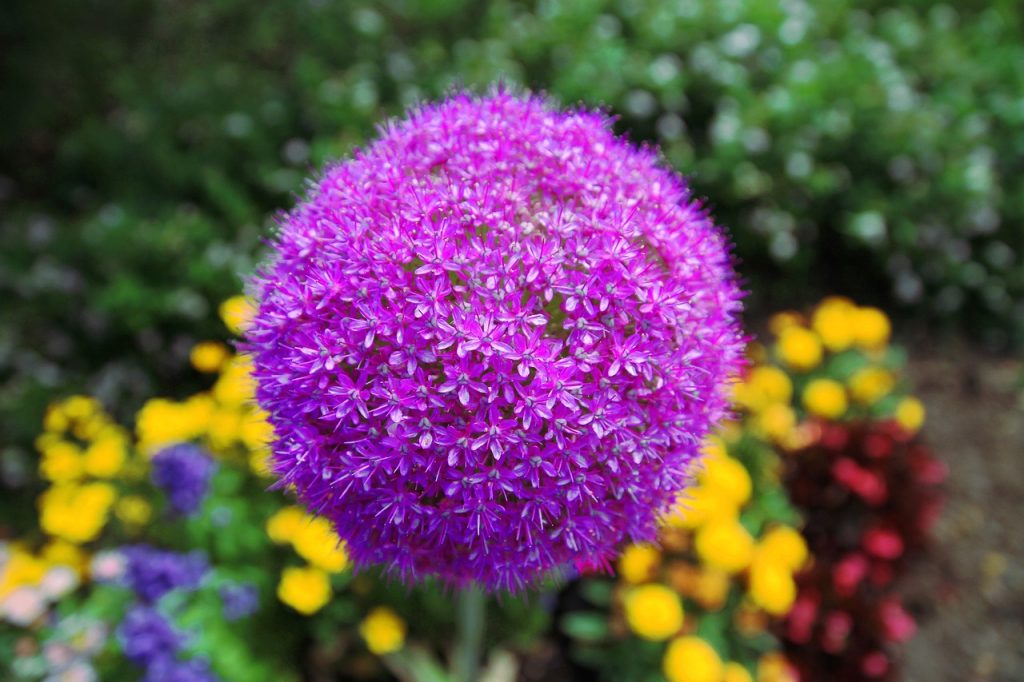
If ‘Purple Sensation’ is impressive, ‘Gladiator’ is absolutely monumental, reaching 1.5m with flower heads up to 20cm across. The colour is a softer lavender-purple, but the sheer scale makes it impossible to ignore. One of the best for creating height without bulk in borders.
Growing Tips: Plant these giants 20cm deep with plenty of space around them. They’re expensive, but you only need a few for a massive impact. Stake discreetly if your site is windy. The dried seedheads are spectacular and last all winter.
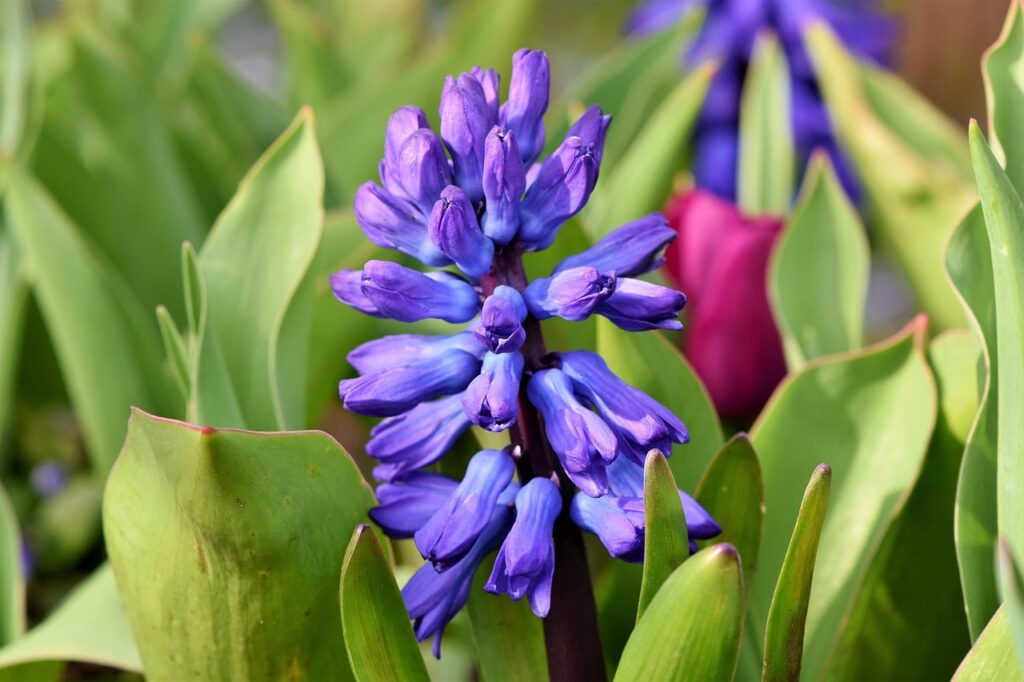
15. Hyacinthus ‘Delft Blue’
Hardiness: H5 | Height: 30cm
Despite its name, this is definitely on the purple side of blue, with densely packed flowers that release an intoxicating perfume. The colour is soft enough to combine with almost anything, whilst being strong enough to hold its own. Perfect for pots near doorways where you’ll catch the scent.
Growing Tips: Plant bulbs 10cm deep in October for flowers in April. After flowering in pots, plant out in the garden where they’ll return annually with slightly looser flower spikes. It can cause skin irritation, so wear gloves when handling.
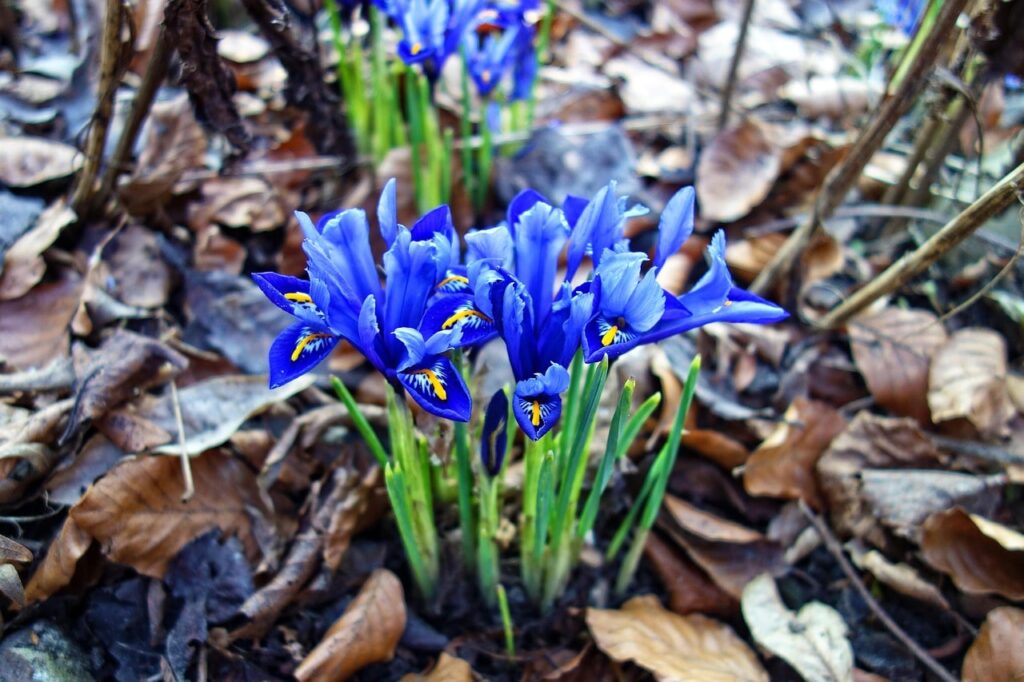
16. Iris reticulata ‘Harmony’
Hardiness: H6 | Height: 15cm
These miniature irises bloom in February, reaching just 15cm in height, with royal purple petals marked with yellow and white. They’re incredibly detailed up close, as if nature has been painting with a tiny brush. Perfect for alpine gardens or the front of flower borders, where you can appreciate their intricacy.
Growing Tips:Plant bulbs 10cm deep in very well-drained soil—they’ll rot in winter wet. Fantastic in pots with gritty compost. After flowering, feed the plants weekly until the foliage dies back. They’ll slowly form clumps in suitable conditions.
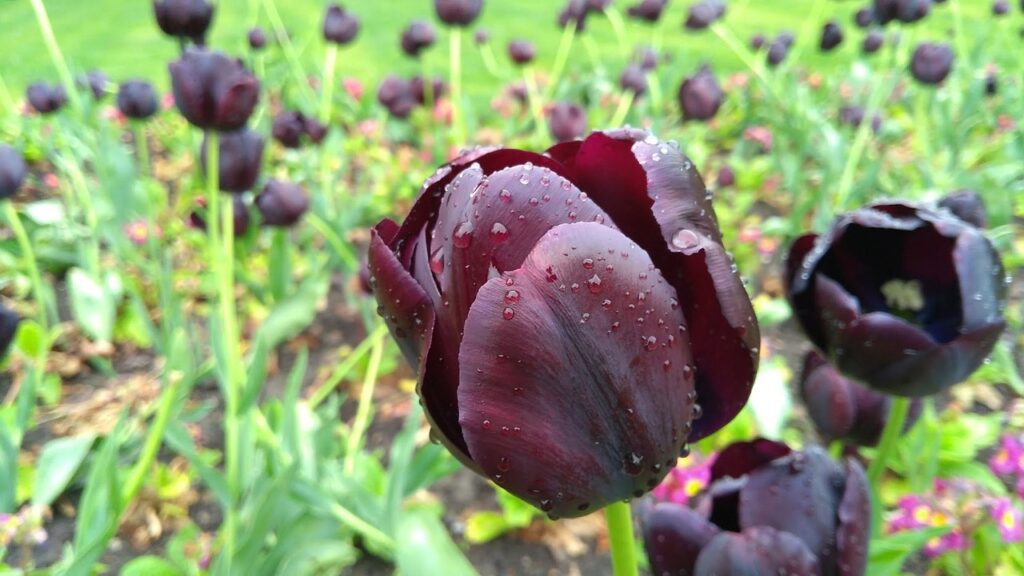
17. Tulipa ‘Queen of Night’
Hardiness: H5 | Height: 60cm
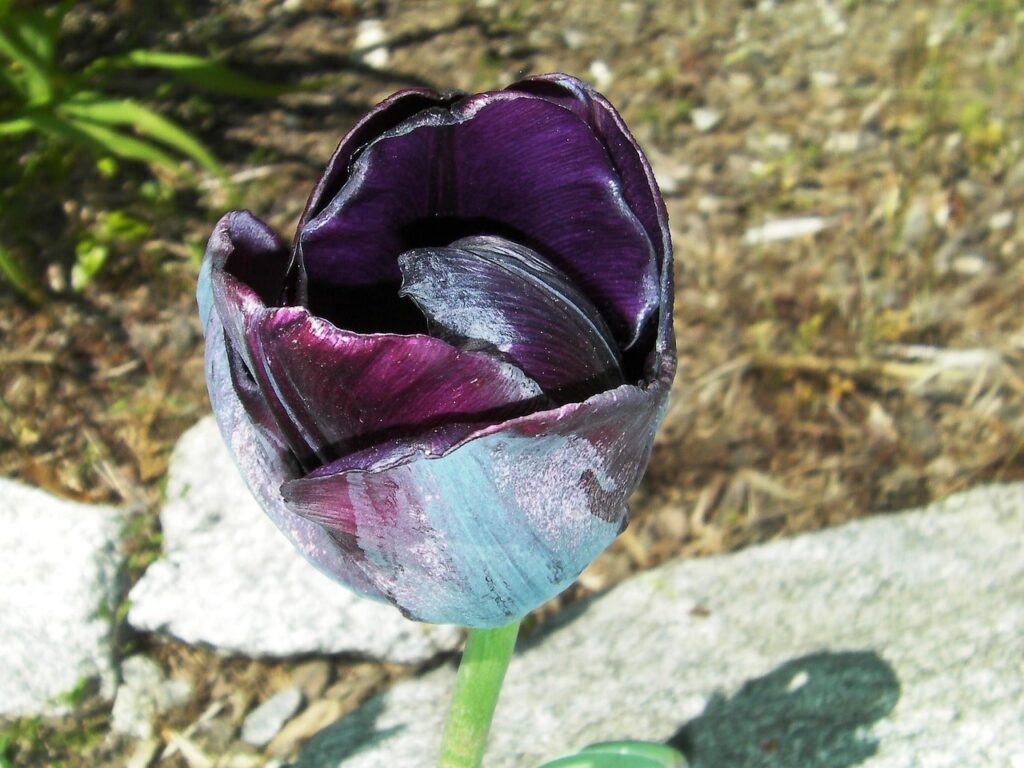
The ultimate in sophisticated spring colour, this deep maroon-purple tulip is so dark it appears black in certain lights. At 60cm tall with a classic single late form, it’s the perfect full stop to the tulip season in May. Combines brilliantly with white or pale pink varieties.
Growing Tips: Plant in November for best results, going deep at 20cm. Needs full sun to develop its intense colour properly. Despite being a single late variety, it’s surprisingly perennial if planted deeply and fed well after flowering.
18. Tulipa ‘Negrita’
Hardiness: H5 | Height: 45cm
A Triumph tulip in rich purple with a warm pink undertone that prevents it from feeling cold. At 45cm, it’s the perfect height for most borders, and the strong stems mean it stays upright even in typical April weather—one of the most reliable purple tulips for returning year after year.
Growing Tips:Brilliant for cutting—pick when buds are just showing colour for longest vase life. Plant in groups of at least nine for impact. Combines beautifully with pale yellow narcissi or white tulips for a sophisticated spring palette.
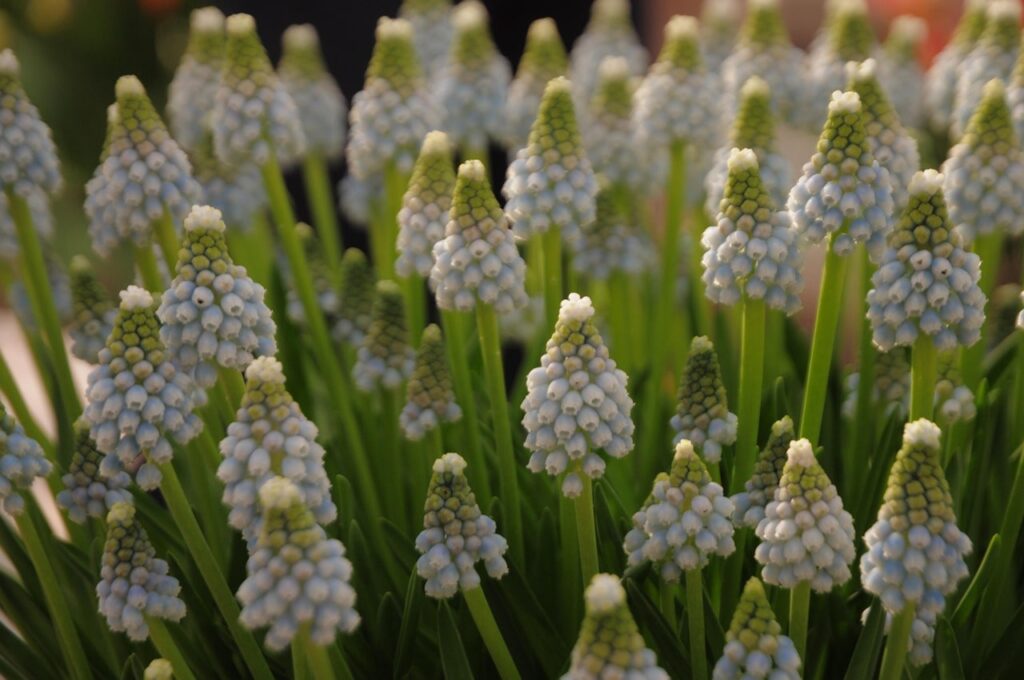
19. Muscari armeniacum
Hardiness: H6 | Height: 20cm
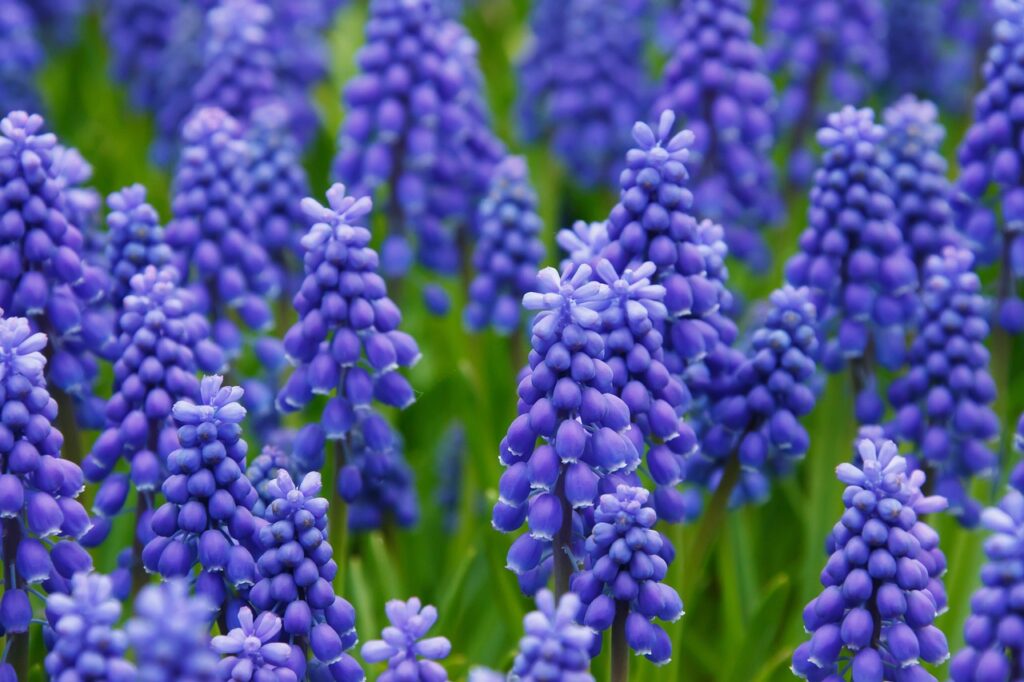
The classic grape hyacinth in deep blue-purple, producing 20cm spikes of tiny bell flowers that increase enthusiastically to form impressive drifts. They’re virtually indestructible and will grow almost anywhere, though they can become a bit too enthusiastic in ideal conditions.
Growing Tips:Plant bulbs 10cm deep in autumn. They produce foliage in autumn that persists through winter, so don’t panic if you see green shoots in November. Excellent for underplanting taller bulbs. Pull up excess clumps after flowering if they’re spreading too much.
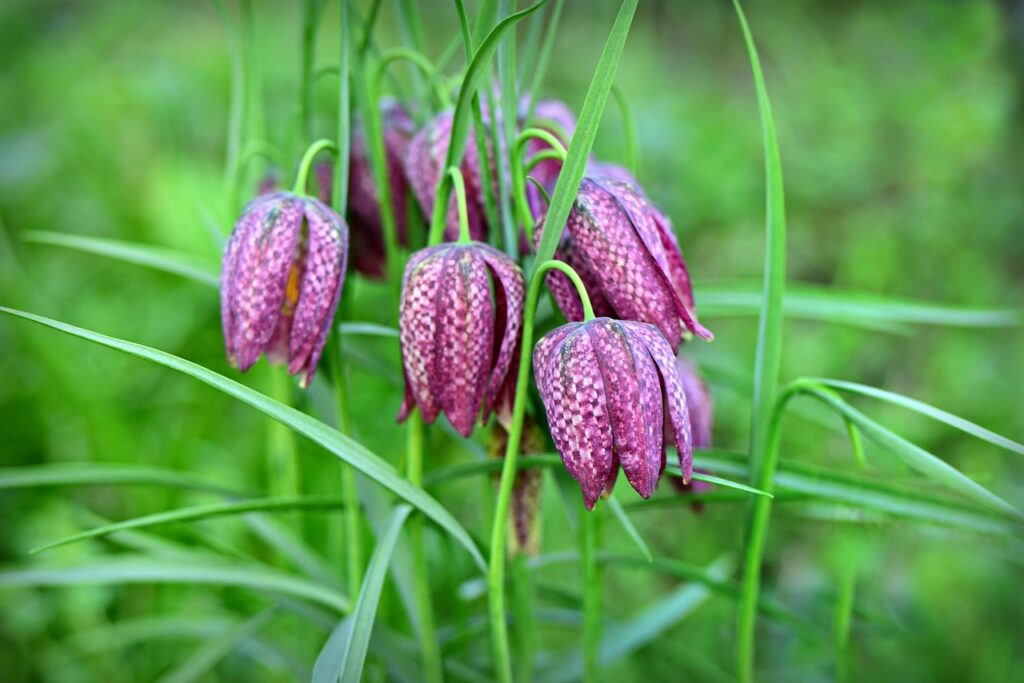
20. Fritillaria meleagris
Hardiness: H6 | Height: 30cm
The snake’s head fritillary is utterly unique with its chequered purple and white bells on delicate 30cm stems. It may look exotic, but it is actually native to British water meadows. Each flower has a distinctive tessellated pattern that’s mesmerising up close and I love these as crowd stoppers in my garden designs.
Growing Tips:Prefers damp conditions unlike most bulbs, making it perfect for clay soils or pond margins. Plant bulbs 10cm deep in autumn. Beautiful naturalised in grass where it will self-seed happily. Leave unmown until seeds have dispersed in July.
White Spring Bulbs: The Elegant Neutrals
White bulbs bring a sense of calm sophistication to spring gardens, acting as the perfect foil for brighter colours whilst creating their own moments of pure elegance.
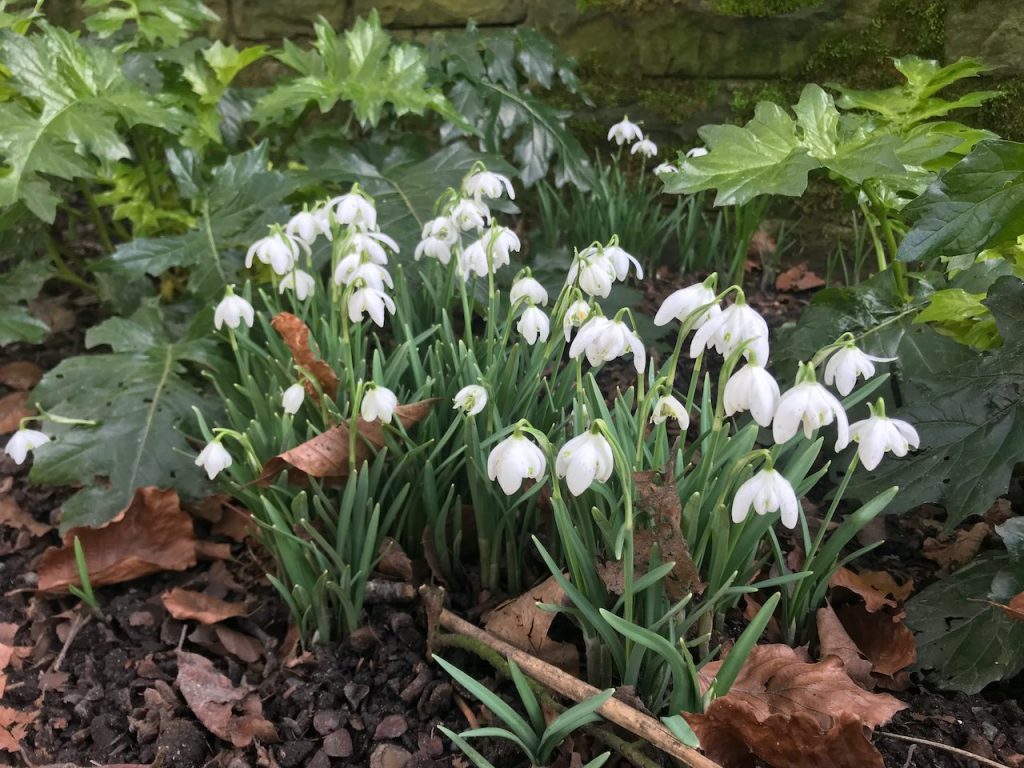
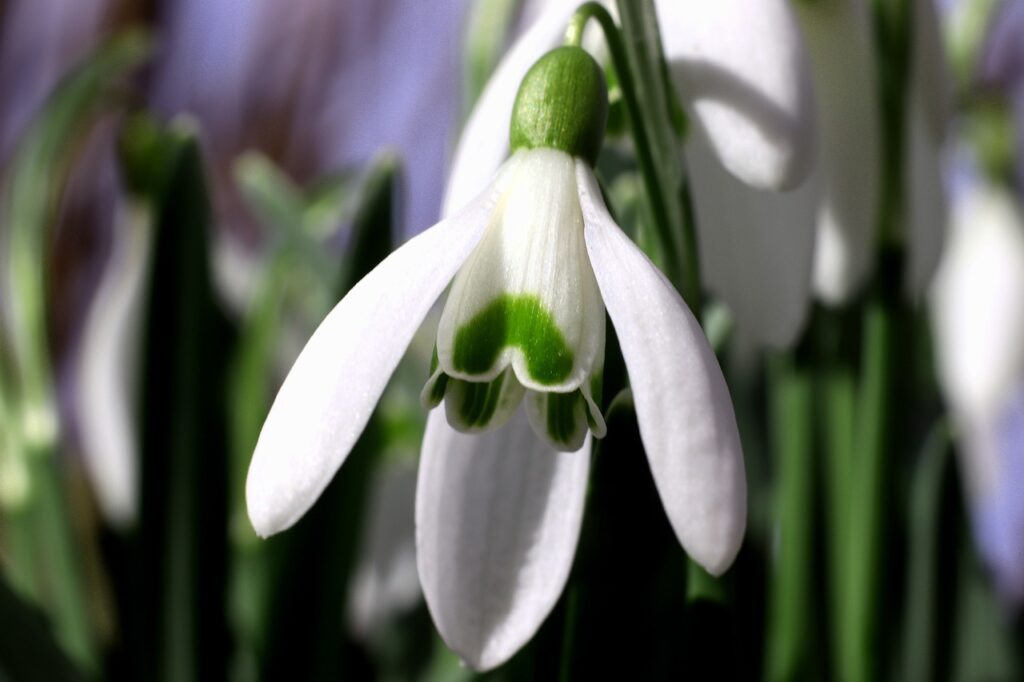
21. Galanthus nivalis (Common Snowdrop)
Hardiness: H7 | Height: 15cm
The ultimate harbinger of spring, often flowering in January with perfect white drops marked with green. At just 15cm tall, they’re small but mighty, pushing through frozen ground when nothing else dares. Every garden needs snowdrops—it’s basically the law!
Growing Tips: Best planted ‘in the green’ just after flowering rather than as dry bulbs. They prefer partial shade and humus-rich soil. Once established, they’ll seed around gently. Divide clumps every few years after flowering to spread them about.
22. Galanthus ‘S. Arnott’
Hardiness: H7 | Height: 20cm
If common snowdrops are lovely, ‘S. Arnott’ is absolutely sublime, with larger flowers on 20cm stems and a honey scent that’s unexpected from such delicate flowers. It’s vigorous, increasing well to form impressive clumps that make a real impact in late winter.
Growing Tips:Worth the extra cost for its superior size and scent. Plant bulbs immediately upon receipt as they deteriorate quickly when dry. Combines beautifully with winter aconites and early crocuses. Mark clumps to avoid digging them up in summer.
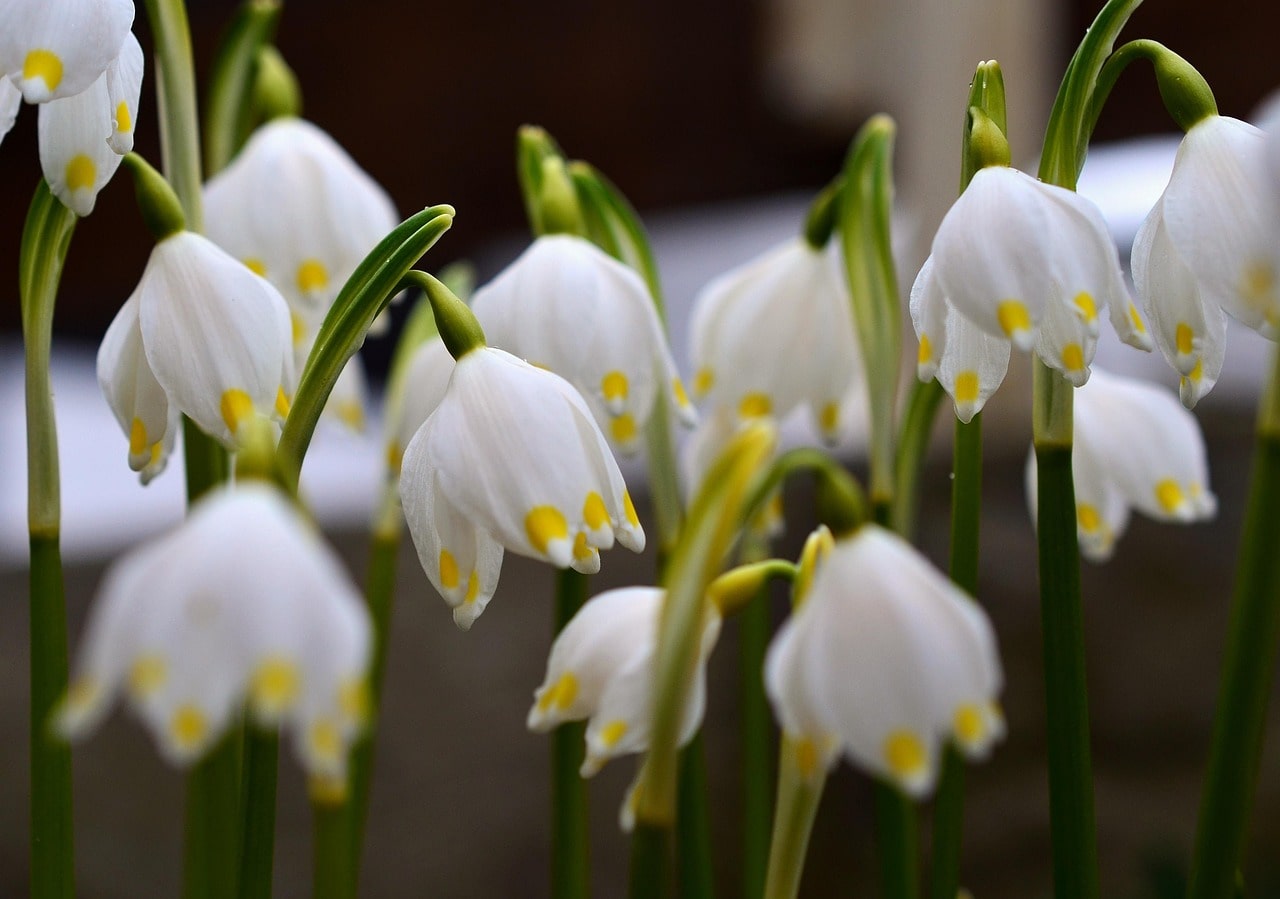
23. Leucojum vernum (Spring Snowflake)
Hardiness: H6 | Height: 30cm
Like snowdrops on steroids, reaching 30cm with larger bell flowers tipped with green. They flower slightly later than snowdrops, bridging the gap before daffodils take over. The flowers have a delicate violet scent that’s particularly noticeable on warm days. I have these all over my garden here at Garden Ninja HQ for that gap-filling last flush before the herbaceous perennials wake up!
Growing Tips: Prefers heavier soils than snowdrops and tolerates quite boggy conditions. Plant bulbs 10cm deep in autumn. Slower to establish than snowdrops, but worth the wait. Excellent for difficul,t damp shade where little else thrives.
24. Narcissus ‘Thalia’
Hardiness: H6 | Height: 40cm
This triandrus daffodil produces two or three ivory-white flowers per stem at 40cm tall. The petals are elegantly reflexed, and there’s often a hint of cream in the small cup. It’s refined, sophisticated, and has a delicate fragrance that’s particularly strong in the evening.
Growing Tips: More perennial than many white daffodils, returning reliably for years. Plant 15cm deep in informal groups. Excellent for white gardens or combined with blue muscari. The graceful flowers move beautifully in the breeze.
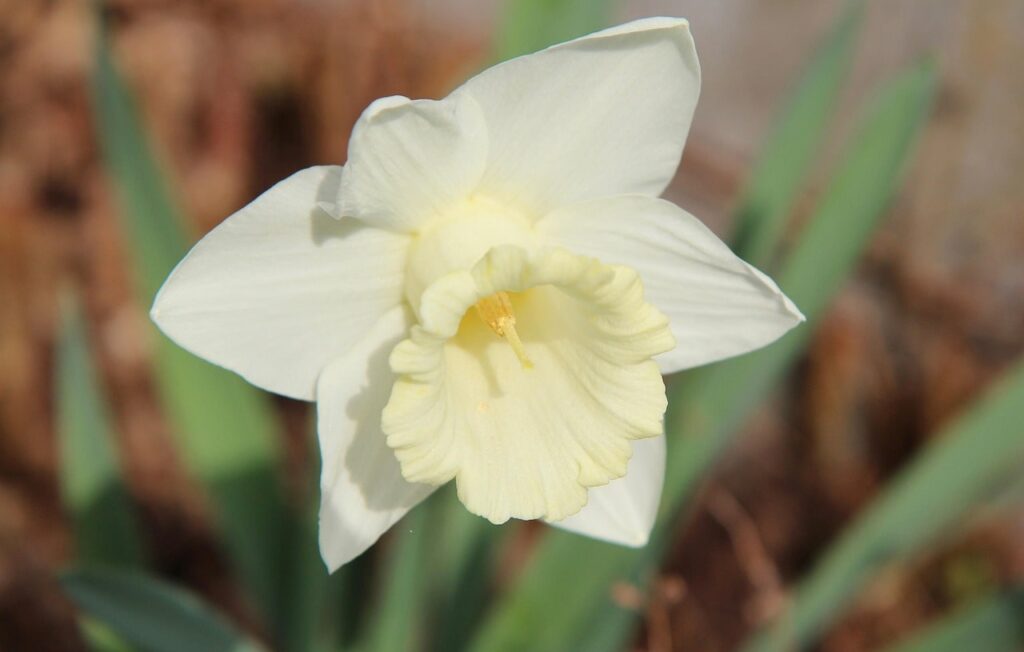
25. Narcissus ‘Mount Hood’
Hardiness: H6 | Height: 45cm
Starting cream and ageing to pure white, this large trumpet daffodil at 45cm creates a substantial impact. It’s been around since 1938, but it remains one of the best whites, characterised by strong stems and long-lasting flowers that withstand rough weather.
Growing Tips: Plant in bold groups for maximum impact—singles look lost. Excellent for cutting, lasting over a week in water. The bulbs are enormous, so plant them deeply at 20cm. Combines beautifully with early white tulips.
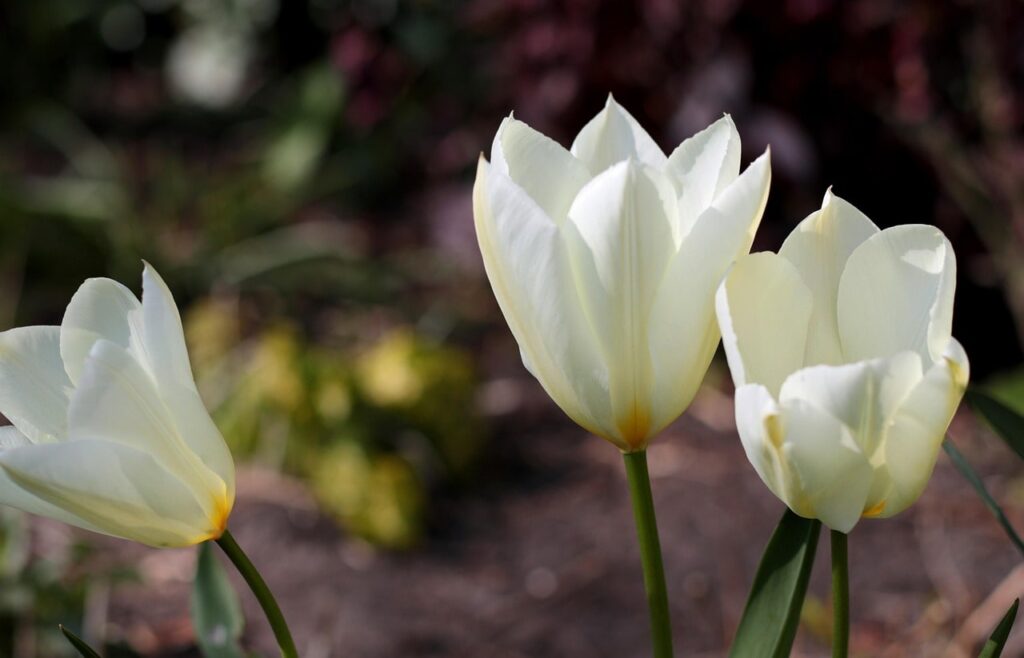
26. Tulipa ‘Purissima’
Hardiness: H5 | Height: 45cm
Also sold as ‘White Emperor’, this Fosteriana tulip blooms early with enormous, pure white flowers on 45cm stems. The petals have a crystalline quality that seems to glow in spring sunshine. It’s one of the most reliable tulips for returning year after year.
Growing Tips:Naturally perennial if planted deeply in well-drained soil. The grey-green foliage is attractive in its own right. Opens fully in sunshine to reveal a yellow centre. Plant with blue grape hyacinths for a classic combination.
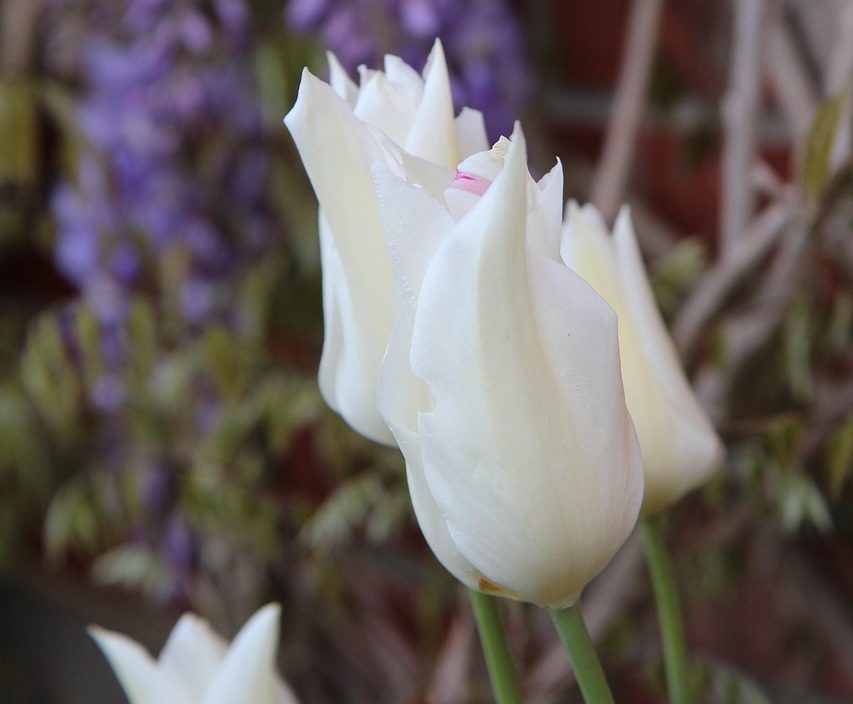
27. Tulipa ‘White Triumphator’
Hardiness: H5 | Height: 60cm
A lily-flowered variety with elegantly pointed petals that open into perfect six-pointed stars. At 60cm, it’s tall and graceful, adding height without weight to late spring displays. The pure white is dazzling and pairs perfectly with almost everything.
Growing Tips: Benefits from support in exposed positions due to its height. Plant deeply and leave undisturbed for the best perennial performance. Stunning in large pots underplanted with white violas. Pick just as buds open for exceptional vase life.
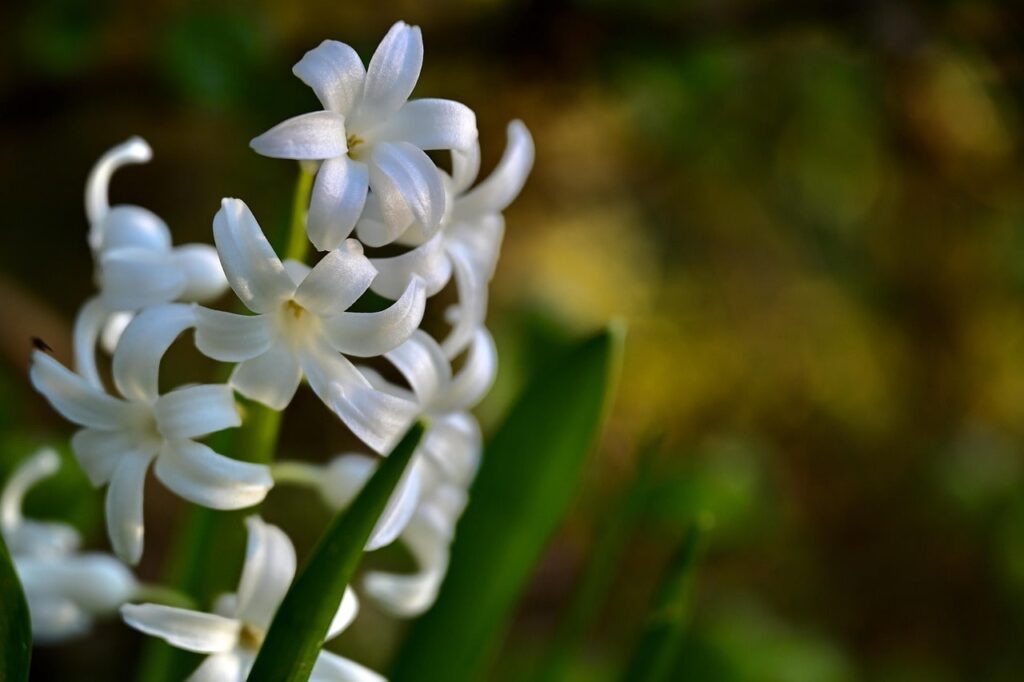
28. Hyacinthus ‘Carnegie’
Hardiness: H5 | Height: 30cm
Pure white flowers packed onto sturdy 30cm stems, with that incredible hyacinth perfume that fills entire gardens. Later flowering than many hyacinths, extending the season into late April. The individual florets are larger than those of many varieties, creating impressive spikes.
Growing Tips: Forcing bulbs indoors for Christmas, plant in September and keep them cool and dark for 13 weeks. In the garden, they’re best in formal situations where their stiffness is an asset. Mulch after planting to prevent soil splash marking the white flowers.
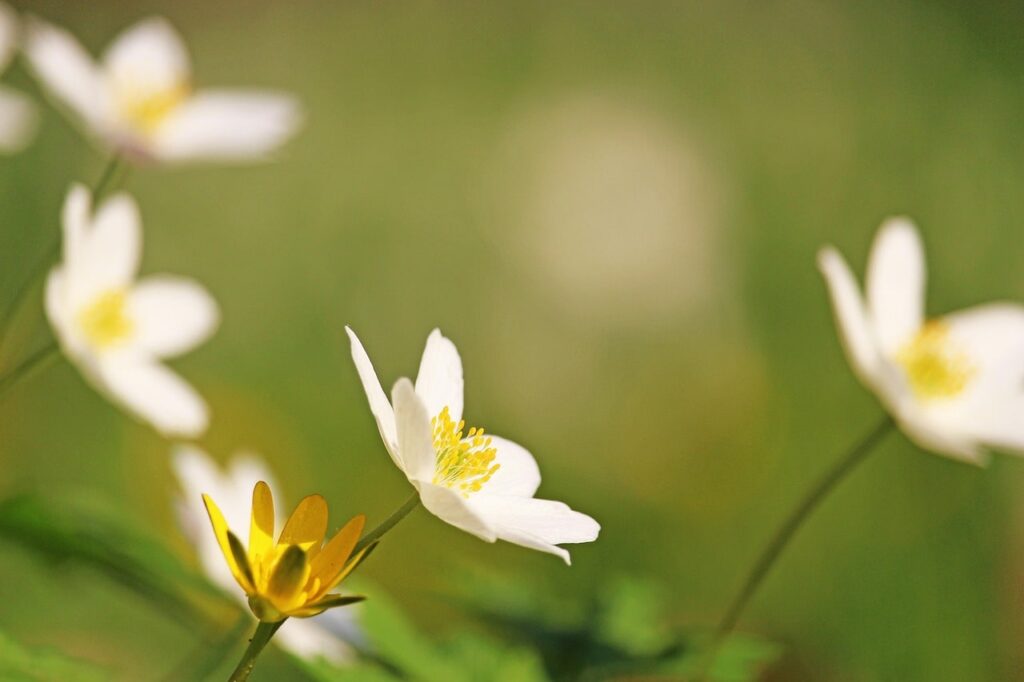
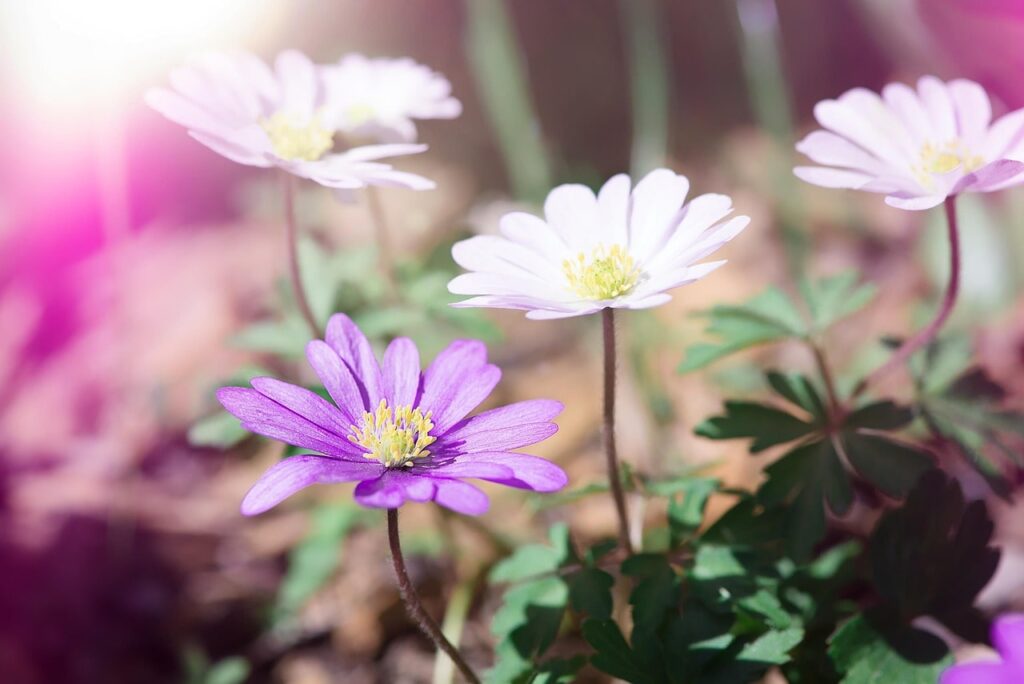
29. Anemone blanda ‘White Splendour’
Hardiness: H5 | Height: 15cm
These cheerful daisy flowers appear in March, standing just 15cm tall, and open flat in sunshine to reveal their yellow centres. They’re brilliant for naturalising under shrubs where they’ll form extensive carpets, dying back completely by summer to leave space for other plants.
Growing Tips:Soak the weird, wizened tubers overnight before planting 5cm deep. They look dead but don’t worry—they’re not! Slow to establish initially but then spreads enthusiastically. Mix with blue and pink forms for a tapestry effect.
30. Muscari ‘White Magic’
Hardiness: H6 | Height: 15cm
A white grape hyacinth that’s surprisingly different from its blue cousins, with pure white bells on 15cm stems. It’s less invasive than the common blue form, whilst still being reliable and easy. Perfect for adding texture to white spring schemes.
Growing Tips: Plant bulbs 10cm deep in autumn for flowers in April. Excellent in pots where its neat habit is an asset. Complements white daffodils or tulips beautifully. Remove spent flowers but leave foliage to feed next year’s display.
Pink Spring Bulbs: The Romantic Touches
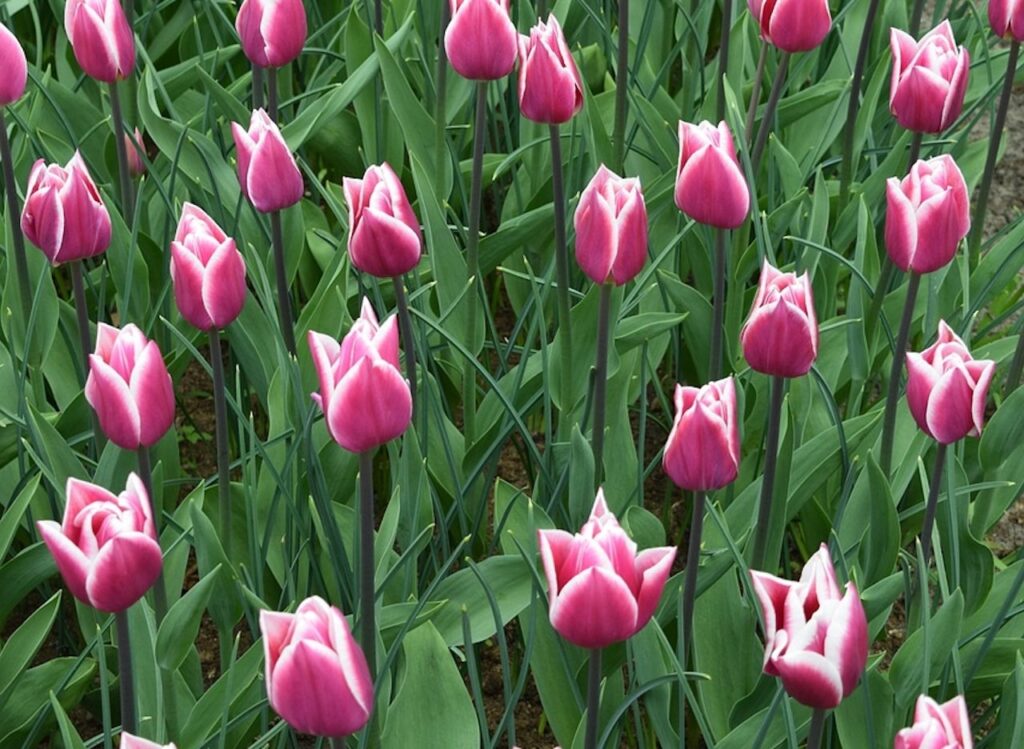
Pink bulbs bring a softness to spring displays that’s impossible to achieve with other colours. From barely-there blush to shocking magenta, this palette offers incredible variety.
31. Tulipa ‘Angelique’
Hardiness: H5 | Height: 45cm
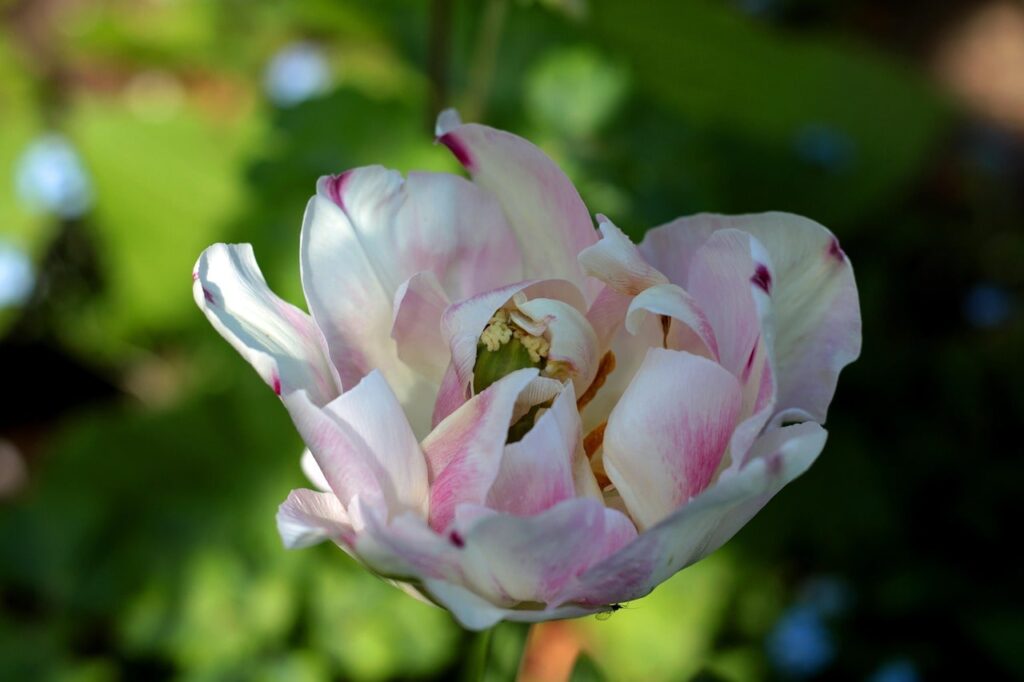
The ultimate romantic tulip, featuring fully double, pale pink flowers that resemble peonies. At 45cm tall, they’re substantial without being overwhelming, and they have a sweet fragrance that’s unusual in tulips. Late flowering in May, they’re perfect for bridging the gap to summer.
Growing Tips: The double flowers can hold water and snap in heavy rain, so some support might be needed. Exceptional in pots where you can control conditions better. Plant in November to reduce disease risk. Combines beautifully with forget-me-nots.
32. Tulipa ‘Pink Diamond’
Hardiness: H5 | Height: 55cm
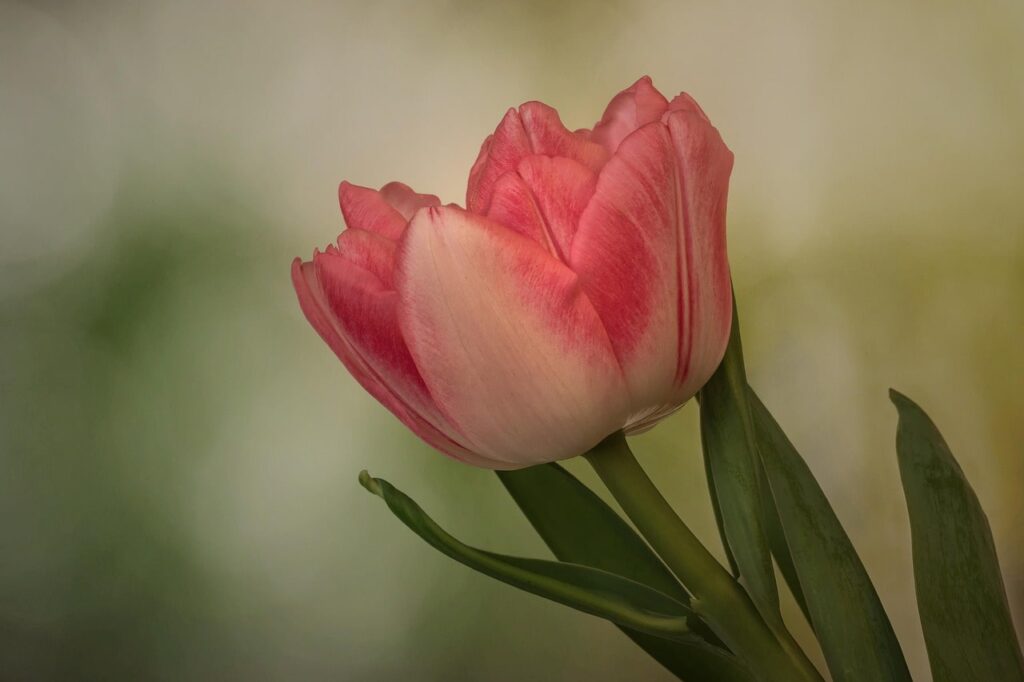
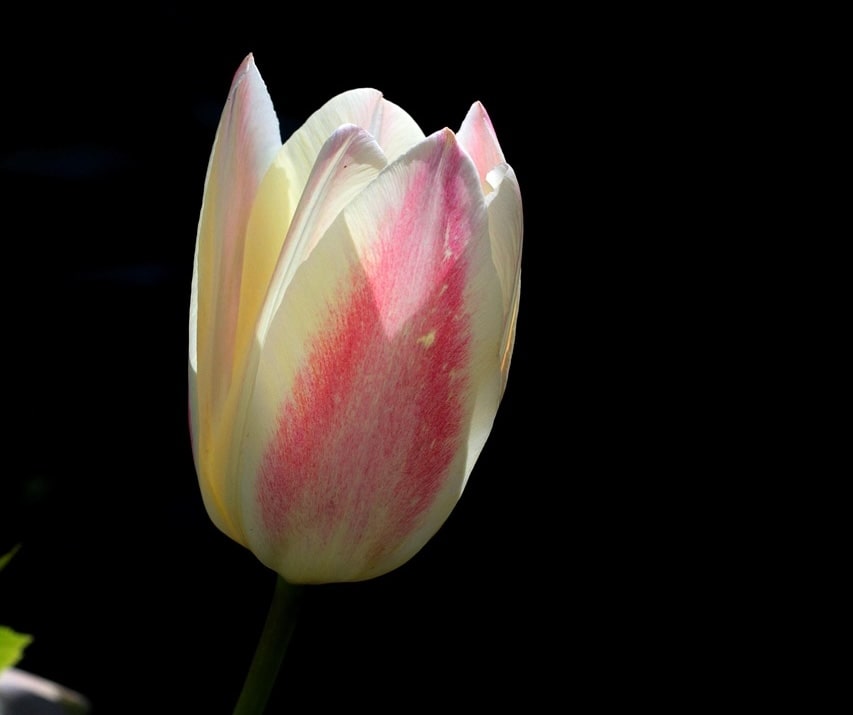
A single late variety in the softest shell pink with slightly ruffled petals that catch the light beautifully. At 55cm tall, it’s elegant and refined, perfect for more sophisticated schemes. The colour intensifies as the flower ages, developing deeper pink tones.
Growing Tips:One of the better pinks for perennial performance if planted deeply. Needs full sun to develop proper colour. Stunning with deep purple tulips or white narcissi. Deadhead promptly but leave foliage until it yellows naturally.
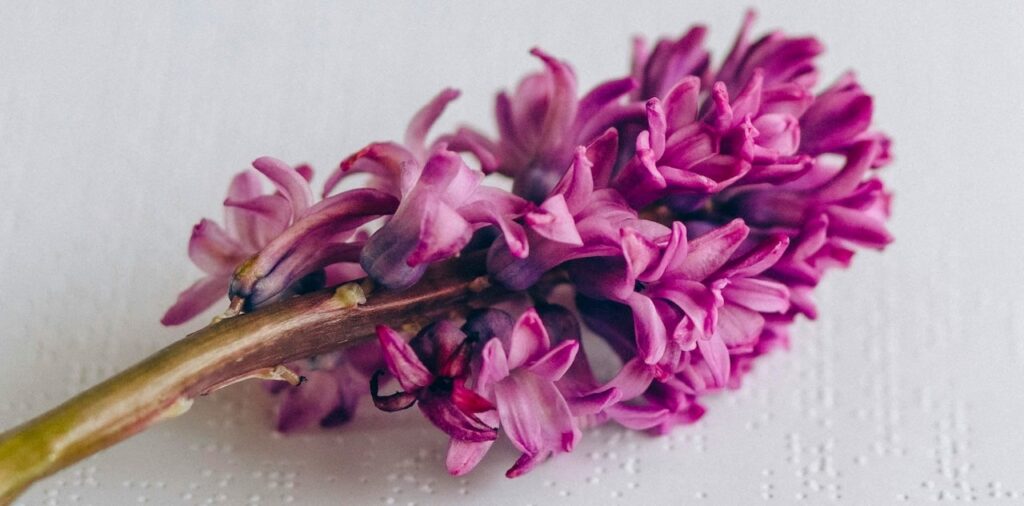
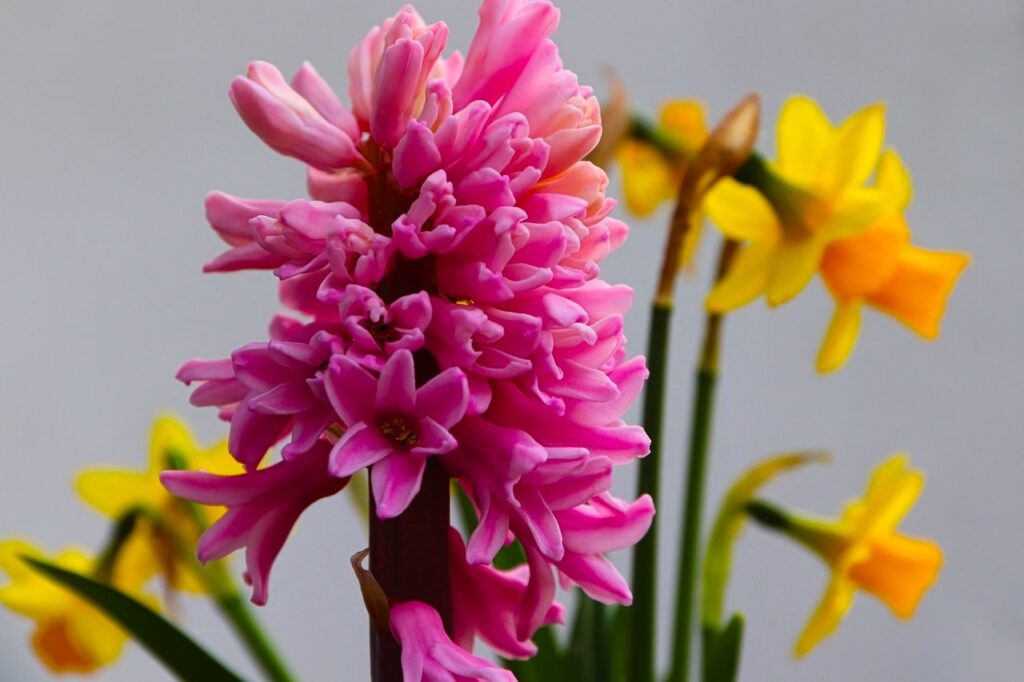
33. Hyacinthus ‘Pink Pearl’
Hardiness: H5 | Height: 30cm
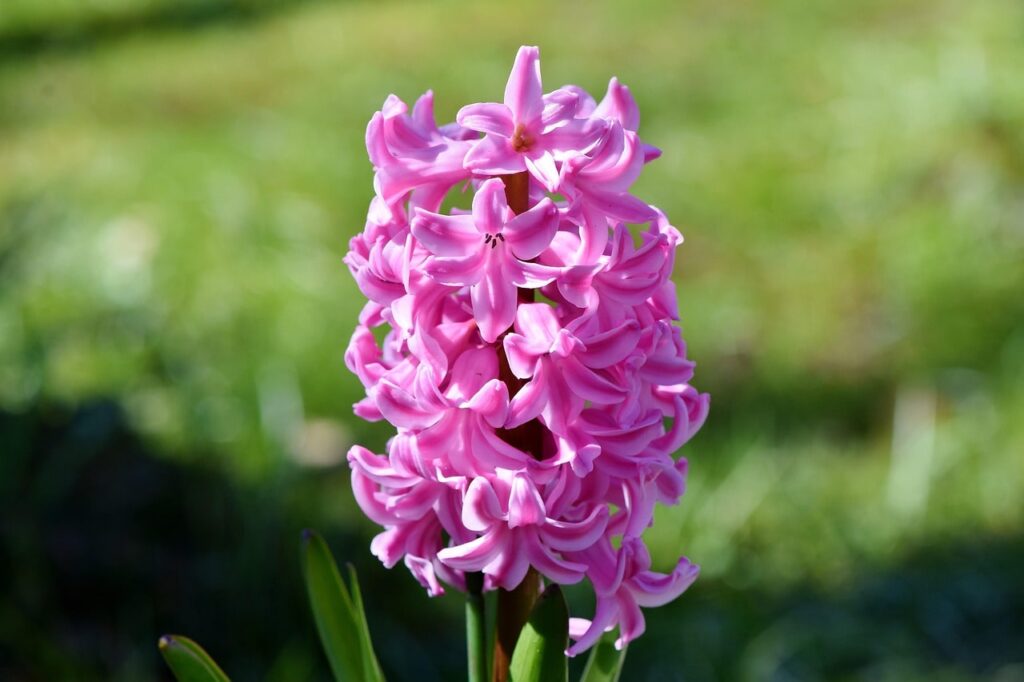
Deep rose-pink flowers with paler edges, creating a two-tone effect that’s particularly attractive. It flowers earlier than many hyacinths, often blooming in March. The perfume is intense and carries well on cool spring air.
Growing Tips: Excellent for forcing—pot up in September for Christmas blooms. In borders, plant 10cm deep in formal groups. After flowering in pots, plant out in the garden where they’ll return annually with looser spikes.
34. Hyacinthus ‘Fondant’
Hardiness: H5 | Height: 25cm
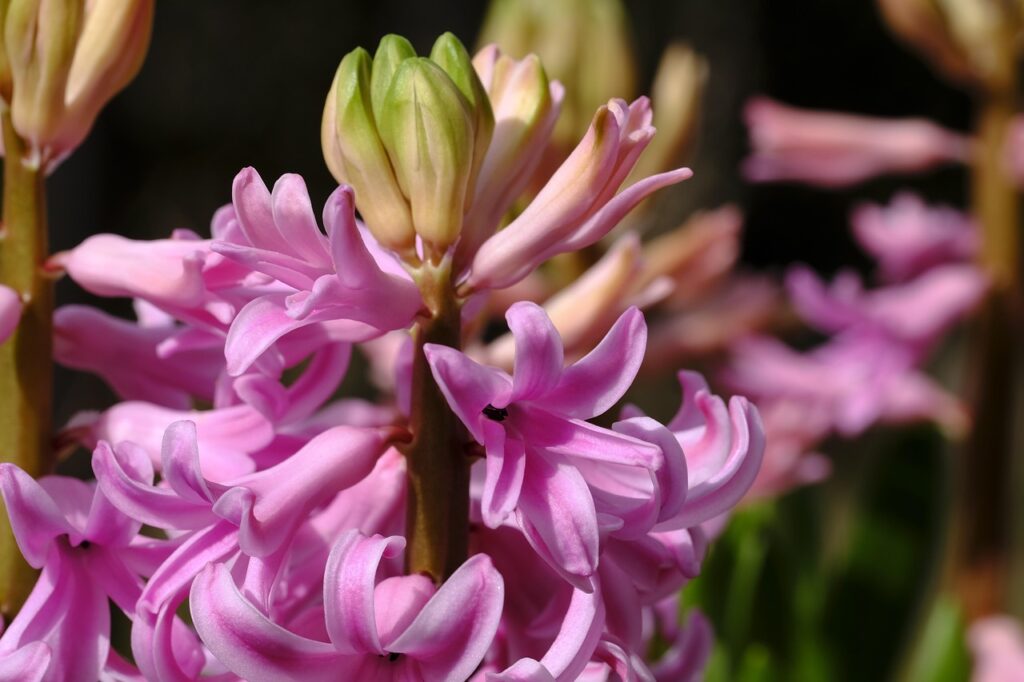
The palest baby pink that’s almost white in some lights, with densely packed florets on 25cm stems. It’s delicate and refined, perfect for sophisticated colour schemes. The fragrance is sweet without being overpowering.
Growing Tips: The delicate colour of this plant is best shown in partial shade, where the flowers won’t bleach. Excellent in pots combined with white muscari and pale pink tulips. Protect from wind, which can snap the heavy flower heads.
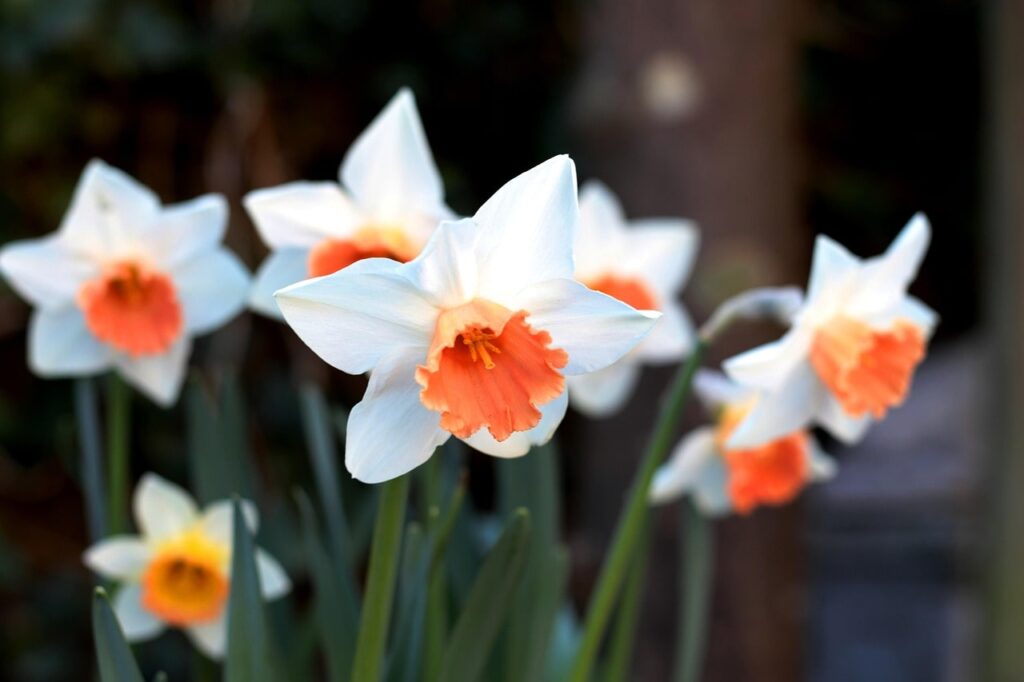
35. Narcissus ‘Pink Charm’
Hardiness: H6 | Height: 40cm
A large-cupped daffodil with white petals and a coral-pink cup that deepens with age. At 40cm tall, it’s perfectly proportioned and surprisingly tough despite its delicate appearance. The colour is best in cool springs when the pink develops fully.
Growing Tips:The pink colour is strongest in partial shade and cool conditions. In hot springs, it may be more apricot than pink. Plant deeply in groups for the best effect. Excellent for cutting, though pick in bud for the longest vase life.
36. Tulipa ‘Dynasty’
Hardiness: H5 | Height: 40cm
A triumph tulip in clear rose-pink that’s neither too pale nor too bright. At 40cm with sturdy stems, it’s reliable and long-lasting, perfect for beginners. The colour holds well even in strong sunshine, unlike some pinks that fade quickly.
Growing Tips: One of the easiest pinks to grow successfully. Plant in groups of at least nine for impact. Combines well with white or deep purple varieties. Good for exposed sites where more delicate varieties would struggle.
37. Tulipa ‘Mariette’
Hardiness: H5 | Height: 55cm
A lily-flowered variety in deep rose-pink with elegantly reflexed petals. At 55cm tall, it adds grace and movement to borders, the pointed petals creating interesting shadows and shapes. Late flowering in May when most tulips are finished.
Growing Tips: The elegant flowers can look lost planted singly, so group generously. Benefits from deep planting at 20cm for perennial performance. Stunning with purple alliums which will hide dying foliage. Excellent for cutting.
38. Cyclamen coum
Hardiness: H5 | Height: 10cm
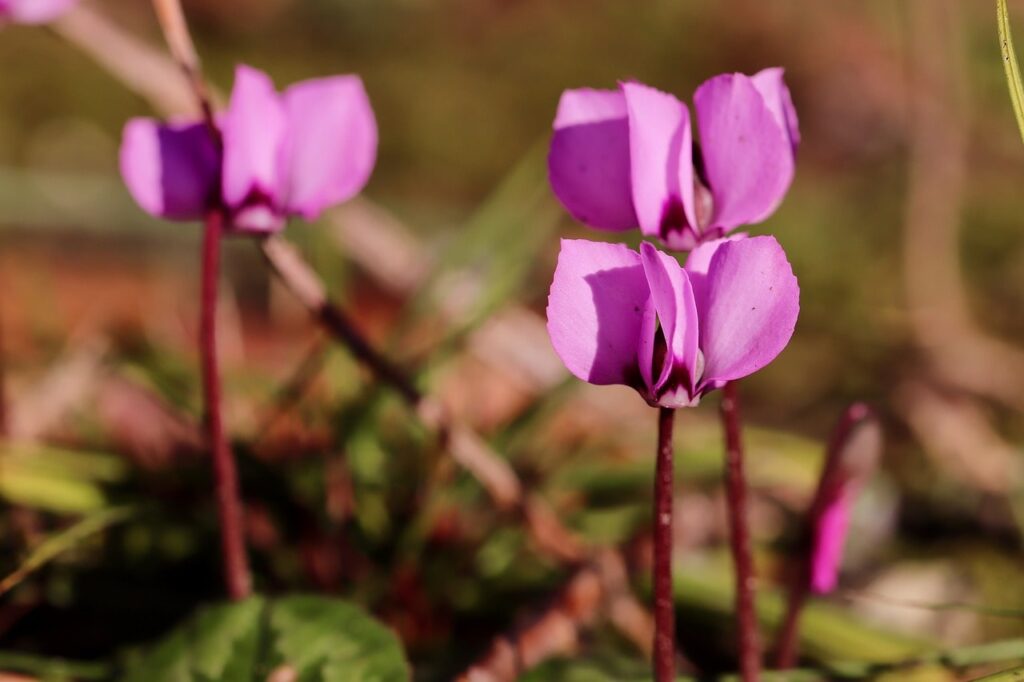
Not strictly a bulb but a corm, these tiny 10cm cyclamen flower from January to March with swept-back pink petals above marbled leaves. They’re perfect for difficult dry shade under trees where little else will grow, creating carpets of colour when established.
Growing Tips: Plant corms just below soil surface in humus-rich soil. They self-seed readily once happy, gradually forming extensive colonies. The decorative leaves persist after flowering, providing ground cover. Various pink shades available from pale to deep magenta.
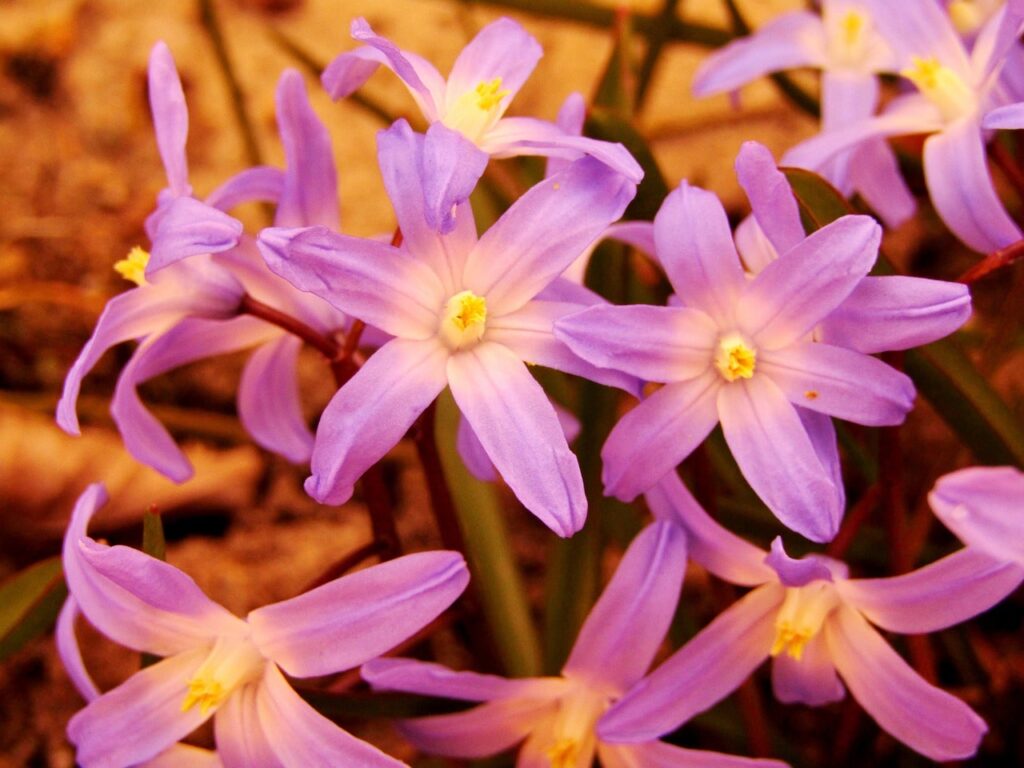
39. Chionodoxa ‘Pink Giant’
Hardiness: H6 | Height: 15cm
Despite the name, these are only 15cm tall, with star-shaped pink flowers that face upward cheerfully. They appear in March and are brilliant for naturalising, spreading steadily without becoming troublesome. Each bulb produces multiple flower stems.
Growing Tips: Plant bulbs 10cm deep in autumn. Excellent under deciduous shrubs where they flower before the canopy fills out. Self-seeds readily in suitable conditions. Mix with blue forms for a pretty tapestry effect.
40. Anemone blanda ‘Charmer’
Hardiness: H5 | Height: 15cm
Deep rose-pink daisy flowers appear in March, opening flat in sunshine to reveal darker centres. At just 15cm tall, they’re perfect for rock gardens or naturalising under shrubs. The ferny foliage disappears completely by summer.
Growing Tips: Soak tubers overnight before planting 5cm deep—they look like rabbit droppings but don’t let that put you off! Slow initially but eventually forms impressive drifts. Excellent in dry shade once established.
Red Spring Bulbs: The Bold Statements
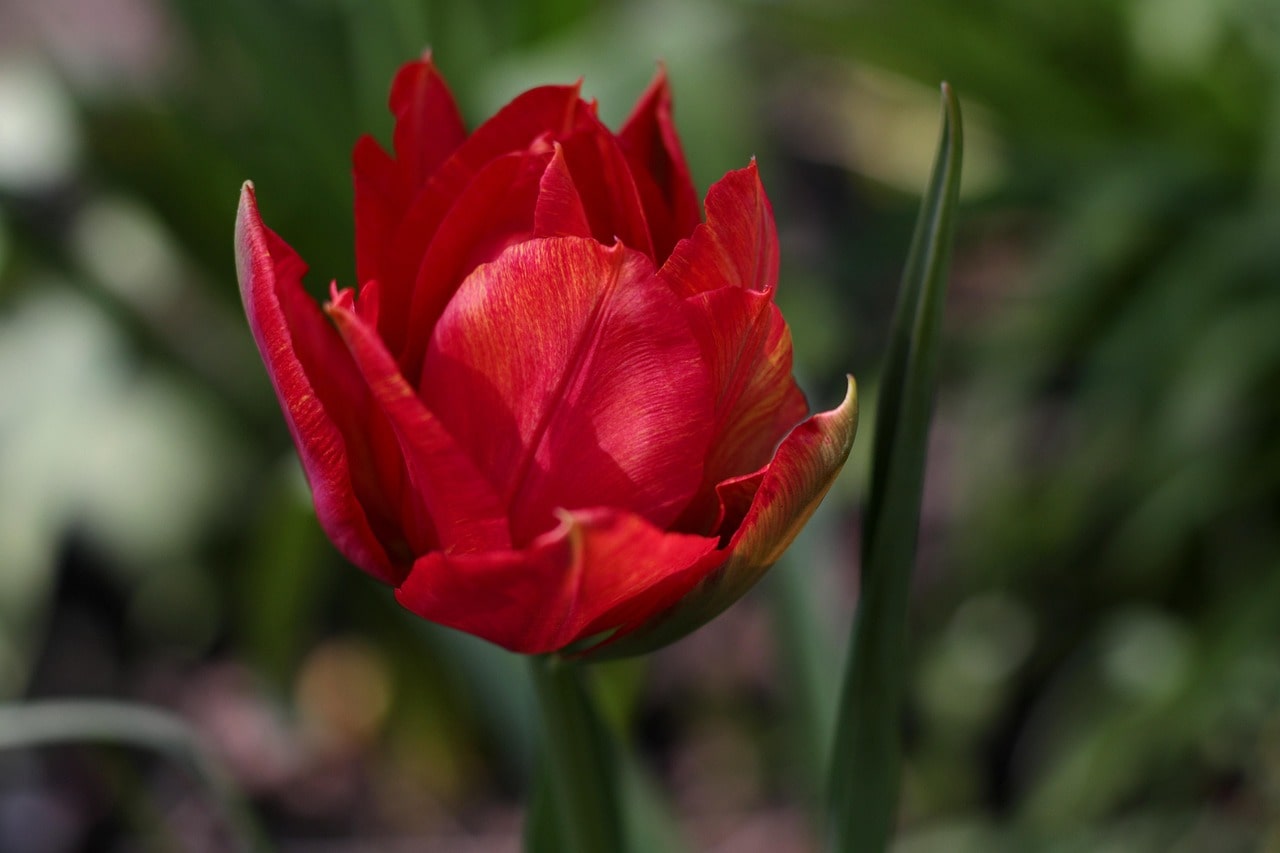
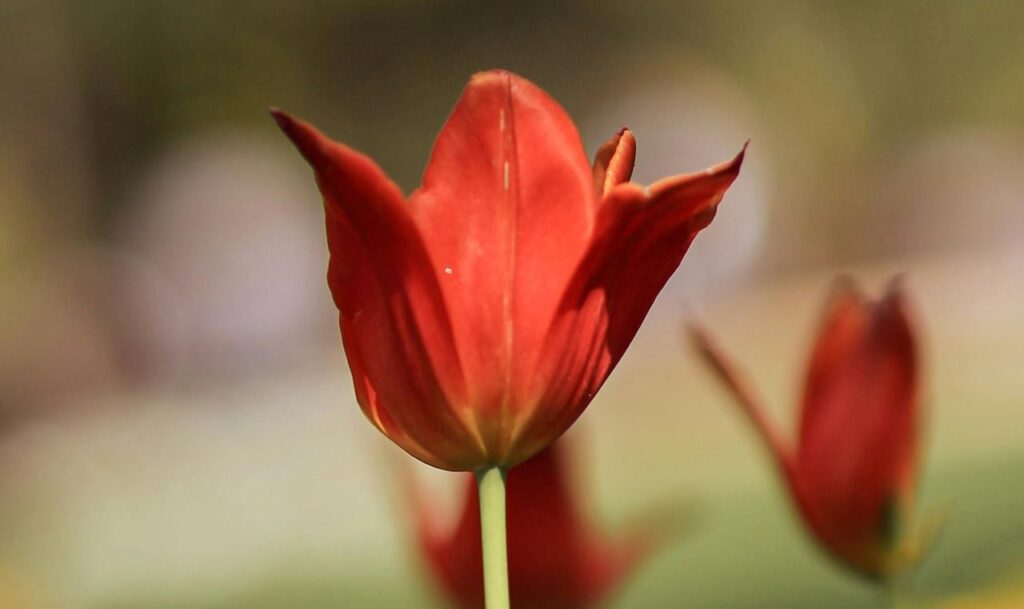
Red bulbs make no apologies for their presence, demanding attention and creating focal points that are impossible to ignore. Great for hot colour borders or the boldest gardeners who want to make a spring statement!
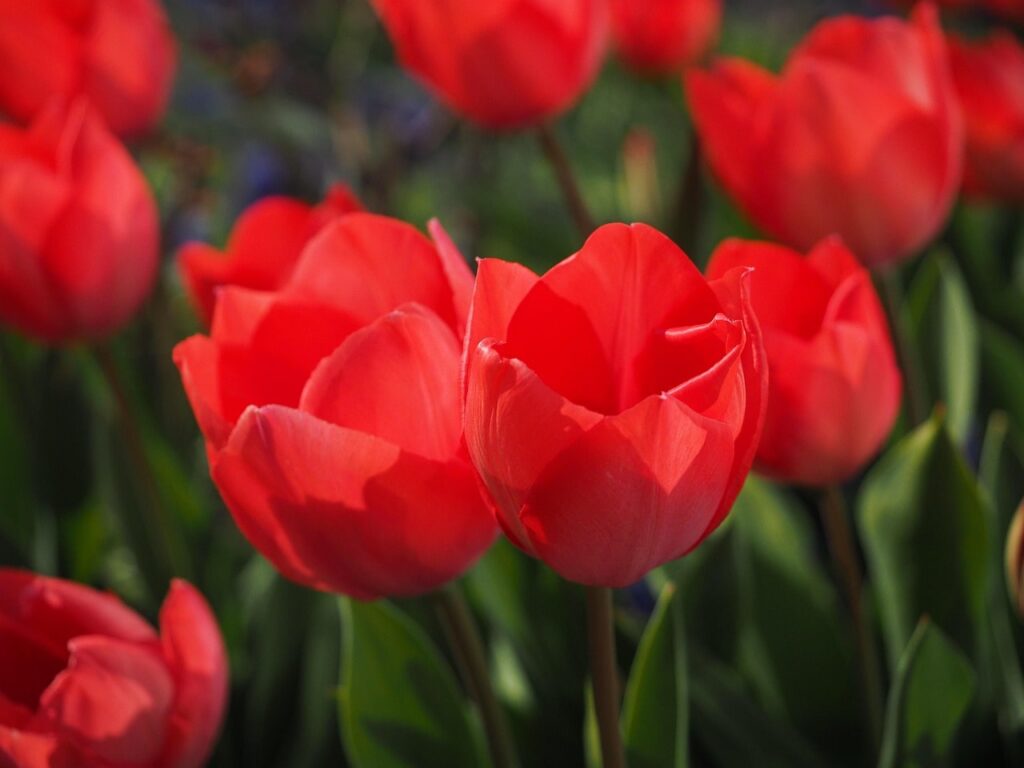
41. Tulipa ‘Red Impression’
Hardiness: H5 | Height: 55cm
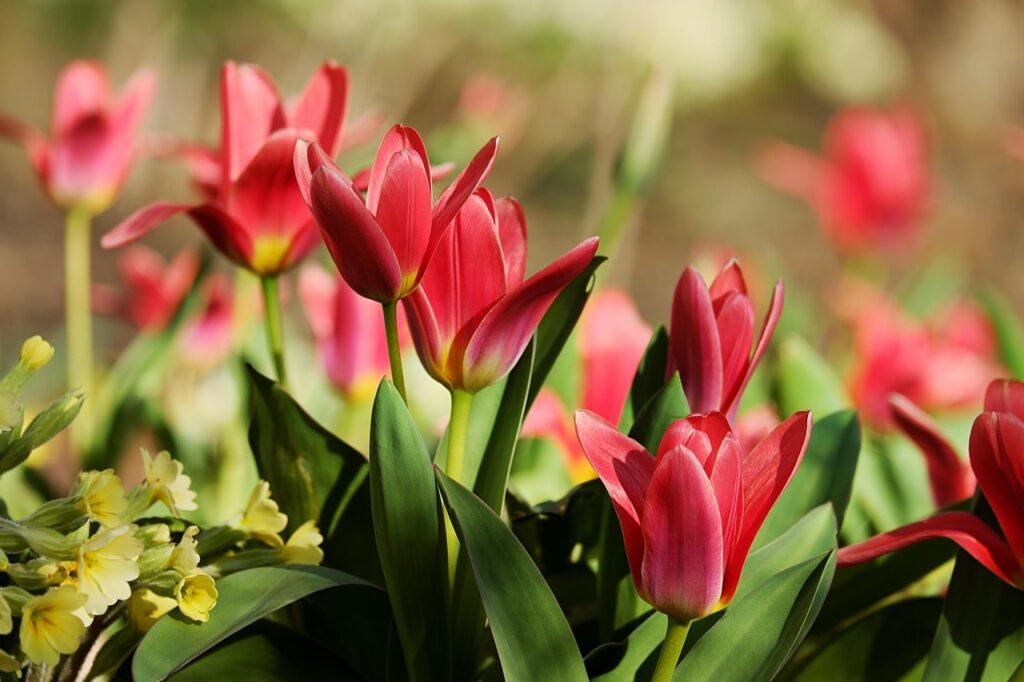
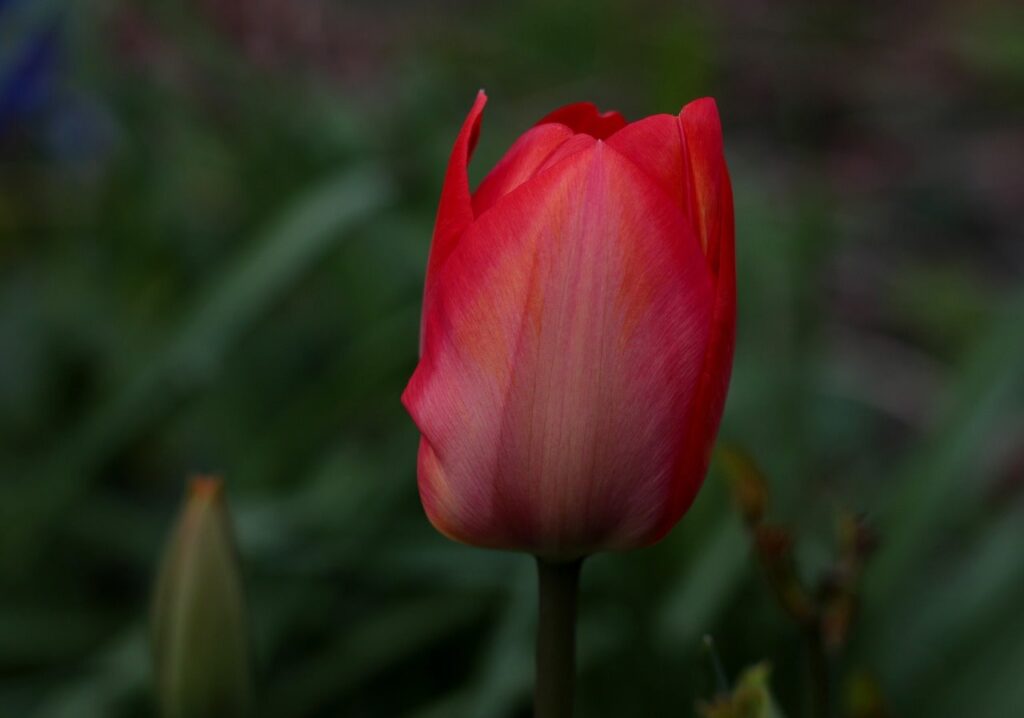
A Darwin hybrid in pillar-box red that shines so brightly it almost glows. At 55cm with massive flowers, it’s impossible to ignore. One of the most reliable reds for returning annually, which is unusual for such a bright colour.
Growing Tips: Plant deeply at 20cm for best perennial performance. The colour is so strong it needs careful placement—too many and it’s overwhelming. Combines well with white or deep purple. Excellent for cutting.
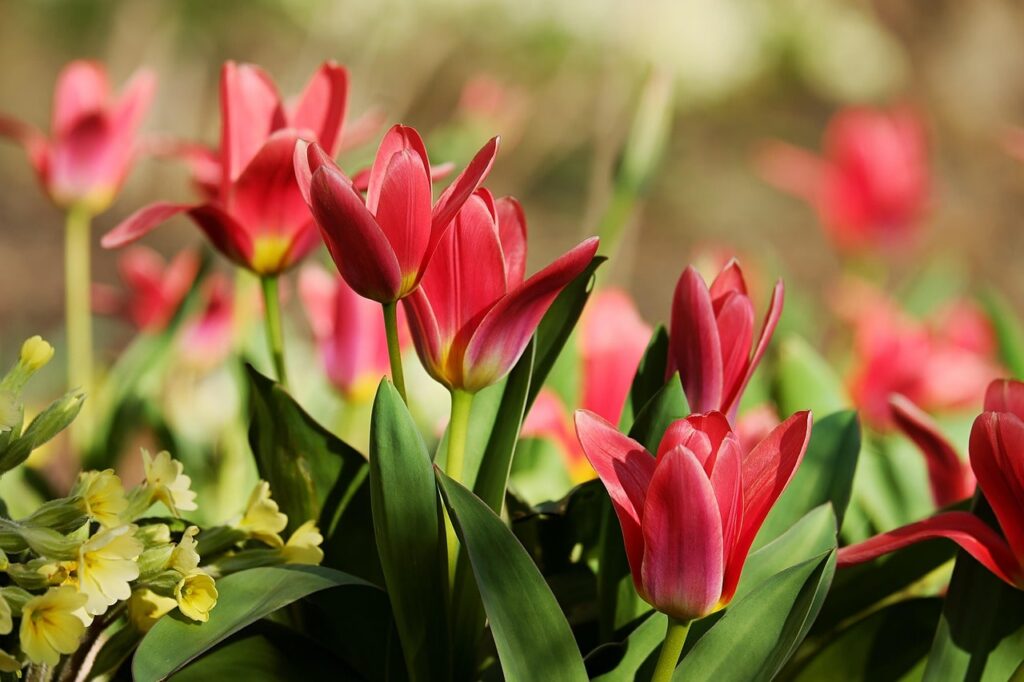
42. Tulipa ‘Apeldoorn’
Hardiness: H5 | Height: 60cm
The classic red Darwin hybrid, introduced in 1951 and still one of the best. Huge scarlet flowers on 60cm stems that stand up to anything April weather can throw at them. It’s bold, brash, and absolutely brilliant.
Growing Tips:One of the easiest tulips to grow, it tolerates less-than-perfect conditions. Group plants in bold for maximum impact. Returns reliably for years if planted deeply. The bulbs are huge, so ensure planting holes are deep enough.
43. Tulipa ‘Red Riding Hood’
Hardiness: H4 | Height: 20cm
A Greigii tulip with unusual mottled foliage and brilliant red flowers at just 20cm tall. It’s perfect for pots, rock gardens, or the front of borders. The leaves are almost as ornamental as the flowers, with purple stripes and mottling.
Growing Tips: More perennial than most tulips, especially in well-drained soil. The decorative foliage emerges early, providing interest before flowers appear. Excellent in pots with good drainage. Opens fully in sunshine to show black centres.
44. Hyacinthus ‘Jan Bos’
Hardiness: H5 | Height: 30cm
Cerise-red flowers that are closer to deep pink than true red, but the intensity makes them read as red in the garden. Early flowering and strongly scented, they’re perfect for pots where the colour won’t clash with other plants.
Growing Tips: One of the best for forcing—pot in September for Christmas colour. The intense colour works best in contemporary settings or strong colour schemes. Can look jarring with pastel colours, so place carefully.
45. Hyacinthus ‘Woodstock’
Hardiness: H5 | Height: 25cm
Deep burgundy-red that’s almost purple in some lights, with densely packed florets on sturdy 25cm stems. It’s sophisticated rather than shouty, perfect for adding depth to colour schemes. The unusual colour makes it a talking point and works well against yellow daffodils and other orange or blush spring bulbs.
Growing Tips: The deep colour shows best in full sun. Excellent in formal bedding schemes or geometric patterns. After pot culture, plant in the garden where it will return with looser spikes. Combines beautifully with pale pink or white hyacinths.
46. Anemone coronaria ‘Hollandia’
Hardiness: H4 | Height: 25cm
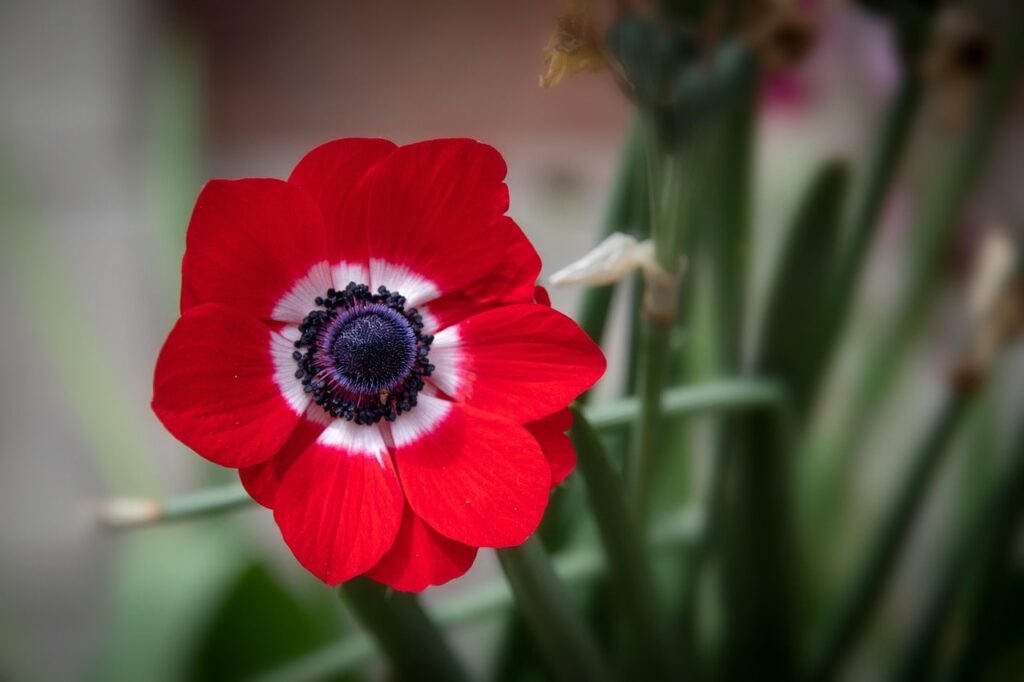
Technically a corm rather than a bulb, but these brilliant scarlet poppies are too good to omit. At 25cm tall, they produce tissue-paper flowers from April to June. The red is pure and bright, perfect for cottage garden schemes.
Growing Tips: Soak corms overnight before planting 5cm deep. In cold areas, plant in spring for summer flowers. Excellent for cutting—pick when buds are showing colour. May need winter protection in very cold areas.
47. Tulipa ‘Couleur Cardinal’
Hardiness: H5 | Height: 35cm
Deep scarlet with a plum-purple flush on the outer petals, creating a two-tone effect that’s particularly striking. At 35cm, it’s shorter than many reds, making it perfect for exposed sites or containers. Fragrant, which is unusual for red tulips.
Growing Tips:One of the best reds for difficult conditions, tolerating partial shade and wind. Plant in groups where the colour variations between flowers create interest. Early flowering for a red tulip. Combines well with purple varieties.
48. Tulipa ‘Pinocchio’
Hardiness: H4 | Height: 25cm
A Greigii tulip with red flowers edged in cream, creating a flame effect. At just 25cm tall with mottled foliage, it’s perfect for detailed viewing in pots or rock gardens. The colour pattern varies slightly between flowers, adding interest.
Growing Tips: More perennial than most tulips in well-drained soil. The decorative foliage appears early and persists after flowering. Opens flat in sunshine to reveal complex markings. Excellent in alpine gardens with good drainage.
49. Tulipa ‘Ile de France’
Hardiness: H5 | Height: 50cm
A Triumph tulip in deep blood-red, that’s one of the darkest reds available. At 50cm with strong stems, it’s reliable and long-lasting. The colour is so deep it appears almost black in certain lights, adding drama to spring displays and is great for gothic garden designs or planting plans.
Growing Tips:The dark colour shows best against light backgrounds—stunning against white walls or pale gravel. Plant in groups for maximum drama. Combines brilliantly with black tulips for a gothic effect. Good for cutting.
50. Tulipa sprengeri
Hardiness: H5 | Height: 45cm
The latest tulip to flower in June, with scarlet-red flowers on 45cm stems. It’s a species tulip that naturalises well, coming back reliably and even self-seeding in suitable conditions. Perfect for extending tulip season into early summer.
Growing Tips:Unlike most tulips, this prefers partial shade and tolerates damper conditions. Plant bulbs 15cm deep in autumn. Leave undisturbed to form colonies. The latest tulip to flower often blooms into June. Seeds around gently in suitable conditions.
Mixed & Bicolour Spring Bulbs: The Showstoppers
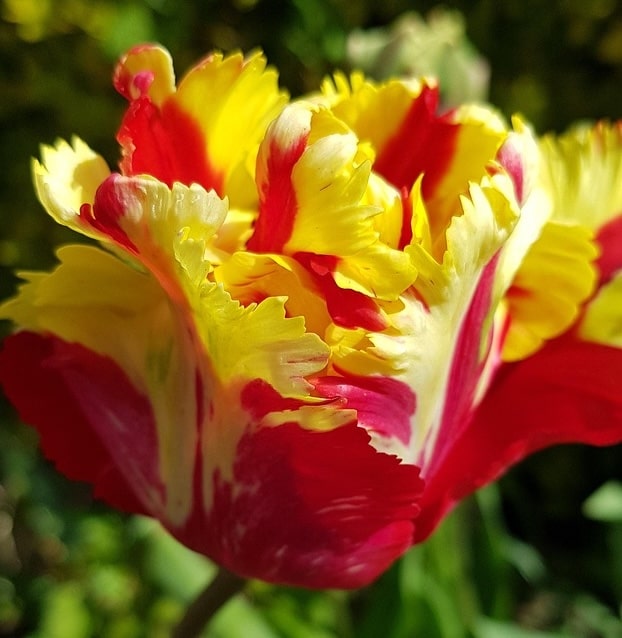
For sheer drama and visual interest, nothing beats the mixed and bicoloured varieties with their flames, stripes, and feathered edges adding a riot of sometimes clashing colours to your spring borders.
51. Tulipa ‘Flaming Parrot’
Hardiness: H5 | Height: 55cm
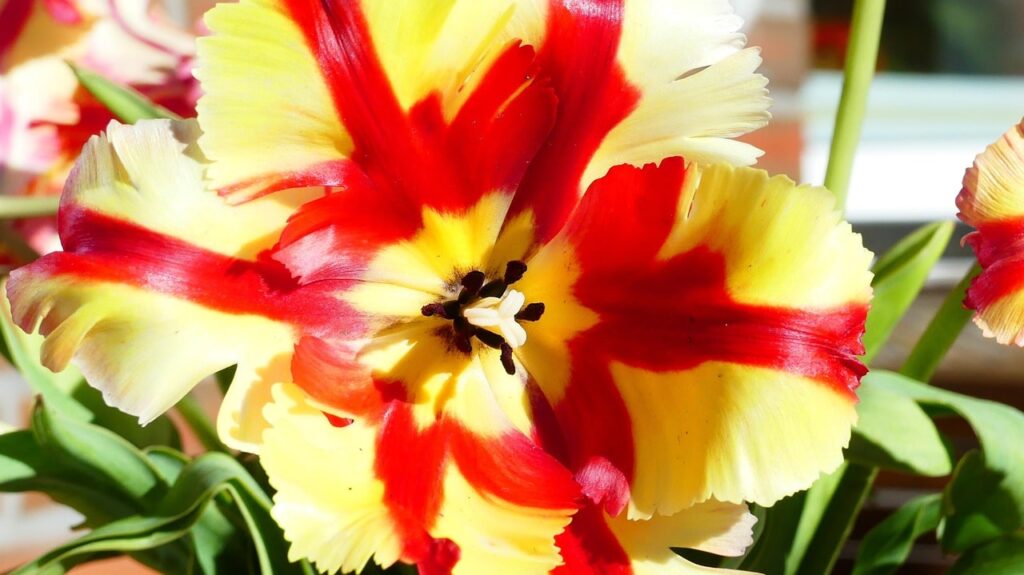
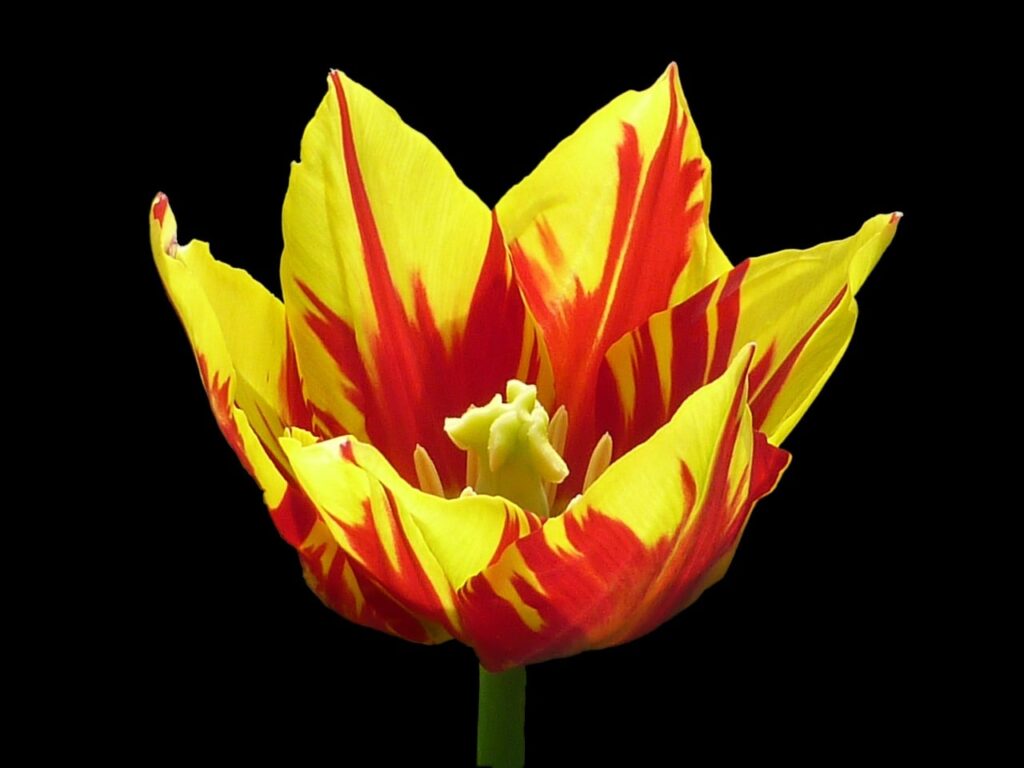
A parrot tulip with outrageous red and yellow flames on ruffled, fringed petals. At 55cm tall, it’s impossible to ignore, with flowers that look like exotic birds have landed in your garden. Each flower is slightly different, adding to the spectacle.
Growing Tips: The heavy, ruffled flowers need shelter from strong winds. Plant in groups where individual variations create a tapestry effect. Late flowering in May. The stems can be weak, so some support might be needed.
52. Tulipa ‘Estella Rijnveld’
Hardiness: H5 | Height: 60cm
A parrot tulip with white petals is dramatically flamed with red, creating a raspberry ripple effect. The deeply fringed petals twist and curl, changing shape daily. At 60cm, it’s tall and dramatic, perfect for creating focal points.
Growing Tips:Each flower is unique, making mass plantings particularly effective. Needs shelter from wind and rain, which can damage the delicate petals. Exceptional as a cut flower if picked just as buds open.
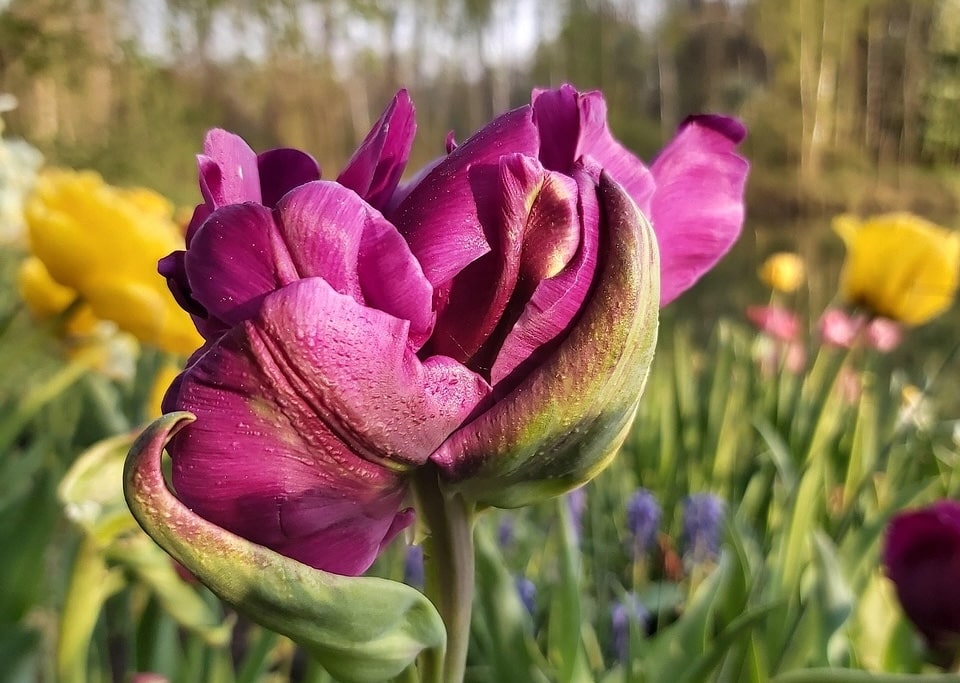
53. Tulipa ‘Blue Parrot’
Hardiness: H5 | Height: 55cm
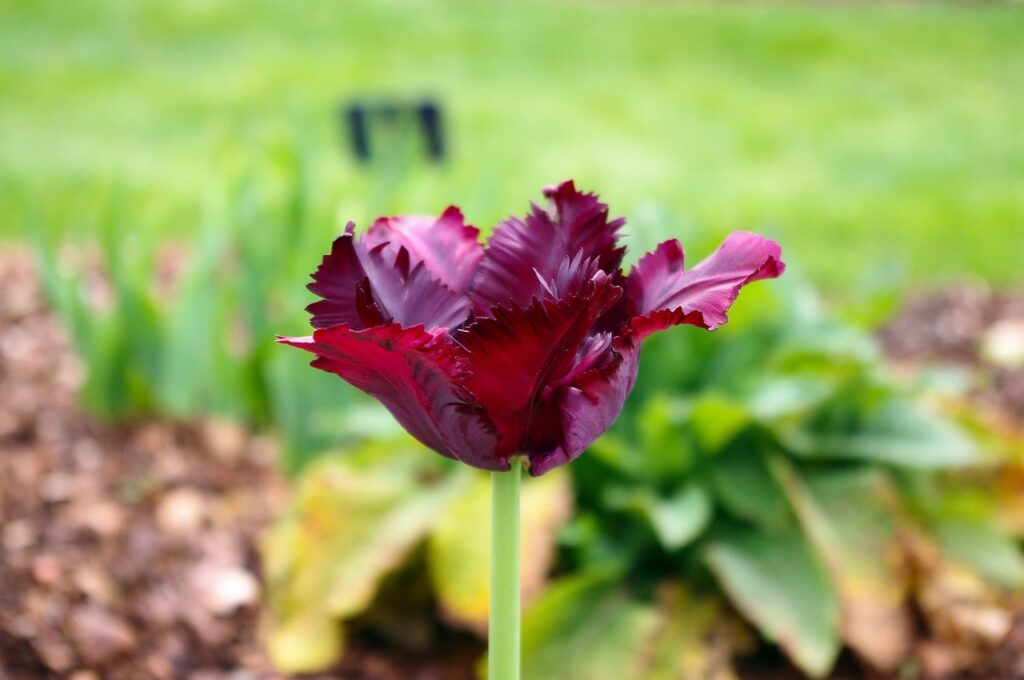
Not actually blue but a violet-purple with blue undertones, with the characteristic ruffled parrot petals. At 55cm with a light fragrance, it’s one of the more refined parrots. The colour is complex, changing in different lights.
Growing Tips: The subtle colour works better in sophisticated schemes than the brighter parrots. Needs full sun to develop proper colour. Late flowering in May. Combines beautifully with white or pale pink tulips.
54. Tulipa ‘Carnaval de Nice’
Hardiness: H5 | Height: 45cm
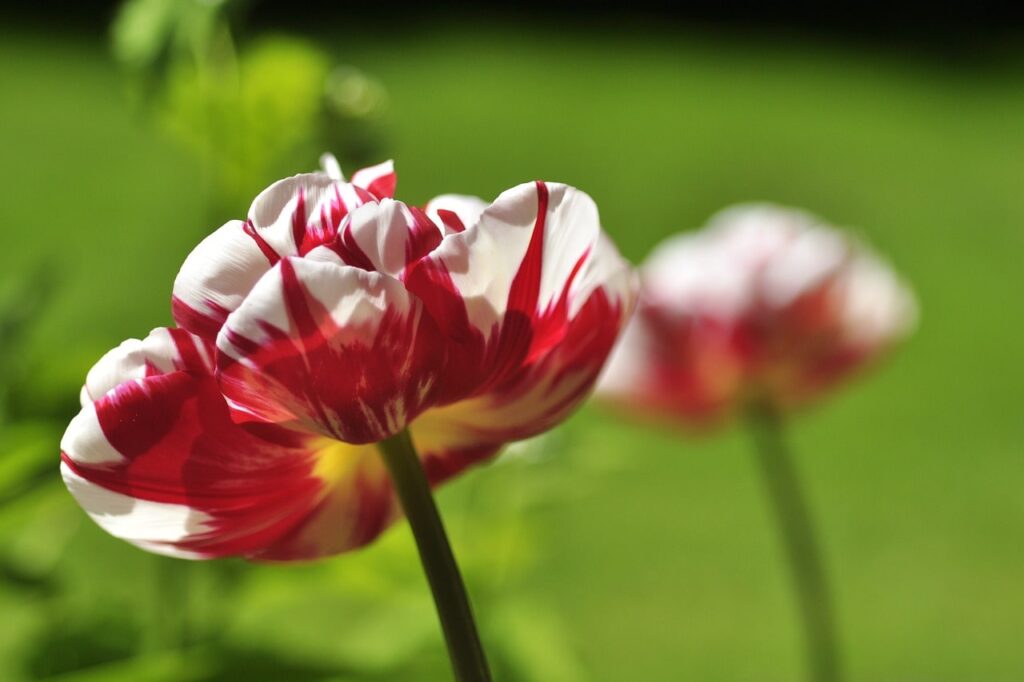
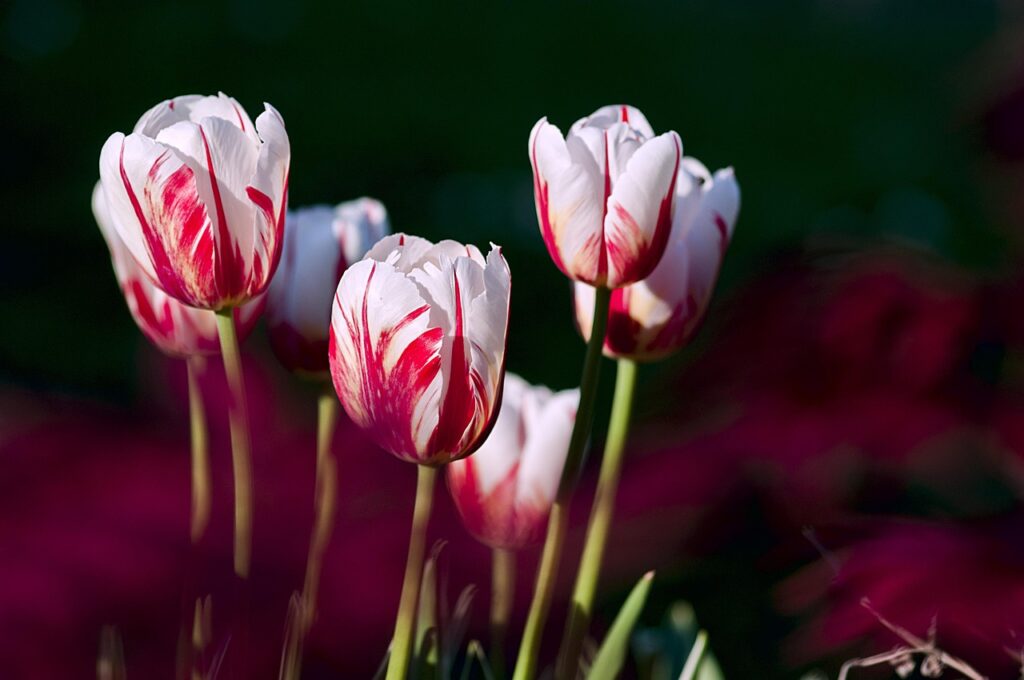
A double late tulip with white petals heavily flamed with red, looking like it’s been splashed with paint. At 45cm with peony-like flowers, it’s substantial and long-lasting. Each flower has a different pattern, creating fascinating variation and my grandad used to grow these in his front garden so they bring back great memories of me gardening as a child!
Growing Tips:The heavy double flowers can hold water, so good drainage is essential. Support may be needed in exposed positions. Late flowering in May. Spectacular in pots where you can appreciate the individual flower patterns.
55. Crocus chrysanthus ‘Pickwick’
Hardiness: H6 | Height: 10cm
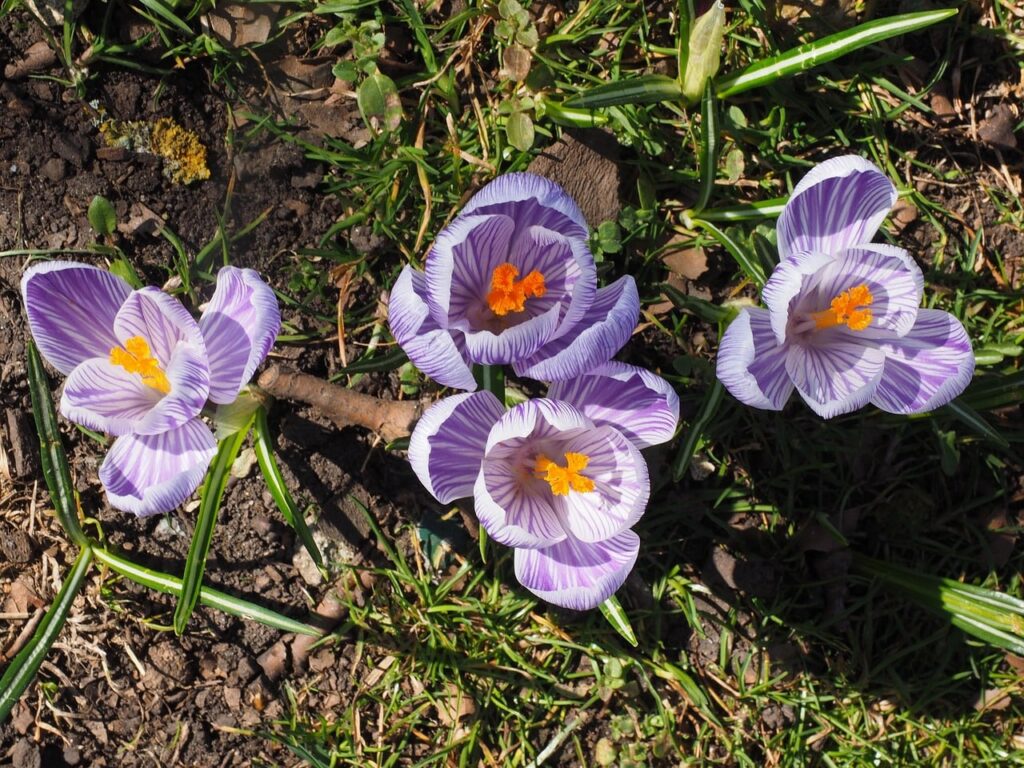
Silvery-lilac with dark purple stripes on the outer petals, creating a striped effect that’s particularly striking. At just 10cm tall, it’s perfect for detailed viewing in rock gardens or containers. Opens flat in sunshine to reveal orange centres.
Growing Tips: Plant corms 8cm deep in well-drained soil. Excellent for naturalising in grass or gravel. The striped effect is most pronounced in cool weather. Increases readily to form clumps. Very early flowering in February.
56. Tulipa ‘Rem’s Favourite’
Hardiness: H5 | Height: 50cm
A Triumph tulip with purple flames on white petals, creating a dramatic two-tone effect. At 50cm with strong stems, it’s reliable and weather-resistant. The flame pattern varies between flowers, ensuring no two are exactly alike.
Growing Tips: The purple flames darken with age, creating additional interest. Plant in groups to appreciate the variations between flowers. Mid-season flowering in April. Combines well with solid purple or white varieties.
57. Tulipa ‘Flaming Flag’
Hardiness: H5 | Height: 45cm
White petals with purple-pink flames that become more intense as the flower ages. At 45cm, it’s perfectly proportioned for most borders. The flames have a feathered edge that creates additional complexity.
Growing Tips: Each flower develops differently, making mass plantings particularly interesting. The colour is best in cool springs. Suitable for cutting if picked in bud. Combines beautifully with solid pink varieties.
58. Tulipa ‘Mickey Mouse’
Hardiness: H5 | Height: 30cm
Red with yellow edges creating a flame effect that’s bright and cheerful rather than sophisticated. At just 30cm tall, it’s perfect for containers or the front of borders. The colours are pure and bright, creating real impact.
Growing Tips: The short stature makes it wind-resistant. Excellent in pots where the bright colours can be controlled. Opens fully in sunshine to show contrasting centres. More perennial than many bicolours if planted deeply.
59. Tulipa ‘Zurel’
Hardiness: H5 | Height: 40cm
A Triumph tulip with cream petals heavily flamed with deep red, creating a candy-cane effect. At 40cm with strong stems, it’s reliable and long-lasting. The pattern is consistent between flowers, making a coordinated display.
Growing Tips: The striking pattern needs careful placement to avoid overwhelming other plants. Plant in groups of at least seven for impact. Mid-season flowering in April. Excellent for cutting, lasting well in water.
60. Iris hollandica ‘Eye of the Tiger’
Hardiness: H4 | Height: 60cm
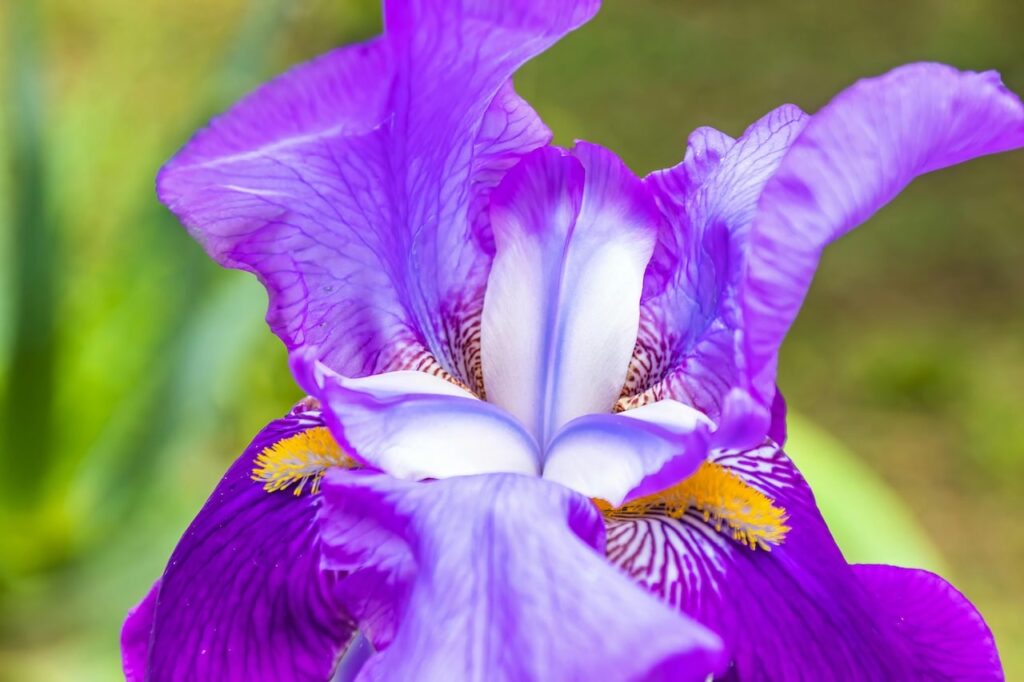
Not strictly an early spring bulb as it flowers in May, but this bicoloured Dutch iris is too good to leave out. Bronze standards with yellow falls marked with orange create a complex colour combination. At 60cm tall, it adds valuable height.
Growing Tips: Plant bulbs 15cm deep in well-drained soil. Needs full sun for best flowering. It can be left undisturbed for years. Excellent for cutting—pick when buds are showing colour. May need winter mulch protection in very cold or icy areas.
Creating Your Perfect Spring Display
After all these varieties, you might be feeling a bit overwhelmed, but here’s the thing: you don’t need all sixty varieties to create something spectacular. Start with a colour theme and build from there. Maybe it’s a sophisticated white and purple combination, or perhaps you’re brave enough for the full rainbow treatment.
The key is succession planting. Choose early, mid, and late varieties in your chosen colours to extend the display from January through to June. Layer bulbs in pots with late tulips at the bottom, mid-season daffodils in the middle, and early crocuses on top—what we call the lasagne method, though it looks far prettier than it sounds!
Remember that bulbs are incredibly forgiving. Plant them upside down? They’ll right themselves. Forget to plant until January? Spring-flowering bulbs are adaptable enough to cope. Not sure about colour combinations? Nature has a way of making everything work together in the end.
Planting Like a Pro: The Garden Ninja Method
Over the years, I’ve developed what I modestly call the Garden Ninja Method for bulb planting. It’s not revolutionary, but it works every single time. The first thing to do is always to plant bulbs at a depth three times their height to ensure they don’t need staking and are not easily dug up by pets or squirrels.
Group bulbs in odd numbers such as threes, fives, sevens, and nines.
Even numbers appear artificial, while odd numbers create a naturalistic drift. For naturalising in grass, throw handfuls of bulbs and plant where they land. It feels wrong, but it makes the most natural effect imaginable.
Don’t forget to mark where you’ve planted, especially for bulbs that die back completely. There’s nothing worse than accidentally digging up dormant bulbs in summer when you’re trying to plant annuals. I use short bamboo canes or lolly sticks, but plant labels work just as well.
Learn how to Design Your Own Garden
Now that you know how to use colour with spring bulbs for amazing effects, why not learn more about how to design your own garden?
Whether you’re just starting out or have years of experience, our courses are designed for all skill levels. You’ll learn practical techniques in garden layout, plant selection, and maintenance while benefiting from Lee Burkhill’s deep knowledge and passion for sustainable gardening.
29
Garden Design Examples for Small Gardens: 30 Design Templates & Planting Plans
Garden Design Examples for Small Gardens: 30 Design Templates & Planting Plans: In this online gardening course, I’ll walk you through 30 fantastic garden designs, explaining the logic behind the layout, the plant choices, and take-home tips for applying them in your own garden.
Weekend Garden Makeover: A Crash Course in Design for Beginners
Learn how to transform and design your own garden with Lee Burkhills crash course in garden design. Over 5 hours Lee will teach you how to design your own dream garden. Featuring practical design examples, planting ideas and video guides. Learn how to design your garden in one weekend!
Garden Design for Beginners: Create Your Dream Garden in Just 4 Weeks
Garden Design for Beginners Online Course: If you want to make the career jump to becoming a garden designer or to learn how to design your own garden, this is the beginner course for you. Join me, Lee Burkhill, an award-winning garden designer, as I train you in the art of beautiful garden design.
There you have it—sixty spectacular varieties organised by colour to transform your spring garden from drab to absolutely fabulous. Whether you’re planning a sophisticated monochrome display or going full-on rainbow, these varieties will deliver year after year with minimal fuss.
Start planning now, get those bulbs ordered, and by next spring you’ll be the envy of every gardener in your neighbourhood. Trust me, once you’ve experienced the pure joy of a garden bursting with spring bulbs, you’ll never look back. The only problem? You’ll want to plant even more next year!
Remember, gardening isn’t about perfection; it’s about creating joy. So grab your trowel, order those bulbs, and let’s make next spring absolutely spectacular. Happy planting, ninjas!
Lee Burkhill, known as the Garden Ninja, is an award-winning garden designer and horticulturist with over 30 years of gardening experience and 15 years as a professional garden designer. A qualified RHS (Royal Horticultural Society) professional, Lee specialises in sustainable garden design and practical horticultural advice. He designs and presents on BBC1’s Garden Rescue and in leading gardening publications. Lee combines three decades of hands-on gardening knowledge with professional design qualifications to help gardeners create beautiful, functional outdoor spaces.